Malta
- Who issues it
- Authority for Transport in Malta (Transport Malta)
- Minimum age
- 18 years
- Buoyage
- IALA region A
Do you need a licence?
Yes, for a pleasure boat under 24 metres in Malta's internal and territorial waters with 30 HP combined or more, or if you tow water-skiers.
You don't need one for:
- an unpowered boat
- a boat below 30 HP
- a hire from a licensed operator under regulation 36
A Nautical Licence starts at 18.
Nautical Licence
From 18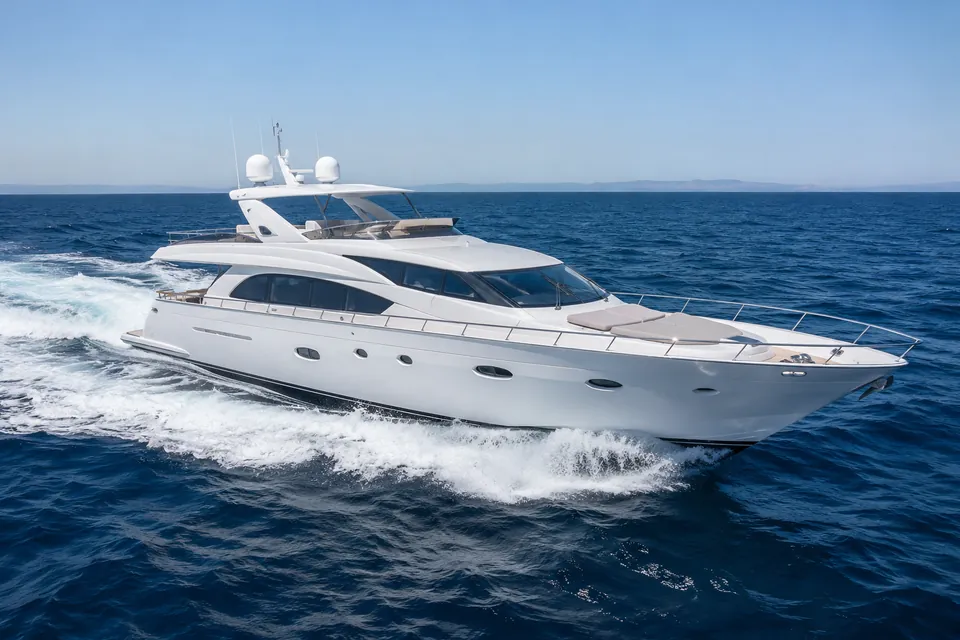
- What it lets you do
- You can use pleasure craft under 24 metres in Malta’s territorial waters, up to 12 nautical miles from the baseline, including for water-sports towing.
- How you get it
- After approved training based on 24 hours of classroom and practical tuition, adjusted to your ability, you take an oral exam. Practical boat handling is compulsory.
- Where to study
- Study it in Academy
Recreational Skipper
From 18- What it lets you do
- You can use pleasure yachts under 24 metres overall, within 35 nautical miles of a safe haven in the Mediterranean Sea, with no engine-power limit.
- How you get it
- You complete at least 19 hours of theory and 5 hours of practical and demonstration sessions, then take an oral assessment and a multiple-choice exam. The pass mark is 85%.
- Where to study
- Study it in Academy
Professional deck titles
Rating forming part of a navigational watch
STCW II/4- What it lets you do
- You can work as a navigational watch rating on seagoing ships of 500 GT or more.
- Where to study
- Study it in Academy
Able seafarer deck
STCW II/5- What it lets you do
- You can serve as an able seafarer deck on seagoing ships of 500 GT or more.
- Where to study
- Study it in Academy
Officer in charge of a navigational watch on ships of less than 500 GT engaged on near-coastal voyages
STCW II/3- What it lets you do
- You can keep a bridge watch on ships under 500 GT on near-coastal voyages.
- Where to study
- Study it in Academy
Officer in charge of a navigational watch
STCW II/1- What it lets you do
- You can keep a bridge watch on ships of 500 GT or more, or on ships under 500 GT beyond near-coastal voyages.
- Where to study
- Study it in Academy
Master on ships of less than 500 GT engaged on near-coastal voyages
STCW II/3- What it lets you do
- You can command ships under 500 GT on near-coastal voyages.
- Where to study
- Study it in Academy
Master or chief mate
STCW II/2- What it lets you do
- You can be master or chief mate on ships of 3,000 GT or more, from 500 GT to under 3,000 GT, or under 500 GT when sailing beyond near-coastal voyages.
- Where to study
- Study it in Academy
Radio certificates
VHF Short Range Certificate
SRC- What it lets you do
- You can operate VHF and DSC equipment on non-SOLAS vessels within GMDSS sea area A1.
- Where to study
- Study it in Academy
GMDSS Restricted Operator's Certificate
ROC- What it lets you do
- This lets you operate GMDSS radio equipment on SOLAS vessels restricted to sea area A1.
- Where to study
- Study it in Academy
GMDSS General Operator's Certificate
GOC- What it lets you do
- You can operate GMDSS radio equipment on SOLAS vessels, including beyond sea area A1.
- Where to study
- Study it in Academy
Ready to study for it?
The Academy is free with an account: lessons for every topic, timed mocks marked like the real exam, and your progress saved.
Official sources: Transport Malta — Syllabus: Basic Seamanship and Boat Handling · Legislation Malta — Small Ships Regulations, S.L. 499.52 · Transport Malta — Recreational Skipper: Mediterranean Sea, Model Course 1.00 (2019) · Legislation Malta — Merchant Shipping (Training and Certification) Regulations, S.L. 234.17 · Government of Malta, servizz.gov — Global Maritime Distress and Safety System · Transport Malta — Syllabus for the Course Leading to the Issuance of a Nautical Licence (June 2026)