Coming soon
Anchoring & mooring
Ground tackle, anchor scope and the role of each mooring line.
Seamanship & Sailing
Build the practical skills you use on board. Start by choosing a knot for the job; anchoring, boat handling and sailing lessons are on the way.
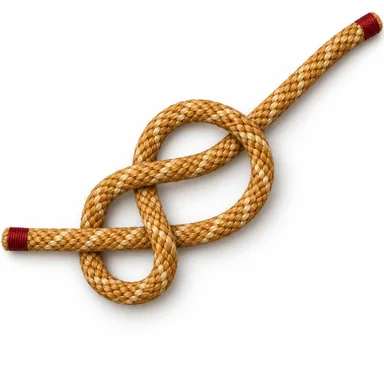
A virtual rope on your screen: watch each move, copy it, choose over or under and check your knot.
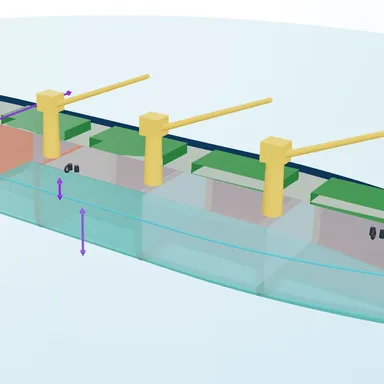
Open the ship parts explorer: four vessels from a dinghy to a cargo ship, layer by layer, with a drag-and-drop test.
Coming soon
Ground tackle, anchor scope and the role of each mooring line.
Coming soon
Docking, turning and working with wind and current.
Coming soon
Points of sail, tacking, gybing and sail trim.
Content checked September 9, 2026
 Ship construction: structure, watertight integrity and dry-docking
 Deck equipment and machinery: winches, cranes, hatches, watertight doors, pilot ladders and gangways
 The marine diesel engine
 Batteries, charging and electrics
 Engine checks before you go, and outboard care
 Gas and petrol safety aboard: LPG, fuel vapour and ventilation
 Propulsion basics: how a boat is pushed
 Remote control of the propulsion plant and engineering systems (STCW A-II/2)
 Types of propulsion, one by one
 Steering gear and autopilot: change-over, tests and drills (SOLAS V/26)
 Cargo and stores (IMDG labels), painting, lubrication and routine maintenance
 Surveys, certificates, maintenance and dry-docking
 Steering, fuel, water and bilge systems
 Engine trouble at sea: fuel, cooling and air
 Cargo planning, hull stresses and stability management
 Cargo securing and dangerous goods basics (CSS and IMDG Codes)
 Centre of gravity and metacentric height (GM)
 The GZ curve and the stability criteria (2008 IS Code)
 Displacement, draught and hydrostatics
 Load lines, freeboard and draught marks (Load Line Convention)
 Loading, ballast and the stowage plan
 Working stability on small ships: loading, free surface and trim
 Why a boat stays upright: weight, buoyancy and righting lever
 Damage stability calculations, longitudinal strength and the draught survey
 Stress tables, loading instruments and partial loss of intact buoyancy
 Trim, list and free surface
 Yacht stability: metacentre, types of equilibrium, shifting weights, the GZ curve and AVS
 Deck work safely: snap-back zones, working aloft and over the side, enclosed spaces and permits to work (ratings)
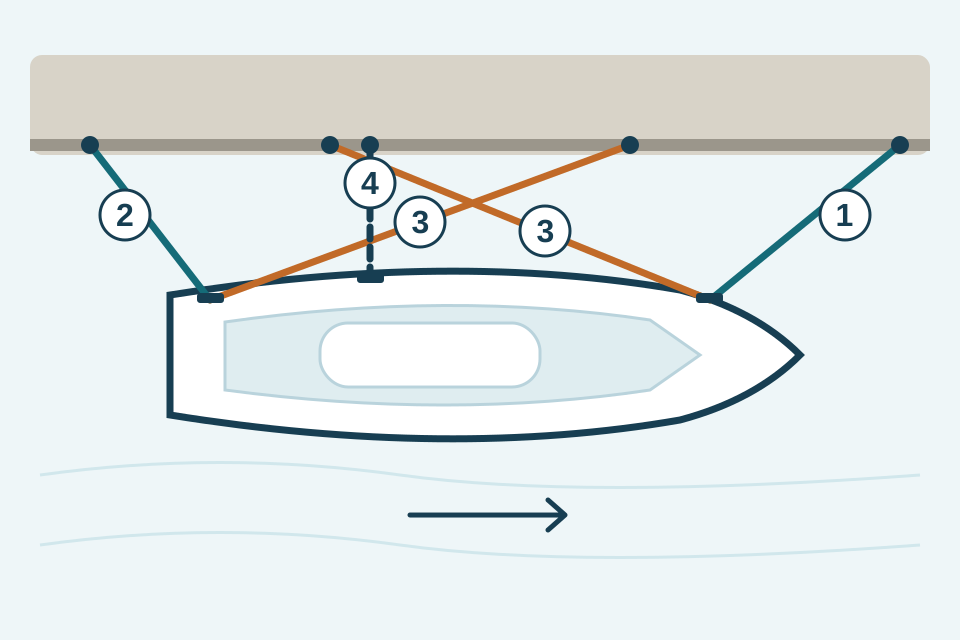 Mooring lines and fenders: bow, stern and spring lines
 Rope handling: coiling, cleating, winches and throwing a line
 Rope materials, strength and care; basic splices
 Ship mooring and anchoring stations: mooring and tug lines, safe working loads, the windlass and buoy mooring (STCW A-II/5)
 Abandoning ship: liferaft, grab bag and survival
 Advanced fire fighting: control, organisation and investigation (STCW A-VI/3)
 Search and rescue near the coast: IAMSAR for small ships
 Drills: emergencies step by step
 Emergency organisation on board and responding to distress (IAMSAR)
 Leading the emergency response and coordinating search and rescue
 Fast rescue boats: launching, handling and recovery (STCW A-VI/2-2)
 Fire on board: prevention and fighting
 Fire on ships: fire chemistry, ignition sources, detection and fixed systems (STCW A-VI/1-2)
 Fighting fire: extinguishers, hoses, breathing apparatus and the fire party
 Collision, grounding, flooding and damage control
 Life-saving appliances: lifejackets, immersion suits, lifeboats and liferafts
 Emergency types, alarm signals and muster lists (STCW A-VI/1-1)
 Safety equipment and the crew safety briefing
 Search and rescue: who to call and how help comes
 Launching and handling survival craft and rescue boats (STCW A-VI/2-1)
 Personal survival: abandoning, in the water and in survival craft
 Body structure, shock, electric shock and moving a casualty (STCW A-VI/1-3)
 Hypothermia, cold-water immersion, drowning and heat illness
 First aid and resuscitation
 Wounds, burns and fractures
 Medical care on board: treatment, nursing and death at sea (STCW A-VI/4-2)
 Medical first aid (STCW A-VI/4-1): examining a casualty, toxic hazards (MFAG) and the ship's medical guide
 The medicine chest and seasickness
 Radio medical advice and evacuation
 SOLAS, MARPOL, STCW and the IMO conventions
 Designated security duties: access control, searches and security equipment (STCW A-VI/6-2)
 Flags, papers and cruising in foreign waters
 Leadership, teamwork, fatigue and seafarers' rights (MLC)
 The law of the sea, flag states and port state control
 Leadership, crew management and training on board
 Personal safety, social responsibilities and preventing violence and harassment (STCW A-VI/1-4)
 Boating rules: licences, documents, required equipment and zones
 Brazil: NORMAM-211 rules for recreational craft
 Germany: the inland rules (BinSchStrO) where they differ from CEVNI
 Germany: the seaways rules (SeeSchStrO): fairways, signals and right of way
 Spain: navigation zones, required equipment and documents
 France: safety equipment by distance from shelter (Division 240) and documents
 Greece: speedboat rules, coastal limits and documents
 Croatia: navigation areas, safety equipment and documents
 India: the Merchant Shipping Act and DG Shipping requirements for deck officers
 Italy: navigation limits, safety equipment and documents
 The Netherlands: the inland rules (BPR), right of way and waterway signs
 The Philippines: maritime law and MARINA requirements for deck officers
 Portugal: navigation areas, safety equipment and documents
 United States: federal rules for small passenger and uninspected vessels (46 CFR, 33 CFR)
 Safety management on board: the ISM Code
 Security awareness: the ISPS Code and security levels (STCW A-VI/6-1)The master's business: certificates, port state control, ISM audits and the law
 Ship security officer: the security plan, risk assessment and inspections (STCW A-VI/5)
 Keeping a watch as a rating: helm orders in English and handovers (STCW A-II/4)
 Safe watchkeeping and the bridge team (STCW Code A-VIII/2)


