
Maritime law, rules and watchkeeping · Level R2 · 4 parts · about 13 min
Boating rules: licences, documents, required equipment and zones
4 short parts: Licences · Papers and flag · Safety gear · Checks and fines. Each part explains the idea, then gives the points to remember, the common mistakes, a worked case and a practice question; the Academy unit adds all 24 check questions.
1 · Licences
Who needs a licence, and which one
There is no single world boating licence. Each country decides when you need one, usually by engine power, boat length, speed and distance from the coast.
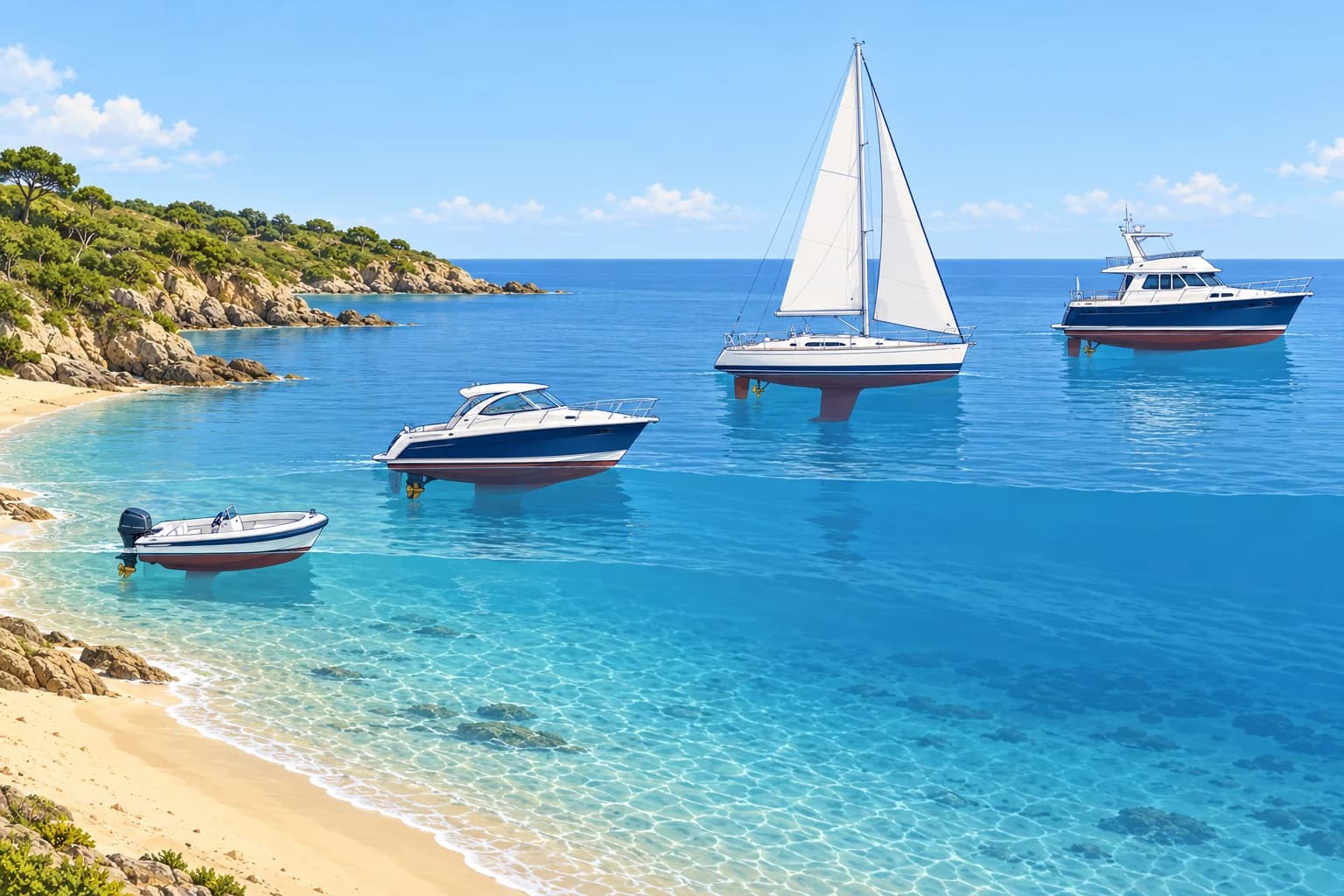
Each country sets its own rules
Boating licences are national law. No treaty creates one licence for pleasure craft that every country must accept. The flag state (the country whose flag your boat flies) and coastal state (the country whose waters you use) can both set rules. That is why this module has one unit per country.
What decides the licence
Most countries use a few factors: engine power in kilowatts (kW) or horsepower (hp), hull length, the speed the boat can reach, and distance from the coast or a shelter. A shelter is a refuge your boat can safely reach, use and leave in the conditions. Some licences also limit you to daylight. A bigger boat or a longer trip may need a different qualification.
Small boats may need none
In Spain, since 1 October 2026, adults aged 18 or over may use private motorboats up to 5 m and 15 CV (metric hp) without a licence, with no power reducer. Sailboats up to 6 m are exempt for sport use. Go by day, within 2 nautical miles (NM) of your departure port, marina or beach. Hired motorboats and sailboats need the corresponding qualification; jet skis have separate rules. At sea, Germany requires a licence above 11.03 kW combustion or 7.5 kW continuous electric power.
Inland waters have their own rules
Rivers, canals and lakes often follow separate inland rules. In Europe many inland waters use CEVNI (the European inland waterway code) or a national version of it, and some need a separate inland licence or a CEVNI test.
Using your licence abroad
Before boating abroad, check whether your licence is accepted under the boat's flag-state rules and the local country's rules. Check both even on a home-flag boat. The ICC (International Certificate of Competence) helps to prove your skill abroad; the Foreign waters unit explains it. The boating-licence guide compares countries.
Key figures
- Common factors
- Engine power, length, speed, distance from coast or shelter
- Spain: licence-free private motor/sport sail, age 18+ (1 Oct 2026)
- Motor ≤5 m/15 CV (metric hp), no reducer; sail ≤6 m; day; ≤2 NM
- France: motorboats at sea
- Licence above 4.5 kW (6 hp); seagoing sailing boats exempt
- Germany, at sea
- Above 11.03 kW combustion or 7.5 kW continuous electric
- Netherlands, inland: Klein Vaarbewijs
- 15–<25 m; motorboats <15 m capable of >20 km/h through water
Remember
- Boating licences are national: there is no single licence every country must accept.
- Power, length, speed and distance from the coast or a shelter decide which licence you need.
- Small, low-powered boats are often licence-free, but the limits differ between countries.
- Inland waters may need their own licence or a CEVNI test.
- Abroad, check both the flag state's rules and the local country's rules.
Common mistakes
Wrong: My licence is valid on any boat in any country.
Right: Check whether your licence is accepted by the boat's flag state and the country you visit.
Wrong: Small boats never need a licence.
Right: For a motorboat at sea, France requires a licence above 4.5 kW, regardless of length. Seagoing sailing boats are exempt.
Wrong: Inland lakes and rivers follow the sea rules.
Right: Inland waters often have their own rules (CEVNI or a national code) and sometimes a separate licence.
Worked case
You hold a coastal licence from your home country. On holiday abroad you want to rent a 6 m motorboat with a 40 hp outboard on a route reaching 3 NM from the nearest usable shelter. What do you check before you sign?
Show the answer
Check the boat's actual flag and the local rental rules. Confirm the qualification needed for its length and power, whether distance is measured from the coast or a shelter, and whether your licence or an ICC is accepted. Check the insurer's requirements and carry the required licence and ID.
Practice question
Who decides whether you need a licence to drive a pleasure boat?
- One rule agreed by every country
- The marina where the boat is kept
- The boat's builder and its manual
- The national law of each country
Show the answer
Answer: D. Boating licences are national. The flag state and the coastal state can both set rules.
2 · Papers and flag
Ship's papers, registration, insurance and radio
Carry the required papers for your boat, insurance and radio in an accepted form, plus your licence and ID where required.
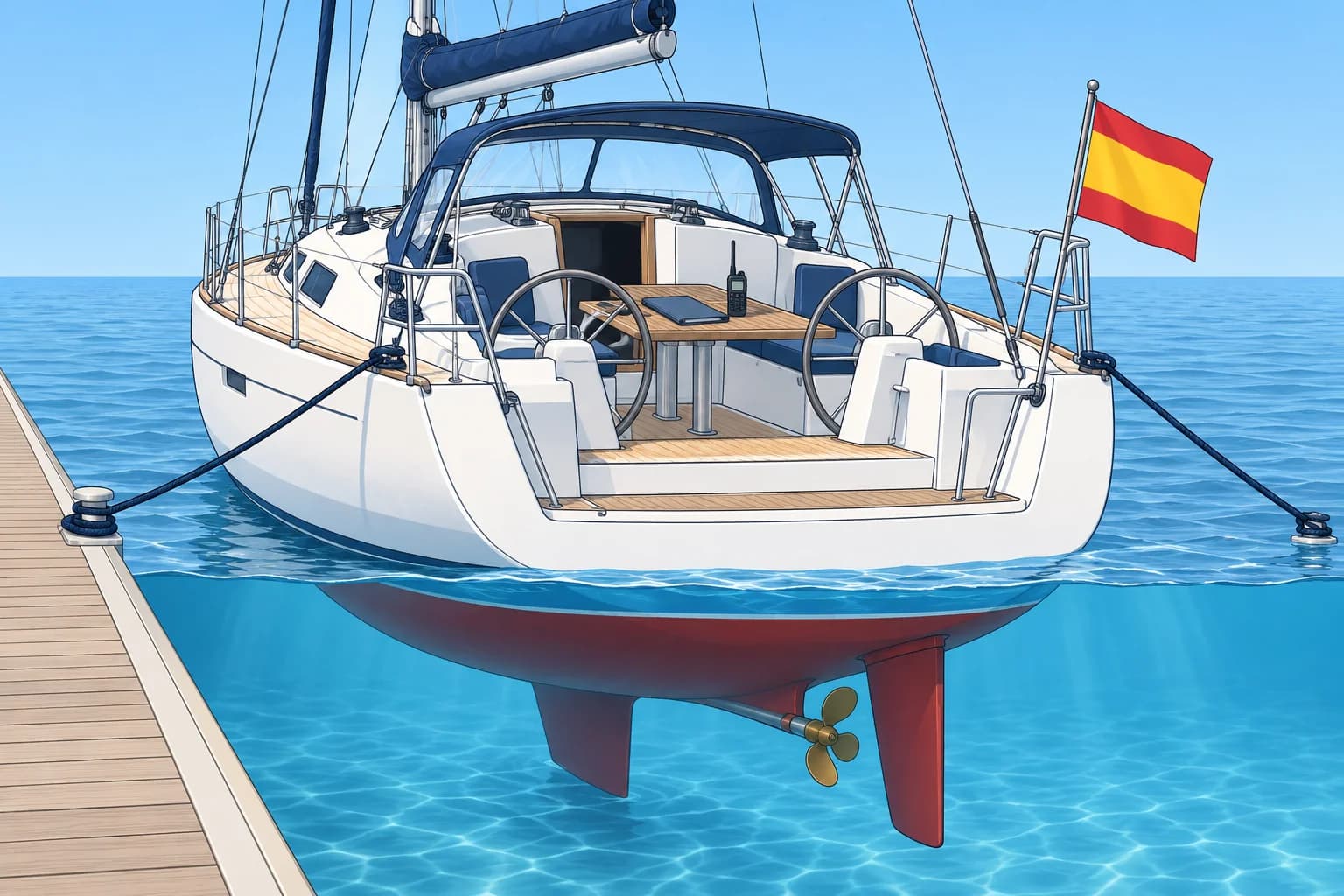
Registration gives a nationality
A boat has the nationality of the state whose flag it is entitled to fly. Under the UNCLOS (the UN Convention on the Law of the Sea), every ship sails under one flag only. The registration certificate records the boat's flag and identity; it does not always prove ownership. Registration requirements and small-boat exemptions vary by country.
The flag
A registered boat flies its national ensign (its nationality flag), usually at the stern. The flag state's rules then follow the boat: its licences, its equipment list and its inspections. Changing the flag means changing the registration first.
Insurance
Third-party insurance pays for injury or damage you cause to others. Many countries make it compulsory, for example Spain, Portugal, Italy, Croatia and Greece; others do not, but almost every marina and charter company asks for it. Carry the certificate on board, in the local language or English if you can.
Radio papers
For VHF (very high frequency) marine radio, check your flag state's authorisation rules: you may need a ship station licence. Exemptions vary. A call sign identifies the station; an MMSI (Maritime Mobile Service Identity) is its nine-digit identity for DSC (Digital Selective Calling, for digital radio calls) and AIS (Automatic Identification System, for identifying vessels). Voice-only VHF does not always need an MMSI. You normally need an accepted operator qualification, such as the SRC (Short Range Certificate); national alternatives apply. Missing paperwork must never delay a distress call.
Builder's papers
Most recreational craft 2.5–24 m long first placed on the EU market or put into service from 16 June 1998 need CE marking (the mark showing compliance with EU product rules) under the Recreational Craft Directive (RCD), subject to exemptions. A later resale alone does not bring an older boat under that rule. The builder's plate shows the design category, maximum load and number of people. Keep the owner's manual on board.
Design categories
Wind strength uses the Beaufort scale; significant wave height averages the highest third of waves. A covers winds above force 8 and waves above 4 m, excluding abnormal conditions. B covers up to force 8 and 4 m; C up to force 6 and 2 m; D up to force 4 and 0.3 m, with occasional waves up to 0.5 m. Individual waves can be higher. Categories are not distance permissions.
Key figures
- Nationality
- One flag per boat, proved by the registration certificate
- MMSI
- 9-digit identity for DSC and AIS; not always needed for voice VHF
- RCD: Beaufort / significant waves
- A >8/>4 m · B ≤8/≤4 m · C ≤6/≤2 m · D ≤4/≤0.3 m
- Usual papers on board
- As required: registration, insurance, radio papers, licence + ID
Remember
- Registration records flag and identity; it does not always prove ownership. A boat has one national flag.
- The flag state's licences, equipment rules and inspections follow the boat.
- Third-party insurance is compulsory in many countries and asked for by most marinas.
- Check flag-state radio authorisation and accepted operator qualifications; national exemptions and alternatives apply.
- The CE builder's plate shows the design category, maximum load and maximum people.
Common mistakes
Wrong: A copy of the papers left at home is enough.
Right: Carry each required document in a form the relevant authority accepts: originals, authorised copies or official digital records.
Wrong: Anyone may use the VHF if the boat has a radio licence.
Right: Check the accepted operator qualification and national exceptions. Missing paperwork must never delay a distress call.
Wrong: Design category C means the boat may go to zone C.
Right: The design category describes the wind and waves the boat was built for. Navigation zones are a separate, national idea.
Worked case
A marina official abroad asks for your boat's papers. You have your licence, a photo of the registration on your phone, and the insurance policy in your home language. The VHF is fitted but you never applied for anything for it. What may be a problem?
Show the answer
A phone photo may not qualify. Carry each required document in a form the relevant authority accepts: originals, authorised copies or official digital records. An insurance certificate in English or the local language can avoid delays. Check flag-state radio authorisation, whether an MMSI is needed, and accepted operator qualifications or national alternatives. Missing paperwork must never delay a distress call.
Practice question
What proves a boat's nationality?
- The builder's capacity plate
- Its registration certificate
- The registered owner's passport
- Its insurance certificate
Show the answer
Answer: B. Registration with a flag state gives the boat its nationality and the right to fly that flag.
3 · Safety gear
Required safety equipment by zone
The flag state sets the gear a boat must carry. The list grows with the distance you go from the coast or a shelter.
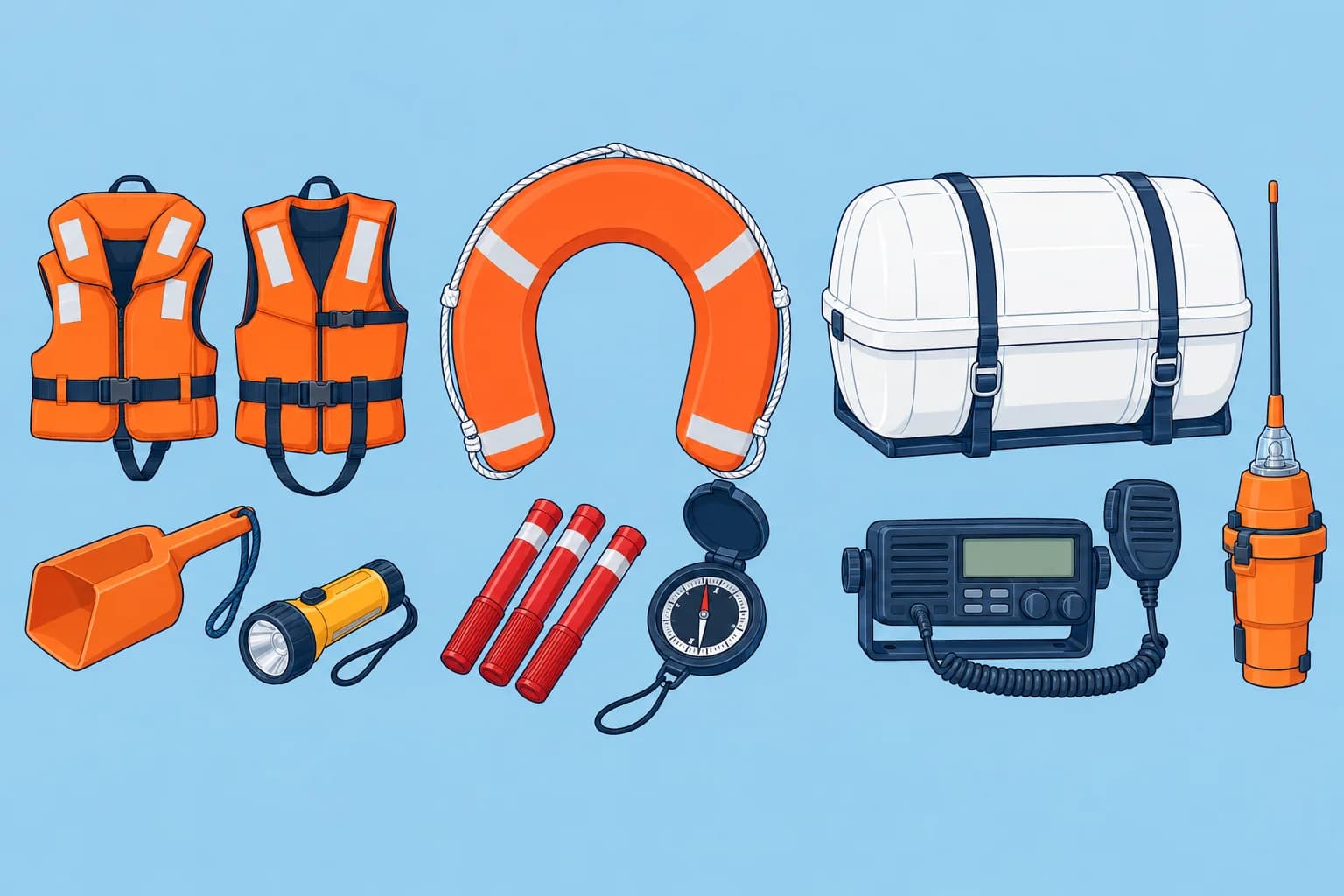
Who sets the list
In most countries the flag state, the country whose flag the boat flies, sets its safety equipment requirements. Some also apply their list to foreign boats kept there by residents. Check the registration: a charter boat may fly a foreign flag. Its flag-state requirements and applicable coastal-state and charter rules matter.
The list grows with distance
Countries use navigation zones or bands. Spain has seven zones measured from the coast or a shelter. France measures from a shelter: <2 NM, 2–<6 NM, 6–<60 NM and ≥60 NM. Portugal and Italy also use distance. Stay within the equipped band and any national operating limits. Separately, keep within the boat's design limits for wind and waves.
The common core
Common essentials include a lifejacket for each person, an anchor with suitable chain or rope, a bailer (water-scooping container) or pump, and a light. Check the required navigation lights and sound signals too. Further-out equipment often includes flares, a lifebuoy (rescue ring), compass, charts, fixed VHF radio, liferaft and an EPIRB (Emergency Position Indicating Radio Beacon), a satellite distress beacon. These are common patterns, not one legal list; carriage rules vary by country.
In date and in working order
Keep gear in working order. Flares have expiry dates; inflatable lifejackets, liferafts and extinguishers may need inspection or servicing. Follow the applicable expiry, inspection and servicing requirements. Where in-date equipment is required, expired items do not satisfy the required inventory.
Lifejackets in newtons
Buoyancy is the upward force that helps keep you afloat. It is measured in newtons (N). 50 N is a buoyancy aid for good swimmers near help. 100 N suits sheltered waters. 150 N suits coastal and offshore use, but waterproof clothing can prevent face-up flotation. 275 N is for heavy clothing and offshore work. Children need jackets that fit their weight.
Key figures
- Lifejacket levels
- 50 N aid · 100 N sheltered · 150 N coastal/offshore · 275 N heavy
- France: bands from a shelter
- <2 NM · 2–<6 NM · 6–<60 NM · ≥60 NM
- Spain: zones
- 1 (unlimited) to 7 (ports and sheltered bays)
- Usual offshore additions
- Liferaft, fixed VHF with DSC, EPIRB, more flares
Remember
- Check the boat's actual flag, its equipment rules and applicable coastal-state or charter requirements.
- The list grows with distance from the coast or a shelter, zone by zone.
- Legal lists vary. Carry suitable personal flotation for everyone and check the applicable equipment requirements.
- Follow applicable expiry, inspection and servicing rules. Expired items fail requirements for in-date equipment.
- 150 N lifejackets suit coastal and offshore use; children need their own size.
Common mistakes
Wrong: Category B lets me go offshore without checking the equipment rules.
Right: Category B describes wind and wave conditions. You still need the equipment and permissions required for your route.
Wrong: One lifejacket size fits all, so adult jackets cover the children.
Right: Children need lifejackets sized for their weight. An adult jacket can slip off a child.
Wrong: Flares last as long as they stay dry.
Right: Flares have a printed expiry date. Where in-date flares are required, expired ones do not meet the requirement.
Worked case
On a French-flagged boat, your route reaches 7 NM from the nearest usable shelter. You carry only the under-6-NM kit. The boat is design category B. Can you go as equipped?
Show the answer
No. At 7 NM you need the 6–<60 NM equipment, including a liferaft and fixed VHF. Category B describes wind and wave conditions, not a permitted distance. Fit the complete required kit or choose a route within your equipped band. Check national operating limits, licence privileges, expiry dates and servicing too.
Practice question
For a locally flagged charter boat, whose basic equipment rules apply?
- The local flag's
- Your home country's
- The marina's own
- The charter guest's
Show the answer
Answer: A. The boat's flag state sets its basic equipment rules. Check the actual registration, plus applicable coastal-state and charter requirements.
4 · Checks and fines
What an officer can check, and what visitors are fined for
Under applicable law, officers can board to check papers, gear and alcohol. Check local navigation, beach and reserve rules before you visit.
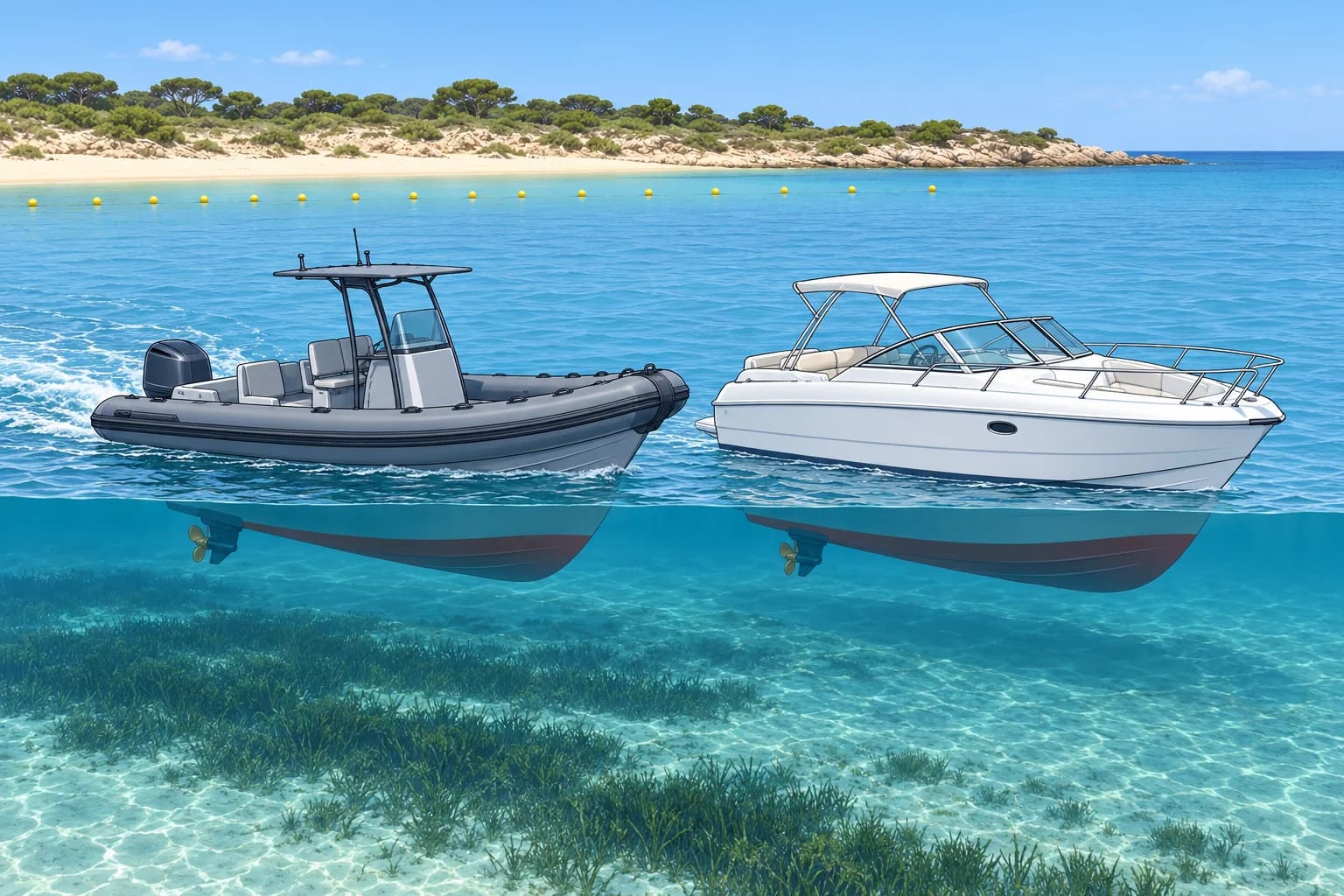
Local law applies in local waters
Local navigation, beach, pollution and protected-area rules apply in internal waters (waters landward of the baseline) and the territorial sea (up to 12 NM seaward of it). The baseline is the reference line for measuring sea limits. Flag-state requirements still matter; entering another country's waters does not automatically impose all its equipment rules. Coast guards, maritime police and port authorities may stop and board pleasure boats under applicable law.
What they check
Expect checks of the required registration, insurance certificate, skipper's licence and ID, and radio authorisation. Officers may count lifejackets and flares, check expiry dates, and test the skipper for alcohol. Many European countries use 0.5 g/l of blood (grams per litre); limits and exceptions vary. Check the local rule before you take charge and stay fit to steer.
Beaches and swimmers
Follow local speed and exclusion rules. France normally caps speed at 5 knots within 300 m of shore; lower limits may apply. In Spain, buoyed bathing zones exclude leisure navigation; the 3-knot rule applies to unbuoyed bathing strips. Portugal normally excludes boats within 300 m of bathing beaches, except authorised access. Use designated access channels along their length, roughly perpendicular to the shore, at the posted speed. Keep out of swimming zones.
Nature and pollution
Marine reserves may ban anchoring, fishing or entry. In the Mediterranean many places forbid anchoring on seagrass meadows (Posidonia), which grow back very slowly. Sewage discharge is banned near the coast and in harbours in most countries, and throwing plastic overboard is banned everywhere.
How to stay out of trouble
Before you leave, read the local rules for the area you visit: the harbour master's notices, the marina and the local pilot book. Keep the papers together in a waterproof folder. The country units of this module give each country's details.
Key figures
- Territorial sea
- Up to 12 NM from the baseline (UNCLOS)
- Alcohol (common limit)
- 0.5 g/l blood in many European countries
- Beach strip, France
- General maximum 5 knots within 300 m; lower local limits may apply
- Spain, unbuoyed bathing strips
- 3 knots maximum; buoyed bathing zones exclude leisure boats
Remember
- Applicable local navigation, beach, pollution and protected-area rules apply to visiting foreign boats too.
- Officers may check required registration, insurance, licence and ID, radio papers, gear and alcohol.
- Slow down near beaches and keep out of buoyed swimming zones.
- Do not anchor on seagrass where it is banned, and respect marine reserves.
- Read the harbour master's notices and local rules before you go.
Common mistakes
Wrong: A foreign-flag boat only follows the law of its own flag.
Right: Follow applicable local navigation, beach, pollution and protected-area rules too. Flag-state requirements still matter.
Wrong: Alcohol limits only apply to drivers on the road.
Right: Skippers can face alcohol limits and testing too. Check the local limit before you take charge and stay fit to steer.
Wrong: I can anchor anywhere outside a harbour.
Right: Reserves and seagrass meadows often ban anchoring. Check the local rules and use mooring buoys where provided.
Worked case
In French coastal waters, a patrol stops you 200 m off a beach at 8 knots. Your required papers are at home. You plan to anchor near seagrass. What should you correct and check?
Show the answer
Reduce to 5 knots or any lower posted limit. Carry your required papers in a form the relevant authority accepts: originals, authorised copies or official digital records. Before approaching the seagrass, check local anchoring restrictions. Choose permitted sand or an authorised mooring.
Practice question
What maximum territorial-sea width does UNCLOS allow, measured from the baseline?
- 3 NM
- 6 NM
- 12 NM
- 24 NM
Show the answer
Answer: C. UNCLOS allows a territorial sea up to 12 NM wide, measured from the baseline used as the reference line.