
Maritime law, rules and watchkeeping · Level R2 · 4 parts · about 14 min
Italy: navigation limits, safety equipment and documents
4 short parts: Units and limits · Safety gear · Boat papers · Patente, coast. Each part explains the idea, then gives the points to remember, the common mistakes, a worked case and a practice question; the Academy unit adds all 25 check questions.
1 · Units and limits
Natante, imbarcazione, nave: how far each may go
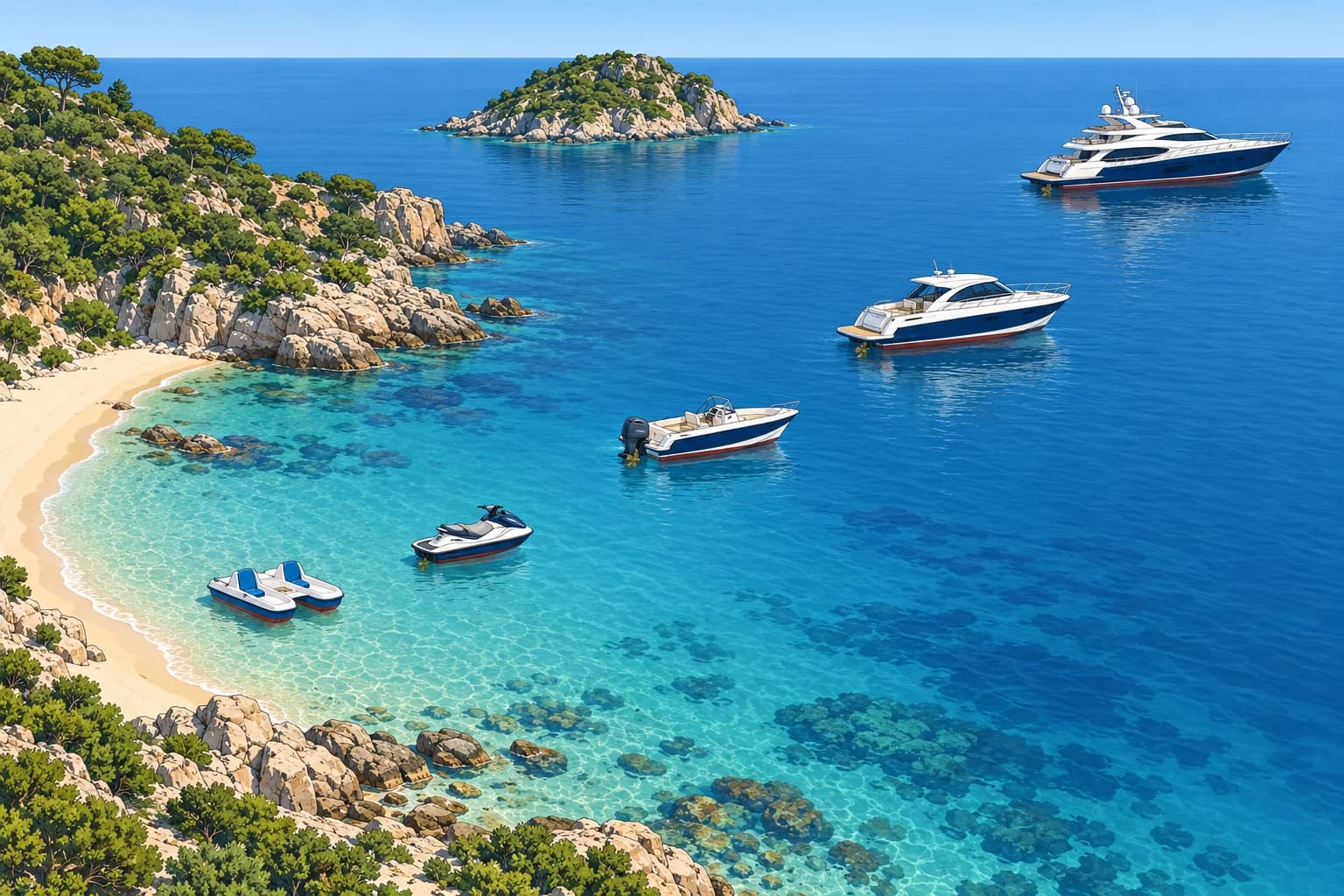
Italy sorts pleasure craft by length. A small natante has short legal limits, while a registered imbarcazione goes as far as her papers allow.
The law
Italian pleasure boating follows the Codice della nautica da diporto (Legislative Decree 171/2005, as amended) and its implementing Regolamento (Ministerial Decree 146/2008). Decree 133/2024 updated the Regolamento from 21 October 2024. The Guardia Costiera (the Capitanerie di porto, or harbour authorities) enforces it at sea. A nautical mile (NM) is 1,852 m.
Three classes by length
A natante is up to 10 m hull length. An imbarcazione is over 10 m and up to 24 m. A nave da diporto is over 24 m. Imbarcazioni and navi must enter the central online register (ATCN). Natanti need no registration, navigation licence or safety certificate. You may register one voluntarily; it then follows the imbarcazione rules.
Natanti limits
CE marking means compliance with applicable EU product standards. A natante without CE marking may go 6 NM from the nearest coast, or 12 NM if type-approved or certified for it. A CE-marked natante follows its design category, but never beyond 12 NM. Pedalos, small canoes, kayaks, boards and sailboats up to 4 m² of sail stay within 1 NM. Jet skis (moto d'acqua) stay within 1 NM of the coast, subject to local restrictions.
Imbarcazioni
A registered boat goes as far as her navigation licence allows. A non-CE boat is licensed either within 6 NM or without limit. The design category describes the wind and waves the hull was built for; it is not by itself a legal distance limit.
Tenders
A tender is a small boat serving a larger mother boat. If it is a natante, it may travel up to 1 NM from the coast or mother boat without the normal safety kit or liferaft. Still carry a lifejacket for each person. Beyond that limit, carry the normal kit for the distance.
Key figures
- Natante
- Hull up to 10 m; no registration needed
- Imbarcazione
- Over 10 m to 24 m; registered in the ATCN
- Natante without CE
- 6 NM; 12 NM if approved or certified
- CE natante
- Design category, never beyond 12 NM
- Jet ski, pedalo, board
- 1 NM from the coast
- Tender
- 1 NM from the coast or her mother boat
Remember
- Natante ≤ 10 m, imbarcazione > 10 to 24 m, nave > 24 m.
- Only imbarcazioni and navi must be registered and hold a navigation licence.
- A natante never goes beyond 12 NM; a non-CE natante is limited to 6 NM unless certified.
- Jet skis, pedalos and boards stay within 1 NM of the coast.
- The Regolamento was updated by Decree 133/2024, in force since 21 October 2024.
Common mistakes
Wrong: My CE category A natante may travel 20 NM from the nearest coast.
Right: A natante remains limited to 12 NM whatever its design category. If you register it, follow the resulting navigation licence and its limits.
Wrong: The design category tells me how far from the coast I may go.
Right: It tells you the wind and sea the boat was built for. The legal limit comes from the boat class and its papers.
Worked case
Your unregistered 8.5 m CE category B motorboat faces a direct crossing between shores 30 NM apart, with no intervening islands. May you make it?
Show the answer
No. Midway you would be 15 NM from either coast, beyond the natante's 12 NM limit. Category B does not remove that cap. Choose another route that remains within 12 NM, or arrange registration and an appropriate navigation licence before attempting this crossing.
Practice question
What is an unregistered pleasure boat with a 9.5 m hull called in Italian law?
- Nave da diporto
- Imbarcazione
- Natante da diporto
- Unità minore
Show the answer
Answer: C. An unregistered pleasure boat up to 10 m hull length is a natante. Voluntary registration brings it under the imbarcazione rules.
2 · Safety gear
Allegato V: the kit by distance from the coast
Annex V lists the minimum safety kit by your greatest distance from the nearest coast. A 10 NM trip uses the 12 NM column.
The table
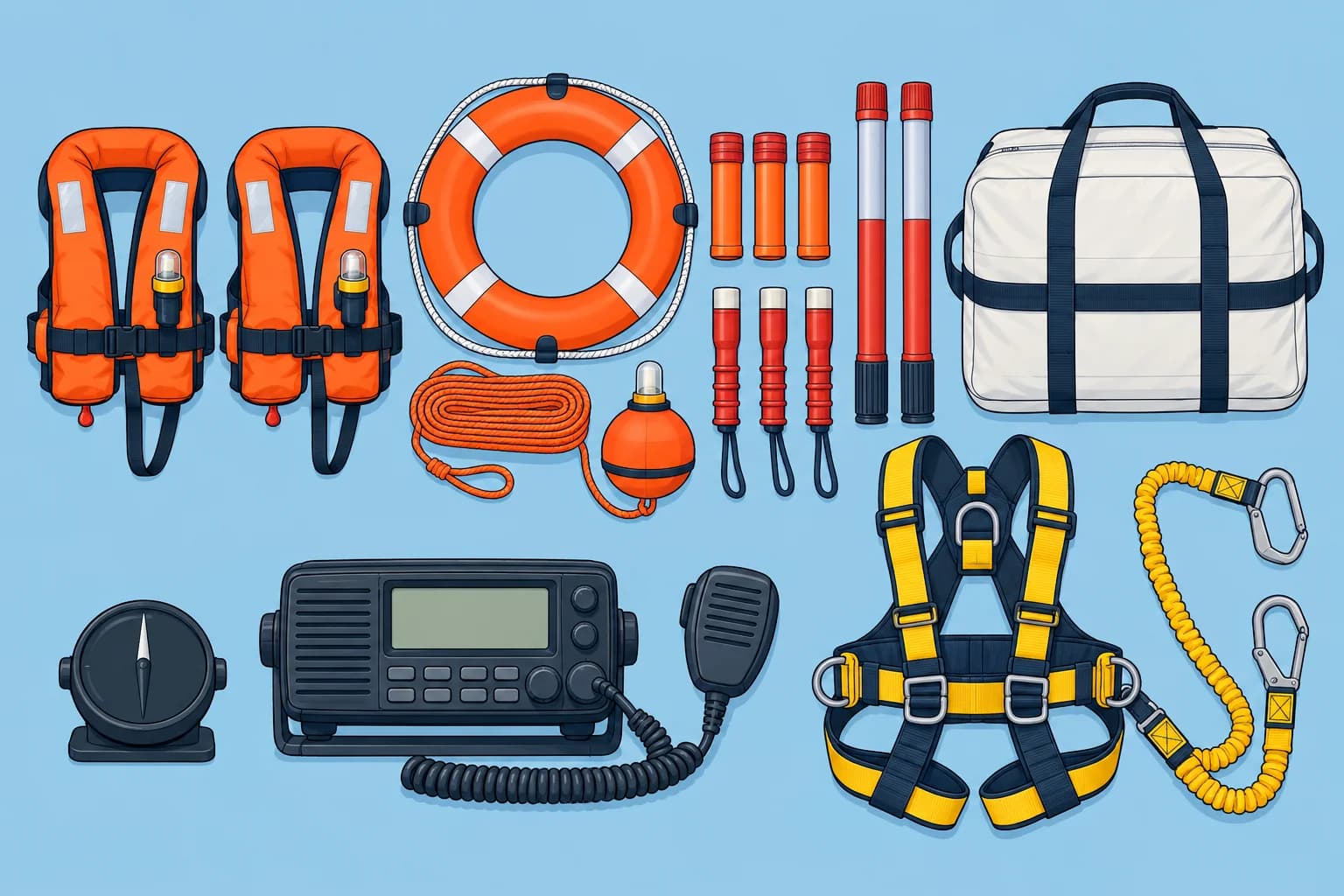
Allegato V lists inland waters and the 300 m, 1, 3, 6, 12, 50 NM and unlimited bands. Choose the smallest band covering your greatest distance from the nearest coast: 10 NM uses the 12 NM column. CE boats carry extinguishers from the owner's manual; non-CE boats follow the engine-power table. Extinguishers need no periodic service, only good condition and a gauge in the green. Follow manufacturers' instructions.
Lifesaving
For cruising boats beyond 300 m, carry a lifejacket each: 100 N through 6 NM; 150 N with automatic light beyond. N means newtons, a measure of buoyancy. Inland waters require 100 N. Carry a lifebuoy (rescue ring) with line beyond 1 NM at sea and on inland waters; add its light beyond 3 NM. Carry a coastal liferaft for everyone beyond 6 NM, an offshore raft beyond 12 NM, unless an equivalence applies. Mark jackets with the registered boat's number. Wear one when alone underway at night.
Distress signals
Distress signals depend on the band: over 1 and up to 3 NM, carry 1 smoke signal and 2 red hand flares; over 3 and up to 50 NM, carry 2 smoke signals, 2 hand flares and 2 red parachute rockets. Beyond 50 NM, carry 2 smoke signals, 3 hand flares and 3 rockets. An LED device meeting SOLAS MED rules may replace a hand flare.
Navigation and radio
Navigation lights (COLREG, the collision rules) are required beyond 1 NM. Beyond 6 NM: compass and deviation table for imbarcazioni (deviation is boat-induced compass error), clock, VHF (very high frequency) marine radio and COLREG signal table. Beyond 12 NM: charts, plotting tools, binoculars, barometer, a depth-measuring device or line reaching 20 m, GPS, first-aid kit and radar reflector. Beyond 50 NM: carry a 406 MHz EPIRB (emergency position-indicating radio beacon, a satellite distress beacon), or an Annex V-compliant satellite phone sending distress and position to IMRCC, Italy's rescue coordination centre.
Sailing boats and boards
Since 21 October 2025, sailing boats carry deck harnesses with tethers (safety lines): one over 6 and up to 12 NM, two beyond 12 NM. Sailing-dinghy crews, board sailors, kitesurfers, and jet ski riders and passengers must always wear at least a 50 N buoyancy aid, at any distance.
Equivalences
Inside Italy's search-and-rescue area beyond 12 NM, a coastal raft may replace an offshore raft if you carry GPS plus EPIRB or a compliant satellite phone. Over 6 and up to 12 NM, a CE/ISO 6185 inflatable tender at least 2.5 m long may replace the coastal raft: inflated, upright on deck, ready for manual launch, with boarding aid, survival kit and room for all. CE A/B/C inflatables meeting ISO 6185 parts 3/4 may omit the raft within 12 NM with its survival kit and an extra extinguisher.
Key figures
- Cruising-boat lifejackets
- Sea >300 m–6 NM: 100 N; beyond: 150 N + automatic light. Inland: 100 N
- At sea beyond 300 m
- Pump/bailer (water scoop); black anchor ball if boat over 7 m
- At sea beyond 1 NM
- Navigation lights; whistle and bell if over 12 m (bell: portable OK)
- Unlimited signals
- 2 smoke, 3 hand flares, 3 parachute rockets
- Radio
- VHF beyond 6 NM; EPIRB beyond 50 NM, subject to equivalence
- Liferaft
- Coastal: over 6 to 12 NM; offshore: beyond 12 NM; equivalences apply
Remember
- Cruising boats at sea: lifejacket each beyond 300 m; 100 N through 6 NM, then 150 N with automatic light. Inland: 100 N.
- Over 1 to 3 NM: 1 smoke signal and 2 hand flares; parachute rockets beyond 3 NM.
- Beyond 6 NM: VHF and COLREG signal table; compass/deviation table for imbarcazioni. Beyond 12 NM: GPS and charts.
- Sailing boats: one deck harness with tether over 6 to 12 NM, two beyond 12 NM, since 21 October 2025.
- Sailing dinghies, boards, kites and jet skis: everyone wears at least a 50 N aid at any distance.
Common mistakes
Wrong: On a 2 NM trip I need parachute rockets like everyone else.
Right: The 3 NM column requires 1 smoke signal and 2 red hand flares. Parachute rockets are required beyond 3 NM, starting with the 6 NM column.
Wrong: A handheld GPS replaces the required charts on a 20 NM trip.
Right: Charts are required beyond 12 NM; approved electronic charts may replace them. A GPS position alone is not a chart.
Wrong: The EPIRB is needed beyond 12 NM.
Right: The EPIRB is required beyond 50 NM, in the unlimited band. A satellite phone meeting Annex V's distress-link requirements may replace it; an SOS button alone is not enough.
Worked case
Your CE-marked 11 m sailing yacht will go 10 NM offshore with four adults. She has four 100 N lifejackets, a lifebuoy with line, two hand flares, one smoke signal and no harness. All other required 12 NM-band gear is aboard. What must you change?
Show the answer
Replace the four lifejackets with 150 N jackets with automatic lights. Add a lifebuoy light, one smoke signal, two red parachute rockets and one harness with tether. The trip is beyond 6 NM, so the 12 NM band applies.
Practice question
Which distress signals does a boat need for a trip 2 NM from the nearest coast?
- 2 hand flares and 1 smoke signal
- 3 hand flares and 3 red rockets
- 2 red rockets and 2 smoke signals
- No distress signals in this band
Show the answer
Answer: A. A 2 NM trip uses the 3 NM column: 1 smoke signal and 2 red hand flares. Rockets are required beyond 3 NM.
3 · Boat papers
Documents on board and compulsory insurance
Registered boats carry a navigation licence and safety certificate. Every boat with an engine, even a small natante, must be insured.
Registered boats
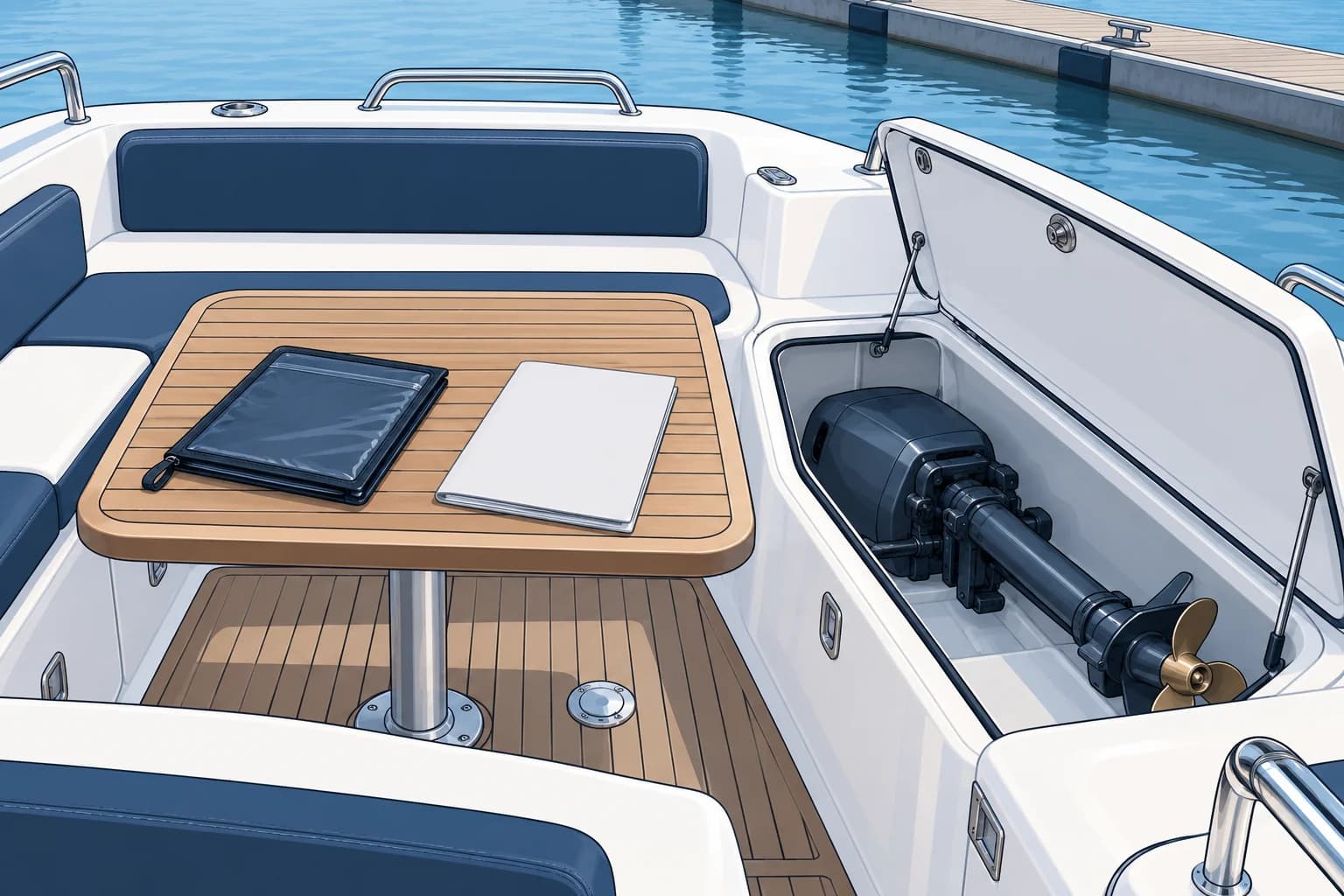
An imbarcazione or nave carries her licenza di navigazione (navigation licence, issued on entry in the ATCN) and her certificato di sicurezza (safety certificate). If an outboard is fitted, carry its engine power declaration. If a radio is fitted, carry its station licence. Carry the insurance certificate too.
Natanti
A motor-powered natante carries the declaration of engine power (dichiarazione di potenza) and insurance certificate. Any natante with a radio fitted carries its radio station licence. To prove ownership and nationality abroad, an Italian natante may carry its construction or import declaration plus a sworn self-declaration on the ministry's model.
Insurance is compulsory
Third-party insurance (RC) covers injury or damage you cause to others. It is compulsory for every pleasure craft with an inboard, sterndrive or outboard engine, whatever its power. Only rowing boats and sailing boats with no engine are exempt. A detachable outboard must be insured even when stowed in a locker or used on a tender. You need not display a sticker, but you must show proof of insurance when checked.
Originals or copies
Between Italian ports, you may carry certified copies of the papers. Abroad, carry originals. For a private, unpaid loan, carry the owner's written permission. Check the destination's requirements before going abroad.
Checks at sea
The Guardia Costiera, Guardia di Finanza, Polizia and Carabinieri may stop you. They check papers, the licence, the safety kit, the number of people and your distance limit. A clean check may earn the bollino blu sticker for the season, which helps avoid repeat checks of the same items.
Key figures
- Imbarcazione papers
- Licenza di navigazione, certificato di sicurezza, insurance
- Natante papers
- Engine: power declaration + insurance; radio fitted: station licence
- Insurance
- Compulsory for any boat with an engine, any power
- Copies
- Certified copies between Italian ports; originals abroad
- Bollino blu
- Seasonal sticker after a clean check
Remember
- Registered boats: navigation licence and safety certificate on board.
- Motor-powered natanti: engine power declaration and insurance; radio station licence if a radio is fitted.
- Every motor-powered pleasure craft must have third-party insurance, whatever the power.
- Insure a detachable outboard even when it is stowed.
- Certified copies between Italian ports; originals abroad.
Common mistakes
Wrong: A small 4 hp outboard on a dinghy needs no insurance.
Right: Insurance is compulsory for every boat with an engine, whatever its power, and for detachable outboards even when stowed.
Wrong: A natante needs no papers at all.
Right: Motor-powered natanti carry the engine power declaration and insurance certificate. Any natante with a radio fitted carries its radio station licence. No registration is needed.
Worked case
A friend lends you his 6 m natante with a 40 hp outboard for a week in Sardinia, then you plan a day trip to Corsica (France). He gives you photocopies of the papers. What do you need?
Show the answer
Ordinary photocopies are not certified copies. Get originals or certified copies for the Italian leg: engine power declaration, insurance certificate and radio station licence if fitted. For France, take originals, the construction or import declaration, and a sworn statement using the ministry's form to prove ownership and nationality. Carry your friend's written permission and confirm insurance cover in French waters.
Practice question
Which boats are exempt from compulsory third-party insurance?
- Natanti under 6 m long
- Boats under 30 kW of power
- Rowing and engineless sailboats
- Tenders used near their yacht
Show the answer
Answer: C. Only units without any engine are exempt; every motor-powered unit must be insured.
4 · Patente, coast
When you need a patente nautica, and the beach rules
Beyond 6 NM, on a jet ski or above 30 kW you need a patente nautica. Near the beaches, the local Capitaneria's ordinance sets the rules.
When a patente is needed
You need a patente nautica (boating licence) beyond 6 NM, on jet skis or towing water-skiers. Within 6 NM, you need one above 30 kW (40.8 hp) or above these displacement limits: two-stroke 750 cc (carburettor) or 900 cc (injection); four-stroke 1,000 cc outboard or 1,300 cc inboard; diesel 2,000 cc, or 1,300 cc if supercharged. Displacement is cylinder volume in cubic centimetres (cc). Supercharging forces extra air into the cylinders.
Categories
Category A covers natanti and imbarcazioni, for motor or sail and motor, within 12 NM or unlimited. B covers navi. C lets eligible disabled skippers direct navigation while another adult handles the boat. D1 starts at 16: motor craft only, daylight, within 6 NM, up to 85 kW, subject to D1-specific displacement limits. Under 18, the length limit is 10 m; from 18, 12 m. D1 jet skis stay within 1 NM.
New licence card
A new card model was approved in December 2025 and published in the Gazzetta Ufficiale on 13 January 2026. Existing licences stay valid until they expire; you get the new card when you renew. Normally, a licence is valid for 10 years if you are under 60 when it is issued or renewed, or 5 years if you are 60 or older. Medical restrictions may shorten validity.
Visiting skippers
For a non-resident skipper on an Italian-flag boat, check that Italy recognises your home or residence-state licence. Carry it aboard and obey its limits. On foreign-flag boats, check flag-state rules too. Italian citizens resident in Italy still need the Italian licence required for that voyage and craft.
Beach rules
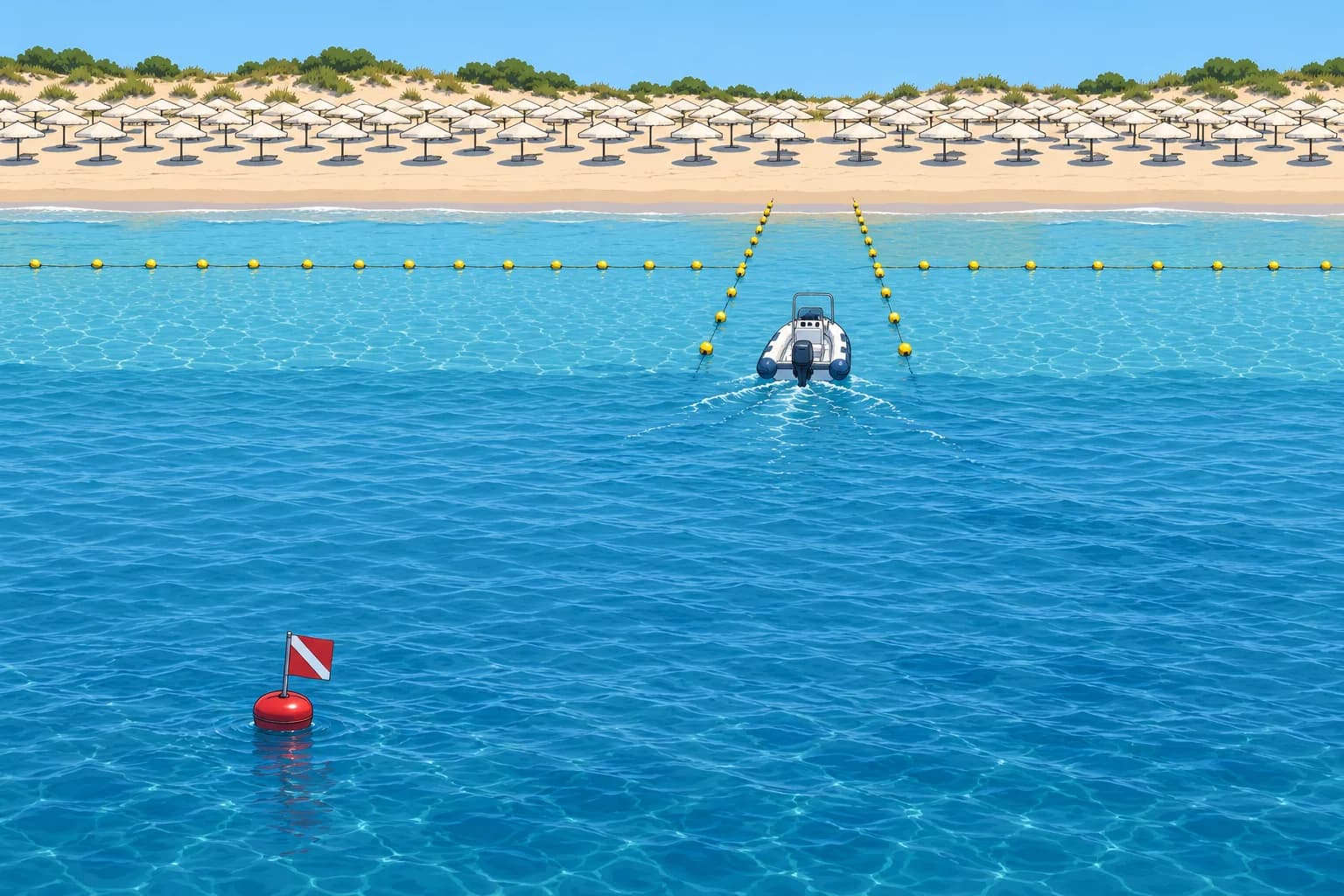
Each Capitaneria di porto issues a yearly bathing safety ordinance (ordinanza di sicurezza balneare). It reserves a strip off beaches for swimmers in season, often around 200 m off sandy beaches and 100 m off cliffs, where motor craft may not go. Reach the shore only through a marked launch corridor (corridoio di lancio) at minimum speed. Read the ordinance for the stretch you visit.
Divers and reserves
Keep at least 100 m from a diver's red flag with a white diagonal stripe. In marine protected areas (aree marine protette), navigation, anchoring and access are restricted by zone: check the area's rules before you go.
Key figures
- Patente needed
- Beyond 6 NM; jet ski; water-ski towing; over 30 kW (40.8 hp)
- Displacement limits
- 2T 750 cc/900 inj. · 4T 1,000 out, 1,300 in · diesel 2,000/1,300 turbo
- D1
- 16+; day; 6 NM; ≤85 kW; D1 engine limits; ≤10 m under 18, ≤12 m adult
- Licence validity
- At issue/renewal: under 60, normally 10 years; 60+, 5 years
- Diver's flag
- Keep at least 100 m away
Remember
- Patente beyond 6 NM, on a jet ski, when towing a water-skier, or above 30 kW / the displacement limits.
- Category A: 12 NM or unlimited; D1 from 16, day only, within 6 NM.
- Old licence cards stay valid; the new model came with the January 2026 notice.
- Each Capitaneria's bathing ordinance sets the swimmer strip and launch corridors.
- Stay 100 m from a diver's flag; check marine protected area zones.
Common mistakes
Wrong: Within 6 NM any boat may be driven without a licence.
Right: Within 6 NM you still need one for a jet ski, for towing a skier, or if the engine is above 30 kW or the displacement limits.
Wrong: The bathing strip is 300 m everywhere in Italy.
Right: Each Capitaneria sets its own distances in the yearly ordinance. Read the one for the coast you visit.
Wrong: A D1 licence lets a 17-year-old drive a 12 m boat at dusk.
Right: D1 is daytime only, within 6 NM; under 18 it covers boats up to 10 m.
Worked case
You are 20. On holiday in Apulia you rent a 5.8 m inflatable with a 40 hp outboard. You hold no licence. You plan to stay 3 NM off the coast and land at a busy beach for lunch. Is this legal?
Show the answer
You cannot decide from horsepower alone. Check the engine's declared power and displacement. If both are within the licence-free limits, no patente is needed for this 3 NM trip. Read the local bathing ordinance before choosing a landing. Use a permitted marked launch corridor at minimum speed; if none is available, choose another permitted landing. Stay at least 100 m from diver flags.
Practice question
You have no licence. Your four-stroke petrol outboard is declared at 29 kW and 1,100 cc. You plan to stay 3 NM offshore. May you skipper?
- Yes; you remain inside 6 NM
- Yes; power stays below 30 kW
- No; displacement exceeds 1,000 cc
- No; every engine requires a licence
Show the answer
Answer: C. No. Either power above 30 kW or displacement above the applicable limit triggers the licence requirement within 6 NM. Your four-stroke outboard exceeds 1,000 cc, so you need a patente even at 29 kW and 3 NM offshore.