
Maritime law, rules and watchkeeping · Level R2 · 4 parts · about 15 min
Brazil: NORMAM-211 rules for recreational craft
4 short parts: CHA categories · Areas and gear · Boat papers · Navy inspection. Each part explains the idea, then gives the points to remember, the common mistakes, a worked case and a practice question; the Academy unit adds all 25 check questions.
1 · CHA categories
Amateur categories and the CHA
In Brazil you skipper a recreational boat with a CHA, the amateur licence. Its category must match the waters you are sailing in.
The rule book
Brazilian recreational boating follows NORMAM-211/DPC, issued by the Navy's Directorate of Ports and Coasts (DPC). The current text is the 2026 edition, revision 1 of 27 February 2026. Jet skis follow separate rules, NORMAM-212/DPC. Local rules come from each Capitania (port authority) in its NPCP (port standards and procedures).
The CHA
Your licence is the CHA (Carteira de Habilitação de Amador, amateur licence), physical or digital, and you must carry it. The digital CHA lives in the gov.br app and shows a QR code. A CHA without a photo needs official photo ID with it. A CHA is valid for 10 years, or 5 years if you are 65 or older.
Five categories
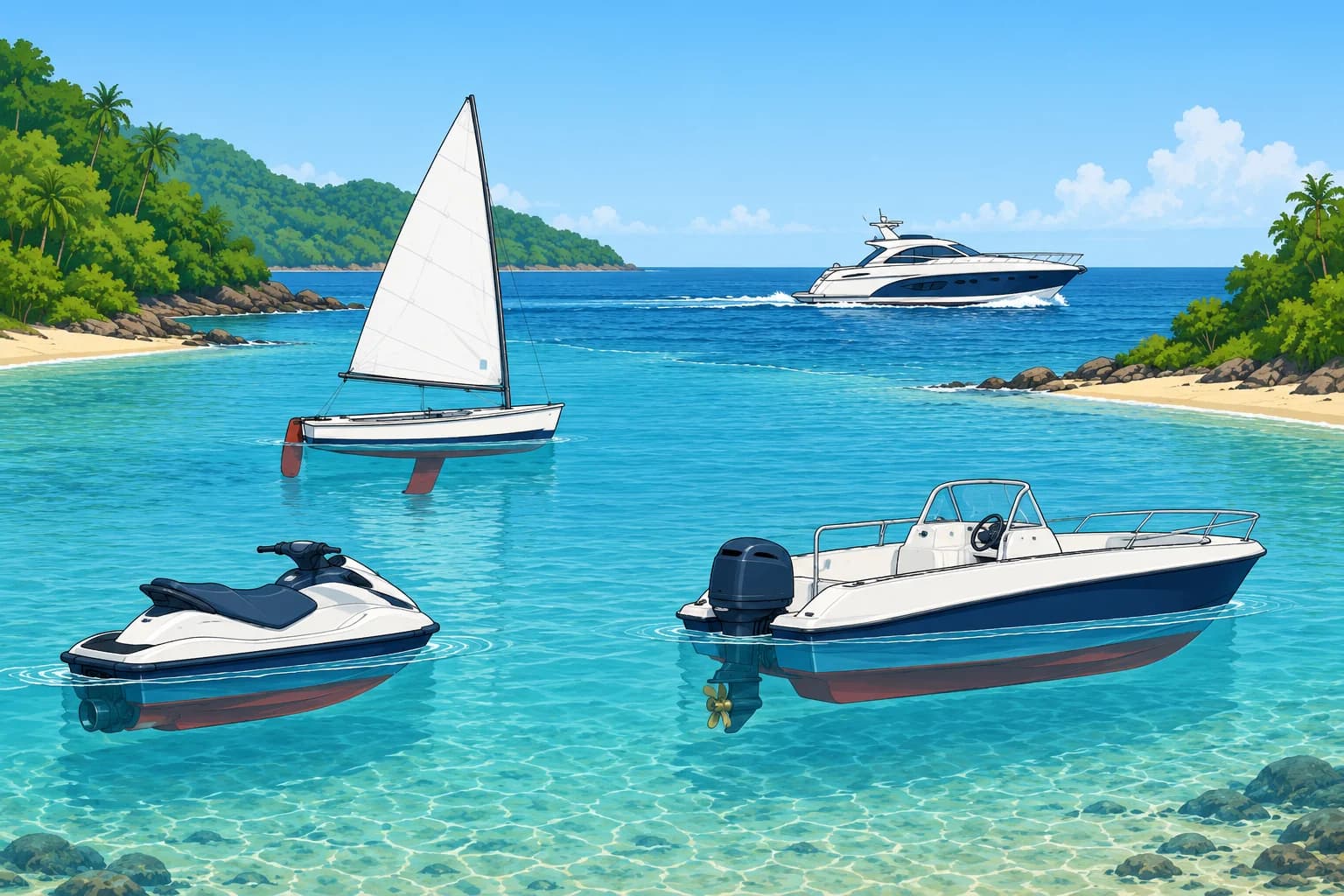
Arrais-Amador (ARA): inland waters, as locally defined. Mestre-Amador (MSA): coastal, within sight of the coast and up to 20 nautical miles (NM), between Brazilian and foreign ports. Capitão-Amador (CPA): no distance limit. Motonauta (MTA): jet skis, in inland waters. Veleiro (VLA): sailing boats without an engine, in inland waters. Holders first licensed in ARA, MSA or CPA from 2 July 2012 need MTA to ride a jet ski.
Getting it
ARA, MSA and CPA need a written exam in Portuguese, and you must be at least 18. ARA also needs a practical training certificate from an accredited school. You must hold ARA to sit MSA, and MSA to sit CPA.
Small boats and visitors
Floating devices and miúda craft (very small, up to 6 m) without an engine need no CHA. For sail-only dinghies up to 6 m, Veleiro is optional from age 8. Larger sailing yachts need ARA, MSA or CPA for their area. Brazil accepts a foreign amateur licence issued by a maritime authority and written in Portuguese, Spanish or English. Carry it with your passport, or photo ID for visitors from Mercosur member countries. Its own limits still apply; there is no conversion to a CHA.
Key figures
- Arrais-Amador (ARA)
- Inland waters, as defined in each NPCP
- Mestre-Amador (MSA)
- Coastal, within sight of the coast and up to 20 NM
- Capitão-Amador (CPA)
- No limit from the coast
- Motonauta / Veleiro
- Jet skis / sail without engine; inland waters
- CHA validity
- 10 years; 5 years from age 65
- Exam age (ARA, MSA, CPA)
- 18; Veleiro from 8 (optional for sail craft ≤6 m)
Remember
- NORMAM-211/DPC (2026 edition) is the rule book; jet skis follow NORMAM-212/DPC.
- ARA covers inland waters; MSA covers coastal waters within sight of the coast to 20 NM; CPA has no distance limit.
- Holders first licensed in ARA, MSA or CPA from 2 July 2012 need MTA to ride a jet ski.
- Carry the CHA, paper or digital; valid 10 years, 5 years from age 65.
Common mistakes
Wrong: An Arrais-Amador may go a few miles out to sea in good weather.
Right: ARA covers inland waters only, as set in the local NPCP. Open coastal waters need at least Mestre-Amador.
Wrong: A Capitão-Amador can ride any jet ski.
Right: Holders first licensed in ARA, MSA or CPA from 2 July 2012 need the Motonauta (MTA) category to ride a jet ski.
Wrong: A foreign licence can be converted into a Brazilian CHA.
Right: There is no conversion. A foreigner who wants a CHA starts at Arrais-Amador and sits the full process.
Worked case
A Portuguese visitor has a valid maritime-authority licence in Portuguese that permits her planned route, plus her passport. She charters a 12 m yacht in Salvador to sail 15 NM offshore, within sight of land and outside NPCP inland limits. May she or her friend, who holds only ARA, skipper?
Show the answer
She may skipper: Brazil accepts her maritime-authority licence in Portuguese with her passport, and it permits this route. The route is coastal: within sight of the coast and within 20 NM, outside inland limits. Her friend may not skipper with ARA, which covers inland waters only. Check the charter conditions too.
Practice question
Which category lets you skipper a motor yacht 15 NM offshore, within sight of the Brazilian coast and outside NPCP inland limits?
- Arrais-Amador
- Mestre-Amador
- Motonauta (MTA)
- Veleiro (VLA)
Show the answer
Answer: B. Coastal navigation is within sight of the coast and up to 20 NM; it needs at least Mestre-Amador. Beyond either limit, you need Capitão-Amador.
2 · Areas and gear
Navigation areas and required equipment
Your TIE states the boat's area: inland, coastal or oceanic. That classification decides the required gear, subject to the stated exemptions.
Areas and sizes
Your NPCP defines inland Area 1 (sheltered) and Area 2 (sometimes exposed to significant wind and waves). Coastal navigation stays within sight of land and within 20 NM; oceanic extends beyond either limit. Size classes: miúda (very small) ≤6 m; pequeno porte (small) >6 and <12 m; médio porte (medium) >12 and <24 m; grande porte (large) ≥24 m. Equipment tables retain older headings: follow their explicit length thresholds, including at exactly 12 m.
Classification and signals
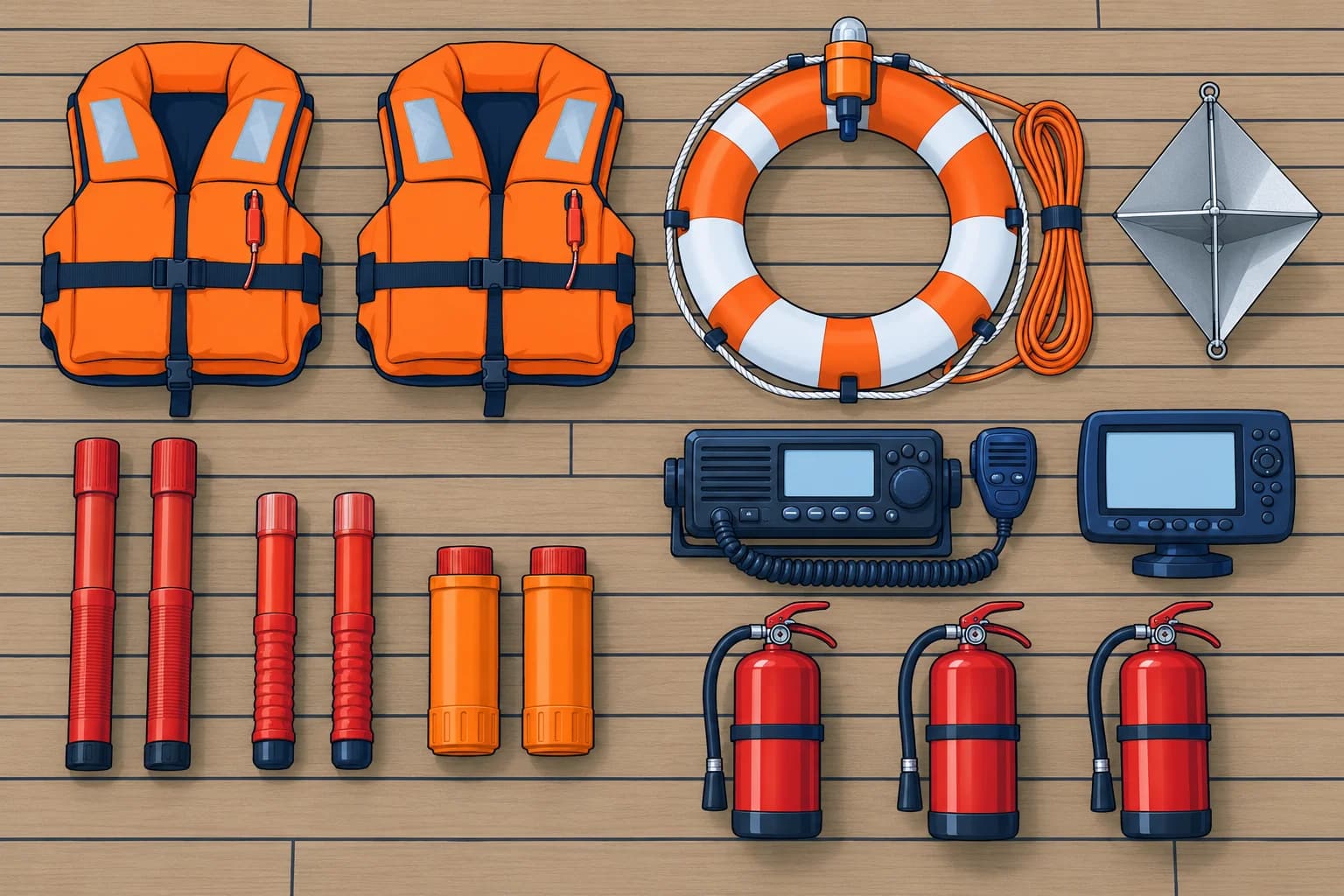
Carry the gear for the area on your TIE (inscription title), subject to the stated exemptions. Your licence must cover your actual area. Coastal boats over 6 m and under 24 m carry 2 red parachute rockets, 2 red hand flares and 2 orange smoke signals; oceanic boats in this length range carry 4 of each. Oceanic-classed boats racing in inland Areas 1 or 2 need not carry liferafts during that regatta.
Lifejackets and buoys
Carry a lifejacket for everyone, with child sizes. Inland boats under 24 m: class III or V; inland large: III; coastal: II; oceanic: I, meeting SOLAS international safety standards. Boats over 6 m and under 12 m carry one lifebuoy; from 12 m, two, including large yachts. Miúda craft need none. At least one buoy needs a floating line: 20 m or twice its stowage height above water, whichever is greater. Coastal/oceanic-classed boats need an automatic light on every lifebuoy, even on inland trips.
Electronics and rafts
Coastal boats over 6 m need fixed VHF short-range radio with DSC (digital selective calling), a GNSS satellite-navigation receiver and radar reflector. Oceanic boats add a second GNSS receiver, 406 MHz EPIRB distress beacon, approved liferaft places for everyone and HF long-range radio with DSC or accepted distress-capable satellite alternative. Large coastal boats also need EPIRB and that long-range link. Large coastal/oceanic boats need a 9 GHz search-and-rescue radar transponder (SART). Inland VHF: compulsory on large boats, otherwise recommended.
Fire below 12 m
B-1 is a fire-extinguisher capacity rating. Motorboats under 6 m need no extinguisher. From 6 m to under 12 m, carry three B-1 units. Recommended positions: two near the engine and one at the helm. With a portable fuel tank up to 27 litres, two units suffice; recommended positions are one near the engine and one at the helm.
Fire from 12 m to under 24 m
Carry four B-1 units; recommended positions are two near machinery, one at the helm and one in the galley (kitchen). Also carry one B-1 or C-1 per main corridor on each accommodation (living-space) deck. Recommended positions keep every space within 20 m of a unit. Primarily sailing boats may replace two B-1 units with one B-2 and omit accommodation units. Quantities are required; positions are recommended.
Key figures
- Coastal limit
- Within sight of the coast, up to 20 NM
- Lifejacket class
- Inland <24 m III/V, large III; coastal II; oceanic SOLAS I
- Coastal pyrotechnics, >6 m to <24 m
- 2 parachute rockets, 2 hand flares, 2 smoke
- Oceanic pyrotechnics, >6 m to <24 m
- 4 parachute rockets, 4 hand flares, 4 smoke
- Coastal electronics, >6 m
- Fixed VHF with DSC, 1 GNSS receiver, radar reflector
- Extinguishers 6–under 12 m, fixed tank
- 3 × B-1; recommended: 2 near engine, 1 at helm
Remember
- Areas: inland 1 and 2 (NPCP); coastal within sight and 20 NM; oceanic beyond either limit.
- Equipment follows the TIE area, subject to stated exemptions; your licence follows the actual area.
- Jackets: inland <24 m III/V, large III; coastal II; oceanic SOLAS I. Coastal/oceanic-classed boats need buoy lights.
- Coastal boats >6 m and <24 m: fixed VHF with DSC, GNSS, radar reflector; 2 rockets, 2 hand flares, 2 smoke signals.
Common mistakes
Wrong: On a calm inland day trip, a coastal-classed boat may leave the flares ashore.
Right: Coastal-classed boats must carry their required flares even on calm inland trips. The inland-regatta liferaft exemption does not exempt flares.
Wrong: Any lifejacket is fine anywhere.
Right: Inland boats under 24 m need class III or V; inland large boats need III. Coastal boats need II; oceanic boats need SOLAS I.
Worked case
Your 10 m motor cruiser has a fixed fuel tank and a coastal TIE. You stay in NPCP-designated inland waters. You carry class V lifejackets, one lifebuoy, a handheld VHF, no GNSS receiver, two hand flares and two B-1 extinguishers. Is this enough?
Show the answer
No. The coastal TIE decides the gear. Fit class II jackets and a lifebuoy light. Give the buoy a floating line of 20 m or twice its stowage height above water, whichever is greater. Add 2 parachute rockets, 2 smoke signals, fixed VHF with DSC, a GNSS receiver and a radar reflector. The fixed-tank boat needs 3 B-1 extinguishers; recommended positions are 2 near the engine, 1 at the helm. An ARA may skipper in these inland waters.
Practice question
Who defines the limits of inland navigation Areas 1 and 2?
- The boat owner, on their TIE
- Each Capitania in its NPCP
- The marina where it is kept
- The insurer, in its policy
Show the answer
Answer: B. Capitanias, Delegacias and Agencies draw the inland areas in their local NPCP or NPCF.
3 · Boat papers
TIE, DPEM insurance and the departure notice
Keep the boat’s papers and DPEM insurance current. File your departure notice before you sail, and report your return.
Inscription and boat titles
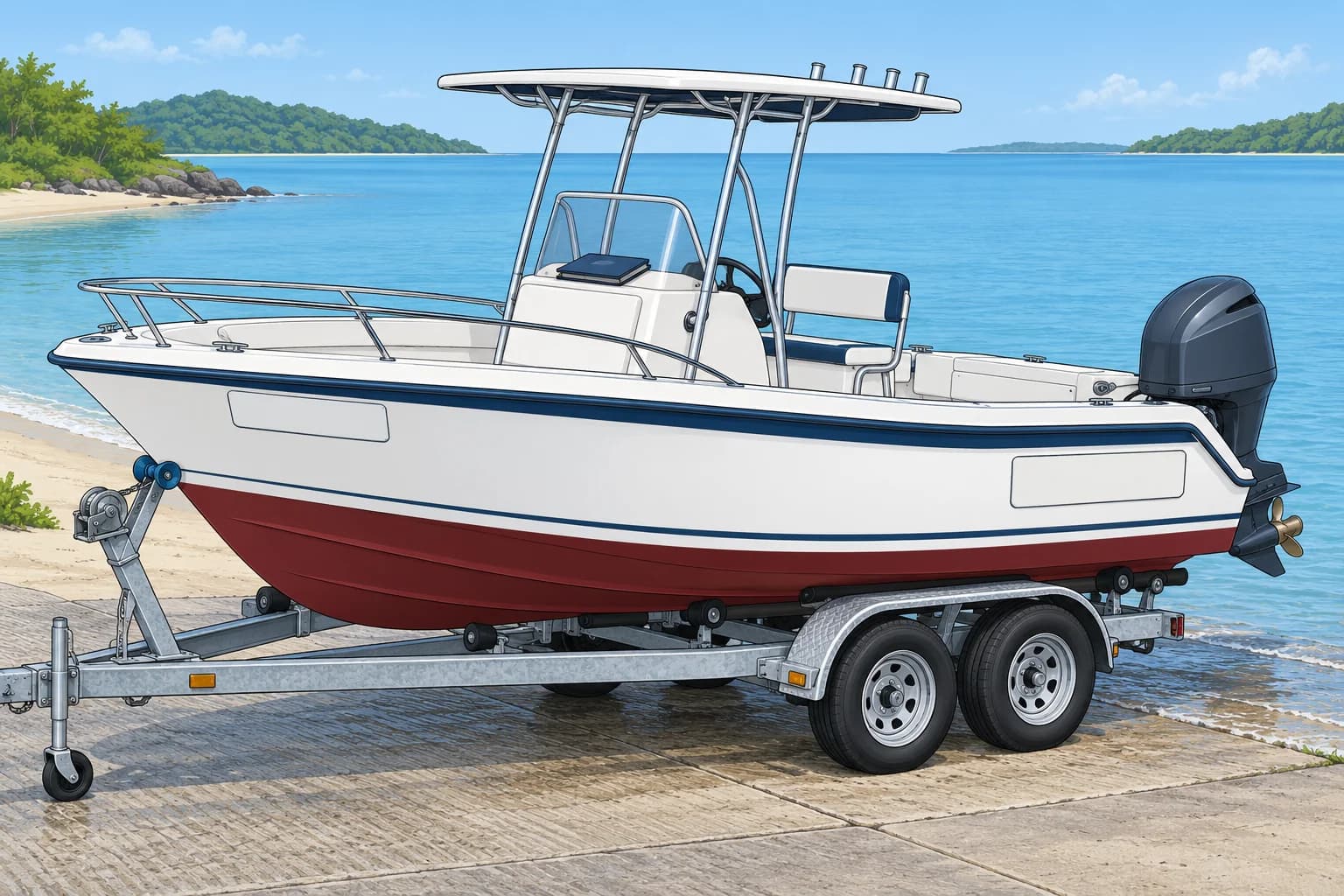
Inscription means recording your boat with a Capitania, Delegacia or Agência (local Navy port offices). The TIE (Título de Inscrição de Embarcação, inscription title) replaced the TIEM for inscribed craft. It is digital in gov.br and valid for five years. Boats over 100 GT (gross tonnage, a measure of enclosed volume) are registered at the Maritime Court and carry the PRPM (property registration) instead.
Deadlines and exemptions
For boats under 24 m and at most 100 GT, apply for initial inscription within 60 days of purchase. Exempt: miúda craft (up to 6 m) without an engine, and miúda oar or sail craft with an engine up to 5 hp. Rowing boats up to 12 m and towed devices up to 10 m are also exempt. If your boat is inscribed, put its name and inscription number on the hull.
DPEM insurance
The DPEM is compulsory insurance for personal injury caused by boats, created by Law 8,374 of 1991. Every owner of a boat subject to inscription must have current cover. The Capitania asks for proof of payment before services such as TIE renewal. Existing cover in a seller's name need not change until renewal.
Inspections
Boats over 6 m and under 24 m need inspection at inscription, when changing from inland to open-sea navigation, or after changes to their basic characteristics, unless the prescribed construction/alteration responsibility statement is presented. Miúda craft are exempt. A classification society checks ships against technical standards; boats it surveys to those standards are called classed boats. Large boats of 24 m or more, and boats classed by a recognised classification society, carry a CSN (navigation safety certificate), valid for 10 years.
Departure notice
The aviso de saída (departure notice) is compulsory. Give it to your marina or club, or to the Capitania if you belong to neither. You may file your plan in the Navy's NAVSEG app instead. Report your arrival too, so a search starts only when it is needed.
Before a coastal day trip
- Check that the TIE or PRPM, as applicable, and your CHA are valid and on board, paper or digital. — Carry the boat title and skipper’s licence; inspectors check both.
- Make sure the DPEM is paid and current. — It is compulsory for every inscribed boat, and the Capitania asks for it.
- Check the gear against the area on the TIE. — The equipment list follows the boat's classification, subject to the stated exemptions.
- Read the forecast and the local NPCP rules. — The skipper must know the weather and the local limits before leaving.
- File the aviso de saída or a NAVSEG plan, and report your arrival. — It lets search and rescue find you if you do not come back.
Remember
- The TIE replaced the TIEM for inscribed craft and is valid for 5 years; boats over 100 GT carry the PRPM instead.
- Under 24 m and at most 100 GT: initial inscription within 60 days of purchase; unpowered miúda craft (≤6 m) are exempt.
- DPEM insurance is compulsory for every boat subject to inscription.
- The aviso de saída is compulsory: hand it in, or use the NAVSEG app.
Common mistakes
Wrong: Small boats still use a separate TIEM.
Right: The separate TIEM was merged into the TIE for inscribed craft, issued digitally in gov.br. Boats over 100 GT carry the PRPM.
Wrong: The departure notice is optional for private boats.
Right: NORMAM-211 makes it compulsory; NAVSEG is an accepted digital alternative.
Worked case
Your 7 m motorboat's TIE expired last month, but its DPEM is current. You belong to no marina or club. A friend says a phone call to them is enough notice. May you leave?
Show the answer
No. Renew the TIE before sailing; current insurance does not replace a valid boat title. File the aviso de saída with the Capitania, Delegacia or Agency, or use NAVSEG. A call to your friend does not replace it. Report your arrival afterwards.
Practice question
Which document proves the inscription of a Brazilian recreational boat below 100 GT?
- CHA
- TIE
- PRPM
- CSN
Show the answer
Answer: B. The TIE replaced the TIEM for inscribed craft and is valid for five years. Boats over 100 GT register at the Maritime Court and carry the PRPM instead.
4 · Navy inspection
What the Navy checks, local rules and fines
Inspectors check papers, equipment and alcohol. Follow local beach limits and IALA region B buoyage.
Inspeção Naval
The Inspeção Naval (Navy inspection) enforces the LESTA (Law 9,537 of 1997, on waterway traffic safety) and its regulation, the RLESTA. Inspectors from the Capitania check the CHA against the area you are in, the TIE or PRPM as applicable, the gear for the boat's classification and the number of people. They also check the EPIRB's battery and registration where one is required. Breaking the RLESTA can bring fines, and a CHA can be suspended for up to 12 months.
Alcohol
Inspectors can breath-test the skipper. 0.25 mg per litre of breath, or 0.05 % in the blood, counts as drunkenness. The skipper is stopped from sailing, the CHA can be suspended for up to 120 days, and a repeat offence cancels it. The case also goes to the police. Refusing the test brings a fine or a suspension of up to 30 days. Without another qualified skipper, the boat is held.
Beaches
Normally, motorboats keep 200 m from the base line: breaking waves, or the water’s edge on lakes and rivers. Sail and oar craft keep 100 m. Use an authorised launching or landing area; cross the beach strip perpendicular to the base line below 3 knots. An anchoring approach is allowed only where not locally prohibited. Check NPCP limits: the Capitania sets local distances where these cannot apply. Keep 200 m from military installations.
Buoyage and rules
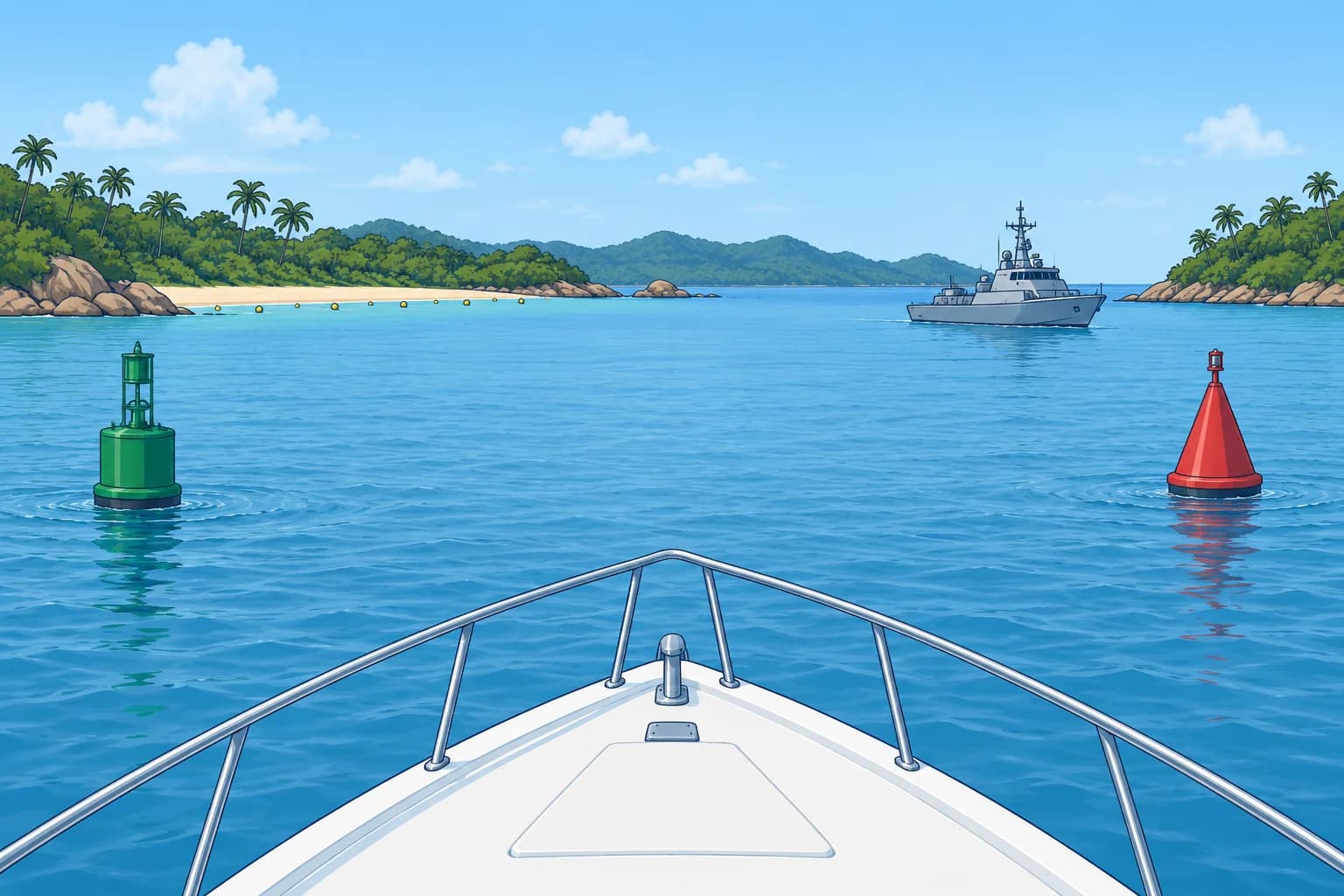
Brazil is in IALA region B: entering from sea, red lateral marks are on your starboard (right) side and green on port (left). The collision rules are the RIPEAM (Brazil's name for the COLREG). Local NPCP rules can add speed limits, anchorages and closed areas.
Foreign yachts
A foreign-flag yacht reports to the Capitania within 24 hours of arriving, with a Declaração de Entrada (entry declaration). Health, Federal Police and Customs must clear the boat first. Be ready for inspection within 48 hours after presenting the declaration. Give at least 24 hours’ notice of changes to the declared itinerary and of departure from Brazil.
Key figures
- Alcohol limit
- 0.25 mg/L breath or 0.05 % blood = drunkenness
- Penalty for drunk skippering
- CHA suspended up to 120 days; cancelled if repeated
- Beach distance (from base line)
- Normally: motor 200 m; sail and oar 100 m. Check NPCP limits.
- Beach transit
- Authorised access: perpendicular to base line, below 3 knots
- IALA region
- B: red to starboard entering from sea
- Foreign yacht entry
- Report within 24 h; visit within 48 h after declaration
Remember
- Inspectors check your CHA for the actual area, the TIE or PRPM, the gear for the boat’s classification and the number on board.
- 0.25 mg/L breath or 0.05 % blood means drunk: CHA suspended up to 120 days.
- Normally motorboats stay 200 m off, sail/oar 100 m; cross the beach strip on authorised routes at right angles below 3 knots.
- IALA region B: red marks to starboard when entering from sea.
Common mistakes
Wrong: Red lateral marks stay to port entering a Brazilian harbour, as in Europe.
Right: Brazil uses IALA region B: entering from sea, keep red marks to starboard and green to port.
Wrong: Refusing the breath test avoids a penalty.
Right: Refusal is an offence in itself: a group C fine or a suspension of up to 30 days, and you cannot keep skippering.
Wrong: You may approach a beach to drop friends off at any speed if no one is swimming.
Right: Use the authorised launching or landing area. Cross the beach strip at right angles to the base line, below 3 knots; check NPCP limits.
Worked case
In an NPCP-designated inland area near Angra dos Reis, you motor parallel to a bathing beach, 150 m from the breaking waves, outside any authorised transit route. Your breath test reads 0.30 mg/L. Your sober friend holds a valid ARA. What happens?
Show the answer
Two offences: normal motorboat navigation is at least 200 m from the base line, and 0.30 mg/L exceeds the alcohol threshold. Inspectors stop you skippering and refer the alcohol case to police. CHA suspension up to 120 days may follow the administrative decision. Your friend’s valid ARA covers these inland waters; they may take over after passing a breath test and inspectors clearing the boat to proceed.
Practice question
What is the minimum breath-alcohol concentration treated as drunkenness for administrative purposes?
- 0.10 mg/L
- 0.25 mg/L
- 0.40 mg/L
- 0.50 mg/L
Show the answer
Answer: B. 0.25 mg per litre of breath, or 0.05 % in the blood, is treated as drunkenness.