
Maritime law, rules and watchkeeping · Level R2 · 4 parts · about 17 min
France: safety equipment by distance from shelter (Division 240) and documents
4 short parts: Distance bands · Safety gear · Boat papers · Permit, 300 m. Each part explains the idea, then gives the points to remember, the common mistakes, a worked case and a practice question; the Academy unit adds all 26 check questions.
1 · Distance bands
Division 240: four bands by distance from a shelter
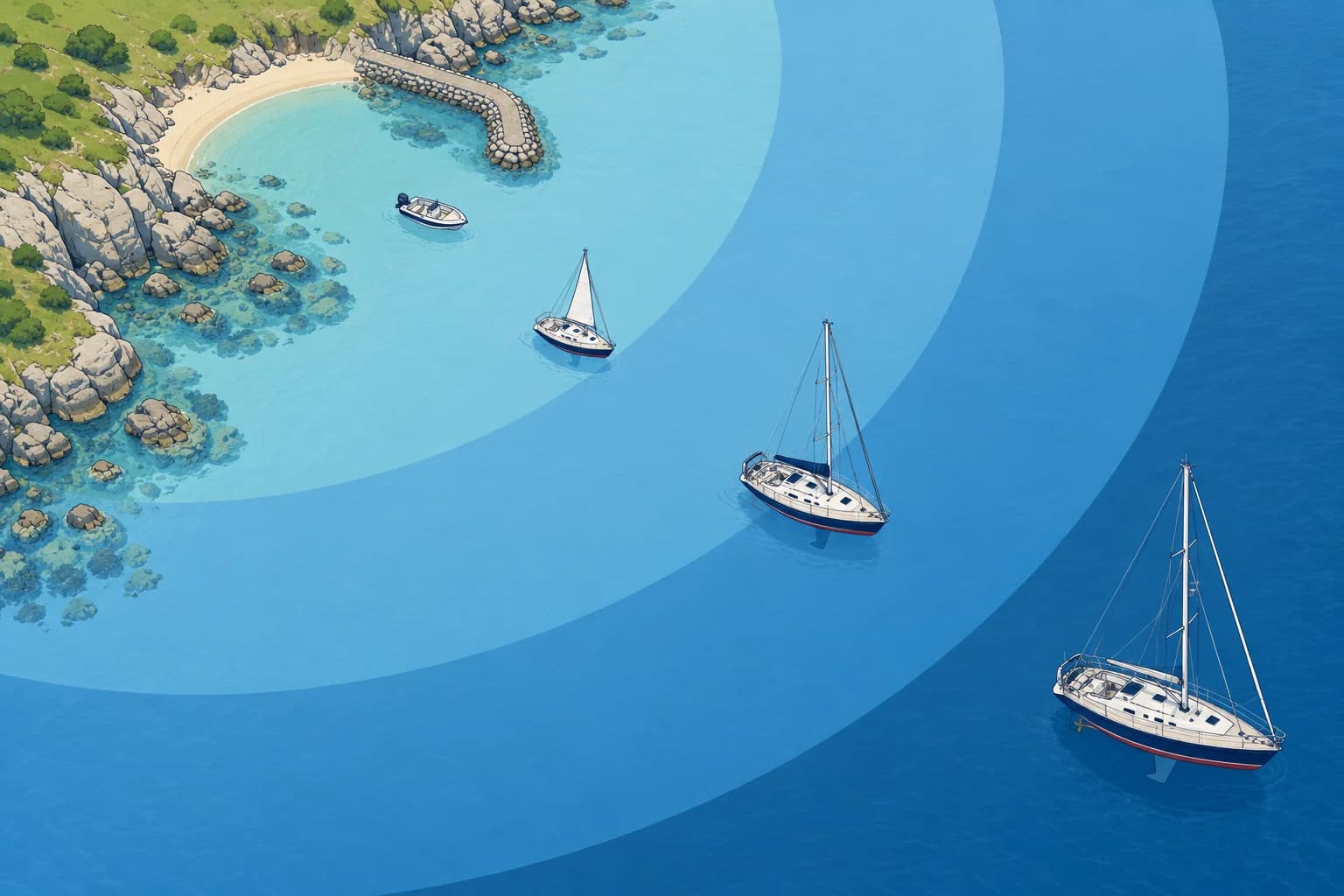
France sets the gear you carry by how far you go from a shelter. There are four bands, and each one adds to the one before.
The rule book
French safety rules for pleasure craft at sea are in Division 240, part of the ship-safety regulation annexed to the ministerial order (arrêté) of 23 November 1987. It covers craft up to 24 m used privately or for training. The latest amendment is the order of 21 May 2026 (Journal officiel of 8 June 2026). The bigger equipment changes came with the order of 11 October 2024. Check that your guide is that recent.
Distance from a shelter
Measure distance in nautical miles (NM) from an abri (shelter): a place on the coast where your boat and crew can reach safety by anchoring, landing or berthing, and leave again without help. It must suit today's weather and sea, and your boat. A beach in an onshore swell is not a shelter that day.
The four bands
Basique: less than 2 NM from a shelter. Côtier: 2 to less than 6 NM. Semi-hauturier: 6 to less than 60 NM. Hauturier: 60 NM or more. Each band adds gear to the one before. In every band, the boat must also stay within her design limits and never carry more people or load than her builder's plate allows.
Tenders and paddle craft
A tender (annexe) stays within 300 m of shelter; its mother ship counts. Beach craft: normally 300 m by day. Qualifying kayaks and rowing boats: 2 NM by day, with safety kit and reboarding arrangements. For 6 NM: extra kit, at least two craft together and an accessible floating waterproof marine radio (VHF) per pair. One craft alone requires association membership for this activity and that VHF. Organised activities have exemptions.
Boards and jet skis
Qualifying paddleboards: 2 NM by day; beach-class boards: 300 m. Windsurfers, kites, wingfoils and motorboards: 2 NM by day. A jet ski (VNM, véhicule nautique à moteur) is used by day only. A one-seat jet ski may go 2 NM from a shelter; one built for two or more, 6 NM. Riders always wear an EIF (level 50 up to 2 NM, 100 beyond) and neoprene at least 2 mm thick.
Visiting boats
Visiting foreign-owned boats normally follow their flag state's equipment rules. In French territorial waters, boats owned by people principally resident in France, or companies based there, must meet French safety-equipment and permit rules regardless of flag. French local navigation rules apply to everyone. RIPAM is the French name for the international collision regulations (COLREG).
Key figures
- Basique
- Less than 2 NM from a shelter
- Côtier
- 2 NM to less than 6 NM
- Semi-hauturier
- 6 NM to less than 60 NM
- Hauturier
- 60 NM or more from a shelter
- Jet ski (VNM)
- Day only; 1 seat: 2 NM; 2 or more seats: 6 NM
- Tender
- Within 300 m of a shelter; the mother ship counts as one
Remember
- Division 240 sets the gear by distance from a shelter, not from the coast.
- Bands: basique < 2 NM; côtier 2 to < 6 NM; semi-hauturier 6 to < 60 NM; hauturier ≥ 60 NM.
- Each band includes all the gear of the band before it.
- A shelter must be usable without help in the weather of the moment.
- Jet skis: day only; 2 NM for one seat, 6 NM for two or more.
Common mistakes
Wrong: Beyond 6 NM there is just one offshore list.
Right: There are two offshore bands: semi-hauturier from 6 NM to less than 60 NM, and hauturier from 60 NM.
Wrong: Any beach counts as a shelter.
Right: A shelter is a place where you can get safe and leave again without help in today's conditions. An exposed beach in swell does not count.
Wrong: A tender may follow the yacht anywhere, because the yacht is a shelter.
Right: A tender may go only 300 m from a shelter. Stay within 300 m of the mother ship or a usable coastal shelter.
Worked case
The nearby beach is exposed to breaking surf today. Your crossing reaches 4 NM from the nearest usable harbour or other shelter. A friend says the beach keeps you in the basique band. Which band applies, and why?
Show the answer
Côtier applies. The beach is unusable in today's conditions, so it cannot count as an abri. Your maximum distance from a usable shelter is 4 NM: at least 2 NM but below 6 NM. Each band includes the previous band's requirements.
Practice question
Your route takes you 8 NM from the nearest shelter. Which Division 240 band applies?
- Côtier band
- Semi-hauturier
- Hauturier band
- Basique band
Show the answer
Answer: B. Semi-hauturier covers 6 NM to less than 60 NM from a shelter. Hauturier starts at 60 NM.
2 · Safety gear
What each band adds to the kit
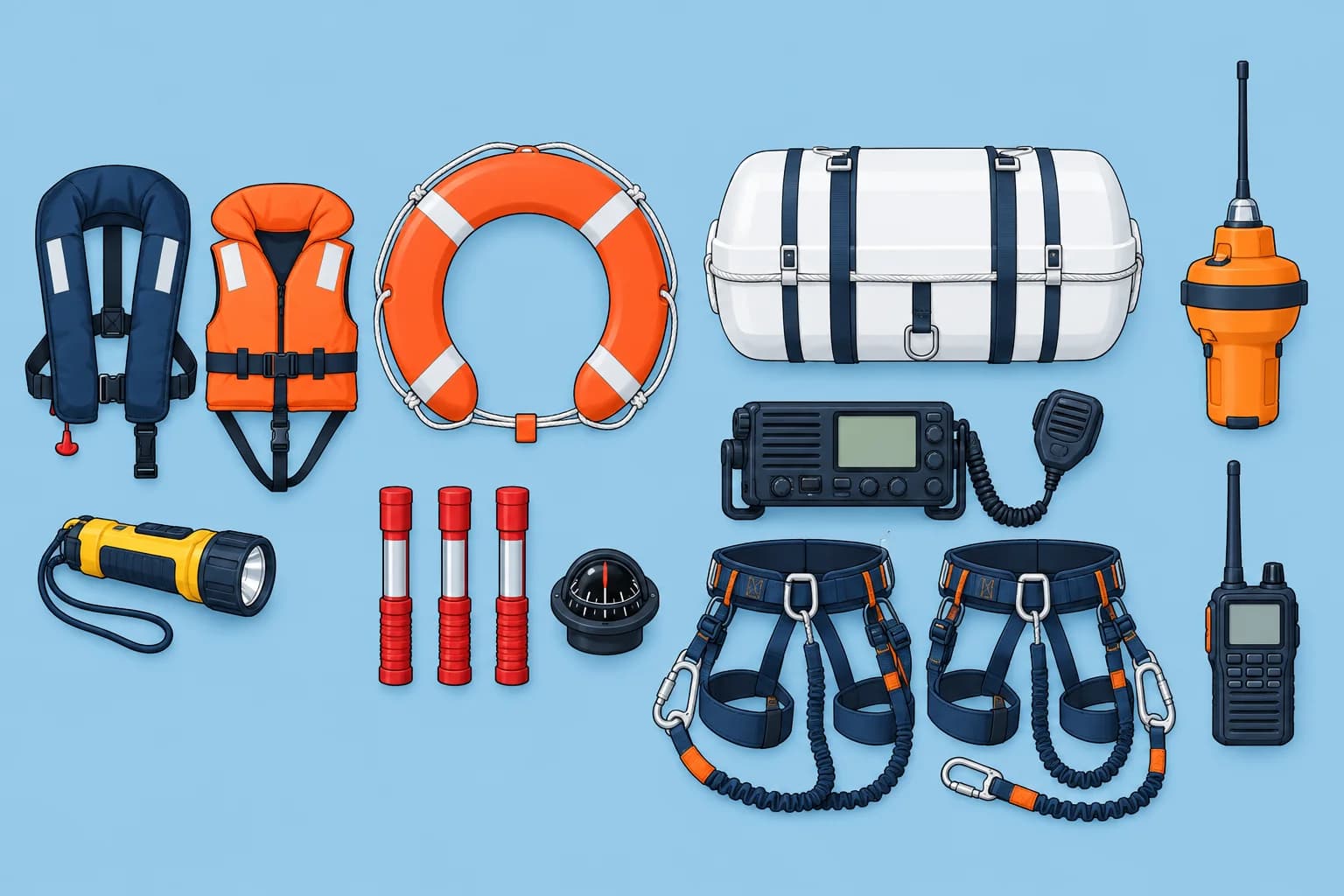
Basique starts the kit. Côtier adds flares; semi-hauturier adds a fixed marine VHF radio; hauturier an emergency position-indicating radio beacon (EPIRB).
Basique (under 2 NM)
For each person, carry an accessible level 50 (50 newtons) buoyancy aid or lifejacket (EIF), or wear a neoprene wetsuit or drysuit covering torso and abdomen, with positive buoyancy and thermal protection. Carry a waterproof 6-hour torch, or one waterproof 6-hour light per person, worn or fixed to their EIF. Add extinguishers specified by the owner's manual (annex 240-A.3 without a manual), a bucket or hand pump to remove water if the boat is not self-draining or has accommodation, a towing point and line, and ground tackle (anchor with chain/rope).
Anchoring and tides
Anchoring exemptions: sailing craft under 250 kg empty; motor craft under 250 kg and at most 4.5 kW. Carry today's local tide times and coefficients outside the Mediterranean.
Côtier (2 to less than 6 NM)
Levels rate buoyancy in newtons (N), not body weight. Add a compliant lifebuoy with its required light; at least level 100 EIFs each; three red hand flares; a waterproof magnetic steering compass, fixed in view of the helm with lighting; current official charts; RIPAM or summary; and a buoyage guide. Swimmers over 30 kg may instead wear level 50 EIFs or wetsuits/drysuits covering torso and abdomen, with thermal protection, at least 50 N intrinsic (built-in) buoyancy, and bright neck/shoulders or a permanently attached waterproof 6-hour light.
Semi-hauturier (6 to less than 60 NM)
Add level 150 EIFs for everyone, a fixed VHF marine radio, an inflatable liferaft for all on board, tools to find and mark your position on a chart, a light list (a directory of coastal navigation lights), a log book, a way to receive marine forecasts, a first-aid kit and a waterproof searchlight. A tether is a safety line connecting your harness to the boat. Sailing boats carry one harness and tether per person; motorboats carry at least one set.
Hauturier (60 NM and more)
Add a 406 MHz emergency position-indicating radio beacon (EPIRB) and waterproof handheld VHF. Your liferaft must seat everyone and meet ISO 9650 type I, be an eligible Division 333 class II raft, or be a Division 311-approved model. A compliant raft already aboard counts; you do not need a second. Satellite communication is recommended.
Rules for everyone
Children up to 30 kg need EIF 100 at any distance; from 6 NM the others need EIF 150. On outboards and jet skis, wear the fitted kill cord (engine-stop lanyard) whenever the engine runs; keep a spare accessible. Before leaving the helm, stop the engine or secure neutral so the propeller cannot engage. With wireless stops and others aboard, someone must remain at the helm. At sea, monitor VHF channel 16 whenever possible. Service gear on time. Keep portable gear accessible; install extinguishers as the owner's manual specifies.
Key figures
- EIF level by band
- Basique 50 · côtier 100 · semi-hauturier and hauturier 150
- Children ≤ 30 kg
- Level 100, at any distance from a shelter
- Hand flares
- 3 red hand flares from the côtier band
- Fixed VHF + liferaft
- From 6 NM (semi-hauturier)
- EPIRB + handheld VHF
- From 60 NM (hauturier)
- Light
- Waterproof, 6 h autonomy, in every band
Before you leave: check the kit against your route
- Along your route, find the greatest distance to the nearest usable shelter. — That distance, not the distance from the coast, sets your band.
- Count everyone aboard and check each child's weight. — You need an EIF of the right level each: level 100 for children up to 30 kg at any distance, and level 150 for the others from 6 NM.
- Check expiry dates on flares, liferaft and EPIRB battery. — Gear must be in date and serviced to count.
- If fitted, attach the kill cord and show the crew the spare. — It stops the propeller if you fall, and the spare lets them restart to pick you up.
- Switch on the VHF and set channel 16. — At sea, keep watch on VHF channel 16 whenever possible.
Remember
- Basique: EIF 50 or qualifying suit, 6-hour waterproof light, extinguishers, bailing, towline, ground tackle; exemptions apply.
- Côtier: lit lifebuoy, EIF ≥ 100 (worn alternatives apply), 3 flares, lit waterproof compass, charts, RIPAM, buoyage guide.
- Semi-hauturier adds: EIF 150, fixed VHF, liferaft, log book, forecasts, first aid, harnesses.
- Hauturier adds: 406 MHz EPIRB, handheld waterproof VHF, offshore-type liferaft.
- Wear the kill cord while running. Before leaving, stop the engine or secure neutral against propeller engagement.
Common mistakes
Wrong: Small children can wear the same level 50 aid as adults near the shore.
Right: Children up to 30 kg need a level 100 EIF at any distance, even close to shelter. From 6 NM, the others need level 150.
Wrong: A handheld VHF is enough for an offshore passage.
Right: From 6 NM you need a fixed VHF. From 60 NM you need a handheld waterproof VHF as well, plus an EPIRB.
Wrong: The kill cord can be lengthened so the driver can move around.
Right: Never lengthen or relocate the kill cord. Before leaving, stop the engine or secure neutral against propeller engagement.
Worked case
A family of four (two adults, children of 25 kg and 40 kg) takes a 7 m outboard boat 4 NM offshore from a shelter. On board: four level 50 buoyancy aids, a torch, an extinguisher, a bucket, an anchor and a towline. The kill cord lies on the dashboard. What must change?
Show the answer
At 4 NM, côtier applies. Carry level 100 EIFs; swimmers over 30 kg may instead wear level 50 aids. The 25 kg child needs level 100. Add a lit lifebuoy, 3 red hand flares, a lit waterproof steering compass fixed in view of the helm, charts, a RIPAM summary and a buoyage guide. Check that the torch is waterproof and lasts 6 hours. Outside the Mediterranean, add local tide times and coefficients. Wear the kill cord and keep a spare accessible.
Practice question
From which band must you carry three red hand flares?
- Basique band
- Côtier band
- Semi-hauturier
- Hauturier band
Show the answer
Answer: B. Three red hand flares are required from the côtier band (2 to less than 6 NM) and stay in every band beyond.
3 · Boat papers
Registration, the annual tax and insurance
Since 2022 one document, the certificat d'enregistrement, proves registration and nationality. Bigger boats also pay a yearly tax.
One document since 2022
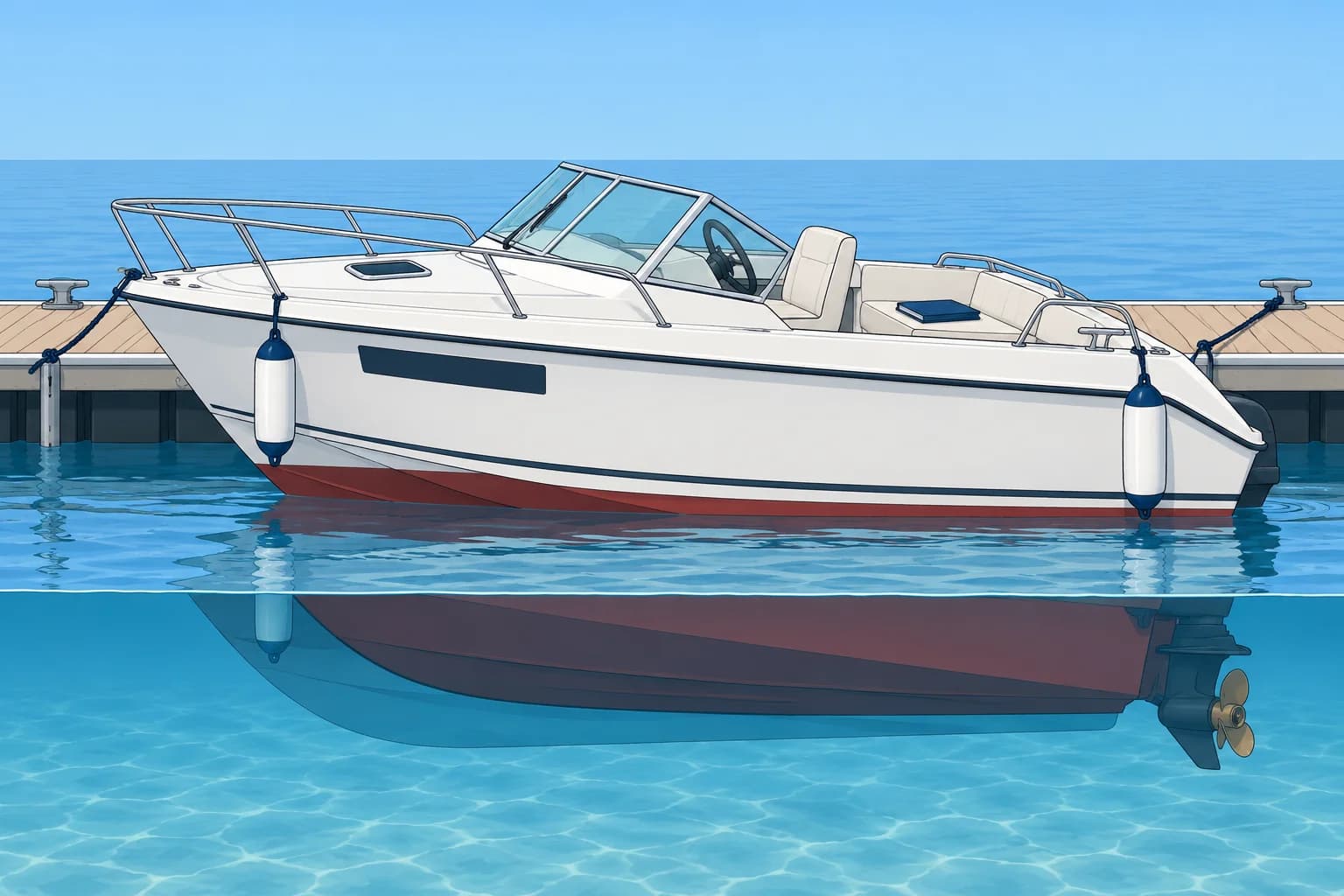
Since 1 January 2022, the certificat d'enregistrement (the boat's titre de navigation) has replaced both the carte de circulation and the acte de francisation. Older documents stay valid. The maritime affairs service now handles registration, rather than customs. Keep the certificate on board.
Who registers
Register sail/motor craft at least 2.5 m long, motor craft above 4.5 kW at any length, and all jet skis. Beach craft are exempt: sail under 2.5 m; motor under 2.5 m and at most 4.5 kW; human-powered under 3.5 m. Qualifying human-powered craft at least 3.5 m register voluntarily within 2 NM, compulsorily beyond. French flag normally requires at least half EU/EEA ownership. Eligible owners abroad can appoint a representative domiciled in France; companies face separate establishment and management conditions.
Online and on time
Buying, selling and most changes are done free at demarches-plaisance.gouv.fr (sea craft only; rivers and canals use other offices). Report a sale, a new address, an engine change or a boat leaving the fleet within one month. Until the buyer registers the sale, the seller may still be billed the tax.
The yearly tax
The old DAFN became the taxe annuelle sur les engins maritimes à usage personnel in 2022. It is due from the owner on 1 January for boats of 7 m or more, boats under 7 m with 22 fiscal horsepower or more, and jet skis of 90 kW or more. Fiscal horsepower is the administrative tax rating, not the engine's advertised horsepower. Restricting the engine does not exempt it.
Insurance and marks
French law has no general duty to insure a pleasure boat at sea, but most ports require third-party cover. It is strongly advised. Motorboats show the registration number on both sides. Sailing boats of at least 7 m show their name and registration service at the stern; smaller sailing boats need no external marks. The registration number must also be visible near the helm or in the cockpit.
Lent or rented boats
Before a rental or loan, complete annex 240-A.6, with start/end dates and any additional drivers. The user signs it and the provider countersigns it. Keep the user's copy available on board for inspection; the provider keeps another copy.
Key figures
- Certificat d'enregistrement
- Since 1 Jan 2022; replaces carte de circulation and francisation
- Registration
- Sail/motor ≥ 2.5 m, motor > 4.5 kW, jet skis; exemptions apply
- Changes and sales
- Report within 1 month (demarches-plaisance.gouv.fr)
- Annual tax applies
- ≥ 7 m, or ≥ 22 fiscal hp, or jet ski ≥ 90 kW
- Insurance
- No general legal duty at sea; ports usually require it
Remember
- The certificat d'enregistrement replaced the carte de circulation and acte de francisation in 2022.
- Sail/motor ≥ 2.5 m, motor > 4.5 kW, jet skis: register; beach craft exempt. Eligible human-powered: optional ≤ 2 NM, must beyond.
- Report sales and changes within one month, online at demarches-plaisance.gouv.fr.
- Annual tax applies to boats ≥ 7 m, smaller boats ≥ 22 fiscal hp, and jet skis ≥ 90 kW.
- Rented or lent boats carry a completed annex 240-A.6, signed by the user and countersigned by the provider.
Common mistakes
Wrong: French boats still get a carte de circulation and a separate francisation act from customs.
Right: Since 1 January 2022 both are merged into the certificat d'enregistrement, issued by the maritime affairs service. Old documents remain valid.
Wrong: Insurance is compulsory for every boat in French waters.
Right: There is no general legal duty at sea, but ports and marinas usually demand third-party cover. Insure anyway: a collision can cost far more than the boat.
Wrong: If I restrict my engine, the boat escapes the annual tax.
Right: Restricting the power does not exempt the boat. The tax follows length and fiscal power as registered.
Worked case
You buy a used 6.5 m motorboat with a 150 hp outboard whose registration certificate records 13 fiscal hp, from a private seller in Brittany. The seller hands you an old carte de circulation. What must you do, and will you pay the annual tax?
Show the answer
Register the change of owner within one month, online at demarches-plaisance.gouv.fr, and ask the seller to report the sale too. You will get a certificat d'enregistrement in your name. The old card stays valid until then. The boat is under 7 m and under 22 fiscal hp, so no annual tax is due. Arrange third-party cover and check any marina's insurance requirements.
Practice question
Which document is issued for a new French pleasure-boat registration since 1 January 2022?
- The carte de circulation
- The acte de francisation
- The certificat d'enregistrement
- The French customs passport
Show the answer
Answer: C. New registrations receive the certificat d'enregistrement, replacing the carte de circulation and acte de francisation. Previously issued documents remain valid.
4 · Permit, 300 m
The permis plaisance and the 300 m strip
Motor pleasure craft above 4.5 kW (6 hp) need a permis plaisance. In the 300 m coastal strip, keep to 5 knots or any lower local limit.
When you need a permit
To helm a motor pleasure craft above 4.5 kW (6 hp), you need a permis plaisance. A craft legally classed as a sailing boat needs no pleasure-boat permit at sea, including when using its auxiliary engine. The option côtière allows up to 6 NM from a shelter. The extension hauturière removes that limit. The option eaux intérieures covers rivers and canals. See the boating-licence page for training details.
The exam
The côtière theory test has 40 questions, with at most 5 mistakes allowed. You first train at an approved school, with at least 5 hours of theory plus practice at the helm. The côtière permit also lets you use a VHF in French territorial waters. The hauturière extension adds a chartwork exam set by the maritime affairs office.
The 300 m strip
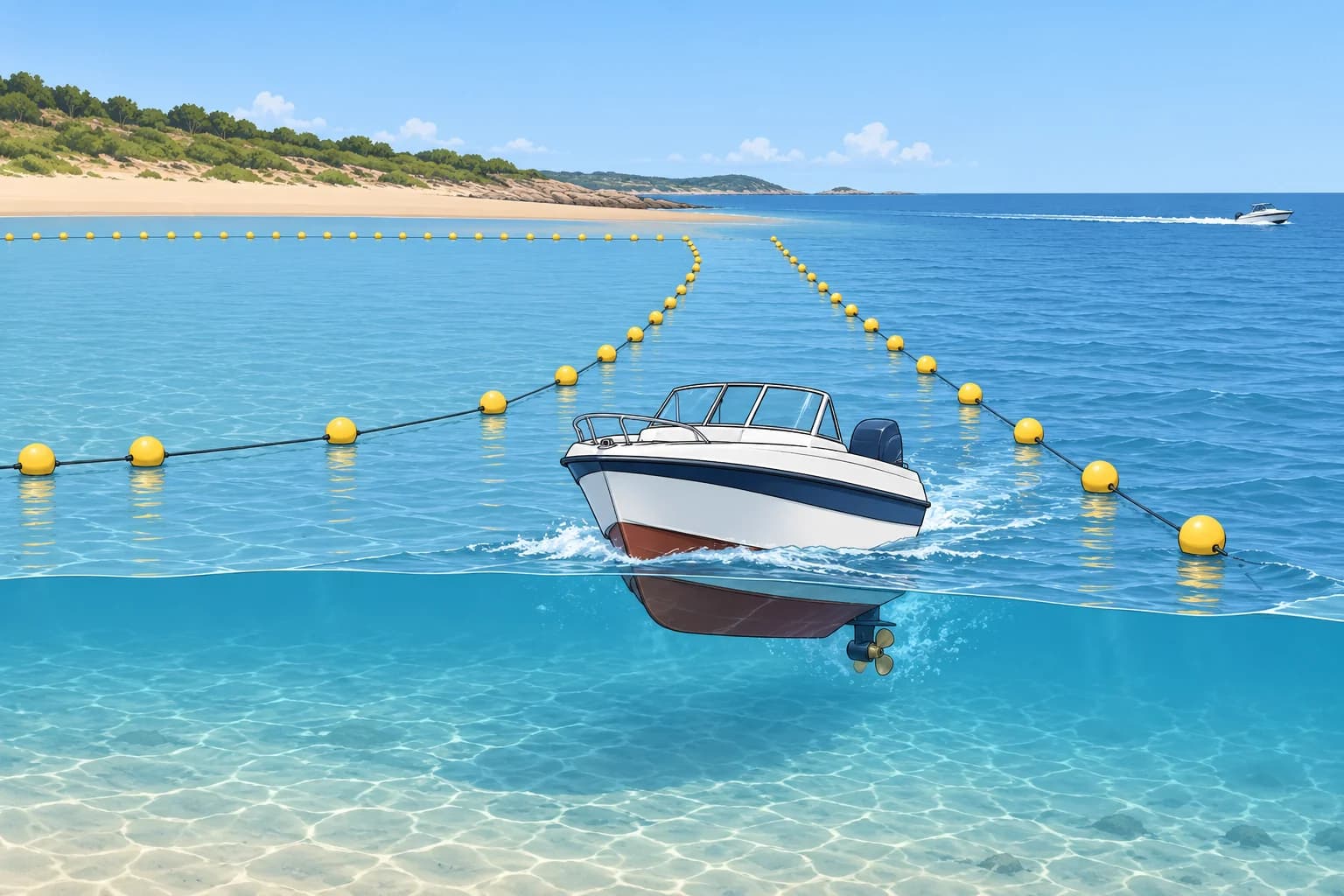
The three préfets maritimes (Channel and North Sea, Atlantic, Mediterranean) make the local rules. On every coast the speed of boats and jet skis is limited to 5 knots within 300 m of the shore, whether or not buoys mark it. In the Mediterranean the rule is in arrêté 109/2024; on the Atlantic, in arrêté 2018/090. Some areas add limits beyond 300 m in summer.
Bathing zones and channels
Yellow buoys can mark the 300 m boundary, access channels or designated bathing zones. Identify the zone from the local buoyage plan and notices. Keep boats out of swimmer-only zones. Use an access channel (chenal) authorised for your boat. Obey its posted speed limit, never exceeding 5 knots. Mayors police swimming and unregistered beach craft; the préfet maritime polices navigation and anchoring.
Who checks
At sea you may be checked by the maritime affairs units, the gendarmerie maritime, customs and the gendarmerie. They look at the permit, the certificat d'enregistrement, the safety kit for your band, the kill cord and speed in the 300 m strip. Missing items are fined, and the boat can be stopped.
Key figures
- Permit needed
- Motor pleasure craft above 4.5 kW (6 hp)
- Option côtière
- Up to 6 NM from a shelter
- Extension hauturière
- No distance limit; chartwork exam
- Theory test
- 40 questions, at most 5 mistakes
- 300 m strip
- 5 knots maximum, buoyed or not; lower local limits may apply
Remember
- Motor pleasure craft > 4.5 kW (6 hp): permit needed. Legally classed sailing boats: no permit at sea, even under auxiliary engine.
- Côtière: 6 NM from a shelter; hauturière: unlimited; eaux intérieures: rivers and canals.
- The côtière permit also covers VHF use in French territorial waters.
- Within 300 m of the shore on all French coasts: maximum 5 knots, even without buoys; obey any lower local limit.
- Stay out of marked swimmer-only zones. Use only a channel authorised for your boat; obey its limit, at most 5 knots.
Common mistakes
Wrong: The 5-knot limit applies only where yellow buoys mark the 300 m line.
Right: It applies within 300 m of the shore everywhere, marked or not. Buoys just make it easier to see.
Wrong: With a côtière permit I may go anywhere within 12 NM of the coast.
Right: The côtière option stops at 6 NM from a shelter. Farther needs the hauturière extension.
Wrong: A 15 hp outboard on a small tender needs no permit.
Right: 15 hp is above 4.5 kW (6 hp), so the driver needs a permis plaisance.
Worked case
You hold a côtière permit and own a 6 m boat with a 115 hp outboard near Hyères. Your route to a beach 8 NM away reaches 4 NM from the nearest usable shelter. You plan to land among swimmers to pick up friends. May you make this trip, and how must you approach?
Show the answer
The route fits your permit: its farthest point is 4 NM from a usable shelter, within the 6 NM limit. That does not make landing among swimmers safe. Use an authorised access channel only when it is clear of swimmers. Within 300 m, keep to 5 knots or any lower local limit. If no safe, permitted approach is available, arrange another pickup point.
Practice question
Above what engine power does a motor pleasure craft need a permis plaisance?
- 2.5 kW (3.4 hp)
- 4.5 kW (6 hp)
- 15 kW (20 hp)
- 30 kW (40 hp)
Show the answer
Answer: B. A motor pleasure craft needs a permit above 4.5 kW (6 hp). A craft legally classed as a sailing boat needs none at sea, even when using its auxiliary engine.