
Maritime law, rules and watchkeeping · Level P3 · 6 parts · about 21 min
SOLAS, MARPOL, STCW and the IMO conventions
6 short parts: The IMO · Amendments · SOLAS & LL · MARPOL & more · STCW & MLC · State roles. Each part explains the idea, then gives the points to remember, the common mistakes, a worked case and a practice question; the Academy unit adds all 38 check questions.
1 · The IMO
The IMO: who writes the rules and who checks the states
The IMO writes global shipping rules, but it cannot enforce them. States make them law, and since 2016 the IMO audits how well each state does that.
What the IMO is
The International Maritime Organization (IMO) is the United Nations agency for shipping safety, security and environmental performance. It sits in London and has 176 Member States. It drafts and adopts conventions (treaties) and codes but has no enforcement police. A convention binds a state internationally once it consents to be bound, for example by ratification or accession (formal ways to join), and the convention enters into force for it. The state must implement its obligations in national law.
Assembly and Council
The Assembly of all Member States is the top body. It meets every two years, approves the budget and work plan, and elects the Council. The Council has 40 members serving two-year terms and runs the IMO between Assemblies. Amendments adopted in 2021 would enlarge it to 52 members, but they need acceptance by two thirds of Member States and are not yet in force.
The committees
The technical work happens in committees open to every Member State. The Maritime Safety Committee (MSC) handles SOLAS, STCW, COLREG and Load Lines. The Marine Environment Protection Committee (MEPC) handles MARPOL and the other environment treaties. The Legal Committee (LEG) deals with liability and compensation. The Facilitation Committee (FAL) simplifies port formalities and documents. Seven sub-committees prepare the detail, including HTW (human element, training and watchkeeping).
The III Code
A rule only works if each state applies it. The IMO Instruments Implementation Code (III Code) sets out what a state must do in each of its three roles: as flag state (the state whose flag the ship flies), port state (the state whose port the ship visits) and coastal state (the state whose waters the ship passes). The III Sub-Committee also analyses casualty reports and port state control data.
The IMSAS audit
Since 1 January 2016 the IMO Member State Audit Scheme (IMSAS) has been mandatory. IMO auditors visit each state, normally about once every seven years, and check it against the III Code: its laws, surveys, certificates, casualty investigations and port state control. The state then writes a corrective action plan. A summary of findings is shared with the other Member States.
Key figures
- IMO Member States
- 176 (plus 3 Associate Members)
- Assembly
- All Member States, every two years
- Council
- 40 members; 2021 amendments to 52 not yet in force
- Main committees
- MSC, MEPC, LEG, FAL, plus Technical Cooperation (TCC)
- IMSAS
- Mandatory audit of states since 1 January 2016
- Audit standard
- III Code: flag, port and coastal state duties
Remember
- States choose whether to become parties to conventions; parties must implement their duties.
- MSC runs safety, MEPC the environment, LEG liability and FAL port formalities.
- The III Code lists what a state must do as flag, port and coastal state.
- IMSAS audits each state against the III Code; it has been mandatory since 2016.
Common mistakes
Wrong: The IMO inspects ships and can detain them.
Right: IMO does not inspect or detain ships under port state control. Flag states survey ships; port states inspect them under national law.
Wrong: An IMO convention applies to every ship once the IMO adopts it.
Right: A convention binds a state after it consents to be bound and the convention enters into force for it.
Wrong: IMSAS audits shipping companies.
Right: IMSAS audits Member States against the III Code. It checks how the state implements its convention obligations.
Worked case
A supplier says an IMO leaflet proves new equipment is legally acceptable on your ship. Your flag’s requirements have not been checked. Do you approve the purchase on that basis?
Show the answer
No. An IMO leaflet alone does not establish acceptance under your flag’s law. Ask the master or company to confirm the applicable convention, entry into force for the flag and national requirements. IMO adopts standards; the flag implements them. Do not treat an IMO publication as flag approval.
Practice question
Which IMO body handles SOLAS, STCW and COLREG?
- IMO's legal affairs committee
- IMO's maritime safety committee
- IMO's port formalities committee
- IMO's marine environment committee
Show the answer
Answer: B. The MSC deals with maritime safety instruments, including SOLAS, STCW, COLREG and Load Lines.
2 · Amendments
How conventions and amendments enter into force
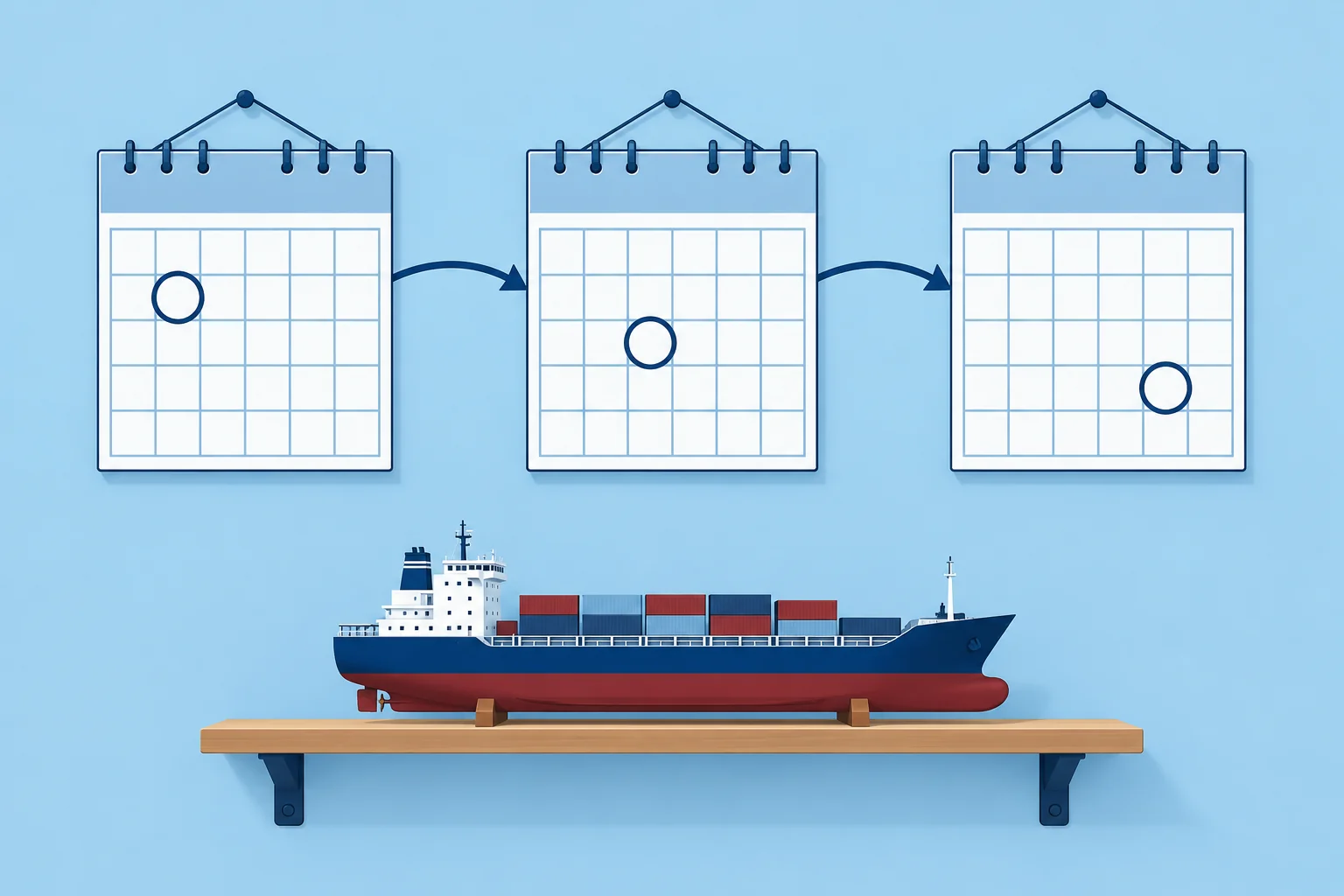
Under tacit acceptance, an amendment is adopted, deemed accepted, then enters into force. Check all three dates in its resolution.
From text to treaty
A convention is first adopted at a conference or by the IMO. States consent to be bound, for example by ratification or accession. Each convention states its own entry-into-force conditions. SOLAS 1974 required acceptance by 25 states representing at least 50% of world merchant tonnage, followed by a 12-month waiting period. It entered into force on 25 May 1980.
Explicit acceptance
Under the older explicit acceptance procedure, an amendment enters into force only after a set share of parties, often two thirds, formally accepts it. This can take decades. It still applies to some provisions, such as SOLAS chapter I and the convention articles. The IMO Convention itself also uses it, which is why the 2021 Council amendments are still waiting.
Tacit acceptance
Most technical amendments use tacit acceptance: silence counts as acceptance. The adoption date is when the committee agrees the text. At the deemed acceptance date, it is accepted unless enough parties have objected. SOLAS acceptance is blocked by objections from more than one third of parties, or parties representing at least 50% of world merchant tonnage. MARPOL uses at least one third of parties, with the same alternative tonnage threshold. Entry into force normally follows six months later.
A worked example
MSC 108 adopted SOLAS amendments in May 2024, including resolution MSC.549(108) on emergency towing. They were set to be deemed accepted on 1 July 2027 and to enter into force on 1 January 2028. Under SOLAS the acceptance period is normally two years and never less than one. MARPOL works similarly but often with a shorter period of at least 10 months. A MARPOL amendment can therefore apply about 16 months after adoption.
The SOLAS cycle
To give industry time to prepare, SOLAS amendments and the mandatory codes under it normally enter into force on 1 January in a four-year cycle, such as 2024 and 2028. Some amendments use the date in between, as several did on 1 January 2026. Each amendment is a resolution numbered by committee and session, for example MSC.550(108). A flag may allow voluntary early implementation, but port states may still apply the old rule until the date.
Key figures
- SOLAS objection threshold
- More than 1/3 of parties, or parties with at least 50% of tonnage
- SOLAS acceptance period
- Normally 2 years after adoption, never less than 1
- Entry into force
- Normally 6 months after deemed acceptance
- SOLAS cycle
- 1 January, four-year cycle (2024, 2028)
- MSC 108 example
- MSC.549(108): adopted May 2024; in force 1 Jan 2028
Reading an IMO amendment
- Note the resolution number, such as MSC.550(108). — It tells you the committee and session, so you can find the text.
- Find the adoption date. — Adoption does not itself establish your ship’s compliance deadline.
- Find the deemed acceptance date. — Enough objections by then would stop the amendment.
- Find the entry-into-force date. — This is the amendment’s entry into force; check separately when your ship must comply.
- Check which ships it covers: new, existing, or by size and type. — Many rules apply only to ships built or contracted after a set date.
- Check your flag's circular on implementation and any early use. — Flag guidance explains implementation; check it against the amendment’s application and transition clauses.
Remember
- Tacit acceptance has three dates: adoption, deemed acceptance and entry into force.
- SOLAS: Objections by over one third of parties, or by parties with at least 50% of tonnage, stop an amendment.
- SOLAS amendments normally enter into force on 1 January in a four-year cycle.
- Explicit acceptance needs formal acceptance by the required share of parties; adoption votes are separate. It can take decades.
Common mistakes
Wrong: An amendment applies on the day the MSC adopts it.
Right: Adoption alone does not make an amendment binding. Check its entry-into-force date, which ships it covers, when your ship must comply and any binding flag requirement.
Wrong: If the flag allows early implementation, every port state must accept it.
Right: Early implementation is voluntary. A port state may apply the rule in force until the official date.
Wrong: Every new IMO rule applies to every ship already in service.
Right: Many rules apply only to new ships. Check the application clause before acting.
Worked case
Your company forwards a notice: "MSC adopted new SOLAS amendments this week; please fit the new equipment before the next port." The notice names no dates. What do you check before you raise a requisition?
Show the answer
Find the resolution and read its adoption, deemed acceptance and entry-into-force dates. Check which ships it covers and any transition. Adoption alone does not establish a legal deadline at the next port. Confirm binding flag requirements and ask why the company requests earlier installation.
Practice question
Under tacit acceptance, what happens if no party objects by the deemed acceptance date?
- The amendment goes back to the committee
- The amendment is treated as accepted
- The amendment needs a second adoption
- The amendment needs each flag's signature
Show the answer
Answer: B. Under tacit acceptance, silence means acceptance. The amendment then enters into force on its set date.
3 · SOLAS & LL
SOLAS, Load Lines and COLREG
SOLAS sets ship safety standards. Load Lines limits loading through minimum freeboard. COLREG sets collision-prevention rules.
SOLAS
The International Convention for the Safety of Life at Sea (SOLAS) 1974 covers passenger ships and cargo ships of 500 gross tonnage (GT, a measure of enclosed volume) or more on international voyages, with chapter-specific exceptions. Chapters cover construction (II-1), fire (II-2), life-saving appliances (III), radio (IV), navigation (V), cargoes (VI), dangerous goods (VII), nuclear ships (VIII), safety management (IX), high-speed craft (X), special safety measures (XI-1), security (XI-2), bulk carriers (XII), verification of compliance (XIII), polar waters (XIV) and industrial personnel (XV).
Codes made mandatory
SOLAS makes detailed codes mandatory: the Fire Safety Systems (FSS) Code, Life-Saving Appliances (LSA) Code, International Maritime Dangerous Goods (IMDG) Code and International Maritime Solid Bulk Cargoes (IMSBC) Code. Chapter IX makes the International Safety Management (ISM) Code mandatory; XI-2 does the same for the International Ship and Port Facility Security (ISPS) Code. Chapter IV radio rules also cover cargo ships from 300 GT. Parts of chapter V, including voyage planning and helping people in distress, apply even to yachts.
Recent SOLAS changes
From 1 January 2026, SOLAS II-1/3-13 covers lifting appliances and anchor-handling winches. Covered new installations meet design standards; covered existing equipment needs testing and examination by the first renewal survey on or after that date. PFOS, a persistent fluorinated chemical, is prohibited in fire-extinguishing media; existing ships comply by their first survey on or after that date. Masters promptly report lost containers to nearby ships, the nearest coastal state and the flag, and report drifting containers they see.
Autonomous ships
In May 2026 MSC 111 adopted the Maritime Autonomous Surface Ships (MASS) Code. It is voluntary from 1 July 2026. A mandatory version is planned for 2032.
Load Lines
The Load Lines Convention 1966, updated by its 1988 Protocol, sets minimum freeboard: the vertical distance amidships (at mid-length) from the deck line’s upper edge to the applicable load line’s upper edge. The ship carries an International Load Line Certificate. Marks identify S (summer), T (tropical), W (winter), F (fresh water), TF (tropical fresh water) and WNA (winter North Atlantic). Select the applicable mark for the zone, season and water density; its upper edge is the loading limit. Freeboard provides reserve buoyancy and reduces water washing over the deck.
COLREG
The Convention on the International Regulations for Preventing Collisions at Sea (COLREG) 1972 entered into force in 1977. It applies to all vessels on the high seas and connected waters navigable by seagoing vessels. Appropriate authorities may make special rules for roadsteads, harbours, rivers, lakes and connected inland waters navigable by seagoing vessels. These must conform as closely as possible to COLREG. Study the Rules in the COLREG module.
Key figures
- SOLAS 1974
- In force 25 May 1980; cargo ships of 500 GT+ on international voyages
- PFOS transition
- 2026 PFOS ban: existing ships comply at first survey on/after 1 Jan
- MASS Code
- Adopted May 2026; voluntary from 1 July 2026
- Load Lines
- 1966 Convention; 1988 Protocol in force 3 Feb 2000
- COLREG 1972
- In force 15 July 1977; includes connected seagoing-navigable waters
Remember
- SOLAS covers construction, fire, LSA, radio, navigation, cargo, ISM and ISPS.
- Mandatory codes such as FSS, LSA, IMDG and IMSBC carry most of the detail.
- Since 1 January 2026 you must report lost freight containers at once.
- Load Lines set the minimum freeboard; COLREG applies to every vessel at sea.
Common mistakes
Wrong: SOLAS has nothing to say to a yacht.
Right: Most of SOLAS does not apply, but parts of chapter V, such as voyage planning and distress duties, bind all ships.
Wrong: The MASS Code is now mandatory for autonomous ships.
Right: The code adopted in 2026 is voluntary. A mandatory version is planned for about 2032.
Wrong: A coastal state can replace COLREG with its own rules anywhere off its coast.
Right: Appropriate authorities may make special rules for roadsteads, harbours, rivers, lakes and connected inland waters navigable by seagoing vessels. These must conform as closely as possible to COLREG.
Worked case
In heavy weather your container ship loses six containers overboard at night, 40 NM off a coast. The chief mate wants to wait until daylight to count the losses before reporting. What does SOLAS now require?
Show the answer
Report at once, without waiting for an exact count. Since 1 January 2026, SOLAS chapter V requires you to inform ships nearby, the nearest coastal state and the flag state. Give the position, the number lost, and any dangerous goods. Send updates as you learn more. Drifting containers are a danger to navigation, especially for small craft at night.
Practice question
Which SOLAS chapter makes the ISM Code mandatory?
- Chapter V
- Chapter IX
- Chapter XI-2
- Chapter XII
Show the answer
Answer: B. Chapter IX covers the management for the safe operation of ships, through the ISM Code. Chapter XI-2 contains the ISPS Code.
4 · MARPOL & more
MARPOL and the other environment conventions
MARPOL has six annexes, one for each kind of pollution. Ballast water, antifouling paint and ship recycling each have their own convention.
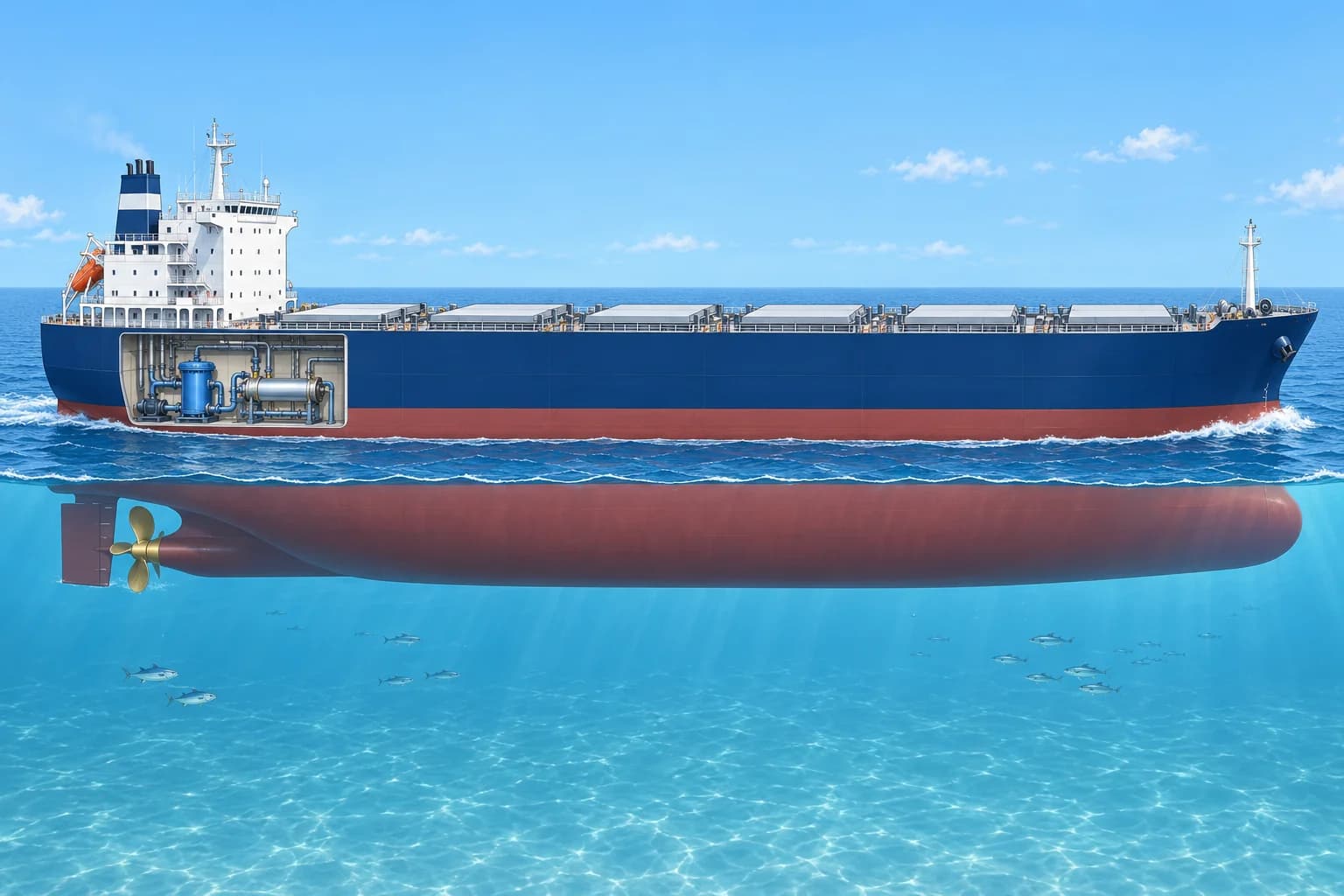
MARPOL
The International Convention for the Prevention of Pollution from Ships (MARPOL) dates from 1973 and was combined with its 1978 Protocol. It entered into force on 2 October 1983. Its six annexes cover oil (I), noxious liquid substances in bulk (harmful liquid cargoes carried in tanks) (II), harmful substances in packaged form (III), sewage (IV), garbage (V) and air pollution (VI). States joining MARPOL accept I and II. They may accept III–V separately; VI requires joining the 1997 Protocol.
How MARPOL works
Check the applicable annex for equipment, survey, certificate and record requirements. Examples include the International Oil Pollution Prevention (IOPP) Certificate, International Air Pollution Prevention (IAPP) Certificate and Oil Record Book. Not every annex requires both a certificate and a record book; Annexes III and V have no international MARPOL certificate. Detailed pollution controls and record-keeping are covered in Ocean: pollution prevention.
Greenhouse gas
Annex VI also covers energy efficiency. In April 2025 the MEPC approved a draft IMO Net-Zero Framework: a global fuel standard with a carbon price. In October 2025 an extraordinary session voted to adjourn its adoption for one year. At the time of writing, it has not been adopted. Watch for the outcome, because MARPOL amendments can apply about 16 months after adoption.
Ballast water and antifouling
For ships subject to the Ballast Water Management (BWM) Convention 2004 D-2 standard, the phase-in ended on 8 September 2024. D-2 limits living organisms discharged in ballast water, usually met through approved treatment. The Anti-fouling Systems (AFS) Convention 2001 bans tributyltin (TBT) biocides in hull coatings. New application of cybutryne coatings has been banned since 1 January 2023; existing coatings have removal or sealing deadlines.
Ship recycling
The Hong Kong Convention on ship recycling entered into force on 26 June 2025. Covered new ships must have an Inventory of Hazardous Materials (IHM), a list of hazardous materials on board. Covered existing ships of 500 GT and above need a certified IHM by 26 June 2030, or before recycling if that is sooner. Ships may only be recycled at authorised yards.
Key figures
- MARPOL
- In force 2 Oct 1983; Annexes I and II compulsory
- Six annexes
- Oil, noxious liquids, packaged, sewage, garbage, air
- BWM D-2
- Phase-in ended 8 Sept 2024 for ships subject to D-2
- AFS bans
- TBT banned; new cybutryne applications banned from 1 Jan 2023
- Hong Kong Convention
- In force 26 June 2025; covered existing ships: IHM by 26 June 2030
- Net-Zero Framework
- Approved Apr 2025; adoption adjourned Oct 2025
Remember
- MARPOL has six annexes; Annexes I (oil) and II (noxious liquids) are compulsory.
- MARPOL certificates and records depend on the annex; not every annex requires both.
- For ships subject to D-2, the BWM phase-in ended on 8 September 2024.
- Covered new ships need an IHM; covered existing ships need one by 26 June 2030, or before recycling if sooner.
Common mistakes
Wrong: The IMO Net-Zero Framework already applies to ships.
Right: Its adoption was adjourned in October 2025, and it is not yet adopted. Follow your company's updates.
Wrong: Ballast water exchange at sea is still enough under the BWM Convention.
Right: Since 8 September 2024 ships subject to D-2 must meet limits on living organisms discharged, usually with an approved treatment system.
Worked case
Under the Hong Kong Convention alone, your covered 15-year-old bulk carrier is inspected in late 2026. The chief engineer says: "The Inventory of Hazardous Materials is only for ships going to the breakers." Is he right, and is the IHM already overdue?
Show the answer
No. An IHM identifies hazardous materials throughout the ship’s working life, not only before recycling. Under the Hong Kong Convention alone, a covered existing ship needs a certified IHM by 26 June 2030, or before recycling if sooner. In late 2026, that transition period is still running. Do not claim it is overdue solely because the Convention entered into force in 2025.
Practice question
Your ship holds an IOPP Certificate. Does that establish compliance with every MARPOL annex?
- Yes; it covers every pollution category
- Yes; other annexes concern shore facilities
- No; check each applicable annex’s requirements
- No; only Annex VI requires certification
Show the answer
Answer: C. The IOPP Certificate concerns Annex I oil-pollution requirements. Check each applicable annex separately; not every annex requires an international certificate.
5 · STCW & MLC
STCW and the Maritime Labour Convention
STCW sets what you must know and prove to hold your certificate. The MLC sets how you must be employed, housed, fed and cared for.
STCW structure
The 1978 STCW Convention (Standards of Training, Certification and Watchkeeping for Seafarers) was substantially amended in 1995 and by the 2010 Manila amendments, which entered into force on 1 January 2012. It has three layers. The articles contain the treaty rules. The regulations in the Annex are grouped in chapters; chapter II is the deck department. The STCW Code gives the detail: Part A is mandatory, with the competence tables, and Part B is guidance.
Certificates
A certificate of competency (CoC) lets an officer serve in a rank, such as officer in charge of a navigational watch (II/1) or master (II/2). A certificate of proficiency (CoP) proves a skill, such as basic training. You revalidate (renew) your CoC every five years under the issuing state’s continued-competence rules. A medical certificate lasts at most two years for adults, or one year if you are under 18. On a ship of another flag you need that flag's endorsement attesting recognition of your CoC.
Recent STCW changes
Resolution MSC.560(108) amended the basic training table A-VI/1-4. From 1 January 2026 it adds preventing and responding to violence and harassment, including sexual harassment, bullying and sexual assault. Flags decide how existing holders catch up. Personal safety covers the content. The IMO is also running a comprehensive review of STCW, so watch for larger changes later this decade.
The MLC
The Maritime Labour Convention, 2006 (MLC) comes from the International Labour Organization (ILO). Its tripartite process brings governments, shipowners and seafarers together. Five titles cover minimum requirements, employment, accommodation and food, health and welfare, and compliance. Covered ships of 500 GT or more on international voyages or operating from a foreign port need a Maritime Labour Certificate and Declaration of Maritime Labour Compliance (DMLC). The certificate confirms compliance. DMLC Part I states the flag’s requirements; Part II records the shipowner’s measures to meet them.
MLC amendments
Code amendments go through a tripartite committee and the International Labour Conference. They are deemed accepted after two years unless enough members disagree, and enter into force six months later. The 2022 amendments (internet access, free drinking water, properly sized personal protective equipment) entered into force on 23 December 2024. The 2025 amendments (harassment, shore leave, repatriation, seafarers as key workers) were approved in June 2025 and are expected in force on 23 December 2027. Your rights in detail are in Human factors.
Key figures
- STCW Manila amendments
- In force 1 January 2012
- CoC revalidation
- Every 5 years
- Medical certificate
- Adults: at most 2 years; under 18: at most 1 year
- MSC.560(108)
- Harassment in basic training, in force 1 Jan 2026
- MLC 2022 amendments
- In force 23 December 2024
- MLC 2025 amendments
- Approved June 2025; expected in force 23 Dec 2027
Remember
- STCW: articles, regulations and Code; Part A is mandatory, Part B is guidance.
- A CoC is revalidated every five years; medical validity is at most two years for adults, one if under 18.
- Since 1 January 2026, basic training includes preventing violence and harassment.
- The MLC is the ILO's seafarers' convention: 2022 amendments in force; 2025 ones expected Dec 2027.
Common mistakes
Wrong: STCW Code Part B is optional, so it never matters.
Right: Part B is guidance, but flags and port states use it to judge whether Part A is met.
Wrong: Your national CoC is enough on any foreign-flag ship.
Right: You also need the flag state's endorsement attesting recognition of your CoC.
Wrong: The 2025 MLC amendments on shore leave are already in force.
Right: They are expected to enter into force on 23 December 2027.
Worked case
You are offered a second mate's job on a Liberian-flag ship. You hold a valid national CoC and a medical certificate issued 26 months ago. What is missing before you can sign on?
Show the answer
Renew your medical before joining; at 26 months it is expired. Obtain the Liberian endorsement recognising your CoC. Exceptionally, the flag may permit service for up to three months while recognition is processed. You must hold an appropriate, valid CoC and documentary proof that an application for endorsement has been submitted. Confirm permission with the company before joining; a receipt alone is not permission to sail.
Practice question
Which part of the STCW Code is mandatory?
- Code Part A only
- Code Part B only
- Both Code parts
- Neither Code part
Show the answer
Answer: A. Part A is mandatory and holds the competence tables. Part B is recommended guidance.
6 · State roles
Flag, port and coastal states in the conventions
The flag state certifies your ship. Port states inspect foreign ships. Coastal states organise routeing, reporting and traffic services.
The flag state
The flag state turns the conventions into law, surveys the ship and issues the statutory certificates: the certificates a convention requires. It may delegate surveys to a recognised organisation (RO), usually a classification society, under the RO Code. It still answers for the result. The Casualty Investigation Code requires a marine safety investigation into every very serious marine casualty: total loss of a ship, a death or severe environmental damage.
The port state
Main conventions let parties inspect foreign ships in their ports: SOLAS I/19, MARPOL article 5, STCW I/4, Load Lines, MLC and BWM. This is port state control (PSC). Initial checks include certificates, records and ship condition. Clear grounds are evidence of non-compliance, such as a broken lifeboat davit (the device used to launch the boat) or inability to perform essential duties. They justify a more detailed inspection. Serious deficiencies can lead to detention.
No more favourable treatment
Several conventions, such as MARPOL, STCW, the MLC and the SOLAS 1988 Protocol, contain a no-more-favourable-treatment clause. A port state applies the same standards to ships of states that have not joined. Choosing a flag outside a convention does not let a ship escape its rules in a party's port.
The coastal state
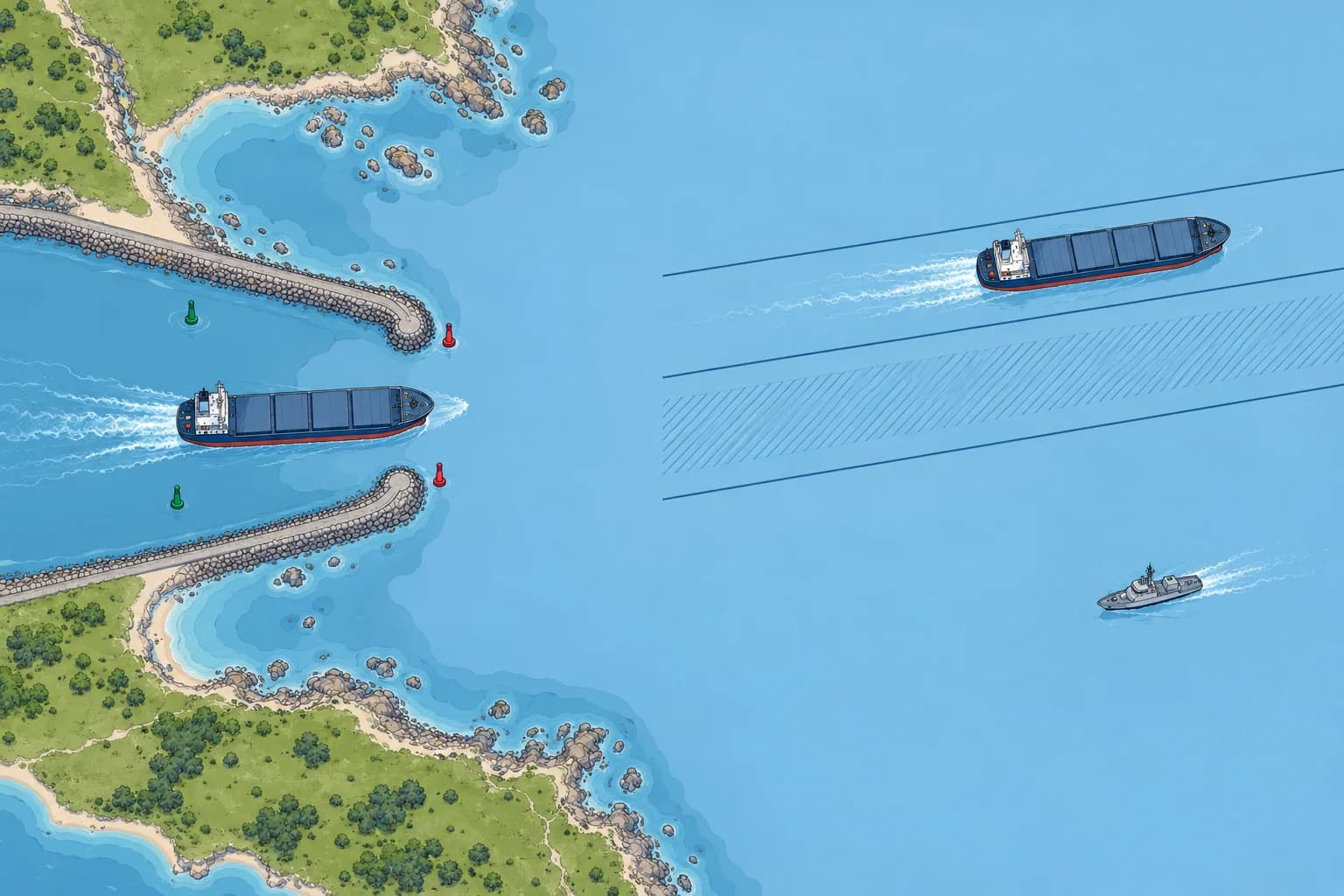
Coastal states use ships’ routeing under SOLAS V/10, ship reporting systems under V/11 and vessel traffic services (VTS) under V/12. IMO adopts international routeing systems and mandatory reporting systems. Governments establish VTS using IMO guidelines; individual VTS do not require IMO adoption. A VTS provides traffic information and support. Check whether a routeing system is mandatory and which ships it covers.
Where you fit
As an officer you meet all three roles in one voyage. The flag's rules follow the ship everywhere. The coastal state's reporting and routeing apply as you pass. The port state checks you on arrival. Knowing which convention gives which state its power helps you answer an inspector calmly and correctly.
Key figures
- Flag state
- Law, surveys, certificates, casualty investigation
- Recognised organisation
- Surveys on the flag's behalf under the RO Code
- PSC powers
- SOLAS I/19, MARPOL art. 5, STCW I/4, MLC, LL, BWM
- Clear grounds
- Evidence of non-compliance, including crew or equipment deficiencies
- Coastal state tools
- Routeing V/10, ship reporting V/11, VTS V/12
Remember
- The flag state certifies; it may delegate surveys to an RO but keeps the responsibility.
- Initial PSC checks include certificates, records and ship condition; clear grounds justify a more detailed inspection.
- No more favourable treatment: non-party flags get the same standards.
- Coastal tools: routeing V/10, reporting V/11 and government-established VTS under V/12.
Common mistakes
Wrong: A class society that issues a certificate becomes the responsible state.
Right: The RO acts for the flag state. The flag remains responsible under the convention.
Wrong: A ship flagged in a non-party state is exempt from that convention in port.
Right: Under the no-more-favourable-treatment clause, the port state applies the same standards.
Wrong: Valid certificates prevent an inspector from checking the ship’s general condition.
Right: Initial checks include certificates, records and ship condition. Clear grounds justify a more detailed inspection; valid certificates are no reason to disregard evident defects.
Worked case
In a party’s port, your non-party-flag ship has apparently valid ballast documents, but the inspector finds contradictory treatment logs. The master says certificates prevent further checks. Is that right?
Show the answer
No. No-more-favourable treatment lets the port apply the BWM standards relevant to your ship despite its flag’s status. Initial PSC checks include certificates, records and ship condition. Contradictory logs can be clear grounds for a more detailed inspection; valid documents do not remove that power.
Practice question
Who remains responsible when a classification society issues a SOLAS certificate on behalf of the flag?
- The class society issuing the certificate
- The port state inspecting the ship
- The shipowner employing the crew
- The flag state delegating the survey
Show the answer
Answer: D. The RO acts for the flag. The flag state keeps the convention duty and its responsibility.