
Maritime law, rules and watchkeeping · Level P1 · 5 parts · about 17 min
Designated security duties: access control, searches and security equipment (STCW A-VI/6-2)
5 short parts: Access control · Searches · Restricted areas · Equipment · Drills, records. Each part explains the idea, then gives the points to remember, the common mistakes, a worked case and a practice question; the Academy unit adds all 28 check questions.
1 · Access control
Controlling access to the ship
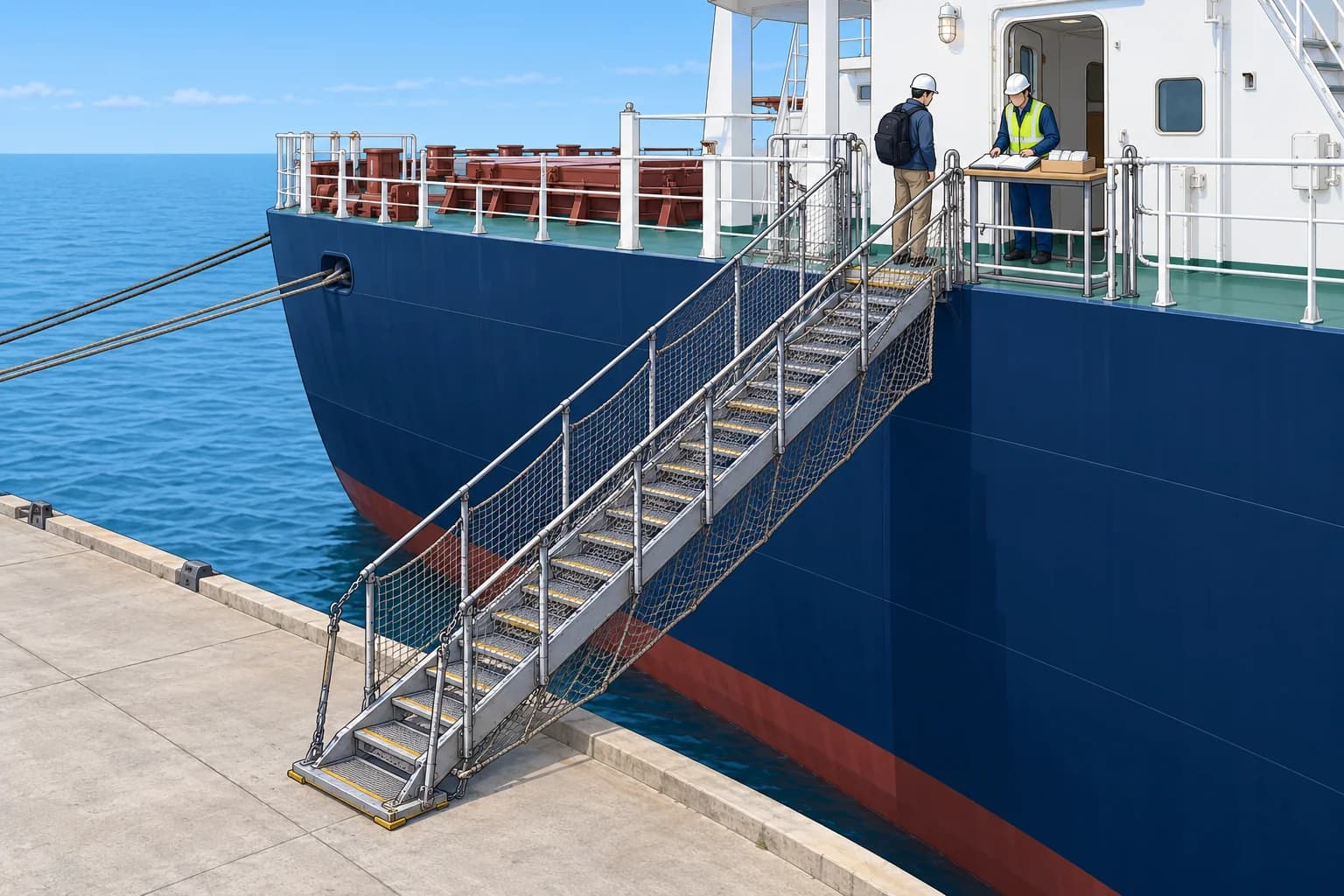
The gangway is the ship's front door. On designated security duty, you decide who comes aboard, and you check every person, every time.
Your duties
If the ship security plan (SSP) gives you designated security duties, such as gangway watch, searches or patrols, STCW regulation VI/6 requires training to table A-VI/6-2, on top of security awareness. You keep the measures of the plan working under the ship security officer (SSO). The practical exercises, such as searches and equipment checks, are done in your approved course.
Every access point
Access control covers every way on board: the gangway, accommodation ladder, pilot ladder, ramps, mooring lines, anchor chain and the side away from the quay. Unused access points are closed, locked or watched. The gangway watch stays at the gangway, with a radio, until relieved.
Checking people
Check photo ID against the person’s face. Confirm their reason for boarding against the crew list, visitor list, work order or an officer’s confirmation. Visitors sign the visitor log (name, company, purpose, times in and out), wear a numbered visitor pass and are escorted or met as the plan says. Returning crew show their pass or ID too. Refuse anyone who cannot prove who they are and why they came; call the officer of the watch (OOW).
Higher levels
At level 2 the plan may limit access points, require escorts for all visitors and increase searches. At level 3 access may be limited to one controlled point and only to people responding to the threat.
Ship and port
When the ship and a port facility, or another ship, need to agree who does which security task, they may sign a Declaration of Security (DoS). The SSO handles it, but it may change what you check at the gangway.
Key figures
- STCW training
- Regulation VI/6; Code table A-VI/6-2
- Visitor log
- Name, company, purpose, pass number, time in and out
- Level 3 access
- May be limited to a single controlled access point
- Level 1 access
- Routine identity, visit, log, pass and escort checks under the plan
At the gangway, for every visitor
- Stop the person at the gangway head and greet them politely. — Nobody walks aboard unchecked; courtesy keeps the check calm.
- Check their photo identity and the reason for the visit against the expected-visitor list or a work order. — A valid ID alone does not prove the person has business on board.
- Search or screen them and their bags as the plan requires for the current level. — Weapons, drugs or devices must not pass the access point.
- Record them in the visitor log and issue a numbered pass. — The log shows who is on board at any time, which matters in an emergency.
- Arrange the escort or call the person they are visiting. — Visitors must not wander into restricted areas.
- At departure, collect the pass and log the time out. — A missing pass or open entry means someone may still be on board.
Remember
- Control every access point, including ladders, ramps, mooring lines and the offshore side.
- Check identity and the reason for the visit; a valid ID alone is not enough.
- Log each visitor, issue a pass, arrange an escort or reception as the SSP requires, and log departure.
- Refuse anyone who cannot prove who they are and why they are there; call the OOW.
- Apply the SSP’s extra access controls at levels 2 and 3.
Common mistakes
Wrong: A person in a company uniform does not need to be checked.
Right: Uniforms can be bought or stolen. Check the ID and the reason for the visit of everyone.
Wrong: Crew members can always walk on board without showing anything.
Right: Crew returning from shore also show their ID or ship's pass, as the plan requires.
Worked case
You are on gangway watch at level 1. A man says he is from a radar service company, called by the second officer. He has a company ID card but no work order, and the expected-visitor list is empty.
Show the answer
Keep him at the gangway head. Call the officer of the watch or the second officer by radio to confirm he is expected. If they confirm, check his ID against his face, search or screen his tool bag as the plan requires, log him, give him a pass and arrange an escort. If nobody expects him, refuse boarding politely and report it.
Practice question
A visitor shows a valid ID card. What else must you check before letting them board?
- Their nationality and their home address
- The reason for their visit on board
- Whether they have visited the ship before
- Whether they speak the working language
Show the answer
Answer: B. Identity and a valid reason for the visit are both needed, for example a work order or confirmation from the person being visited.
2 · Searches
Searching people, baggage, stores and the ship
A good search follows a set pattern. You look for threats, respect privacy and stop if you find a suspicious item.
What gets searched
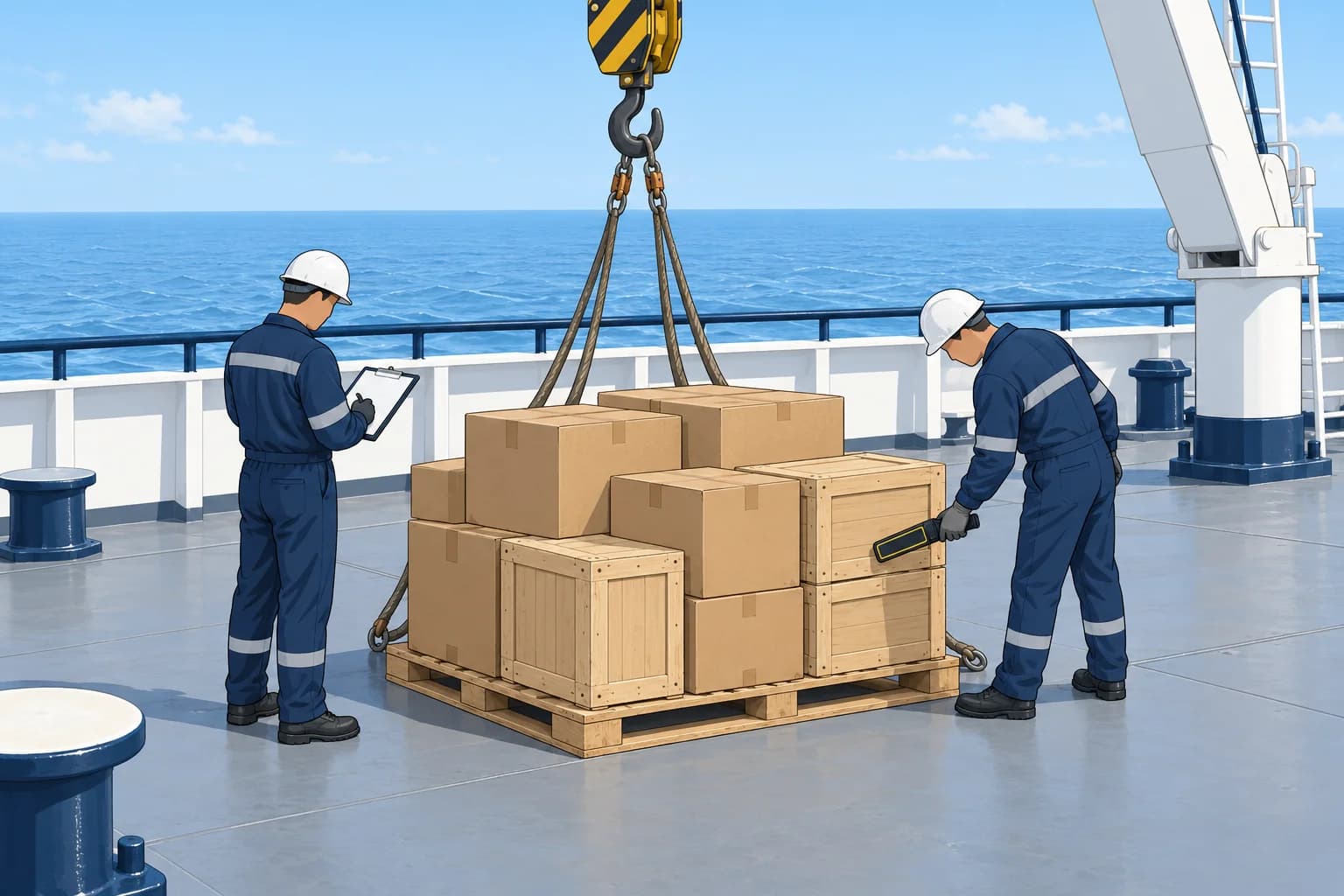
The plan sets which people, bags, vehicles and stores (ship’s supplies) you search at each level. Look for weapons, explosives, drugs, stowaways and tampering: signs that something has been altered or damaged. Use the search area agreed with the port. Keep searched people and items apart from unchecked ones. At higher levels, searches increase and may cover part or all of the ship.
Persons and baggage
Explain the search and ask permission. Refusal may mean refusal of boarding. Use a metal detector or a pat-down search (a hand search over clothing). Use a same-sex searcher for a routine pat-down, with a witness. If none is available, keep boarding on hold and ask the SSO for instructions. Ask the owner to open bags themselves. Respect privacy and religious customs.
Stores and vehicles
Check deliveries against the ship’s order and inspect seals and packaging. Reject unexpected items and stow checked stores securely. For vehicles, check the driver, passengers and delivery papers separately. Have the driver open the cab, luggage and load spaces for inspection as your training and plan require. Check accessible hiding places and keep checked vehicles secure. Do not crawl beneath or dismantle a vehicle unless authorised and safe. Stop and report anything suspicious.
Searching the ship
Before sailing, or when there is a threat, the SSO organises a systematic search. Each team gets an area and a checklist. Work in pairs, search each space from floor to ceiling in a set pattern, and overlap with the next team. Look for stowaways, unknown packages, signs of tampering, loose panels and fresh paint or welding. Inspect void spaces (empty structural spaces) only from safe openings; enclosed-space entry requires the ship’s entry procedure.
If you find something
Do not touch, move or open a suspicious item. Mark the place, move away, keep others back and report to the SSO. A stowaway must be treated humanely: keep them safe, do not threaten them, and report to the master.
Key figures
- Pat-down
- Same-sex searcher; if unavailable, hold boarding and ask SSO
- Stores
- Checked against the order, then stowed securely at once
- Search pattern
- Deck level upward; inspect voids only from safe openings
- Suspicious item
- Do not touch; mark, withdraw, report
Searching a space on board
- Take your assigned area, checklist, torch and radio, and search with a partner. — A plan avoids gaps; a partner gives safety and a witness.
- Stop, listen and look around the whole space before you move anything. — Sounds and things out of place are easier to notice before you disturb the space.
- Search authorised spaces in layers from deck level upward. Inspect voids from safe openings; enclosed-space entry requires the ship’s entry procedure. — A set pattern prevents gaps. A security-search assignment does not authorise enclosed-space entry.
- If you find a suspicious item, stop the search. Do not touch it. Withdraw, keep others away and report from a safe location. Do not report the space clear. — Handling an item can set it off. A stopped search leaves an unresolved concern.
- Report the search status. Only after a complete search finds nothing suspicious, report and mark the space clear as the plan requires. Report stopped or incomplete searches as such. — Accurate status tells the SSO which spaces are clear and which still need action.
Remember
- The plan sets what share of people, bags, vehicles and stores are searched at each level.
- Explain, ask consent and respect privacy. Routine pat-down: same-sex searcher; otherwise hold boarding and ask the SSO.
- Check stores against the order and stow them securely at once.
- Search the ship in pairs, by area and in layers, overlapping with other teams.
- Never handle a suspicious item; treat stowaways humanely and report.
Common mistakes
Wrong: Search a passenger's bag yourself while they wait outside the room.
Right: Ask the owner to open it in front of you and a witness. It protects both of you.
Wrong: Carry a suspicious box to the deck so the experts can see it better.
Right: Never move it. Mark the place, leave, keep others away and report to the SSO.
Wrong: Stores delivered by the usual supplier can go straight to the storeroom.
Right: Check every delivery against the order and look for tampering before it comes aboard.
Worked case
During a search before sailing, you and a partner open a paint locker and find a sports bag that is not on the store list, with a cable sticking out of the zip.
Show the answer
Do not touch or open it. Step back out of the locker with your partner and keep others away. Note the exact position and description. Report to the SSO by radio from a safe distance, following any instruction on radio use near the item. Do not continue searching nearby until the SSO decides what to do.
Practice question
A visitor consents to a required pat-down, but no same-sex searcher is available. What do you do?
- Hold boarding and ask the SSO for instructions
- Replace the pat-down with an escort yourself
- Ask an available witness to approve the search
- Admit the visitor and arrange the search later
Show the answer
Answer: A. Consent does not remove the search safeguards. Hold boarding and let the SSO arrange an authorised solution.
3 · Restricted areas
Restricted areas and watching the ship
Only authorised people may enter restricted areas. Secure these spaces and watch the ship and nearby water to help detect threats early.
What they are
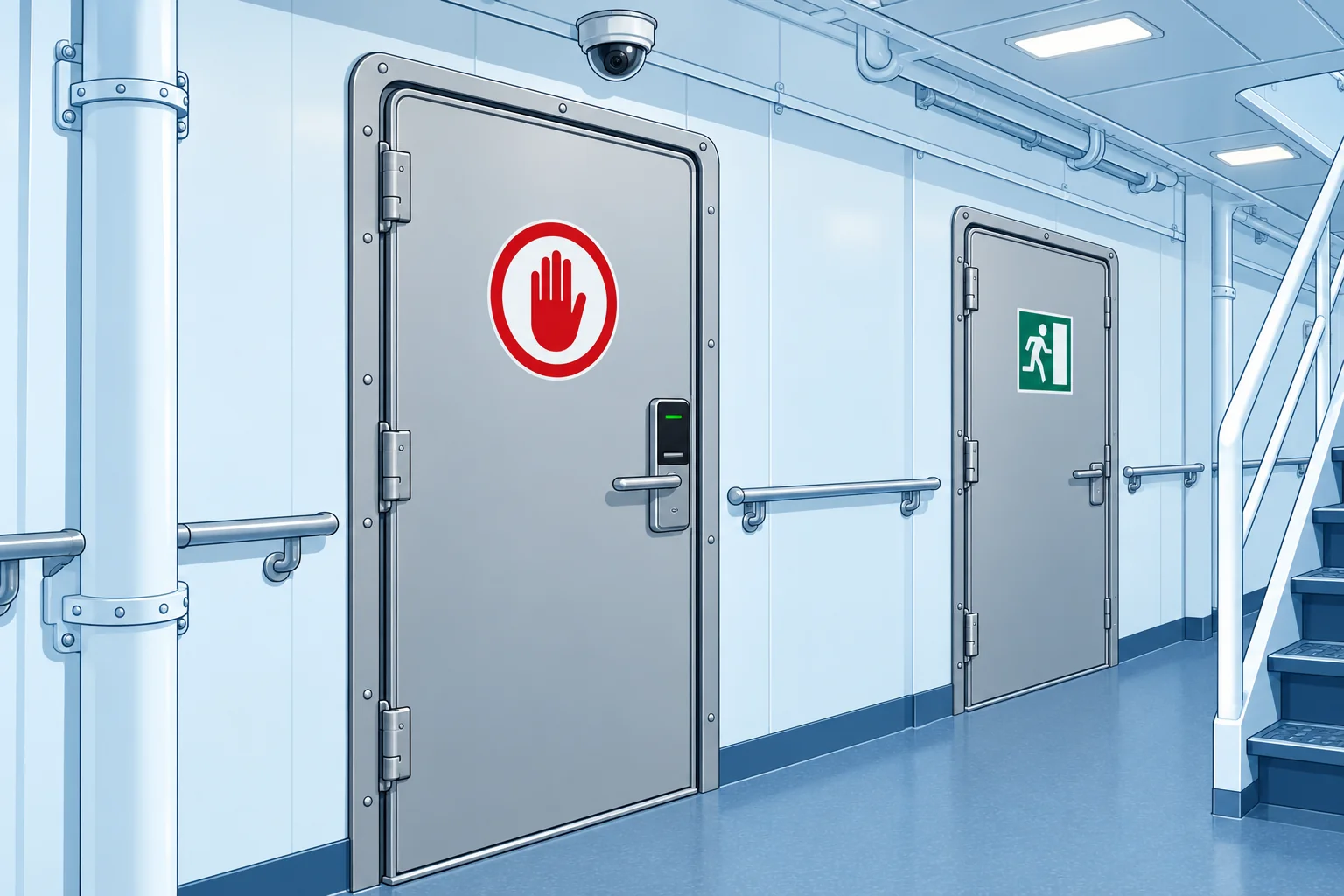
Restricted areas are spaces the plan protects because an intruder could take control of the ship, damage it or hide something there. Typical examples are the navigation bridge, machinery spaces and other control stations, spaces with security and surveillance equipment, ventilation and air-conditioning systems, access to drinking water tanks and pumps, spaces with dangerous goods, cargo pump rooms, cargo spaces and stores, and crew accommodation.
Marking and locking
Restricted areas are marked with signs saying that entry is restricted and that unauthorised presence is a breach of security. Doors are locked or watched, and keys and codes are controlled. Fire escape routes must stay usable from inside: security locks must never trap people in a fire. Check doors and seals during your rounds and report any that are open or damaged.
Watching the ship
The plan sets how the ship and the area around it are monitored: deck watches and patrols, lighting, alarms and closed-circuit television (CCTV). At night, light the decks, the ship's side and the water around it, especially on the side away from the quay, without dazzling the bridge or other ships. Vary your patrol times and routes so nobody can predict them.
The waterside
Watch for small boats approaching or drifting near the ship, divers, people climbing mooring lines or the anchor chain, and anything thrown aboard. At anchor, keep a watch all round and on the anchor chain.
Higher levels
At level 2 expect more patrols, especially when activity on board is low, and waterside watch from the ship or by boat patrols arranged with the port. At level 3 restricted areas may be guarded continuously.
Key figures
- Typical restricted areas
- Bridge, machinery spaces, security equipment, drinking water
- Fire escapes
- Must stay usable; locks never trap people inside
- Patrols
- Vary the time and route
- Lighting
- Decks, ship's side and water, without dazzling the bridge
Remember
- Restricted areas include the bridge, machinery spaces, security equipment and drinking water.
- They are marked, locked or watched; escape routes must stay usable from inside.
- Light the decks, the ship's side and the water, especially the offshore side.
- Vary patrol times and routes; watch for small boats, divers and climbers.
- Higher levels mean more patrols, waterside watch and guards.
Common mistakes
Wrong: Chain the emergency escape door shut to keep intruders out.
Right: Security must never block a fire escape. Use locks that open from inside, alarms or watches.
Wrong: Patrol at exactly the same times each night so the log looks tidy.
Right: Fixed patrols are easy to predict. Vary your times and routes.
Worked case
On a night patrol alongside, you find the door to the steering gear room unlocked and the restricted-area sign lying on the deck. Nobody has a permit to work there.
Show the answer
Do not enter alone. Report at once to the officer of the watch by radio with the location. Stay at a safe distance, watching the door, until help arrives. The SSO will decide whether to search the space and check for tampering. Record the time and what you found in your patrol report.
Practice question
A visitor has a gangway pass. What else is needed before they enter the bridge?
- A note of their name in the visitor log
- An escort chosen by the visitor alone
- Authorisation under the ship security plan
- A promise to stay clear of the controls
Show the answer
Answer: C. Permission to board does not grant access to restricted areas. Follow the SSP’s rules for specific authorisation to enter the bridge.
4 · Equipment
Security equipment, its limits and its tests
Cameras, lights, alarms and detectors help you watch more of the ship. They only work if you know their limits and test them as the plan says.
What the ship has
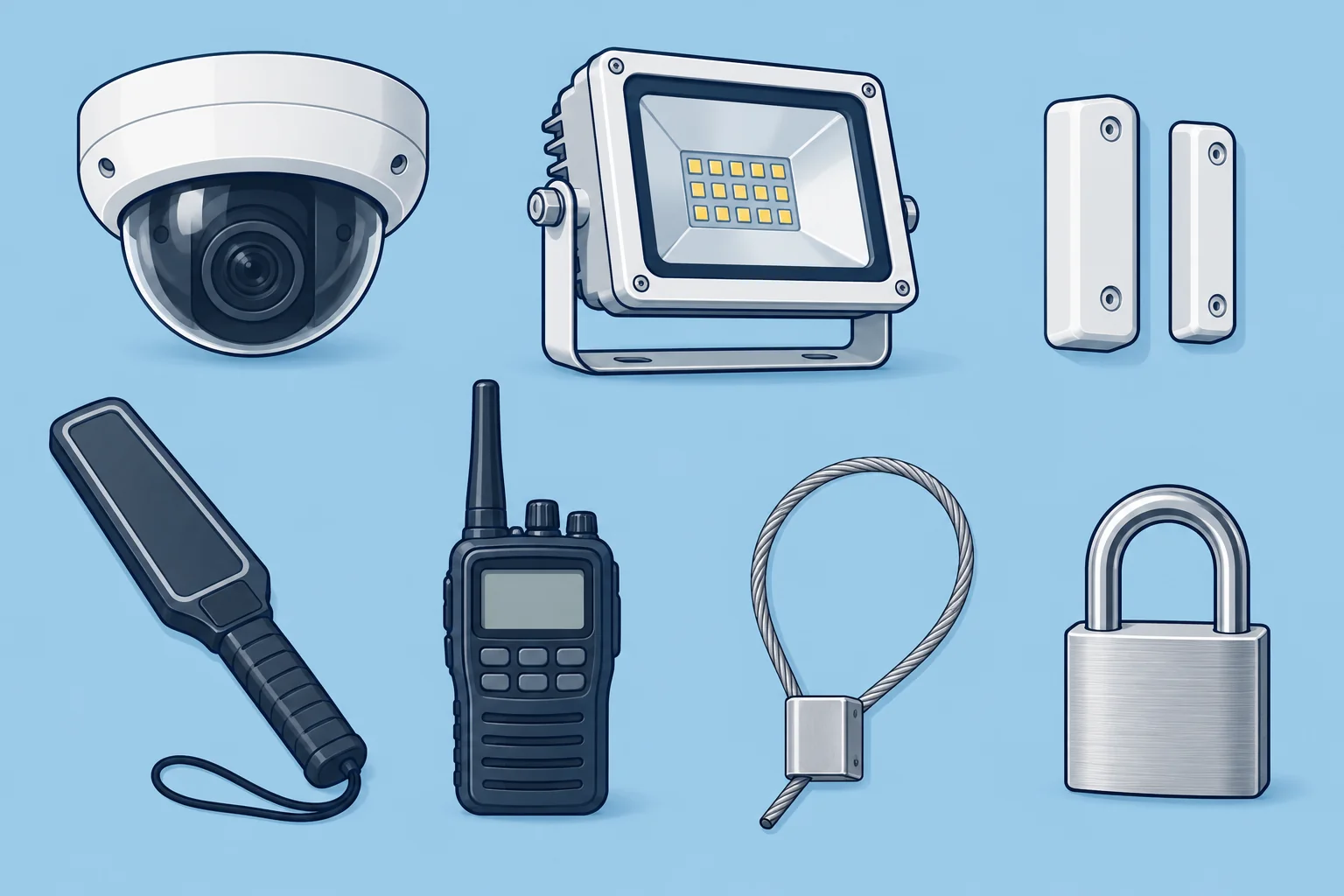
Security equipment depends on the ship and its plan. It can include CCTV cameras and monitors, deck and floodlights, intruder alarms on doors and hatches, locks, seals and key control, handheld and walk-through metal detectors, radios and the public address system (ship’s loudspeakers), and on some ships searchlights or water hoses ready for anti-boarding.
Know the limits
Cameras have blind spots and poor night images; recordings help later review, but live response needs monitoring. Lights can fail or dazzle. False alarms can make people ignore real alerts. Locks depend on controlled keys and codes. Seals show tampering; they do not prevent entry. Metal detectors miss non-metallic threats and drugs. Radios may not work in some parts of the ship. Noise can mask public address announcements. Equipment supports the watch; it does not replace people.
The SSAS
The ship security alert system (SSAS) sends a covert alert, with the ship’s identity and position, to the authorities the flag state chooses, usually including the company. It gives no sound or light on board. Never press an activation point to test it informally. Follow only the SSP’s authorised test procedure, including required notifications to prevent a false alert. A false alert can start a real response.
Tests and records
The plan sets how often each item is tested, calibrated (compared with a known reference) and maintained. You may check that cameras record, that lights work before dark, that alarms sound, and that a detector passes its prescribed test with an approved test piece. Report any fault to the SSO at once and record each test and repair; these are security records.
Key figures
- SSAS on board
- No alarm sound or light; covert ship-to-shore alert
- Metal detector limit
- Does not find plastic, ceramic, liquids or drugs
- Tests
- As the SSP sets; faults reported and recorded
Remember
- Equipment includes CCTV, lighting, alarms, locks, seals, metal detectors and radios.
- Every item has limits: blind spots, false alarms, items a detector cannot find.
- Equipment supports the watch; it does not replace people.
- SSAS: covert alert to shore, no alarm on board; test only by the SSP’s authorised procedure.
- Test, calibrate and maintain as the plan says; report and record faults.
Common mistakes
Wrong: With CCTV running, the gangway watch can stand down at night.
Right: Cameras have blind spots and need someone watching. Keep the watch the plan requires.
Wrong: Press an SSAS button to check it still works.
Right: A real alert starts a real response. Test only under the plan's procedure, with the authorities warned.
Worked case
Before your night gangway watch, the aft mooring deck CCTV camera shows a black image. During the prescribed detector test, the approved test piece gives no alarm.
Show the answer
Report both faults to the SSO or officer of the watch at once and record them in the security equipment log. Until they are fixed, the SSO may set extra patrols on the aft mooring deck and hand searches or a handheld detector at the gangway. Do not just carry on as if the equipment worked.
Practice question
A bag passes a working metal detector without an alarm. What can you conclude?
- The bag contains no weapons or explosives
- Non-metallic threats may still be present
- All baggage checks in the SSP are complete
- The bag is safe if its owner is escorted
Show the answer
Answer: B. No alarm does not establish that the bag is safe. Non-metallic threats may remain, so complete the other checks required by the SSP.
5 · Drills, records
Security drills, exercises, reports and records
Drills keep the plan alive, reports bring problems to the SSO, and records prove what was done. Each one is part of your designated duties.
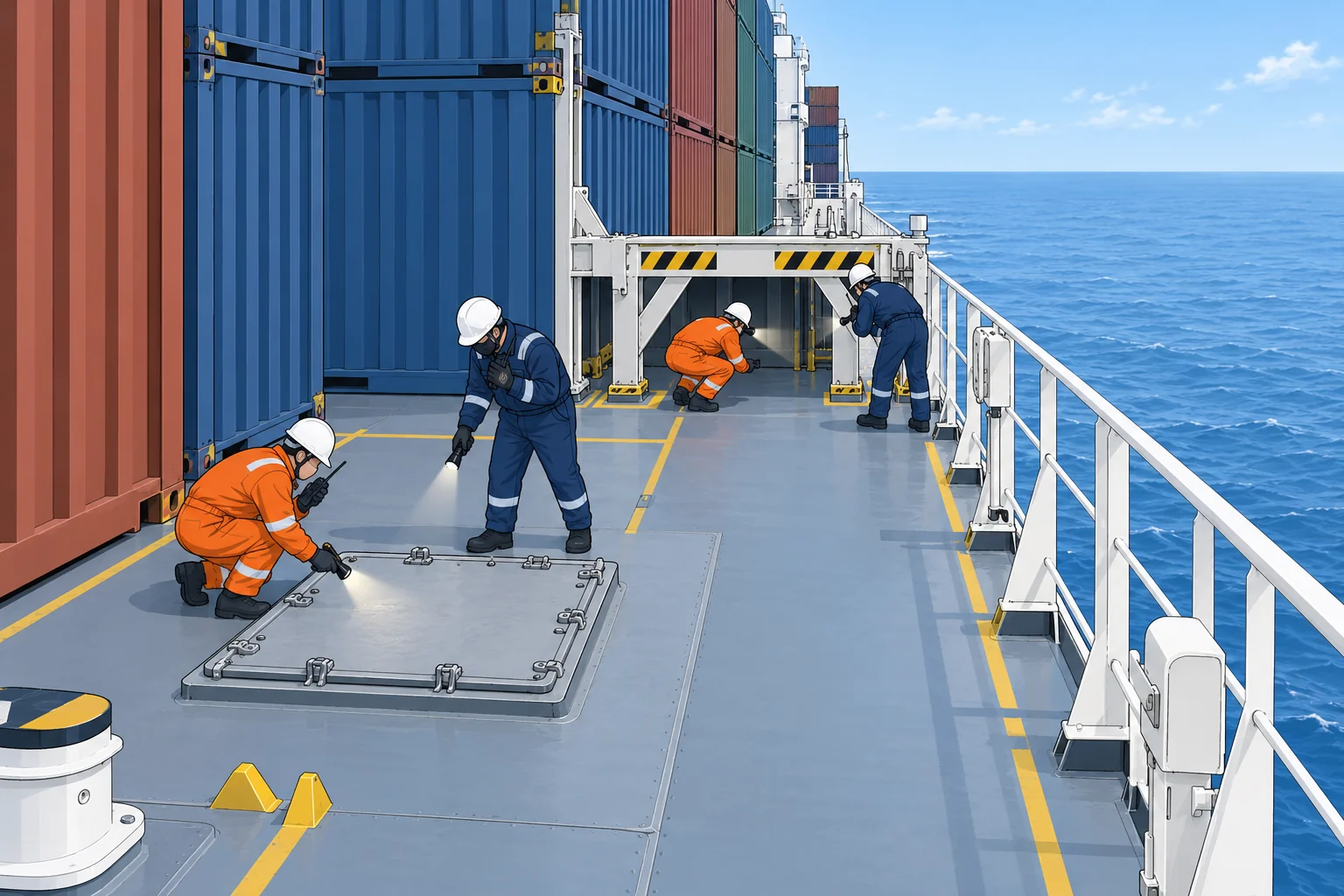
Drills
A security drill tests one part of the plan on board, such as a search, an intruder on deck, a bomb threat or a change of security level. The ISPS Code (Part B, paragraph 13.6) says drills should be held at least once every three months. If more than 25 % of the crew are replaced by people who have not drilled on this ship in the past three months, a drill should follow within one week. The EU and many flag states make this mandatory.
Exercises
A security exercise is bigger and may involve the company, port facilities and authorities, through practical activity or a tabletop exercise (a discussion of a scenario). It should be held at least once each calendar year, with no more than 18 months between exercises (Part B, paragraph 13.7).
What you report
Report to the SSO, or to the officer of the watch who passes it on: any security breach (such as an intruder), an unattended door that should be secured, suspicious people, items or boats, threats received, faulty security equipment, and anything that looks like tampering. Report at once, say what, where, when and who, and write it down when asked.
Security records
Under ISPS Part A, section 10, the ship keeps records of training, drills and exercises; security threats and incidents; breaches; changes of security level; communications about specific threats; audits and reviews; and the maintenance, calibration and testing of security equipment, including the SSAS. Keep records as long as the flag state (the ship’s country of registration) requires. Use the ship’s working language or languages. If none is English, French or Spanish, include a translation into one of them. Share records and plan details only with authorised recipients through approved channels.
Key figures
- Security drills (ISPS B/13.6)
- At least once every three months
- Over 25 % replaced by crew not drilled here in past three months
- Drill within one week
- Exercises (ISPS B/13.7)
- Once each calendar year, no more than 18 months apart
- Records (ISPS A/10)
- Drills, incidents, breaches, levels, equipment tests
Remember
- Drills at least every three months (ISPS B/13.6).
- If over 25 % are replaced by crew not drilled on this ship in the past three months, hold a drill within one week.
- Exercises once each calendar year, no more than 18 months apart.
- Report breaches, threats, suspicious activity and equipment faults to the SSO at once.
- Security records are kept as the flag state sets and are confidential.
Common mistakes
Wrong: Write down drills as done even if they were cancelled, so the records look complete.
Right: False security records break the rules and hide gaps. Record only what really took place.
Wrong: An unsecured restricted-area door needs no report once you lock it.
Right: An unexpectedly unsecured restricted door may indicate a breach. Report it so the SSO can check and record it.
Worked case
Your ship's last security drill was six weeks ago. In port, nine of the 24 crew sign off and are replaced by seafarers new to the ship. The SSO plans the next drill for six weeks later.
Show the answer
Nine of 24 is about 37 %, more than 25 %, and the new crew have not drilled on this ship in the last three months. ISPS B/13.6 calls for a drill within one week of the change. Remind the SSO politely, so the new crew learn the ship's security procedures early. The drill and the crew change are recorded.
Practice question
What minimum routine frequency does ISPS Part B recommend for onboard security drills?
- At least once a year
- At least once a month
- Only when the level changes
- At least every three months
Show the answer
Answer: D. ISPS B/13.6 recommends security drills at least once every three months; many flag states and the EU make this mandatory.