
Maritime law, rules and watchkeeping · Level R3 · 4 parts · about 13 min
Flags, papers and cruising in foreign waters
4 short parts: Flags · Entry and exit · VAT and customs · ICC and permits. Each part explains the idea, then gives the points to remember, the common mistakes, a worked case and a practice question; the Academy unit adds all 24 check questions.
1 · Flags
Ensign, courtesy flag and the Q flag
Your ensign identifies your boat's registration. Fly the local courtesy flag abroad, and follow the arrival port's instructions for the yellow Q flag.
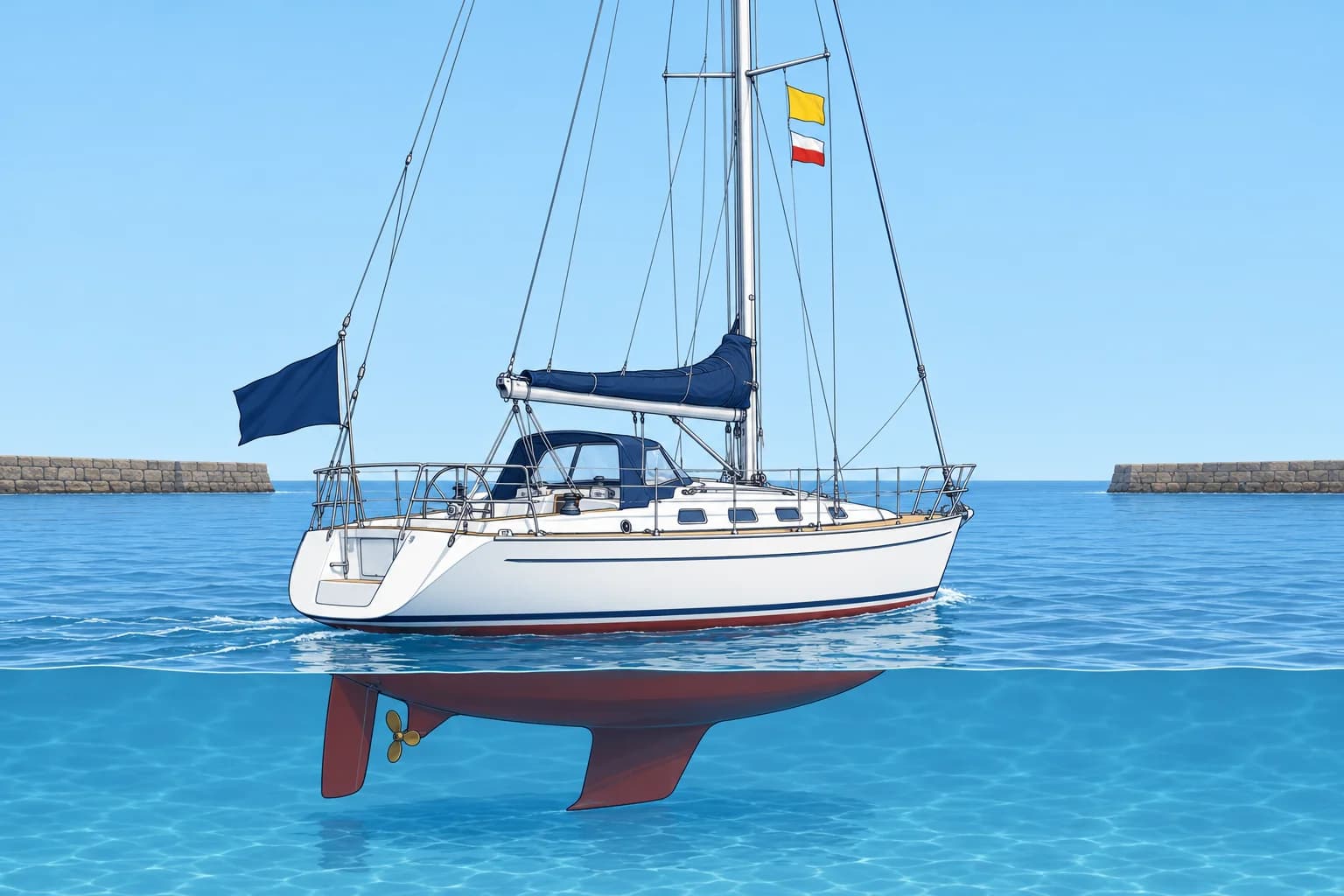
The ensign
The ensign is the national flag your boat is entitled to fly, as shown on its registration. Fly it at the stern on a staff, or on the backstay, the wire supporting a sailing yacht's mast from aft. Some countries have a special ensign for yachts; use only the one your papers allow.
The courtesy flag
In foreign waters, fly the host country's customary courtesy flag from the starboard spreader, a mast strut on the boat's right when you face the bow, or a starboard halyard, a flag-hoisting line. This may be its civil ensign, the flag for civilian vessels: visiting yachts commonly use the Red Ensign in the UK. Keep it clean, upright and in good condition.
The Q flag
The plain yellow Q flag means ‘My vessel is healthy and I request free pratique’: health permission to enter port and carry out normal port activities. Where Q is required, hoist it at the stage specified in the port's arrival instructions. Keep it flying until those instructions permit lowering. Q does not replace customs or immigration clearance; tying up does not mean you are cleared.
Other flags
A club burgee, a club's identifying flag, goes at the masthead or on the port (left) spreader. Never fly flags that look like distress or other signals by mistake: the International Code flags have meanings of their own. The Flags unit in GMDSS teaches the code flags.
At night and in port
Follow local customs for the ensign and courtesy flag; 08:00 to sunset is common in port. Keep required clearance signals displayed as instructed.
Key figures
- Ensign
- At the stern; the flag shown on your registration
- Courtesy flag
- Host country's customary courtesy flag; starboard spreader
- Q flag
- Plain yellow: healthy, requesting free pratique
- When to hoist Q
- Follow the destination's Q-flag and clearance instructions
Remember
- The ensign at the stern shows the boat's nationality, as in its registration.
- Abroad, fly the host country's customary courtesy flag from the starboard spreader.
- The yellow Q flag requests free pratique: health clearance, separate from customs and immigration.
- Follow the destination's Q-flag and clearance instructions, including when to hoist and lower it.
- Keep flags clean and the right way up; replace worn courtesy flags.
Common mistakes
Wrong: The courtesy flag goes on the port spreader.
Right: It goes on the starboard spreader, the place of honour. The port side is used for burgees and other flags.
Wrong: Lower the Q flag as soon as you tie up.
Right: Tying up does not mean clearance. Follow the destination's Q-flag instructions before lowering it.
Wrong: Any flag of your country will do as an ensign.
Right: Fly the ensign your registration allows. Some countries have special yacht ensigns that need a permit.
Worked case
You arrive from Morocco at a Spanish marina with your ensign, a Spanish courtesy flag and Q flying. An employee suggests lowering Q because you are tied up. Does tying up change its meaning, and what should you check?
Show the answer
Keep your registered ensign at the stern and the customary courtesy flag on the starboard spreader. Q requests free pratique, which is health clearance. Tying up does not mean you have clearance. Follow the port's instructions on when to lower Q, and complete customs and immigration formalities separately.
Practice question
Where do you fly the host country's courtesy flag?
- On the yacht's stern staff
- At the yacht's masthead
- On the yacht's port spreader
- On the starboard spreader
Show the answer
Answer: D. Fly the locally customary courtesy flag on the starboard spreader. It may be a civil ensign, such as the Red Ensign in the UK. Your registered ensign goes at the stern.
2 · Entry and exit
Arriving and leaving: immigration, customs and Schengen
Check two borders: Schengen for people and the EU customs territory for goods. Customs formalities can apply even within Schengen.
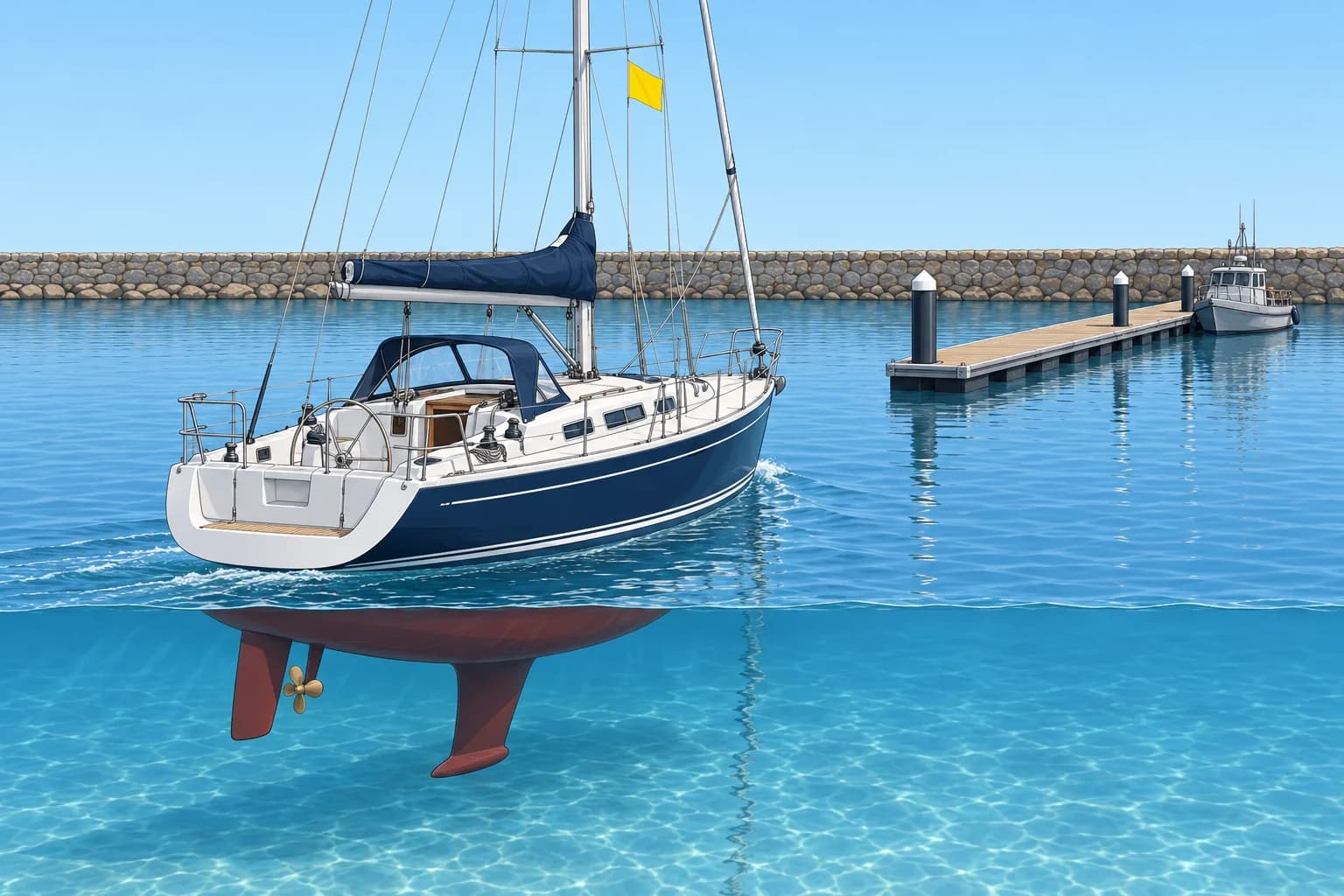
Two different areas
Schengen is about people: routine immigration checks normally do not apply between its members. The EU customs territory is about goods, including your boat. They are not the same. Ireland and Cyprus are in the EU but not in Schengen; Norway, Iceland and Switzerland are in Schengen but not in the EU. The UK is in neither.
Inside Schengen
On a voyage wholly between Schengen ports, pleasure-boat passengers normally have no immigration border check and may use a port that is not a border crossing point. Authorities may still make checks. This exemption concerns people: crossing the EU customs boundary, including from Norway, can still require customs formalities. The pleasure-boat rules are in the Schengen Borders Code, Annex VI, 3.2.4–3.2.6.
Arriving from outside
From a non-Schengen country, normally enter a port that is a border crossing point and report to the border police at once. Hand over the list of persons on board (crew list). Only exceptionally, with permission from the port authority, may you enter another port. Keep a copy of the list with the boat's papers throughout your stay.
The new EU systems
EES, the Entry/Exit System, records eligible non-EU short-stay visitors at participating countries' external borders. EU/EEA/Swiss citizens are excluded; EEA means European Economic Area. Holders of participating countries' residence permits or long-stay visas are generally excluded. EES replaces passport stamps, collecting a photo and, where required, fingerprints. EES has been fully operational since 10 April 2026; check current arrival guidance. The usual short-stay limit is 90 days in any 180. ETIAS is a planned travel authorisation for eligible visa-free visitors; check its launch status before sailing.
Leaving
When you leave Schengen for a non-Schengen country, clear out at a border crossing point so your exit is recorded. Leaving without it can make you look like an overstayer the next time you arrive.
Key figures
- Schengen, not EU
- Norway, Iceland, Switzerland, Liechtenstein
- EU, not Schengen
- Ireland, Cyprus
- Usual short-stay limit
- 90 days in any 180 days; exemptions and other rights may apply
- EES
- Eligible non-EU short-stay visitors; replaces passport stamps
- Rule for pleasure boats
- Schengen Borders Code, Annex VI, 3.2.4–3.2.6
Remember
- Schengen is about people; the EU customs territory is about goods. They differ.
- Between Schengen ports, routine immigration checks normally do not apply; other checks remain possible.
- From outside Schengen: border crossing point and crew list; keep a copy with the boat's papers throughout your stay.
- EES records eligible non-EU short-stay visitors; EU/EEA/Swiss citizens and other exempt travellers are excluded.
- The usual Schengen short-stay limit is 90 days in any 180; exemptions and other rights may apply.
Common mistakes
Wrong: Schengen and the EU are the same thing.
Right: They overlap but differ. Norway is in Schengen but not the EU; Ireland is in the EU but not Schengen.
Wrong: Arriving from outside, you can anchor in any bay and clear in later.
Right: Go first to a port that is a border crossing point, unless the port authority authorises an exception.
Wrong: Time spent living aboard does not count towards the 90 days.
Right: For visitors subject to the short-stay limit, days on board in Schengen waters count like days ashore.
Worked case
You sail from Montenegro to Croatia, then Italy, with a friend subject to EES. A marina that is not a border crossing point offers a berth and suggests clearing in tomorrow. You have no exceptional permission. What do you do?
Show the answer
Use a designated Croatian border crossing point first; the berth offer is not permission to clear in later. Submit the crew list, clear immigration and customs, and keep a copy aboard. Your eligible friend is recorded in EES. The onward trip to Italy normally needs no immigration border check, though other checks remain possible.
Practice question
Which country is in Schengen but not in the EU?
- Ireland
- Norway
- Cyprus
- The UK
Show the answer
Answer: B. Norway, Iceland, Switzerland and Liechtenstein are Schengen members outside the EU.
3 · VAT and customs
EU VAT status and temporary admission for non-EU boats
Check your boat's customs status and VAT evidence separately. Eligible visiting boats can use temporary admission, normally for up to 18 months.
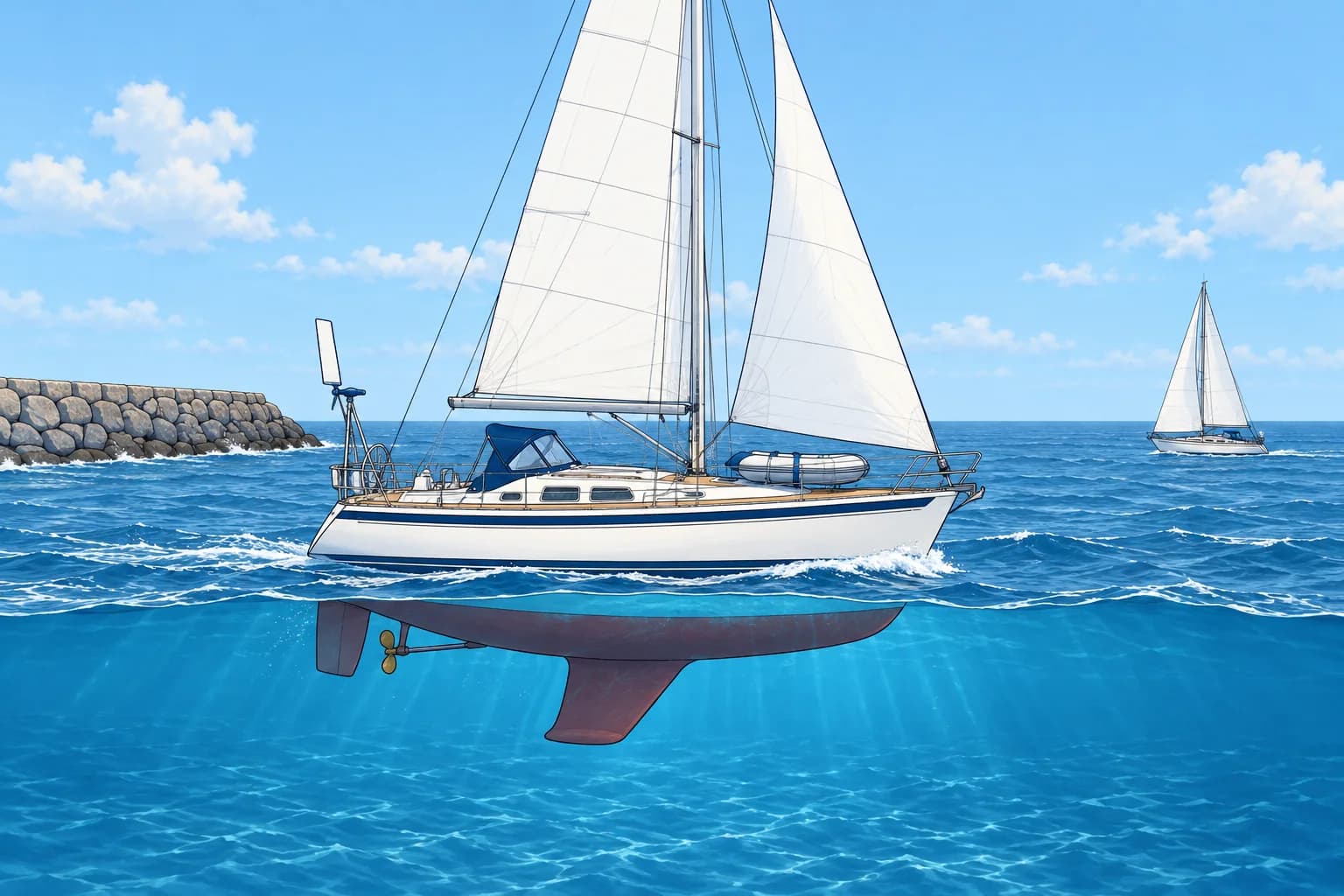
Status and proof
Union status concerns customs: your boat is treated as EU goods. VAT, value added tax, is separate. Your flag proves neither. Carry the VAT invoice and any customs-status evidence needed for your voyage. A historic VAT invoice alone does not prove current Union status after export. Qualifying returned boats may receive relief, normally within 3 years.
Temporary admission
Temporary admission lets eligible visiting boats enter the EU customs territory without paying customs duty or import VAT. Normally, the boat must be registered outside that territory in the name of someone based outside it. The user must also be based outside it. For individuals, this means normal residence outside the territory. Limited exceptions exist. The legal texts are the Union Customs Code (articles 250–253) and Delegated Regulation (EU) 2015/2446.
18 months
A privately used boat may stay 18 months under temporary admission (article 217(e) of Regulation 2015/2446). It is admitted into the EU as a whole, so it can move between EU countries during that time. Extension is possible only in exceptional cases. Leave the EU customs territory, for example for Montenegro, Morocco or the UK, and a new period can start when you return.
When charges arise
Overstaying or breaching temporary-admission conditions can make duty and import VAT due. Use by someone resident in the EU customs territory normally needs a specific exception. One permits occasional private use at the registration holder's request while that holder is in the EU customs territory. Ask customs before lending the boat.
Keep records
Keep proof of when the boat entered and left the EU: clearance papers, marina receipts and passport or border records. Customs can ask you to prove the dates.
Returned goods
A boat exported as Union goods can normally claim customs relief if returned within 3 years in the same state. Import-VAT relief also requires re-importation by the person who exported it. Keep evidence of export and status; returning within three years alone does not guarantee relief.
Key figures
- Temporary admission period
- 18 months, private use (Reg. 2015/2446 art. 217(e))
- Conditions
- Normally: non-EU registration; holder/user established outside
- Returned goods relief
- Normally within 3 years; same state; VAT re-importer condition applies
- Legal basis
- Union Customs Code arts. 250–253; Reg. 2015/2446
Remember
- Customs status and VAT-paid status differ. Carry evidence of both; your flag proves neither.
- Normally, the boat is registered outside EU customs territory; its holder and user must be established outside it.
- Temporary admission for private use lasts 18 months, for the EU as a whole.
- Leave the EU customs territory and a new period can start on return.
- EU-resident use is normally restricted; ask customs about exceptions before lending the boat.
Common mistakes
Wrong: Every 18 months in each EU country gives a new period.
Right: The period covers the whole EU customs territory. Moving between EU countries does not restart it; re-export discharges temporary admission.
Wrong: An EU resident can use a foreign-flag boat freely if the owner lives abroad.
Right: EU-resident use is normally restricted. A narrow occasional-use exception may apply while the registration holder is in the EU customs territory; confirm with customs.
Wrong: An EU boat sold years ago needs no papers for its VAT status.
Right: Carry evidence of customs and VAT status. A historic VAT invoice alone does not prove current Union status after export.
Worked case
A US-resident couple enter Portugal on their US-registered yacht on 15 May 2026. They plan to stay until spring 2028. A friend resident in Spain wants to borrow the yacht alone for a week while they remain in the EU customs territory. What should they check?
Show the answer
If eligible, their normal deadline is 15 November 2027. Re-export by then, or ask customs beforehand about an extension or permanent importation and any duty or import VAT due. Moving between EU countries does not restart the clock. Their friend may qualify for occasional private use at the registration holder's request while that holder remains in the EU customs territory; confirm with customs before lending.
Practice question
How long may a privately used non-EU boat stay in the EU under temporary admission?
- 6 months
- 12 months
- 18 months
- 36 months
Show the answer
Answer: C. The period for privately used sea and inland craft is 18 months (Regulation 2015/2446, article 217(e)).
4 · ICC and permits
The ICC, foreign licences and cruising permits
The ICC helps to prove your competence abroad. Many countries also charge a cruising fee or issue a permit; pay it before you need to show it.
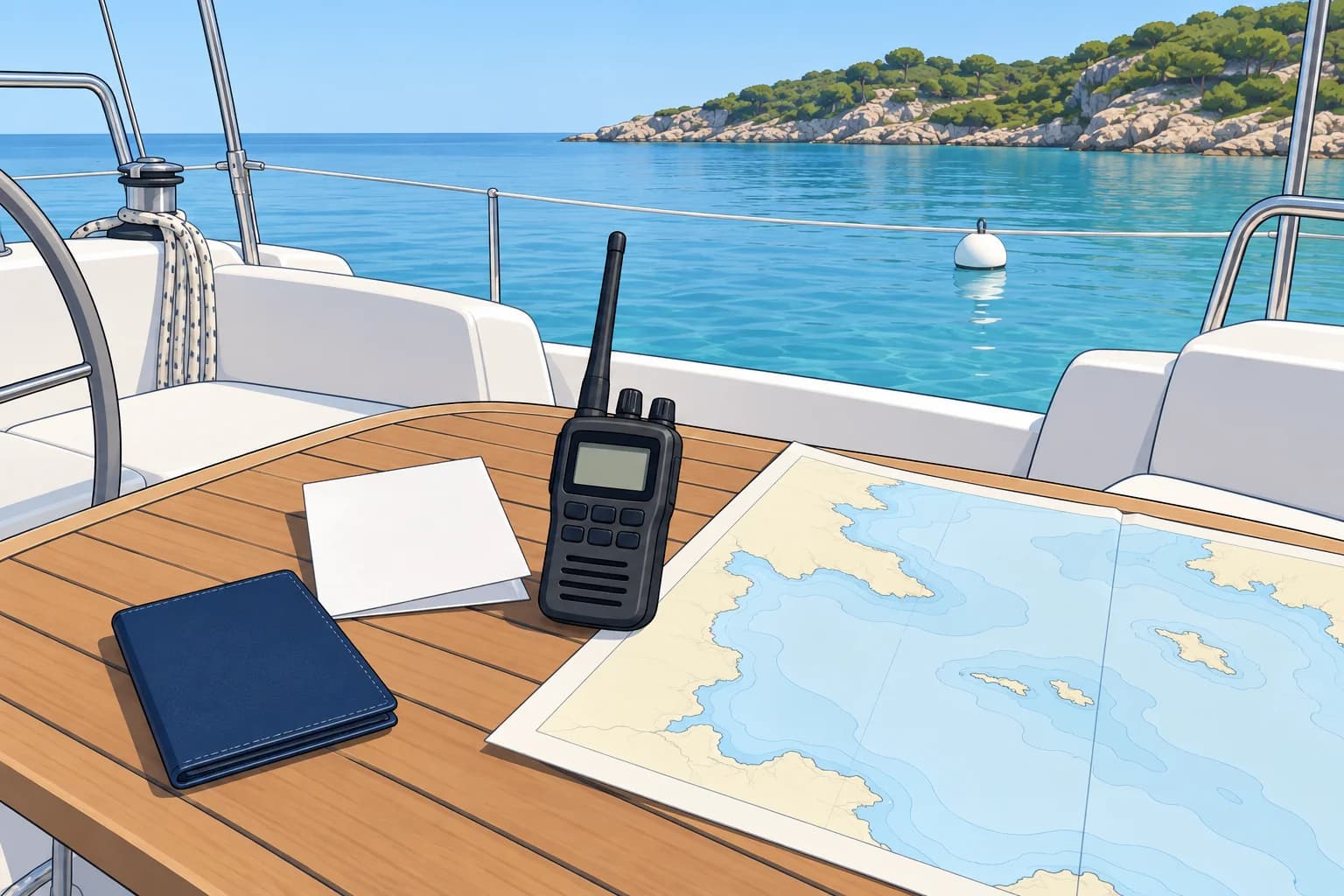
The ICC
The International Certificate for Operators of Pleasure Craft, or ICC, follows UNECE Resolution No. 40, from the United Nations Economic Commission for Europe. A government or authorised body issues it after checking competence. It records categories such as motor or sail and coastal or inland waters; check any restrictions shown. For inland waters, demonstrate knowledge of the relevant navigation rules, including CEVNI, the European inland navigation rules. Your issuer decides how this is assessed.
Where it counts
Resolution 40 recommends acceptance of qualifying ICCs. Check each country's national rules and any conditions on recognition. Your certificate must cover the boat and waters. Many other countries accept it in practice, and charter companies often ask for it. It is not a universal licence. Check with the destination's authorities and the charter company before you go.
Other foreign licences
A licence issued by your boat's flag state is often accepted abroad. Check the destination's requirements. On a local-flag or chartered boat, local rules decide which foreign licences count. Carry your licence and any translation required by the destination's authorities.
Cruising fees and permits
Greece's TEPAI, a monthly cruising fee, normally applies to pleasure boats over 7 m in Greek waters, whatever their flag; check exemptions and arrival-payment deadlines with AADE, Greece's tax authority. Pay later chargeable months before they start. Greek customs may require a Transit Log, a customs document, depending on flag and customs status. Croatia charges a navigation safety fee and tourist tax. Eligible foreign yachts can receive a US cruising licence for up to one year.
Before you sail
Read the country unit for each place you visit, check the latest rules with the port authority, and keep receipts on board. Fines for an unpaid fee are usually much larger than the fee.
Key figures
- ICC basis
- UNECE Resolution No. 40
- ICC endorsements
- Motor/sail, coastal/inland; restrictions and inland-rule knowledge
- Greece
- TEPAI: pleasure boats >7 m; Transit Log: check flag/customs status
- Croatia
- Navigation safety fee (yearly) and tourist tax
- USA
- Cruising licence up to 1 year, reciprocal countries only
Remember
- The ICC records competence; check its motor/sail and coastal/inland categories and any restrictions.
- Acceptance depends on national rules; also confirm the charter company's requirements.
- On a local-flag or chartered boat, local rules decide which licences count.
- Greek TEPAI normally covers pleasure boats over 7 m; Croatia charges a safety fee and tourist tax.
- Pay fees before you need them and keep the receipts on board.
Common mistakes
Wrong: The ICC is accepted by law in every country.
Right: Resolution 40 recommends acceptance. Check national implementation and whether your ICC covers the boat and waters.
Wrong: An ICC coastal endorsement covers canals and rivers too.
Right: You need the inland category and knowledge of inland rules, including CEVNI. Your issuer decides how to assess that knowledge.
Wrong: Cruising fees are paid when you leave the country.
Right: Already there: pay before the next chargeable month. Arriving mid-month: meet AADE's arrival-payment deadline; TEPAI covers a calendar month.
Worked case
You book a Croatian sailing charter, then take your UK-registered 11 m yacht to Greece on 15 July. Your ICC covers coastal sail, but the charter operator says any ICC is enough. What do you verify and arrange?
Show the answer
Check Croatian acceptance and that your ICC's categories cover the charter boat and waters. Confirm whether the safety fee and tourist tax are included. Pay Greek TEPAI for July ahead of arrival; check AADE's deadline and exemptions. Ask Greek customs whether your yacht's flag and customs status require a Transit Log. Keep your ICC, boat papers and receipts aboard.
Practice question
Which document sets up the ICC?
- SOLAS Convention, Chapter V
- The EU RCD 2013/53/EU
- UNECE Resolution No. 40
- MARPOL Convention, Annex V
Show the answer
Answer: C. The ICC is created by UNECE Resolution No. 40. The RCD covers how boats are built.