
Medical care on board · Level R3 · 6 parts · about 18 min
Hypothermia, cold-water immersion, drowning and heat illness
6 short parts: Cold water · Float to Live · Hypothermia · Cold feet · Heat illness · Sun and water. Each part explains the idea, then gives the points to remember, the common mistakes, a worked case and a practice question; the Academy unit adds all 36 check questions.
1 · Cold water
What cold water does to the body
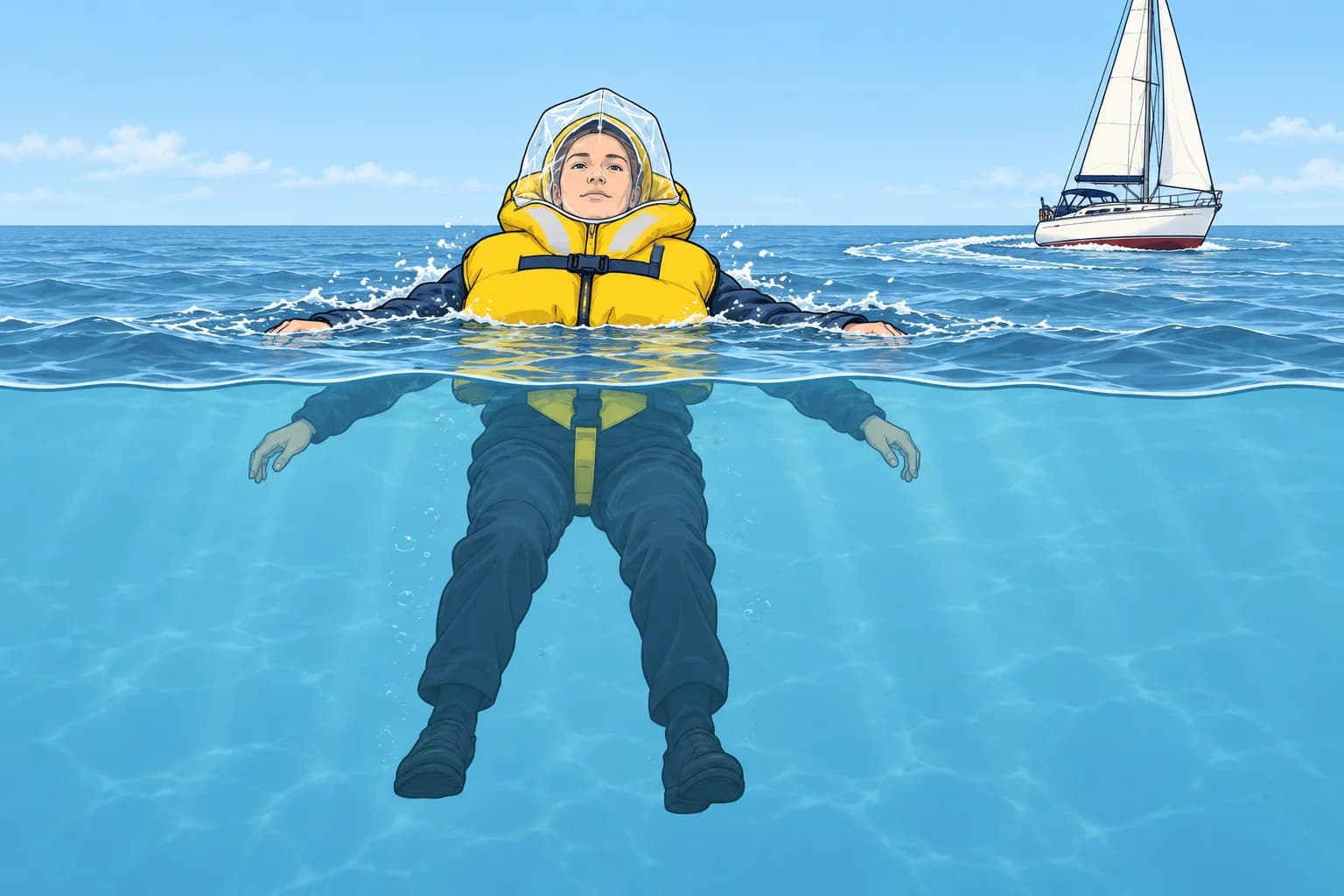
Cold water can make you gasp and lose swimming strength before hypothermia develops. Wear a lifejacket and know the four stages.
Cold water
Water below about 15 °C can trigger cold shock. Water cools you much faster than air. Many cold-water deaths occur before hypothermia develops: cold shock or swim failure can lead to drowning.
Stage 1: cold shock
In the first minute, sudden cold on the skin causes cold shock: a big involuntary gasp, then fast, uncontrolled breathing. If your head is under water or a wave hits your face during the gasp, you breathe water in. Heart rate and blood pressure jump, which can trigger heart problems. Cold shock passes in about 60 to 90 seconds.
Stage 2: swim failure
Over the next few minutes, cold muscles and nerves weaken your grip and swimming strokes. This is swim failure: even strong swimmers may soon be unable to swim or climb a ladder. Once breathing is controlled, reach nearby safety or flotation. Wear your lifejacket before you might fall in; do not rely on putting one on in the water.
Stage 3 and 4: hypothermia and collapse
Hypothermia means the body’s core temperature has fallen below 35 °C. In cold water it usually takes 30 minutes or more, depending on the water, clothing and body size. Post-rescue collapse can happen during or just after rescue: lifting a cold casualty upright or letting them climb can drop the blood pressure and stop the heart.
The 1-10-1 principle
Professor Gordon Giesbrecht sums it up as 1-10-1: about 1 minute to get your breathing under control, about 10 minutes of useful movement, and about 1 hour before you lose consciousness from hypothermia. The numbers are rough and vary with the water and the person. A properly worn lifejacket supports you; a crotch strap stops it riding up and a spray hood, a cover against spray, reduces water splashing into your face.
Key figures
- Cold water
- Below about 15 °C
- Cold shock
- First minute; passes in about 60–90 seconds
- Swim failure
- Can develop within minutes; timing varies
- Hypothermia
- Core below 35 °C; usually after 30 minutes or more
- 1-10-1
- 1 min breathing, 10 min movement, 1 hour consciousness
Remember
- Four stages: cold shock, swim failure, hypothermia, post-rescue collapse.
- Cold shock makes you gasp: grab a handhold within reach or float while you control your breathing.
- Once breathing is controlled, reach nearby safety or flotation before your strength fades.
- 1-10-1: 1 minute, 10 minutes, 1 hour (rough figures).
- A properly worn lifejacket with crotch strap and spray hood helps protect your airway.
Common mistakes
Wrong: In cold water, hypothermia is the first danger.
Right: Cold shock and swim failure kill sooner. Hypothermia usually takes 30 minutes or more.
Wrong: A strong swimmer can swim to shore in cold water.
Right: Swim failure stops even good swimmers within minutes. Stay with the boat or something that floats unless safety is very close.
Worked case
In May, with the sea at 13 °C, a crew member without a lifejacket falls off the foredeck while the boat is under sail. He surfaces gasping and splashing wildly about 20 m astern.
Show the answer
He is in cold shock. Throw him a lifebuoy or a floating line and shout to him to lean back, float and get his breathing under control. Within minutes his arms will weaken, so give him something to hold on to now. Start the man-overboard routine. When you recover him, keep him as horizontal as possible to reduce the risk of post-rescue collapse.
Practice question
What causes the initial gasp and uncontrolled breathing after falling into cold water?
- Hypothermia
- Cold shock
- Frostbite
- Dehydration
Show the answer
Answer: B. The gasp and uncontrolled breathing of cold shock can make you breathe in water.
2 · Float to Live
Float to Live and staying alive in the water
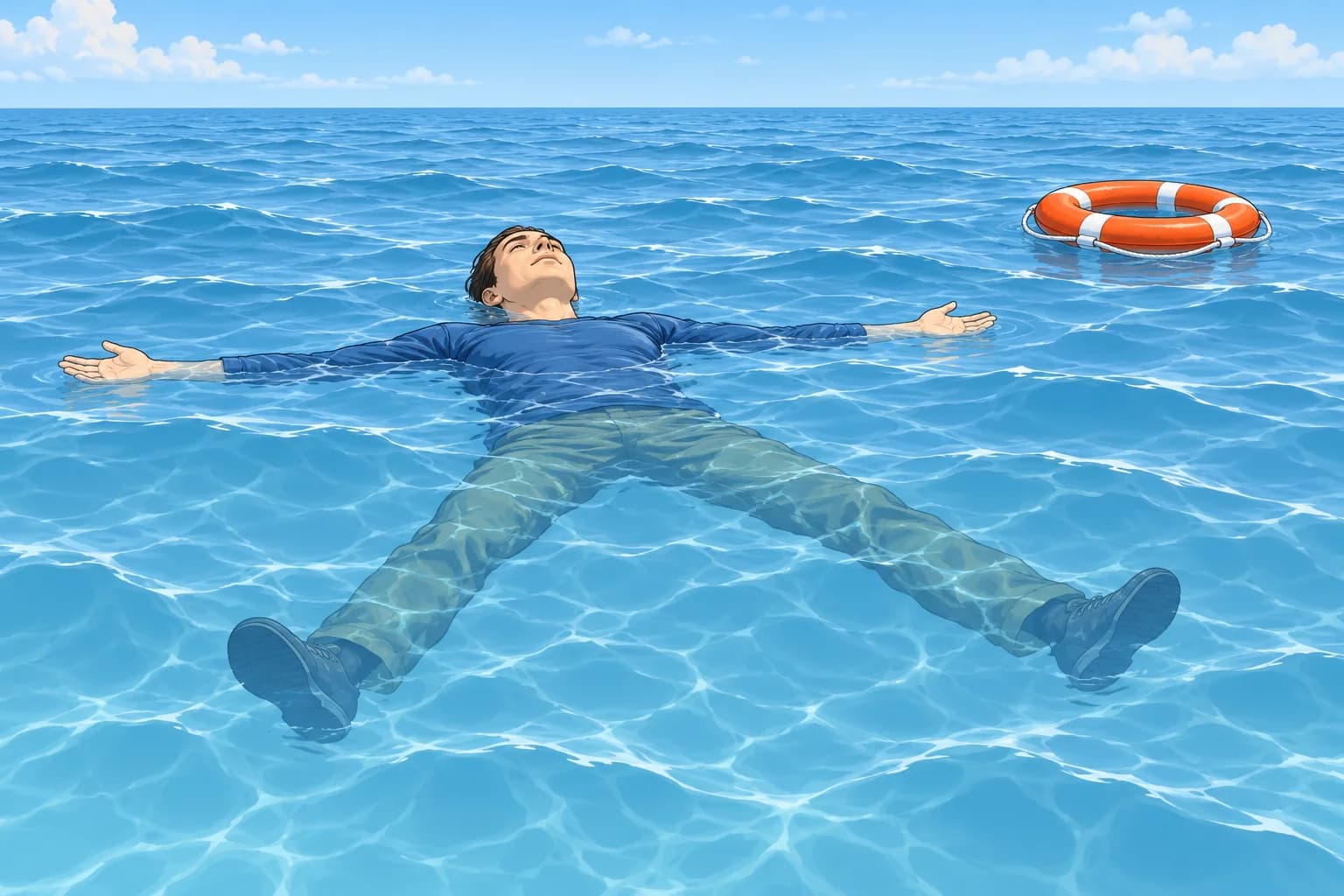
If you fall in, fight your instinct to swim hard. Lean back, float, and let the cold shock pass. Then make a plan.
Float to Live
The RNLI’s Float to Live advice, based on Professor Mike Tipton’s research, works for most people. Lean back with your ears in the water and your face up. Spread your arms and legs, and use small hand movements to stay afloat if you need to. Try to relax and get your breathing under control. It takes about 60 to 90 seconds.
Why not swim?
Thrashing and swimming hard during cold shock makes you breathe water in, strains the heart and squeezes air out of your clothes, so you float lower. Your clothing traps air and helps you float, so keep it on. Most people can float, using small hand movements if needed. Once your breathing is calm, you can think, shout and look around.
Then make a plan
Once you have control, call for help, wave an arm or blow your whistle, and look for something to hold. Swim only if safety is very close: a ladder, a lifebuoy or a boat a few strokes away. Otherwise conserve heat and energy, stay with flotation and avoid unnecessary swimming. You will drift with wind and current.
With a lifejacket
A fitted, fastened lifejacket helps keep your mouth clear, but waves can cover your face. Fasten the crotch strap to stop the jacket riding up. Pull the spray hood, a cover against spray, over your face in waves. With the jacket supporting you, bring your knees up and cross your arms in the HELP position (heat escape lessening posture), only while your airway stays clear. To huddle, face each other, link arms and keep your chests close, with mouths clear of the water.
Stay with the boat
If a dinghy or yacht capsizes, stay with it. It is bigger and easier to see than a head in the water, and you may be able to climb partly out. Leaving it to swim for shore is one of the most common fatal mistakes.
Key figures
- Float to Live
- Lean back, ears in, arms and legs out, calm breathing
- Time to calm breathing
- About 60–90 seconds
- Clothing
- Keep it on: trapped air helps you float
- HELP position
- Knees up, arms crossed, lifejacket on; only with airway clear
Remember
- Fight the urge to swim hard: lean back and float until the cold shock passes.
- Keep your clothes on; trapped air helps you float.
- Swim only if safety is a few strokes away.
- In a lifejacket: crotch strap fastened, spray hood down; HELP or huddle only while your airway stays clear.
- Stay with a capsized boat.
Common mistakes
Wrong: Take off heavy clothes and boots so you can swim.
Right: Keep them on. They hold air, help you float and slow cooling.
Wrong: Swim straight for the boat as soon as you surface.
Right: Grab a secure handhold or flotation if it is within reach. Otherwise float while you control your breathing, usually for 60–90 seconds, then decide.
Worked case
Your small inflatable motorboat overturns in a sudden strong gust, 400 m from a beach. The water is 14 °C. You and a friend wear lifejackets with spray hoods; the upturned hull is floating beside you.
Show the answer
Grab the hull if you can reach it safely. Lean back in your lifejackets and control your breathing. Stay with the upturned hull: it is easier to see, and you may be able to climb partly onto it. Do not swim for the beach. Raise the alarm with a waterproof handheld radio or personal locator beacon if you have one. Use the spray hoods in waves and huddle together while keeping your airways clear.
Practice question
What is the RNLI’s first advice if you fall into cold water?
- Swim hard towards the shore
- Lean back and float to live
- Tread water upright and shout
- Dive under the waves to escape
Show the answer
Answer: B. Lean back, ears in, and float while the cold shock passes.
3 · Hypothermia
Recognising and handling hypothermia
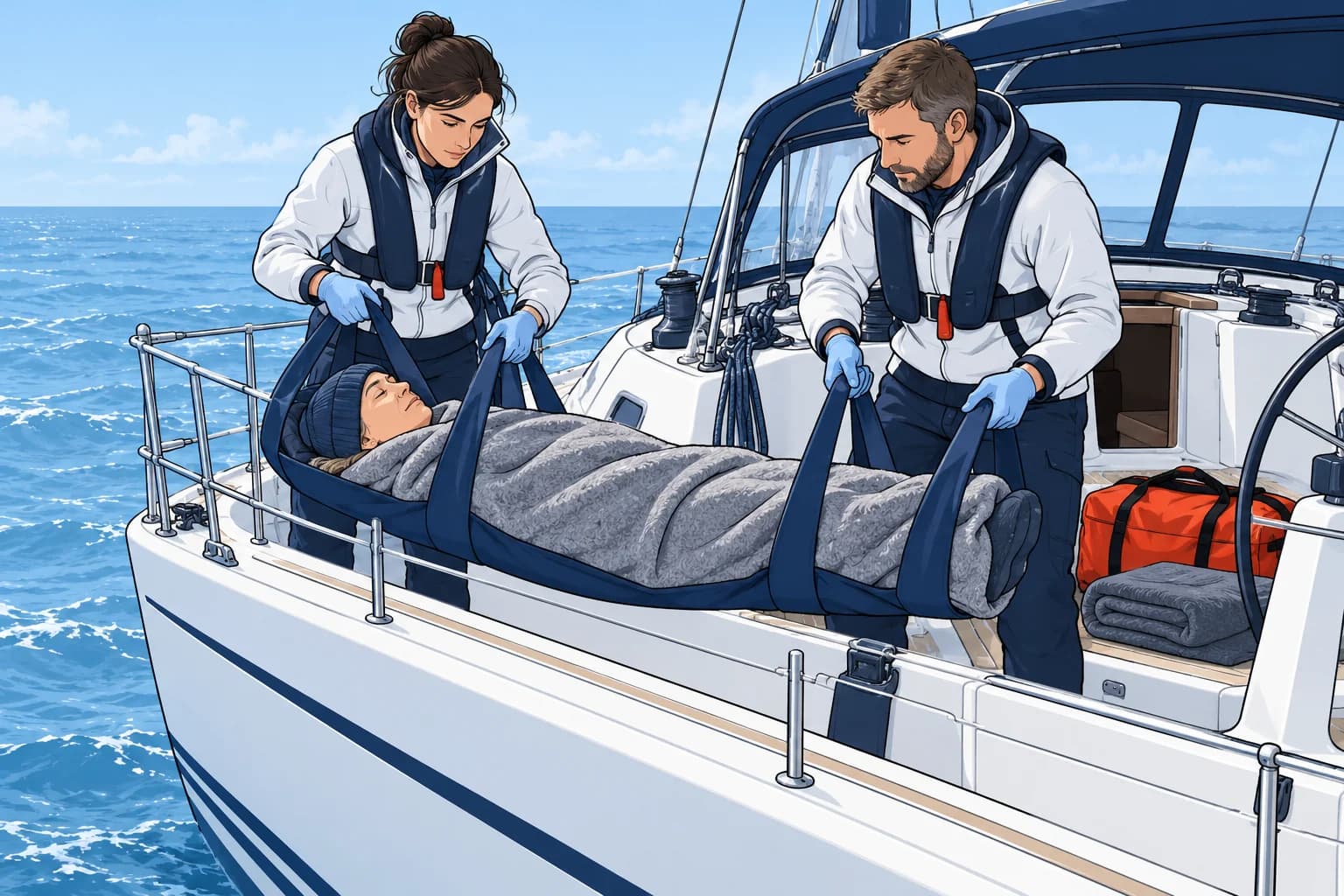
Recover horizontally and gently. Check response and breathing, call for help and start CPR if needed. Then shelter, insulate and rewarm slowly.
Recognise it
Hypothermia can follow time in the water, but also hours on a cold, wet deck or in a liferaft. In mild hypothermia the casualty shivers, is pale and cold, clumsy, slow to speak and makes poor decisions. In severe hypothermia the shivering may stop, and they become confused, drowsy and then unconscious, with slow, weak breathing and pulse.
Check response and breathing
Immediately after recovery, check response, open the airway and assess breathing. Send someone to call for emergency help. In an unresponsive, severely hypothermic casualty, breathing may be extremely slow: check carefully for up to a minute. If unresponsive and not breathing normally, start CPR (cardiopulmonary resuscitation) before sheltering or wrapping them. Keep checking breathing until help arrives. Cold casualties can survive long resuscitation; continue CPR until emergency professionals take over.
Horizontal and gentle
A cold heart is easily upset. Lift the casualty out of the water as horizontally as you can, with a sling or two people. Once aboard, keep them lying down and do not let them stand, walk or climb. Handle them gently, do not rub their skin, and do not let them exercise.
Shelter and insulate
Get them out of wind and spray. Gently remove wet clothes, cutting them off if needed. If you cannot remove them, wrap the wet clothing in a plastic vapour barrier before adding dry insulation, keeping the face clear. Use dry blankets or a sleeping bag, a hat and insulation underneath. Add a windproof outer layer, such as a survival bag (a large protective bag). A vapour barrier reduces evaporation and keeps wet clothing from soaking the dry insulation.
Rewarm slowly
Put wrapped warm packs or hot-water bottles on the chest, armpits and back, never directly on the skin. An alert casualty who can swallow can have warm, sweet drinks. No alcohol: it increases heat loss. Do not put a severely cold casualty in a hot shower. Rewarming takes hours, and they still need medical advice.
Key figures
- Mild
- Shivering, clumsy, slurred speech, poor judgement
- Severe
- Confused, drowsy or unconscious; shivering may stop
- Lift and handle
- Horizontal and gentle; no walking
- Warm packs
- Wrapped, on chest, armpits and back
- Breathing check
- Unresponsive, severely hypothermic casualty: up to 1 minute
Handling a hypothermic casualty
- Recover horizontally. Immediately check response, open the airway and assess breathing. Send someone to call for emergency help; start CPR if unresponsive and not breathing normally. — In an unresponsive, severely hypothermic casualty, breathing may be extremely slow: check carefully for up to a minute. Assessment and CPR come before sheltering or wrapping.
- Keep them lying down and handle them gently; do not let them walk or rub them. — Rough handling or exertion can trigger a dangerous heart rhythm.
- Move them out of wind and spray. Remove wet clothing gently; if you cannot, seal it in a plastic vapour barrier with the face clear before adding dry insulation. — Wind and wet clothing keep pulling heat away. The barrier reduces evaporation and keeps dry insulation from getting soaked.
- Add dry insulation, a hat and insulation underneath, then a windproof outer layer. Keep the face clear. — Dry insulation slows cooling on every side; the outer layer protects it from wind and spray.
- Rewarm the trunk—the chest, back and abdomen—with wrapped warm packs; warm sweet drinks only if fully alert and able to swallow. — Slow, central rewarming is safest; a drowsy casualty may choke.
- Keep monitoring response and breathing until help arrives; start CPR if they become unresponsive and stop breathing normally. — A cold casualty can deteriorate after rescue, even while being rewarmed.
Remember
- Lift horizontally, keep lying down, handle gently.
- Remove wet clothes or seal them in plastic; then dry insulation, hat, insulation underneath and a windproof outer layer.
- Rewarm the trunk slowly; warm sweet drinks only if fully alert; no alcohol.
- Do not rub the skin or put a severely cold casualty in a hot shower.
- Check response and breathing at once; call for help. If unresponsive and not breathing normally, start CPR.
Common mistakes
Wrong: Let the rescued crew member climb the ladder and walk below to warm up.
Right: Keep a cold casualty horizontal and still. Exertion and standing can stop the heart.
Wrong: Give a tot of rum to warm him up.
Right: Alcohol increases heat loss. Give a warm sweet drink only if he is fully alert.
Wrong: Rub his arms and legs hard to get the blood flowing.
Right: Rubbing does not warm the core and can trigger heart problems. Insulate and warm the trunk.
Worked case
You recover a crew member after 40 minutes in 12 °C water. He is no longer shivering, mumbles and cannot answer questions properly. He is breathing.
Show the answer
Suspect severe hypothermia. Check response and breathing at once and have someone call for emergency help. Keep him lying flat; handle gently. Shelter him, remove wet clothes or seal them in plastic, then add dry blankets, a hat, insulation underneath and a windproof outer layer. Put wrapped warm packs on his chest and armpits. Give nothing to drink. Keep monitoring breathing; start CPR if he becomes unresponsive and stops breathing normally.
Practice question
Which sign suggests severe rather than mild hypothermia?
- Strong shivering and cold hands
- Shivering stops and confusion
- Pale, cold skin after a swim
- Feeling chilly in the cockpit
Show the answer
Answer: B. Stopping shivering with confusion or drowsiness suggests severe hypothermia. Continued shivering does not rule it out.
4 · Cold feet
Non-freezing cold injury
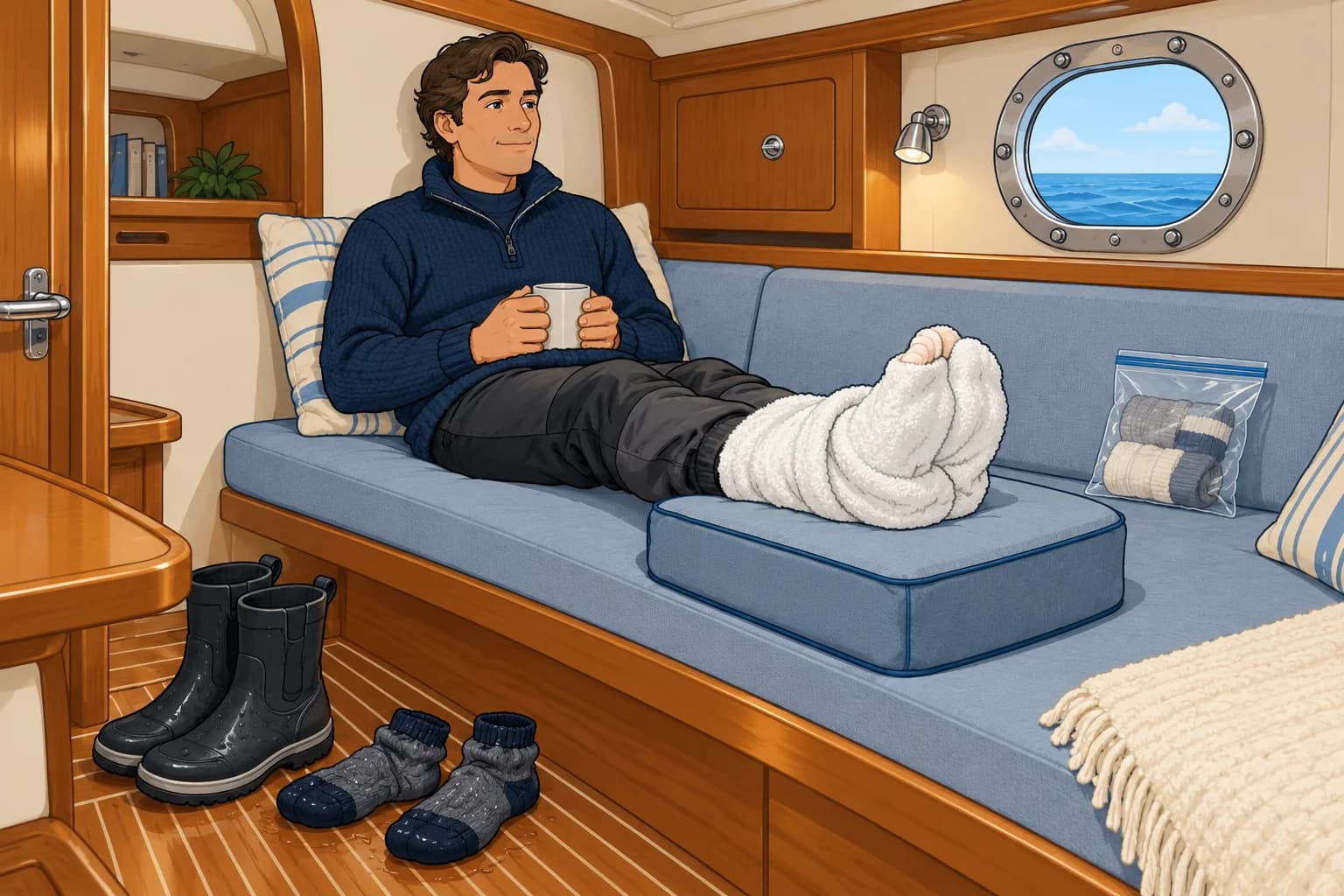
Feet that stay cold and wet for many hours can be damaged without freezing. Keep them dry, warm them slowly, and never rub them.
What it is
Non-freezing cold injury (NFCI), also called trench foot or immersion foot, is damage to the nerves and blood vessels of the feet or hands. It is caused by hours or days of cold and wet at temperatures above freezing. Sailors get it in wet boots on long cold watches, in a flooded cockpit or in a liferaft.
Signs
At first the feet feel cold and numb, and look white or blotchy; the casualty may feel clumsy or as if walking on cotton wool. After warming they turn red, hot and swollen, and become very painful. The pain and sensitivity to cold can last for weeks or months, so early care and prevention matter.
First aid
Remove wet boots and socks, dry the feet gently and keep them in room-temperature air, raised a little. Warm them slowly: do not use hot water, a heater, or rubbing and massage, which damage the tissue further. Avoid walking on badly affected feet. Pain often gets worse as they warm. Get radio medical advice.
Prevention
Change into dry socks every watch, and keep a dry pair in a sealed bag. Avoid tight boots and socks that cut off the blood flow. Move your toes and feet often, keep your whole body warm and fed, and check your feet daily. Do not smoke: it narrows the blood vessels.
Frostbite
Frostbite means tissue has frozen; NFCI damages cold, wet tissue without freezing.
Key figures
- Cause
- Hours to days of cold and wet, above freezing
- Early signs
- Cold, numb, white or blotchy feet
- After warming
- Red, hot, swollen, very painful
- First aid
- Dry, room-temperature air, raise; no rubbing, no hot water
Remember
- NFCI comes from long cold and wet, without freezing.
- Numb, white feet that turn red, swollen and painful after warming.
- Dry the feet and warm them slowly in room-temperature air; never rub or use hot water.
- Prevent it: dry socks every watch, loose boots, move your toes, check feet daily.
Common mistakes
Wrong: Plunge cold, numb feet into hot water to warm them quickly.
Right: Warm them slowly in room-temperature air. Rapid heat damages injured tissue.
Wrong: Rub numb feet hard to restore feeling.
Right: Rubbing and massage cause more damage. Dry them gently and raise them.
Worked case
After 36 hours of a wet, cold delivery trip in sea boots, a crew member says his feet have been numb since the morning. Under the socks they look white and wrinkled.
Show the answer
Suspect non-freezing cold injury. Take off his boots and socks, dry his feet gently, rest them slightly raised and let them warm slowly at room temperature; keep his body warm. Do not rub his feet or put them in hot water. Expect pain and swelling as they warm. Get radio medical advice, keep him off his feet, and change the whole crew into dry socks.
Practice question
What causes non-freezing cold injury?
- A few minutes in icy water
- Touching a frozen metal fitting
- Long hours of cold and wet
- Too much sun on bare feet
Show the answer
Answer: C. Hours or days of cold, wet conditions above freezing damage nerves and vessels.
5 · Heat illness
Heat exhaustion and heat stroke
Heat stroke is an emergency. If a hot casualty is confused, call for help at once and start cooling immediately. Cool before transfer while help is arranged.
How heat illness starts
In hot weather, hard work on deck, little shade, too little water and some medicines stop the body getting rid of heat. Seasickness and alcohol make it worse by drying you out. At first the body copes by sweating; if it cannot keep up, heat illness follows.
Heat exhaustion
Heat exhaustion is the milder form. The casualty is hot, sweaty, pale or clammy, tired and weak, with a headache, dizziness, nausea or cramps, and very thirsty. Their mind is clear. Move them into the shade, let them lie down with legs raised, loosen clothing, cool them with wet cloths and a breeze, and give water or a drink with salts. Get urgent medical help if they worsen, cannot drink or are not clearly improving within 30 minutes. Confusion needs emergency help; keep cooling.
Heat stroke
Suspect heat stroke when someone exposed to heat develops confusion, strange behaviour, slurred speech, collapse, fits or unconsciousness. Core temperature is often above 40 °C, but a lower reading does not exclude it. Skin may be sweaty or dry. Start cooling and call for emergency help; do not wait for a temperature reading.
Cool first, transfer second
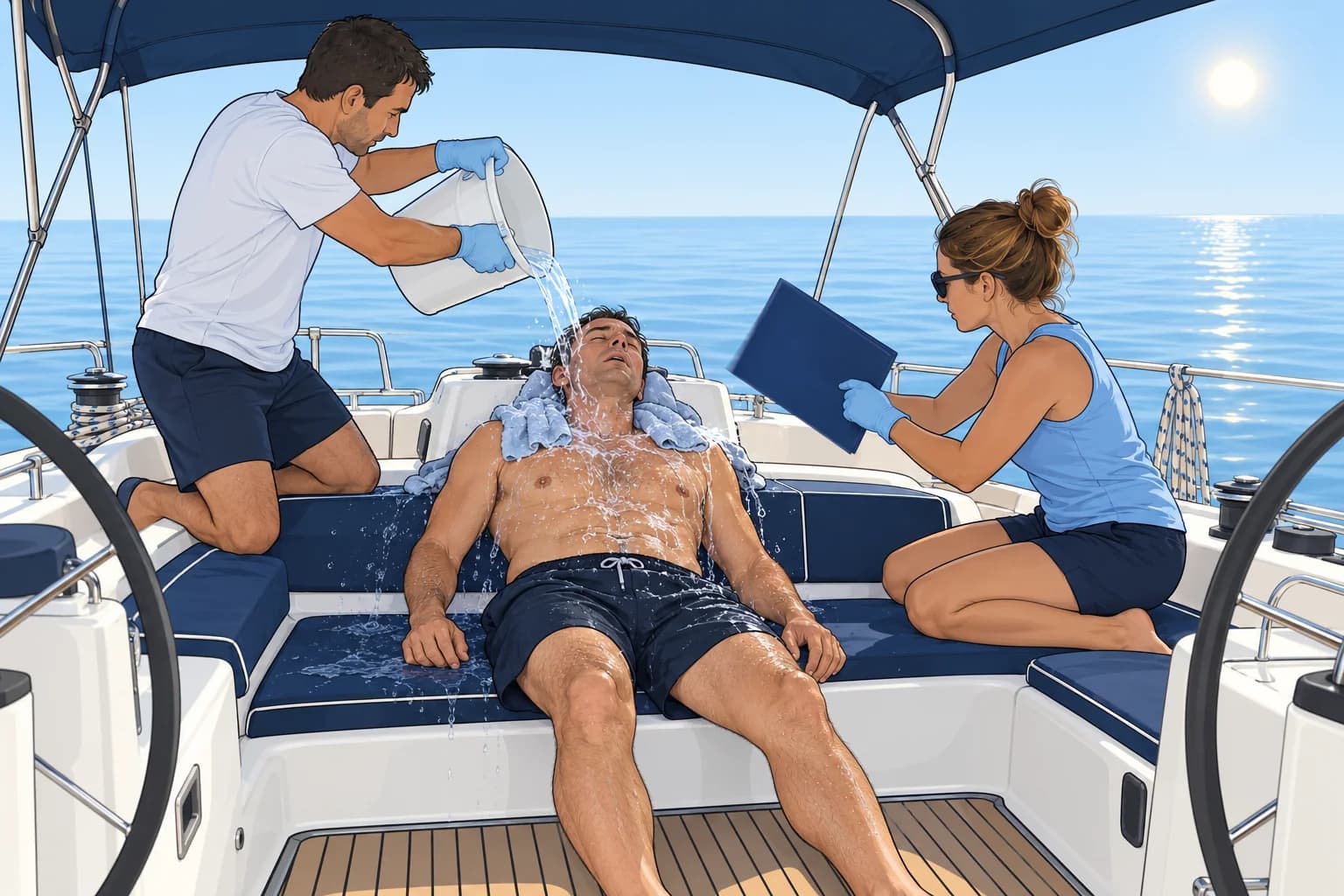
Have another crew member call for emergency help while cooling starts. Use neck-down cold-water immersion only if you can support them safely and keep their airway clear; otherwise soak and fan. On a yacht, move them into shade, remove clothing, pour water over them and fan hard. Add cold packs or wet towels on the neck, armpits and groin. Never lower a confused casualty over the side.
How long to cool
Keep cooling until the core temperature is below 39 °C if you have a suitable thermometer, or for 15 minutes or until the casualty’s mind clears, whichever comes first. Follow radio medical advice. Give drinks only once they are fully alert and able to swallow. A casualty who had heat stroke needs medical assessment, even if they recover.
Key figures
- Heat exhaustion
- Hot, sweaty, weak, dizzy; mind clear
- Heat stroke
- Hot with confusion; often above 40 °C; do not wait for a reading
- Rule
- Cool before transfer; call for help as cooling starts
- Best cooling
- Safe, supported immersion; otherwise soak and fan
- Cool until
- Below 39 °C, or 15 min, or the mind clears
Remember
- Heat exhaustion: hot, sweaty, weak, dizzy, but thinking clearly.
- Heat stroke: hot and confused, collapsed or fitting. It is an emergency.
- Cool first, transfer second: call for emergency help while cooling starts.
- On board: shade, strip, soak with water and fan; cold packs on neck, armpits and groin.
- Drinks only for alert casualties.
Common mistakes
Wrong: A hot casualty who is still sweating cannot have heat stroke.
Right: Many heat stroke casualties still sweat. Confusion is the key sign.
Wrong: Wrap a collapsed hot casualty and head for port before cooling.
Right: Cool first, transfer second. Every minute of high temperature damages the brain.
Wrong: Give a confused, overheated casualty a large drink at once.
Right: A confused casualty may choke. Cool them first; give drinks once they are fully alert.
Worked case
On a windless August afternoon, a crew member who has been winching and sanding on deck for hours starts talking nonsense, stumbles and sits down. Her skin is very hot.
Show the answer
Treat this as heat stroke. Ask someone to call for emergency help while you start cooling her. Move her into shade, remove most clothing and pour water over her while someone fans hard. Put cold packs or wet towels on her neck, armpits and groin. Keep cooling for 15 minutes or until she is thinking clearly, and follow radio medical advice. Give nothing by mouth unless fully alert and able to swallow. She needs medical assessment even if she recovers.
Practice question
What is the key sign that separates heat stroke from heat exhaustion?
- Heavy sweating
- Feeling thirsty
- New confusion
- Muscle cramps
Show the answer
Answer: C. After heat exposure, confusion, collapse or fits suggest heat stroke. Start cooling and call for emergency help; do not wait for a temperature reading.
6 · Sun and water
Sunburn and dehydration
Reflected UV adds to your exposure; wind can hide the heat. Cover up, plan shade and drink regularly.
The sun at sea
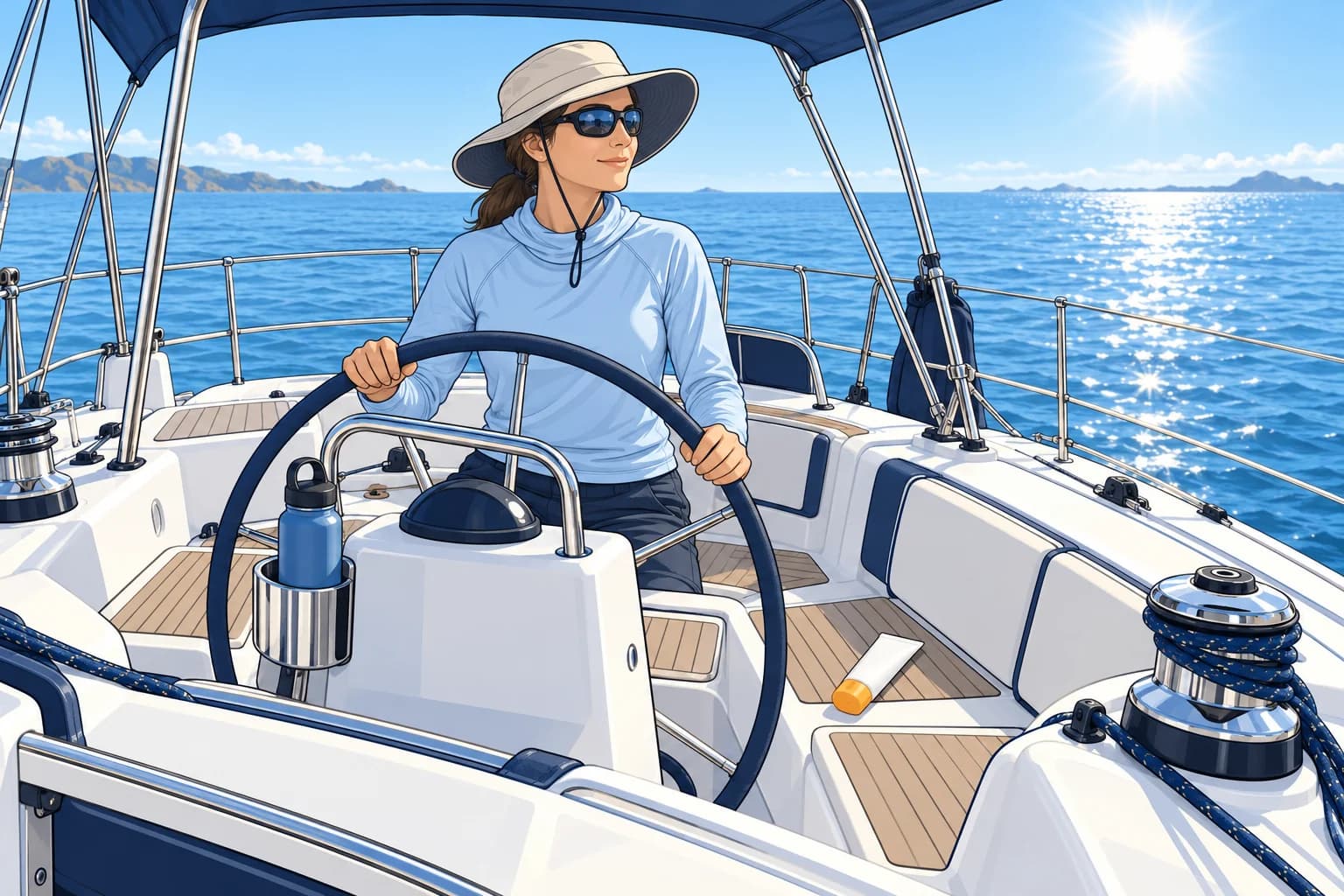
Reflected ultraviolet (UV) light from water, decks and sails can add to exposure, even in shade. A breeze masks heat; cloud does not reliably block UV. Sunburn raises your later skin-cancer risk.
Protect yourself
Cover up with a wide-brimmed hat, long-sleeved UV shirt and wraparound sunglasses. Use broad-spectrum sunscreen with a sun protection factor (SPF) of 30 or higher on all exposed skin, including ears, lips and the tops of feet; reapply every 2 hours and after swimming or heavy sweating. Rig shade, shorten exposed watches, rotate crew, arrange drink breaks and plan hard deck work for cooler hours.
Sunburn first aid
Get out of the sun. Cool the skin with cool water or wet cloths, and use an after-sun or aloe gel. Drink extra water if fully alert and able to swallow. Leave blisters alone. Get emergency help for confusion; if hot, start cooling for suspected heat stroke. Get radio medical advice for widespread blistering, fever, chills, vomiting or a burnt child.
Dehydration
Dehydration means the body has lost more water than it has taken in. At sea you lose water through sweat, breathing in dry wind, vomiting from seasickness and alcohol. Early signs are thirst, dark yellow urine, peeing less, headache, tiredness and dizziness. A dehydrated crew member thinks slowly and is more likely to be injured.
Drink before thirst
Drink small amounts regularly through the day; thirst comes late. Aim for pale straw-coloured urine. After vomiting or heavy sweating, use oral rehydration solution mixed with safe drinking water exactly as the packet directs. Keep alcohol for harbour.
Key figures
- Sunscreen
- Broad-spectrum SPF 30+, every 2 hours and after swimming
- Reflection
- Reflected UV from water and decks can add to exposure
- Dehydration signs
- Thirst, dark urine, headache, dizziness
- Target
- Pale straw-coloured urine
Remember
- Reflection can increase UV exposure; a cool breeze can make sunburn harder to notice.
- Hat, long sleeves, sunglasses, SPF 30+ reapplied every 2 hours, and shade.
- Sunburn: cool skin and give fluids if alert; seek advice for severe burns. Confusion needs emergency help.
- Dehydration: thirst, dark urine, headache. Drink before thirst.
- Seasickness and alcohol dry you out.
Common mistakes
Wrong: It is cloudy and breezy, so there is no need for sunscreen.
Right: UV passes through cloud and the wind hides the burn. Protect your skin every day.
Wrong: Wait until you feel thirsty before drinking.
Right: Thirst comes late. Drink small amounts regularly and check your urine colour.
Worked case
On the second day of a summer crossing, a crew member who has been seasick and spent the morning on the foredeck has a headache, feels dizzy and has hardly peed. His shoulders are bright red.
Show the answer
Suspect dehydration and sunburn. Get him into shade and cool his skin. If fully alert and able to swallow, give small sips of correctly mixed oral rehydration solution. New confusion is an emergency: call for help; if he is hot, start cooling for suspected heat stroke. Give nothing by mouth unless fully alert and able to swallow. Get radio medical advice if he cannot keep fluids down.
Practice question
Why protect exposed skin while sitting under a canopy at sea?
- UV matters only when you feel hot
- Reflected UV can reach skin
- Any shade fully blocks UV rays
- Water absorbs all the sun’s UV
Show the answer
Answer: B. A canopy reduces direct sun, but reflected UV can still reach you. Wind does not block it.