

What cold water does to the body
1The lesson in plain words
Cold water can make you gasp and lose swimming strength before hypothermia develops. Wear a lifejacket and know the four stages.
Cold water
Water below about 15 °C can trigger cold shock. Water cools you much faster than air. Many cold-water deaths occur before hypothermia develops: cold shock or swim failure can lead to drowning.
Stage 1: cold shock
In the first minute, sudden cold on the skin causes cold shock: a big involuntary gasp, then fast, uncontrolled breathing. If your head is under water or a wave hits your face during the gasp, you breathe water in. Heart rate and blood pressure jump, which can trigger heart problems. Cold shock passes in about 60 to 90 seconds.
Stage 2: swim failure
Over the next few minutes, cold muscles and nerves weaken your grip and swimming strokes. This is swim failure: even strong swimmers may soon be unable to swim or climb a ladder. Once breathing is controlled, reach nearby safety or flotation. Wear your lifejacket before you might fall in; do not rely on putting one on in the water.
Stage 3 and 4: hypothermia and collapse
Hypothermia means the body’s core temperature has fallen below 35 °C. In cold water it usually takes 30 minutes or more, depending on the water, clothing and body size. Post-rescue collapse can happen during or just after rescue: lifting a cold casualty upright or letting them climb can drop the blood pressure and stop the heart.
The 1-10-1 principle
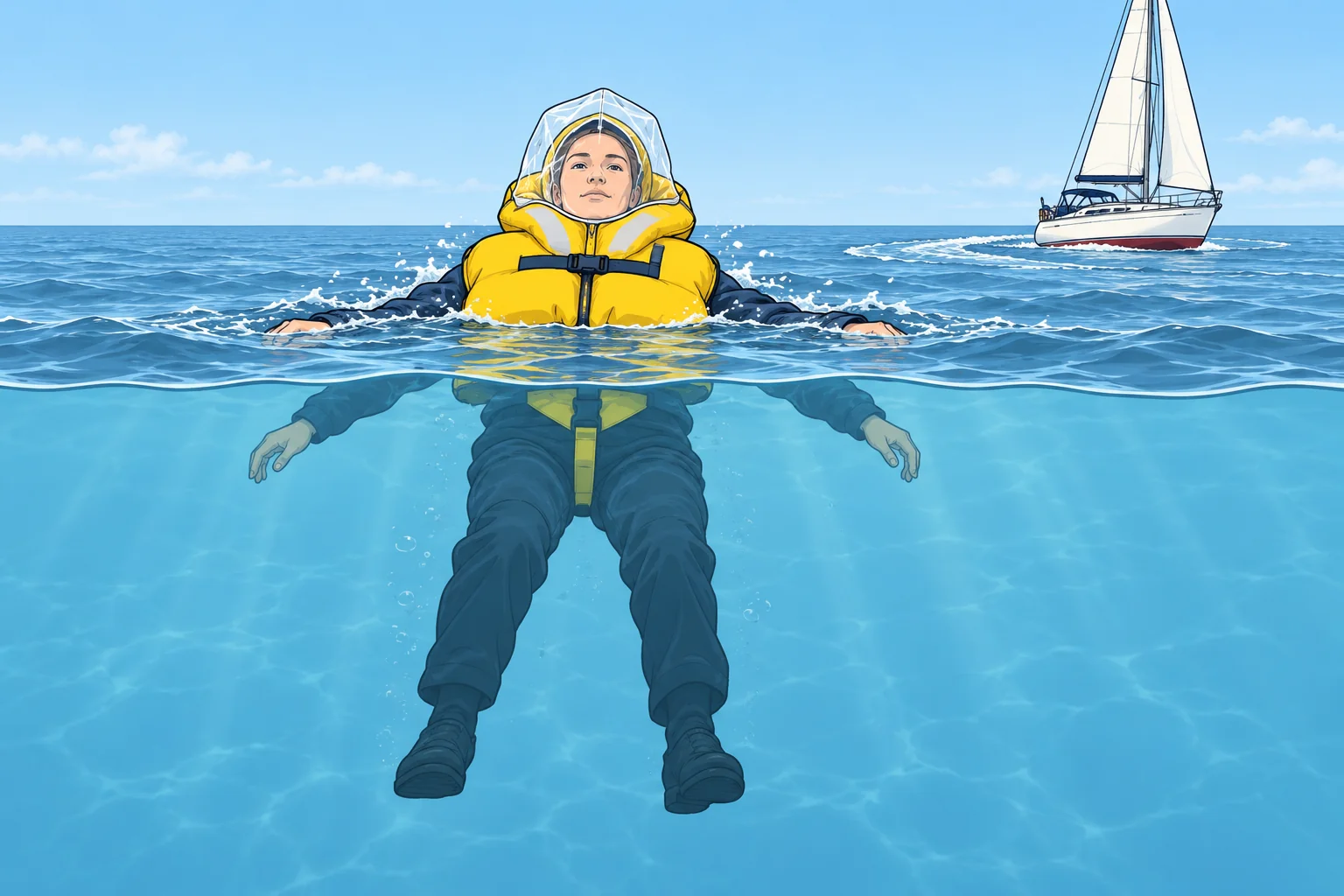
Professor Gordon Giesbrecht sums it up as 1-10-1: about 1 minute to get your breathing under control, about 10 minutes of useful movement, and about 1 hour before you lose consciousness from hypothermia. The numbers are rough and vary with the water and the person. A properly worn lifejacket supports you; a crotch strap stops it riding up and a spray hood, a cover against spray, reduces water splashing into your face.
2Key data
- Cold water
- Below about 15 °C
- Cold shock
- First minute; passes in about 60–90 seconds
- Swim failure
- Can develop within minutes; timing varies
- Hypothermia
- Core below 35 °C; usually after 30 minutes or more
- 1-10-1
- 1 min breathing, 10 min movement, 1 hour consciousness
3Key points
- 1
Four stages: cold shock, swim failure, hypothermia, post-rescue collapse.
- 2
Cold shock makes you gasp: grab a handhold within reach or float while you control your breathing.
- 3
Once breathing is controlled, reach nearby safety or flotation before your strength fades.
- 4
1-10-1: 1 minute, 10 minutes, 1 hour (rough figures).
- 5
A properly worn lifejacket with crotch strap and spray hood helps protect your airway.
4Frequent mistakes
Wrong: In cold water, hypothermia is the first danger.
Right: Cold shock and swim failure kill sooner. Hypothermia usually takes 30 minutes or more.
Wrong: A strong swimmer can swim to shore in cold water.
Right: Swim failure stops even good swimmers within minutes. Stay with the boat or something that floats unless safety is very close.
5Practice case & exam keys
In May, with the sea at 13 °C, a crew member without a lifejacket falls off the foredeck while the boat is under sail. He surfaces gasping and splashing wildly about 20 m astern.
Show the answer
He is in cold shock. Throw him a lifebuoy or a floating line and shout to him to lean back, float and get his breathing under control. Within minutes his arms will weaken, so give him something to hold on to now. Start the man-overboard routine. When you recover him, keep him as horizontal as possible to reduce the risk of post-rescue collapse.
Exam keys
- Cold shock: gasp and hyperventilation in the first minute; risk of inhaling water.
- Swim failure: cold weakens swimming and grip within minutes; do not rely on a fixed survival time.
- Hypothermia: core below 35 °C, usually after 30 minutes or more.
- Post-rescue collapse: lift cold casualties horizontally.
Finish this unit
When you've read it, answer three questions. Get all three right to finish the unit; opening the page alone doesn't count.
My notes for this unit
No notes