

Recognising and handling hypothermia
1The lesson in plain words
Recover horizontally and gently. Check response and breathing, call for help and start CPR if needed. Then shelter, insulate and rewarm slowly.
Recognise it
Hypothermia can follow time in the water, but also hours on a cold, wet deck or in a liferaft. In mild hypothermia the casualty shivers, is pale and cold, clumsy, slow to speak and makes poor decisions. In severe hypothermia the shivering may stop, and they become confused, drowsy and then unconscious, with slow, weak breathing and pulse.
Check response and breathing
Immediately after recovery, check response, open the airway and assess breathing. Send someone to call for emergency help. In an unresponsive, severely hypothermic casualty, breathing may be extremely slow: check carefully for up to a minute. If unresponsive and not breathing normally, start CPR (cardiopulmonary resuscitation) before sheltering or wrapping them. Keep checking breathing until help arrives. Cold casualties can survive long resuscitation; continue CPR until emergency professionals take over.
Horizontal and gentle
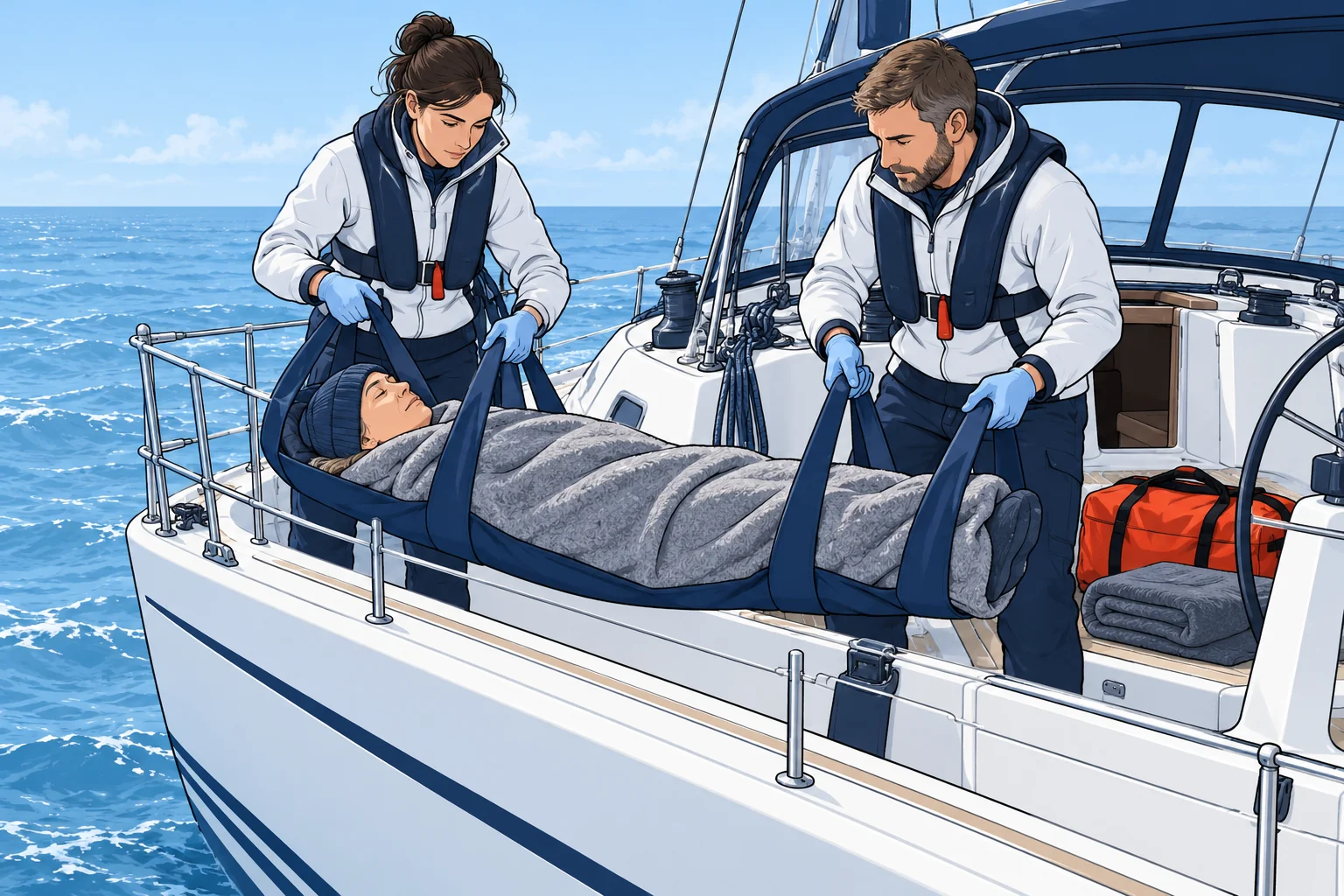
A cold heart is easily upset. Lift the casualty out of the water as horizontally as you can, with a sling or two people. Once aboard, keep them lying down and do not let them stand, walk or climb. Handle them gently, do not rub their skin, and do not let them exercise.
Shelter and insulate
Get them out of wind and spray. Gently remove wet clothes, cutting them off if needed. If you cannot remove them, wrap the wet clothing in a plastic vapour barrier before adding dry insulation, keeping the face clear. Use dry blankets or a sleeping bag, a hat and insulation underneath. Add a windproof outer layer, such as a survival bag (a large protective bag). A vapour barrier reduces evaporation and keeps wet clothing from soaking the dry insulation.
Rewarm slowly
Put wrapped warm packs or hot-water bottles on the chest, armpits and back, never directly on the skin. An alert casualty who can swallow can have warm, sweet drinks. No alcohol: it increases heat loss. Do not put a severely cold casualty in a hot shower. Rewarming takes hours, and they still need medical advice.
2Step by step
Handling a hypothermic casualty
- 1
Recover horizontally. Immediately check response, open the airway and assess breathing. Send someone to call for emergency help; start CPR if unresponsive and not breathing normally.
In an unresponsive, severely hypothermic casualty, breathing may be extremely slow: check carefully for up to a minute. Assessment and CPR come before sheltering or wrapping.
- 2
Keep them lying down and handle them gently; do not let them walk or rub them.
Rough handling or exertion can trigger a dangerous heart rhythm.
- 3
Move them out of wind and spray. Remove wet clothing gently; if you cannot, seal it in a plastic vapour barrier with the face clear before adding dry insulation.
Wind and wet clothing keep pulling heat away. The barrier reduces evaporation and keeps dry insulation from getting soaked.
- 4
Add dry insulation, a hat and insulation underneath, then a windproof outer layer. Keep the face clear.
Dry insulation slows cooling on every side; the outer layer protects it from wind and spray.
- 5
Rewarm the trunk—the chest, back and abdomen—with wrapped warm packs; warm sweet drinks only if fully alert and able to swallow.
Slow, central rewarming is safest; a drowsy casualty may choke.
- 6
Keep monitoring response and breathing until help arrives; start CPR if they become unresponsive and stop breathing normally.
A cold casualty can deteriorate after rescue, even while being rewarmed.
3Key data
- Mild
- Shivering, clumsy, slurred speech, poor judgement
- Severe
- Confused, drowsy or unconscious; shivering may stop
- Lift and handle
- Horizontal and gentle; no walking
- Warm packs
- Wrapped, on chest, armpits and back
- Breathing check
- Unresponsive, severely hypothermic casualty: up to 1 minute
4Key points
- 1
Lift horizontally, keep lying down, handle gently.
- 2
Remove wet clothes or seal them in plastic; then dry insulation, hat, insulation underneath and a windproof outer layer.
- 3
Rewarm the trunk slowly; warm sweet drinks only if fully alert; no alcohol.
- 4
Do not rub the skin or put a severely cold casualty in a hot shower.
- 5
Check response and breathing at once; call for help. If unresponsive and not breathing normally, start CPR.
5Frequent mistakes
Wrong: Let the rescued crew member climb the ladder and walk below to warm up.
Right: Keep a cold casualty horizontal and still. Exertion and standing can stop the heart.
Wrong: Give a tot of rum to warm him up.
Right: Alcohol increases heat loss. Give a warm sweet drink only if he is fully alert.
Wrong: Rub his arms and legs hard to get the blood flowing.
Right: Rubbing does not warm the core and can trigger heart problems. Insulate and warm the trunk.
6Practice case & exam keys
You recover a crew member after 40 minutes in 12 °C water. He is no longer shivering, mumbles and cannot answer questions properly. He is breathing.
Show the answer
Suspect severe hypothermia. Check response and breathing at once and have someone call for emergency help. Keep him lying flat; handle gently. Shelter him, remove wet clothes or seal them in plastic, then add dry blankets, a hat, insulation underneath and a windproof outer layer. Put wrapped warm packs on his chest and armpits. Give nothing to drink. Keep monitoring breathing; start CPR if he becomes unresponsive and stops breathing normally.
Exam keys
- Mild hypothermia shivers; severe may stop shivering and become confused or unconscious.
- Horizontal lift and gentle handling reduce collapse risk.
- Shelter; remove wet clothes or seal in plastic, then dry insulation and a windproof layer; rewarm the trunk.
- No alcohol or rubbing. If unresponsive and not breathing normally, start CPR.
Finish this unit
When you've read it, answer three questions. Get all three right to finish the unit; opening the page alone doesn't count.
My notes for this unit
No notes