

Heat exhaustion and heat stroke
1The lesson in plain words
Heat stroke is an emergency. If a hot casualty is confused, call for help at once and start cooling immediately. Cool before transfer while help is arranged.
How heat illness starts
In hot weather, hard work on deck, little shade, too little water and some medicines stop the body getting rid of heat. Seasickness and alcohol make it worse by drying you out. At first the body copes by sweating; if it cannot keep up, heat illness follows.
Heat exhaustion
Heat exhaustion is the milder form. The casualty is hot, sweaty, pale or clammy, tired and weak, with a headache, dizziness, nausea or cramps, and very thirsty. Their mind is clear. Move them into the shade, let them lie down with legs raised, loosen clothing, cool them with wet cloths and a breeze, and give water or a drink with salts. Get urgent medical help if they worsen, cannot drink or are not clearly improving within 30 minutes. Confusion needs emergency help; keep cooling.
Heat stroke
Suspect heat stroke when someone exposed to heat develops confusion, strange behaviour, slurred speech, collapse, fits or unconsciousness. Core temperature is often above 40 °C, but a lower reading does not exclude it. Skin may be sweaty or dry. Start cooling and call for emergency help; do not wait for a temperature reading.
Cool first, transfer second
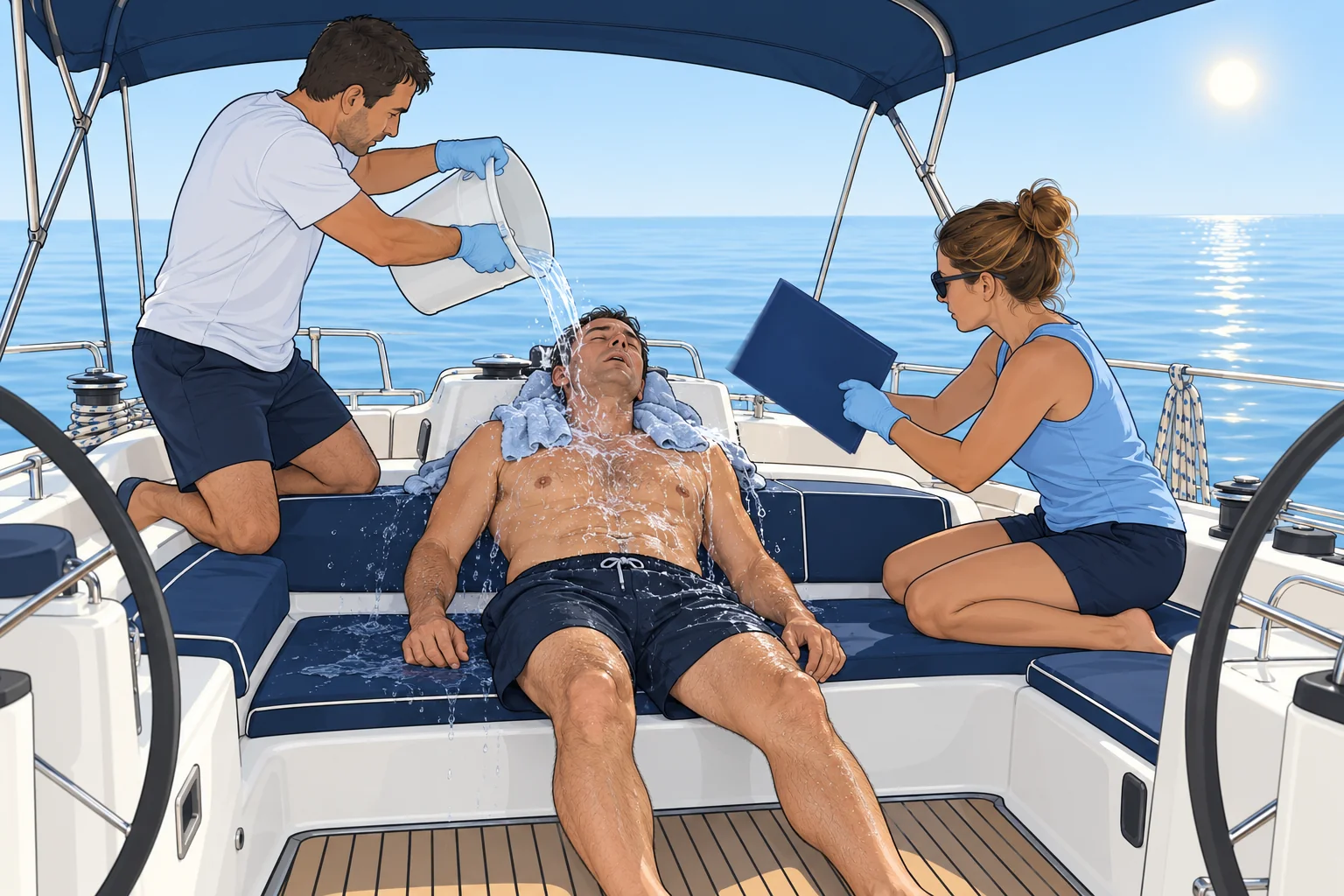
Have another crew member call for emergency help while cooling starts. Use neck-down cold-water immersion only if you can support them safely and keep their airway clear; otherwise soak and fan. On a yacht, move them into shade, remove clothing, pour water over them and fan hard. Add cold packs or wet towels on the neck, armpits and groin. Never lower a confused casualty over the side.
How long to cool
Keep cooling until the core temperature is below 39 °C if you have a suitable thermometer, or for 15 minutes or until the casualty’s mind clears, whichever comes first. Follow radio medical advice. Give drinks only once they are fully alert and able to swallow. A casualty who had heat stroke needs medical assessment, even if they recover.
2Key data
- Heat exhaustion
- Hot, sweaty, weak, dizzy; mind clear
- Heat stroke
- Hot with confusion; often above 40 °C; do not wait for a reading
- Rule
- Cool before transfer; call for help as cooling starts
- Best cooling
- Safe, supported immersion; otherwise soak and fan
- Cool until
- Below 39 °C, or 15 min, or the mind clears
3Key points
- 1
Heat exhaustion: hot, sweaty, weak, dizzy, but thinking clearly.
- 2
Heat stroke: hot and confused, collapsed or fitting. It is an emergency.
- 3
Cool first, transfer second: call for emergency help while cooling starts.
- 4
On board: shade, strip, soak with water and fan; cold packs on neck, armpits and groin.
- 5
Drinks only for alert casualties.
4Frequent mistakes
Wrong: A hot casualty who is still sweating cannot have heat stroke.
Right: Many heat stroke casualties still sweat. Confusion is the key sign.
Wrong: Wrap a collapsed hot casualty and head for port before cooling.
Right: Cool first, transfer second. Every minute of high temperature damages the brain.
Wrong: Give a confused, overheated casualty a large drink at once.
Right: A confused casualty may choke. Cool them first; give drinks once they are fully alert.
5Practice case & exam keys
On a windless August afternoon, a crew member who has been winching and sanding on deck for hours starts talking nonsense, stumbles and sits down. Her skin is very hot.
Show the answer
Treat this as heat stroke. Ask someone to call for emergency help while you start cooling her. Move her into shade, remove most clothing and pour water over her while someone fans hard. Put cold packs or wet towels on her neck, armpits and groin. Keep cooling for 15 minutes or until she is thinking clearly, and follow radio medical advice. Give nothing by mouth unless fully alert and able to swallow. She needs medical assessment even if she recovers.
Exam keys
- Heat exhaustion: mind clear; rest in shade, cool, fluids with salts.
- Heat stroke: hot with confusion or collapse, often above 40 °C; cool and call for help. Do not wait for a temperature reading.
- Cool before transfer: safe, supported immersion with airway clear, or soak and fan; call for help as cooling starts.
- Cool until below 39 °C, 15 minutes, or the mind clears.
Finish this unit
When you've read it, answer three questions. Get all three right to finish the unit; opening the page alone doesn't count.
My notes for this unit
No notes