
Ship stability and stowage · Level P3 · 5 parts · about 17 min
Load lines, freeboard and draught marks (Load Line Convention)
5 short parts: The Convention · Freeboard · The marks · Zones · Dock water. Each part explains the idea, then gives the points to remember, the common mistakes, a worked case and a practice question; the Academy unit adds all 29 check questions.
1 · The Convention
The Load Line Convention, the certificate and its surveys
The Load Line Convention sets how deep a ship may load. It rests on a weathertight hull and a calculated freeboard, proved by a certificate and annual surveys.
Why load lines
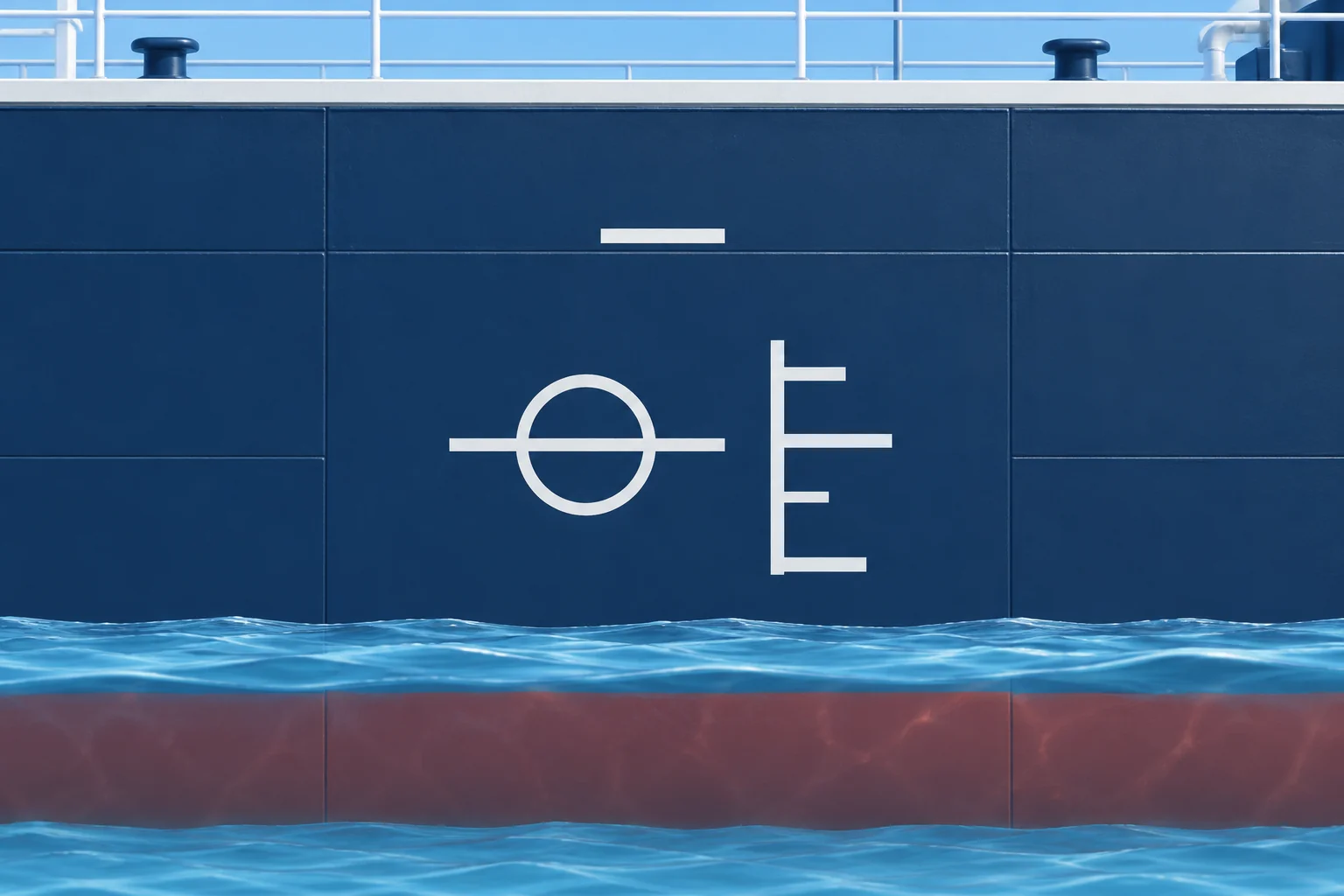
Overloaded ships founder. The International Convention on Load Lines, 1966, with its 1988 Protocol, sets a minimum freeboard for each ship, so she keeps enough reserve buoyancy, the watertight volume above the waterline, and a dry enough deck for the sea she sails in. It applies to ships on international voyages, except, among others, warships, new ships under 24 m, pleasure yachts not in trade and fishing vessels.
Two pillars
Conditions of assignment are the safety requirements on which the assigned freeboard depends. Watertight closures prevent water passing through under pressure; weathertight closures keep sea water out in sea conditions. The requirements also cover deck drainage and protection for the crew. The freeboard calculation uses the ship’s length, shape and structure. You must maintain the conditions throughout service.
Certificate and surveys
After an initial survey the flag State, or a classification society on its behalf, issues the International Load Line Certificate, valid for up to 5 years. Annual surveys, within 3 months either side of each anniversary date, check that nothing has changed: closing appliances, freeing ports (openings that drain water from the deck) and the marks. A renewal survey gives a new certificate. A ship exempted from some rules carries an International Load Line Exemption Certificate.
Record of conditions
With the certificate comes the Record of Conditions of Assignment, a list of every opening and closing device the freeboard depends on. Keep it on board and use it for maintenance: a seized vent flap, a perished hatch gasket or a welded-up freeing port can let water enter the ship or remain trapped on deck.
The rule at sea
Article 12: the appropriate load line must not be submerged when the ship puts to sea, during the voyage or on arrival. The only allowances are for water lighter than sea water and for consumables used between a river berth and the sea (see Dock water). Port State Control can detain an overloaded ship, and the master can be prosecuted.
Key figures
- Convention
- ICLL 1966 and its 1988 Protocol, as amended
- Certificate
- International Load Line Certificate, up to 5 years
- Annual survey
- Within 3 months either side of each anniversary date
- Not covered (examples)
- Warships, new ships < 24 m, pleasure yachts not in trade, fishing
- Article 12
- Mark not submerged at departure, during the voyage or on arrival
Remember
- The Load Line Convention (1966, 1988 Protocol) sets a minimum freeboard for each ship.
- The freeboard depends on the conditions of assignment: a weathertight, watertight hull.
- Certificate up to 5 years; annual surveys within 3 months of each anniversary date.
- The Record of Conditions of Assignment lists every closing device: maintain them.
- The mark must not be submerged at departure, during the voyage or on arrival.
Common mistakes
Wrong: The load line only matters when the ship leaves port.
Right: Article 12 applies at departure, throughout the voyage and on arrival, in every zone she passes through.
Wrong: A valid certificate means the hull is fit, whatever the state of the vents and hatches.
Right: The freeboard assumes the conditions of assignment. Broken closing devices undermine it even with a valid certificate.
Worked case
During rounds you find that two mushroom ventilators on the forecastle have seized open and a hatch cover gasket is missing a long section. The ship sails tomorrow. Why does this matter for the load line, and what do you do?
Show the answer
These are conditions of assignment: the freeboard assumes they are weathertight. Report them to the chief mate and master, repair before sailing or fit approved temporary closures, and record the work. If they cannot be made good, the flag State or class must be told, because the ship may not meet the conditions her certificate depends on.
Practice question
What is the maximum validity of an International Load Line Certificate?
- 1 year
- 5 years
- 4 years
- 10 years
Show the answer
Answer: B. Up to 5 years, kept valid by annual surveys and renewed by a renewal survey.
2 · Freeboard
Freeboard, the deck line and ship types A and B
Freeboard is measured amidships from the deck line down to the load line. Its value depends on the ship’s type, length and form.
Freeboard
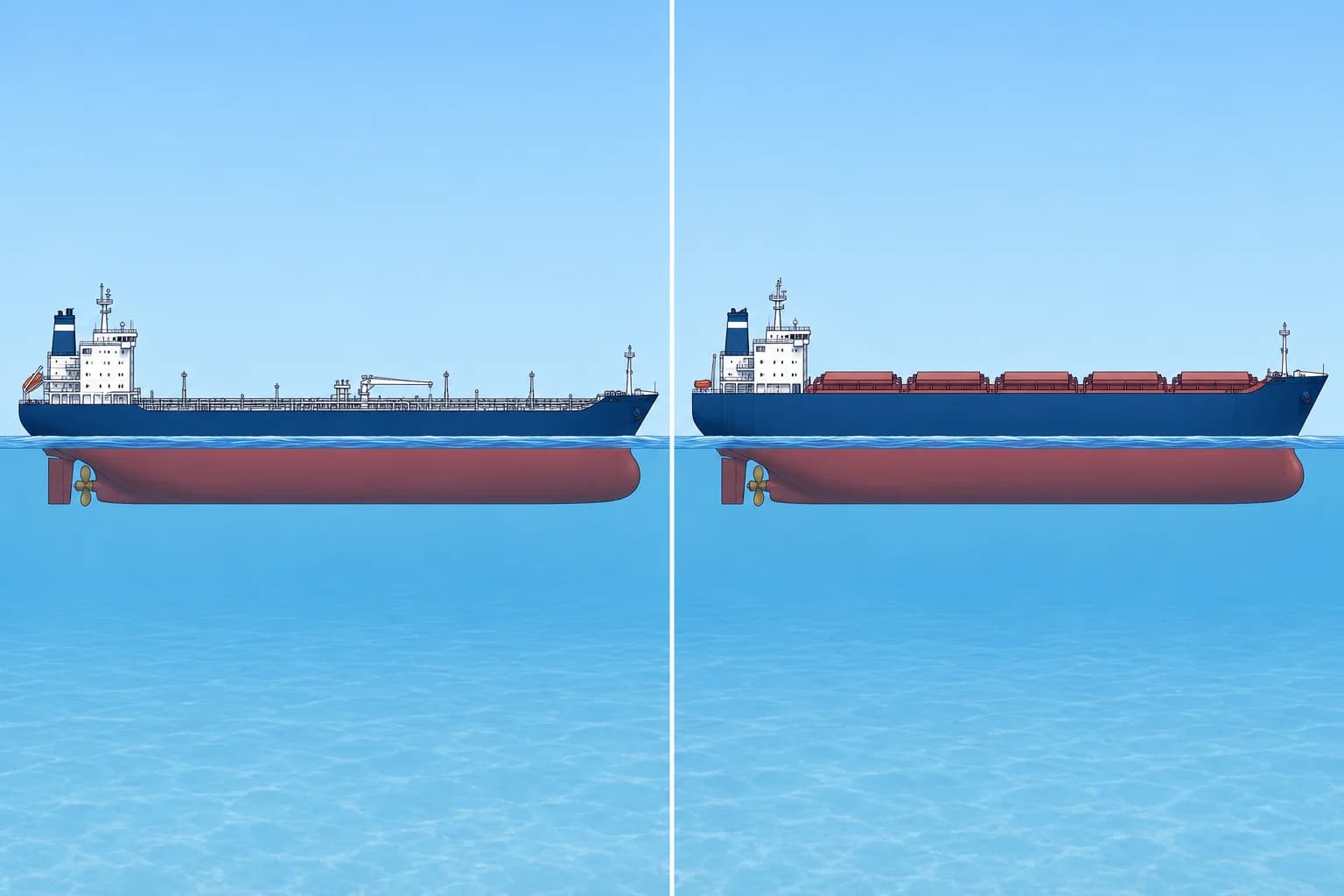
Freeboard is the vertical distance amidships from the deck line’s upper edge to the load line’s upper edge. The freeboard deck is normally the uppermost complete deck exposed to weather and sea, with weathertight closures in its exposed part and watertight closures for side openings below it. The deck line is 300 × 25 mm on both sides. Its upper edge normally follows the deck’s upper surface continued to the outside of the shell plating.
Why it matters
Freeboard helps preserve reserve buoyancy, the enclosed watertight volume above the waterline. More freeboard generally delays deck-edge immersion, when the deck edge reaches the water as the ship heels. This helps preserve stability at larger heel angles and keeps the deck drier. Freeboard alone does not prove adequate stability. Check the approved stability information.
Type A and Type B
A Type A ship is designed to carry only liquid cargo in bulk, with small, well-sealed openings and a highly watertight exposed deck. It receives the smaller tabular freeboard. Other ships are Type B. Approved B-60 and B-100 assignments reduce the Type B tabular freeboard by 60% or 100% of the difference between the B and A values, subject to additional requirements. Weaker hatch covers can require increased freeboard.
How it is assigned
The assigning authority, usually a classification society acting for the flag State, starts with a table value for the ship’s length and type. It adjusts this tabular freeboard for hull fullness (block coefficient), depth, enclosed structures above deck (superstructures and trunks), the deck’s rise towards the ends (sheer), and minimum bow height. The result is the summer freeboard; the other seasonal and fresh-water freeboards follow from it.
Freeboard and draught
With the deck line in its usual position, summer draught plus summer freeboard equals the height from the top of the keel to the upper surface of the freeboard deck at the ship’s side. On the bridge you usually work in draughts; freeboard is the same limit seen from the deck down. Measure it by tape from the deck line when a check is needed.
Key figures
- Freeboard
- Deck line upper edge to load line upper edge, amidships
- Deck line
- 300 mm × 25 mm, amidships, both sides
- Type A
- Liquid bulk cargo only, small sealed openings: smaller freeboard
- Type B
- All other ships; B-60/B-100 reductions possible
- Draught + freeboard
- Top of keel to upper surface of freeboard deck at side
Remember
- Freeboard is measured amidships, from the upper edge of the deck line to the upper edge of the load line.
- The deck line is 300 × 25 mm, its upper edge level with the freeboard deck at the side.
- Type A: tankers, smaller freeboard. Type B: all others; B-60/B-100 may reduce it.
- Summer freeboard comes from tabular freeboard plus corrections; the others follow from it.
- More freeboard generally helps preserve reserve buoyancy and delays deck-edge immersion.
Common mistakes
Wrong: Freeboard is measured from the main deck at the bow.
Right: It is measured amidships, from the upper edge of the deck line to the upper edge of the load line.
Wrong: A bulk carrier is Type A because it carries bulk cargo.
Right: Type A is for ships designed for liquid cargo in bulk only, with small sealed openings. Dry bulk carriers are Type B, often B-60 or B-100.
Worked case
Your bulk carrier has an ordinary Type B assignment. An operator proposes using a smaller freeboard because a similar ship has B-60. Can you accept that proposal?
Show the answer
No. Use your ship’s assigned marks and certificate. B-60 and B-100 are approved reductions for ships meeting additional requirements; similarity to another ship is not approval. Type A is for qualifying liquid-bulk ships, not dry bulk carriers.
Practice question
Where is freeboard measured?
- At the bow, from the forecastle deck to the waterline
- Amidships, from the deck line to the load line
- At the stern, from the poop deck to the waterline
- Amidships, from the keel to the deck line
Show the answer
Answer: B. Freeboard is measured amidships, from the upper edge of the deck line to the upper edge of the load line.
3 · The marks
The load line mark: ring, lines and their spacing
The ring and its lines show how deep you may load in each zone and in fresh water. Read the upper edge, and know where each line sits.
The mark
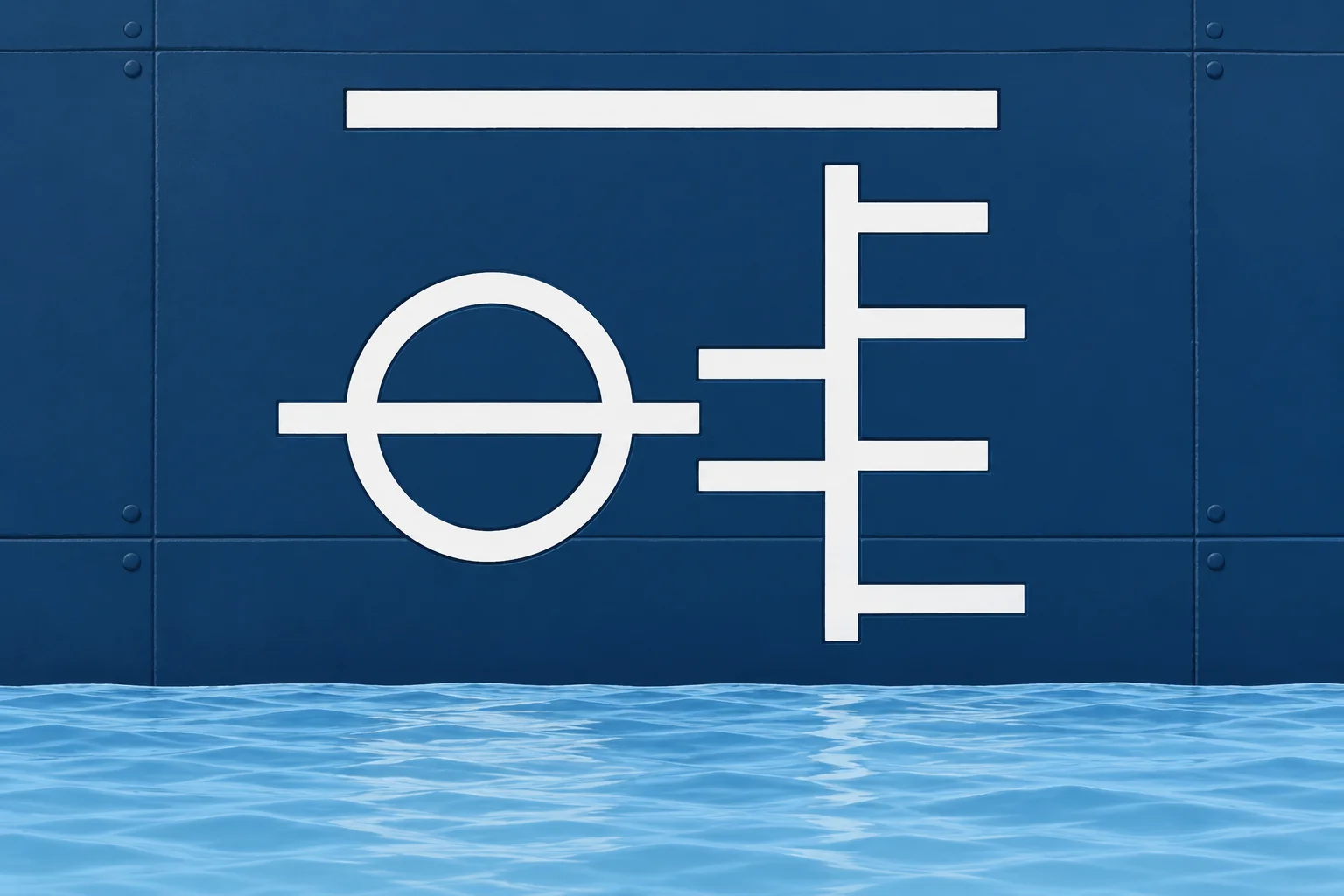
Amidships on both sides, below the deck line, is the load line mark: a ring 300 mm in outside diameter and 25 mm wide, crossed by a horizontal line 450 mm long and 25 mm wide whose upper edge passes through the ring’s centre. The centre lies the summer freeboard below the deck line. Beside the ring are the letters of the assigning authority, about 115 mm high.
The lines
A vertical line 25 mm wide stands 540 mm forward of the ring’s centre. From it run horizontal lines 230 mm long and 25 mm wide. Always read the upper edge. Pointing forward: S, summer, level with the ring’s line; T, tropical, above it; W, winter, below it; WNA, winter North Atlantic, below W. Pointing aft, towards the ring: F, fresh water summer, and TF, tropical fresh water.
The spacing
Let dS be the assigned summer draught. Tropical freeboard is summer freeboard minus dS/48; winter freeboard is summer plus dS/48. T is dS/48 above S on the hull, and W is dS/48 below S. For ships of 100 m or less, WNA is 50 mm below W; for longer ships the WNA freeboard equals the winter one. F is the fresh water allowance (FWA) above S, and TF is the FWA above T.
Fresh water allowance
In fresh water, the same ship floats deeper because it displaces a larger volume of less dense water. The fresh water allowance (FWA) is the extra immersion permitted. Use FWA = Δ ÷ (4 × TPC) mm, where Δ is the summer displacement in tonnes and TPC is the tonnes needed to increase draught by 1 cm at the summer waterline. Hydrostatics explains the derivation.
Example
Use Hydrostatics’ ship: summer Δ 16,500 t and sea-water TPC 25.3 t/cm. FWA = 16,500 ÷ (4 × 25.3) ≈ 163 mm. Draughts are T = dS + dS/48, W = dS − dS/48, F ≈ dS + 0.163 m and TF ≈ dS + dS/48 + 0.163 m. These are draughts from the keel; freeboard is measured down from the deck line.
Timber and paint
Ships assigned timber freeboards carry a vertical line 540 mm abaft (aft of) the ring’s centre. LT, LS, LW and LWNA extend aft; LF and LTF extend forward. L identifies timber lines; the other letters name the same seasons and water types as ordinary lines. Marks must be permanent and clearly visible: white or yellow on dark plating, or black on light plating. Check that they match the certificate.
Key figures
- Ring
- 300 mm outside diameter, 25 mm wide
- Line through the ring
- 450 mm × 25 mm, upper edge through the centre
- Load lines
- 230 mm × 25 mm, from a vertical line 540 mm forward of the centre
- T and W
- dS/48 above and below S (dS = assigned summer draught)
- WNA (ships ≤ 100 m)
- 50 mm below W
- FWA
- FWA = Δ ÷ (4 × TPC) mm, using summer sea-water values
Remember
- Ring 300 mm, line through it 450 mm, load lines 230 mm; all 25 mm wide. Read the upper edge.
- Forward of the vertical line: T, S, W, WNA. Aft of it: F and TF.
- T is dS/48 above S, W is dS/48 below S; WNA is 50 mm below W for ships of 100 m or less.
- F is FWA above S and TF is FWA above T; FWA = Δ ÷ (4 × TPC) mm.
- Timber: vertical line 540 mm abaft the ring; LT, LS, LW, LWNA run aft, LF and LTF forward.
Common mistakes
Wrong: Read the centre or lower edge of the line.
Right: Every load line is its upper edge, as are the deck line and the line through the ring.
Wrong: FWA is about 16.3 mm for summer Δ 16,500 t and TPC 25.3 t/cm.
Right: FWA = 16,500 ÷ (4 × 25.3) ≈ 163 mm. Keep the formula’s millimetre units.
Wrong: Winter is above summer because winter is the bigger freeboard.
Right: A bigger freeboard means less draught, so W is below S on the hull, and T is above it.
Worked case
The shared ship has a length between perpendiculars (LBP) of 140 m and assigned summer draught dS. A cadet says departure for the winter North Atlantic must be delayed because no separate WNA line is painted. What do you check?
Show the answer
Check the marks against the certificate. For this 140 m ship, winter North Atlantic freeboard equals winter freeboard, so a separate WNA line is unnecessary. W draught = dS − dS/48. Verify the assigned W mark and the applicable zone and season before accepting the loading.
Practice question
What is the outside diameter of the load line ring?
- 300 mm
- 450 mm
- 230 mm
- 540 mm
Show the answer
Answer: A. The ring is 300 mm in outside diameter and 25 mm wide. 450 mm is the line through it, 230 mm the load lines, 540 mm the distance to the vertical line.
4 · Zones
Load line zones, seasonal areas and passage planning
Which mark you load to depends on where the ship is and the date. Plan the voyage so she is never deeper than the mark for the zone she is in.
Zones and seasons
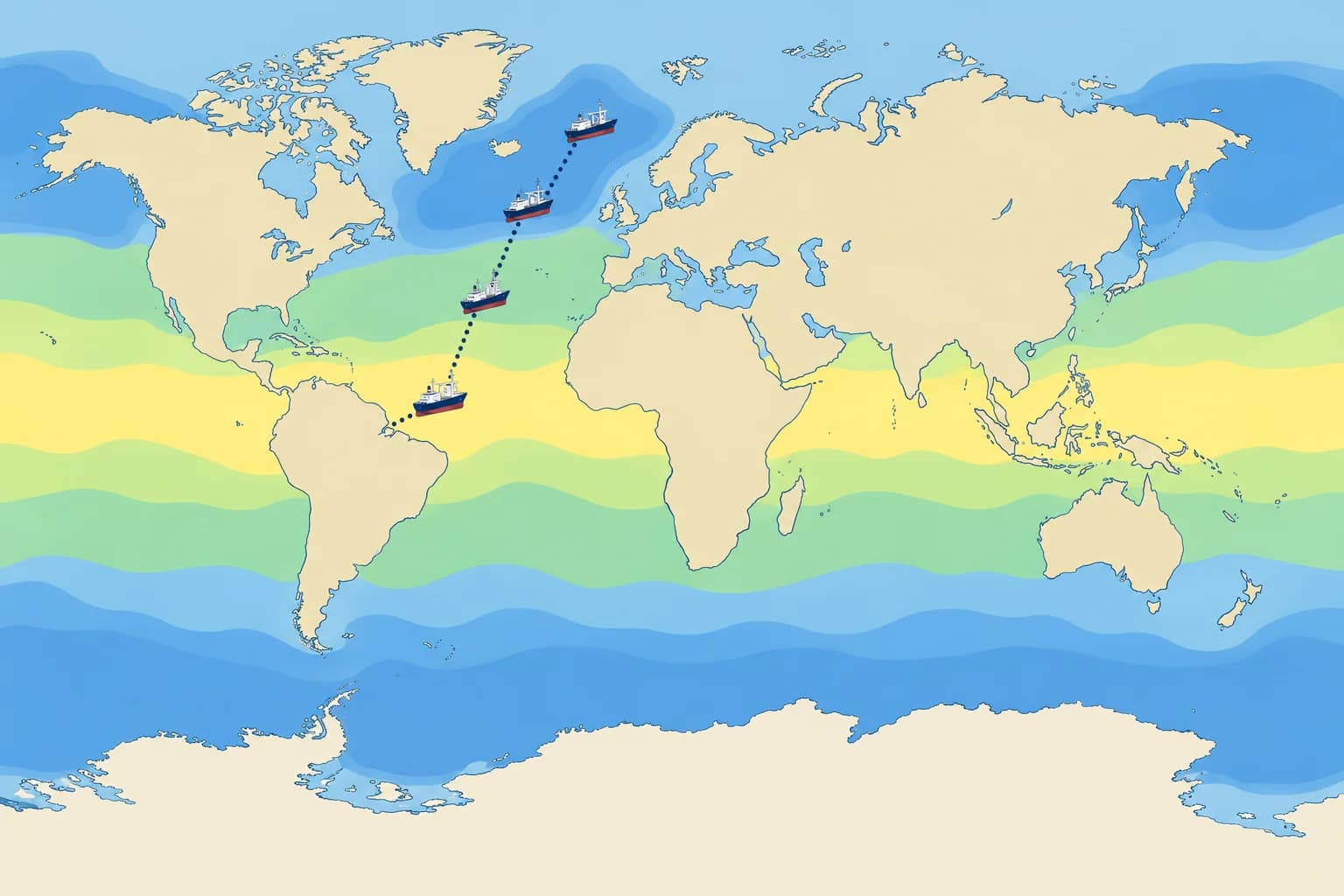
Annex II of the Convention divides the seas into zones and seasonal zones and areas. In a tropical zone you may load to T, in a summer zone to S, and in a seasonal zone to the mark for its current season: for example W in a winter seasonal zone during its winter. The official text defines every boundary by latitude, longitude or coast; the chart of zones shows them.
What they are based on
Boundaries come from weather statistics. A summer zone has no more than 10 % of winds of force 8 or above. A tropical zone has no more than 1 % and few tropical storms. Seasonal zones change with the date: the North Atlantic Winter Seasonal Zone I is winter from 16 October to 15 April and summer from 16 April to 15 October.
Small ships
Ships of 100 m or less get extra protection. They use WNA in the North Atlantic winter area in winter, and some enclosed seas, such as parts of the Mediterranean, have a winter season only for them. Always check the length limit in each area’s rule.
Planning across zones
Check every zone and season you will encounter, including date changes while you remain in one area. For each later limit, add only the consumables you will use before it applies. Your maximum departure displacement is the lowest of those values and the present limit. A less strict zone never permits deeper loading before you cross its boundary. Mark boundaries, season dates and expected crossing dates on your passage plan.
Worked example
At assigned summer draught dS, Δ is 16,500 t; sea-water TPC is 25.3 t/cm. You leave a tropical zone and reach a summer zone after 4 days at 30 t/day. The T limit exceeds 16,620 t; no later limit controls. Departure Δ is 16,500 + 120 = 16,620 t. Extra draught = 120 ÷ 25.3 ≈ 4.74 cm, giving dS + 0.0474 m. For a loading target in whole centimetres, allow at most 4 cm above dS.
Key figures
- Summer zone basis
- ≤ 10 % winds of force 8 or more
- Tropical zone basis
- ≤ 1 % winds of force 8 or more, few tropical storms
- N Atlantic Winter Seasonal Zone I
- Winter 16 Oct – 15 Apr; summer 16 Apr – 15 Oct
- Departure limit (t)
- Lowest of present limit and each later limit + consumption to it
- WNA
- Ships ≤ 100 m, North Atlantic winter area, in winter
Remember
- Load to the mark for the zone and season the ship is in: T, S or W (WNA for small ships).
- Zones come from wind statistics; seasonal zones change with the date.
- Check every later limit plus consumption to it; the lowest value, including the present limit, controls departure.
- Into a less strict zone: the stricter mark governs until you cross.
- Put zone boundaries and season dates on the passage plan.
Common mistakes
Wrong: We load in a tropical zone, so we load to T.
Right: Check all later limits plus consumption before loading to T. If she enters a summer zone, her draught must not exceed the S draught on entry.
Wrong: The season is fixed for the whole voyage by the departure date.
Right: Seasonal zones change with the date. Use the date you expect to be in each zone.
Worked case
You load in a summer zone on 10 October for a 9-day passage that enters the North Atlantic Winter Seasonal Zone I on 17 October. The chief mate plans to load to S. What do you point out?
Show the answer
On 17 October Zone I is in winter (16 October to 15 April). The W line’s upper edge must be at or above the waterline on entry. Check every later limit plus consumption to it, including Δ at W plus the fuel and fresh water used before the boundary; compare with the present S limit. If she is 100 m or less and enters the WNA area, check WNA instead.
Practice question
In the worked example (summer Δ 16,500 t, 4 days at 30 t/day to summer waters, T limit above 16,620 t, no later controlling limit), what is the maximum departure displacement?
- 16,740 t
- 16,500 t
- 16,620 t
- 16,380 t
Show the answer
Answer: C. The summer-entry limit controls: 16,500 + (4 × 30) = 16,620 t. The present tropical limit is higher and no later limit controls. 16,380 t subtracts consumption instead.
5 · Dock water
Loading in dock water and the checks before sailing
In a river or dock berth the water is lighter, so the ship may sink past her mark by the dock water allowance and rise to it at sea.
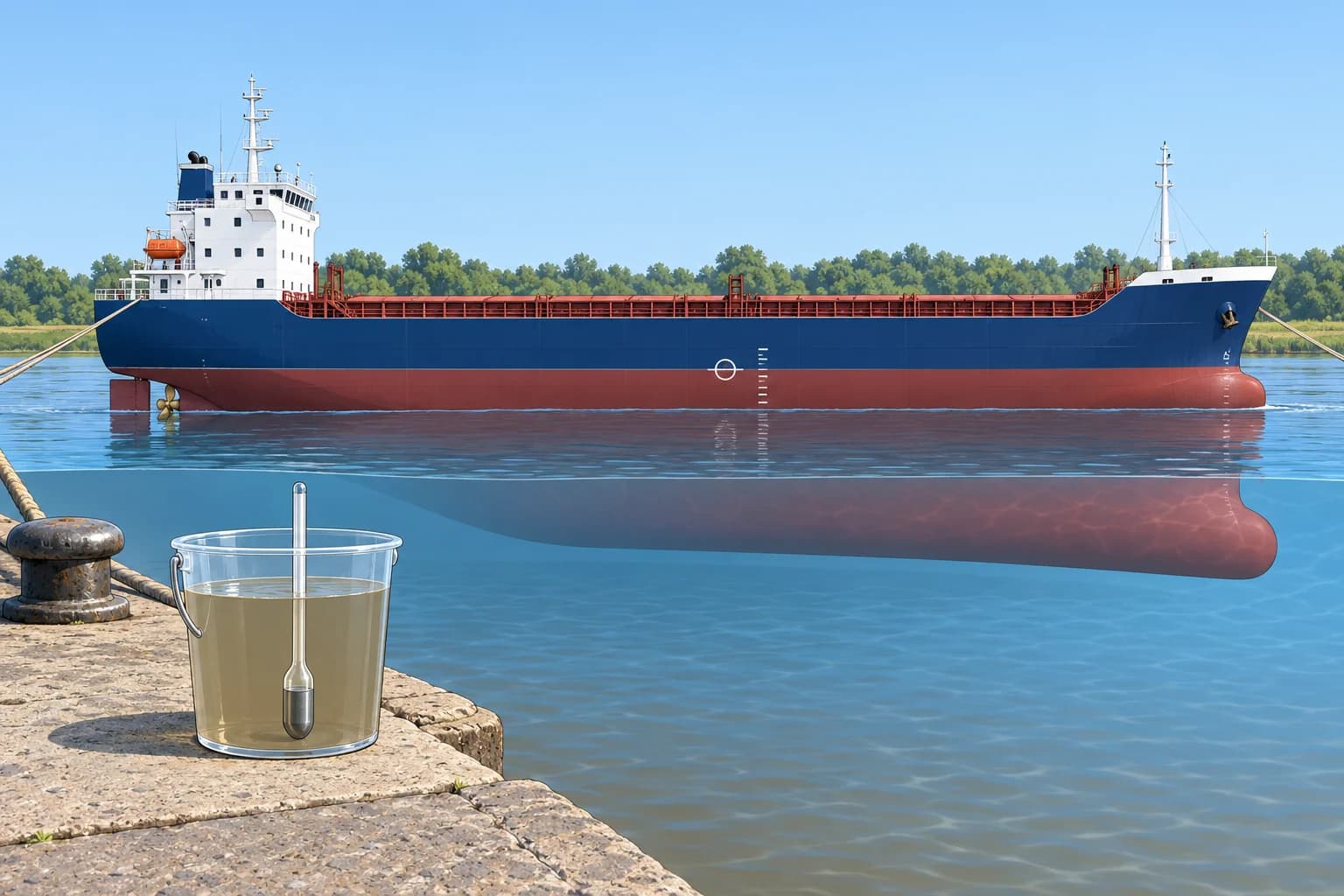
The idea
In a river or dock the water is lighter than sea water, so the ship floats deeper. When she reaches the sea she rises. You may load until the mark is submerged by the dock water allowance (DWA), so that she floats at the mark in sea water. DWA = FWA × (1.025 − ρ) ÷ 0.025, with ρ the dock water density in t/m³ (Hydrostatics derives it).
Measuring density
Take water samples at several depths alongside amidships, away from discharges, using a depth-sampling bottle. Transfer them to a clean hydrometer jar. A hydrometer is a floating density gauge; follow its instructions for reading the meniscus (the curved liquid surface). River density changes with tide and rain, so sample again near completion.
River passage
Article 12(3): a ship leaving a port in a river or inland waters may load deeper by the weight of fuel and other consumables used between the berth and the sea. Divide that weight by the dock-water TPC to get the allowance in centimetres. Her applicable load line must not be submerged when she reaches the sea.
Reading the marks
Average both sides to estimate mean amidships draught. A list is a lean to one side. Bring the ship upright for the final compliance check and verify both appropriate load lines against the permitted immersion. Allow for DWA and any river consumption allowance. Read in calm water or average repeated readings. For cargo estimates, dock-water TPC = sea-water TPC × ρ ÷ 1.025.
Timber deck cargo
Use timber lines only if they are assigned and the Convention’s timber conditions of assignment are met. Follow the approved Cargo Securing Manual and applicable flag requirements. The 2011 Timber Deck Cargo (TDC) Code gives guidance on stowage and securing. Timber deck cargo stability belongs to Cargo planning.
Worked example: loading in dock water
- Given: summer Δ 16,500 t, sea-water TPC 25.3 t/cm, dock density 1.010 t/m³. FWA = 16,500 ÷ (4 × 25.3) ≈ 163.043 mm; DWA = FWA × (1.025 − 1.010) ÷ 0.025 ≈ 97.826 mm. — Only 60% of the fresh water allowance applies here. Keep unrounded values until the final cargo estimate.
- Summer mark applies. Allowed dock draught ≈ assigned summer draught dS + 0.0978 m. — At unchanged displacement in sea water she will rise about 97.8 mm to the summer mark.
- Present mean amidships draught dS − 0.050 m, near even keel. Sinkage still allowed ≈ 0.097826 + 0.050 = 0.147826 m = 14.7826 cm. — This is how far the ship may still sink in the dock.
- TPC in dock water = 25.3 × 1.010 ÷ 1.025 ≈ 24.930 t/cm. — Lighter water gives fewer tonnes per centimetre.
- Cargo still to load ≈ 14.7826 × 24.9298 ≈ 368.53 t, about 369 t. Treat TPC as constant over this small change. — Sinkage times TPC gives the weight.
- Recheck density and both load lines with the ship upright; stop at dS + 0.0978 m in this example. — Density may change during loading; recheck while you can still correct the load.
Remember
- DWA = FWA × (1.025 − ρ) ÷ 0.025; load until the mark is submerged by the DWA.
- Sample dock water from several depths at the ship’s side; resample near completion.
- River allowance (cm) = consumables used from berth to sea (t) ÷ dock TPC (t/cm).
- Average readings estimate mean draught; make the final load-line check upright, on both sides.
- Timber lines require assigned timber freeboards and compliance with the Convention’s timber conditions.
Common mistakes
Wrong: Use the full FWA in any dock water.
Right: The full FWA is for fresh water of 1.000 t/m³. In brackish water use the DWA, a proportion of the FWA.
Wrong: Use the sea-water TPC to find the cargo still to load.
Right: In dock water use sea-water TPC × ρ ÷ 1.025. With sea-water TPC the example gives about 374 t instead of 369 t.
Wrong: Read one side only; the other is hard to reach.
Right: Average both sides for mean-draught estimates. A list can hide an immersed mark; bring the ship upright and check both load lines for final compliance.
Worked case
In the worked example the agent says density on the morning sample was 1.000 t/m³ after heavy rain, so you can use the full FWA. Your own sample alongside, from three depths, reads 1.010 t/m³. What do you load to?
Show the answer
Use your representative sample: 1.010 t/m³ gives DWA ≈ 97.8 mm. With the ship upright, stop at dS + 0.0978 m and check both load lines. Using the full 163 mm would allow dS + 0.163 m and leave about 6.5 cm excess immersion at sea. Sample again near completion and record the density in the log book.
Practice question
FWA 163 mm, dock water density 1.010 t/m³. What is the DWA?
- 163.0 mm
- 65.2 mm
- 97.8 mm
- 100.0 mm
Show the answer
Answer: C. DWA = 163 × (1.025 − 1.010) ÷ 0.025 = 163 × 0.6 = 97.8 mm. 65.2 mm uses 0.4 instead of 0.6.