

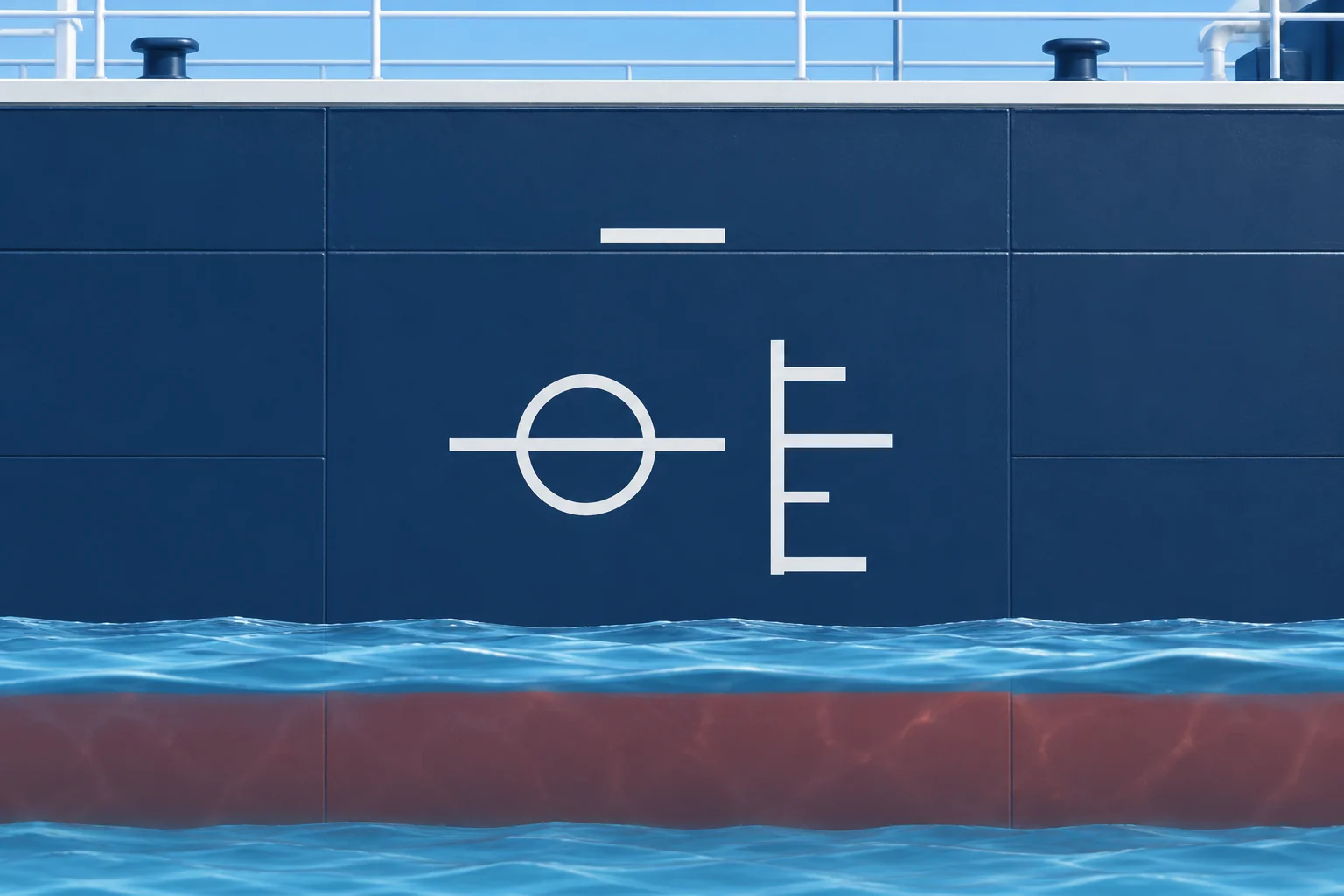
The Load Line Convention, the certificate and its surveys
1The lesson in plain words
The Load Line Convention sets how deep a ship may load. It rests on a weathertight hull and a calculated freeboard, proved by a certificate and annual surveys.
Why load lines
Overloaded ships founder. The International Convention on Load Lines, 1966, with its 1988 Protocol, sets a minimum freeboard for each ship, so she keeps enough reserve buoyancy, the watertight volume above the waterline, and a dry enough deck for the sea she sails in. It applies to ships on international voyages, except, among others, warships, new ships under 24 m, pleasure yachts not in trade and fishing vessels.
Two pillars
Conditions of assignment are the safety requirements on which the assigned freeboard depends. Watertight closures prevent water passing through under pressure; weathertight closures keep sea water out in sea conditions. The requirements also cover deck drainage and protection for the crew. The freeboard calculation uses the ship’s length, shape and structure. You must maintain the conditions throughout service.
Certificate and surveys
After an initial survey the flag State, or a classification society on its behalf, issues the International Load Line Certificate, valid for up to 5 years. Annual surveys, within 3 months either side of each anniversary date, check that nothing has changed: closing appliances, freeing ports (openings that drain water from the deck) and the marks. A renewal survey gives a new certificate. A ship exempted from some rules carries an International Load Line Exemption Certificate.
Record of conditions
With the certificate comes the Record of Conditions of Assignment, a list of every opening and closing device the freeboard depends on. Keep it on board and use it for maintenance: a seized vent flap, a perished hatch gasket or a welded-up freeing port can let water enter the ship or remain trapped on deck.
The rule at sea
Article 12: the appropriate load line must not be submerged when the ship puts to sea, during the voyage or on arrival. The only allowances are for water lighter than sea water and for consumables used between a river berth and the sea (see Dock water). Port State Control can detain an overloaded ship, and the master can be prosecuted.
2Key data
- Convention
- ICLL 1966 and its 1988 Protocol, as amended
- Certificate
- International Load Line Certificate, up to 5 years
- Annual survey
- Within 3 months either side of each anniversary date
- Not covered (examples)
- Warships, new ships < 24 m, pleasure yachts not in trade, fishing
- Article 12
- Mark not submerged at departure, during the voyage or on arrival
3Key points
- 1
The Load Line Convention (1966, 1988 Protocol) sets a minimum freeboard for each ship.
- 2
The freeboard depends on the conditions of assignment: a weathertight, watertight hull.
- 3
Certificate up to 5 years; annual surveys within 3 months of each anniversary date.
- 4
The Record of Conditions of Assignment lists every closing device: maintain them.
- 5
The mark must not be submerged at departure, during the voyage or on arrival.
4Frequent mistakes
Wrong: The load line only matters when the ship leaves port.
Right: Article 12 applies at departure, throughout the voyage and on arrival, in every zone she passes through.
Wrong: A valid certificate means the hull is fit, whatever the state of the vents and hatches.
Right: The freeboard assumes the conditions of assignment. Broken closing devices undermine it even with a valid certificate.
5Practice case & exam keys
During rounds you find that two mushroom ventilators on the forecastle have seized open and a hatch cover gasket is missing a long section. The ship sails tomorrow. Why does this matter for the load line, and what do you do?
Show the answer
These are conditions of assignment: the freeboard assumes they are weathertight. Report them to the chief mate and master, repair before sailing or fit approved temporary closures, and record the work. If they cannot be made good, the flag State or class must be told, because the ship may not meet the conditions her certificate depends on.
Exam keys
- ICLL 1966 + 1988 Protocol; minimum freeboard helps preserve reserve buoyancy and a drier deck.
- Certificate ≤ 5 years; annual survey ± 3 months of the anniversary date.
- Article 12: not submerged at departure, during the voyage or on arrival.
Finish this unit
When you've read it, answer three questions. Get all three right to finish the unit; opening the page alone doesn't count.
My notes for this unit
No notes