
Seamanship basics: ropes, knots and the boat · Level R2 · 3 parts · about 6 min
Mooring lines and fenders: bow, stern and spring lines
3 short parts: Line leads · Prepare · Stay clear. Each part explains the idea, then gives the points to remember, the common mistakes, a worked case and a practice question; the Academy unit adds all 15 check questions.
1 · Line leads
Read the lead before naming the line
A mooring line pulls in the direction it runs, called its lead. That direction tells you which movement it can restrain.
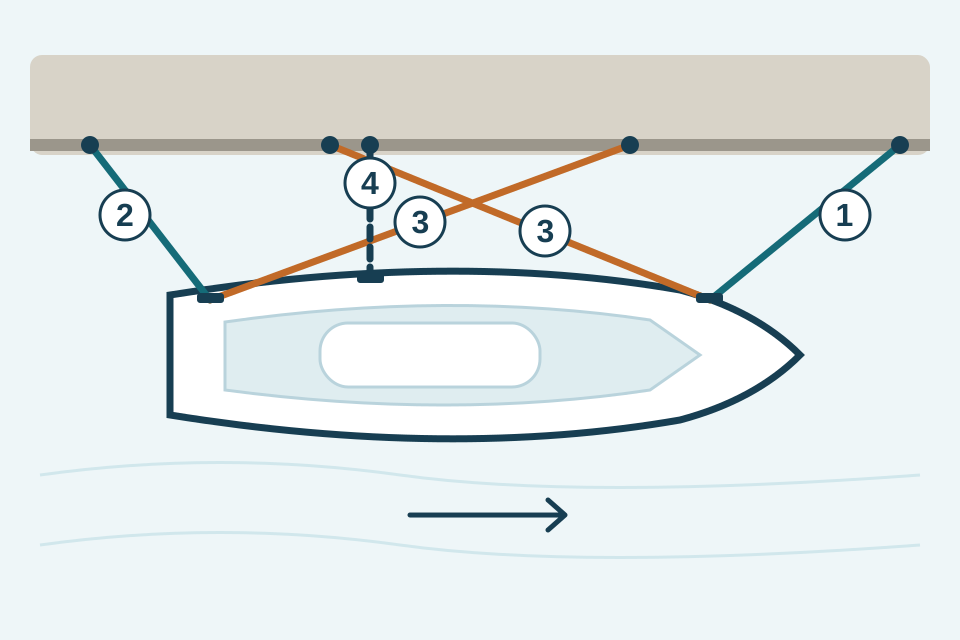
Start with the movement
A berth is the place where you secure the boat. Ahead means forwards; astern means backwards. Which line would tighten if you moved ahead, astern or away from the berth? A taut (tight) line resists movement that increases the distance between its ends; it cannot push.
Bow and stern lines
The bow is the front of the boat; the stern is the back. Forward means towards the bow; aft means towards the stern. A bow line leads to a shore point ahead; a stern line leads to one astern. Their angles determine how much they restrain movement along and away from the berth.
Spring and breast lines
Springs run mainly along the berth and limit movement ahead or astern. A line from forward leading aft checks movement ahead; one from aft leading forward checks movement astern. Breast lines run more nearly across the gap and limit movement away from the berth.
Key figures
- 1 · Bow line
- From the bow towards a point ahead
- 2 · Stern line
- From the stern towards a point astern
- 3 · Springs
- Along the berth; check ahead and astern movement
- 4 · Breast line
- Across the gap; checks movement away from the berth
Remember
- Follow the lead: names alone do not explain the restraint.
- A line pulls; it does not push.
- Springs restrain movement along the berth.
Common mistakes
Wrong: A line from the bow stops every kind of movement.
Right: Its effect depends on its lead and which movement would tighten it.
Wrong: A spring must lead towards the nearest shore fitting.
Right: Its long lead along the berth is what restrains fore-and-aft movement.
Worked case
The boat is creeping ahead. One prepared line runs from forward to a shore point aft; another runs from aft to a point forward. Which could check the creep, and why?
Show the answer
The line from forward leading aft could check it: moving ahead increases the distance between its ends. Confirm the actual lead and agreed arrangement; do not reach into a loaded line.
Practice question
What can a mooring line do when loaded?
- Push the hull away from the berth
- Pull along the line’s own lead
- Restrain movement equally in all directions
- Restrain the boat while the line is completely slack
Show the answer
Answer: B. A rope carries tension along its lead; it cannot carry a pushing load.
2 · Prepare
Prepare the boat and crew before the approach
Prepare lines, fenders and clear roles while there is still room and time to stop and rethink the approach.
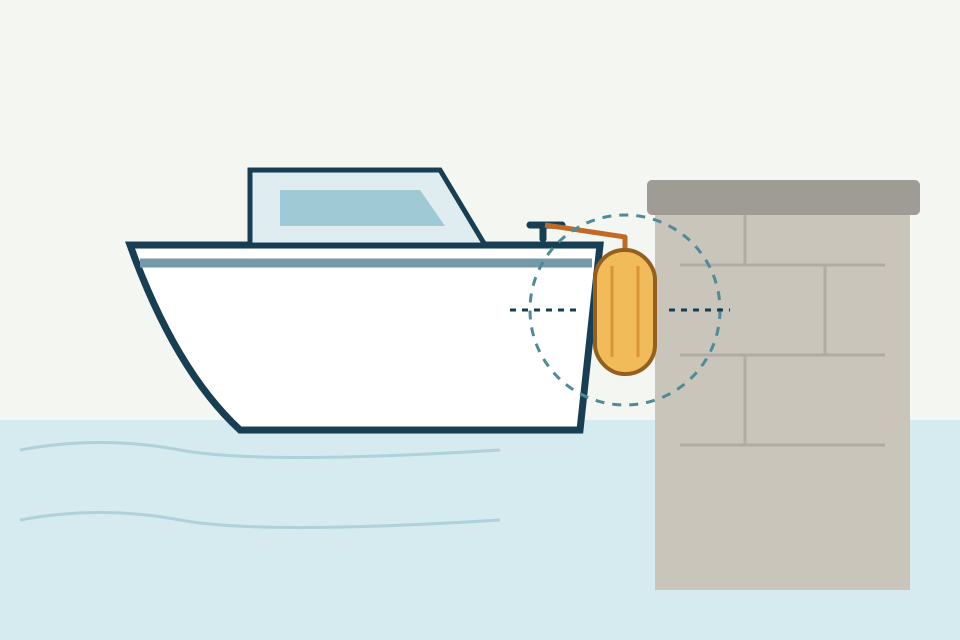
Read the berth
Check space, water movement and wind before committing. Conditions can differ from departure. Agree the approach and an escape option with the helm—the person steering. A difficult berth may need another plan or assistance.
Rig before arrival
Prepare untangled lines and fenders—protective cushions between boat and berth. Match fender height to the contact surface and keep a movable fender ready. Never use hands or feet as a fender.
Brief the crew
Wear suitable footwear and lifejackets. Name who handles each line, where it goes and how instructions will be repeated. Agree a clear stop signal. Tell the helm if a line is not ready or someone is in an unsafe position.
Once alongside
A fixed quay (a solid dock attached to the shore) stays at one height while the boat rises and falls with the tide. Arrange enough line length for that movement without excessive slack. Recheck fender contact height. Look for chafe (wear from rubbing), especially frayed or flattened strands at fittings. Report problems and have the person directing the operation arrange adjustments safely.
Remember
- Prepare before the helm needs full attention on manoeuvring.
- Fender height must match the contact surface.
- An unsafe crew position is a reason to stop.
Common mistakes
Wrong: The usual fender height suits every berth.
Right: Check the actual contact height and adjust before the approach.
Wrong: The crew will work out their jobs on arrival.
Right: Brief roles, line leads and communication beforehand.
Worked case
You are approaching a higher quay than usual. Your fenders hang below its contact edge and a crew member offers to hold the boat off by hand.
Show the answer
Do not use the person's hand as a fender. Tell the helm, stop or abandon the approach if necessary, and reposition the fenders before trying again.
Practice question
When should lines and fenders be prepared?
- Before the final approach
- After the first line is loaded
- As the hull touches the berth
- After the helm has stepped ashore
Show the answer
Answer: A. Preparation leaves the helm free to concentrate on control during the approach.
3 · Stay clear
Keep people out of the loaded line's path
A mooring line under tension (pulling force) stores energy. Keep clear of bights and possible recoil, and report trouble before trying to fix it.
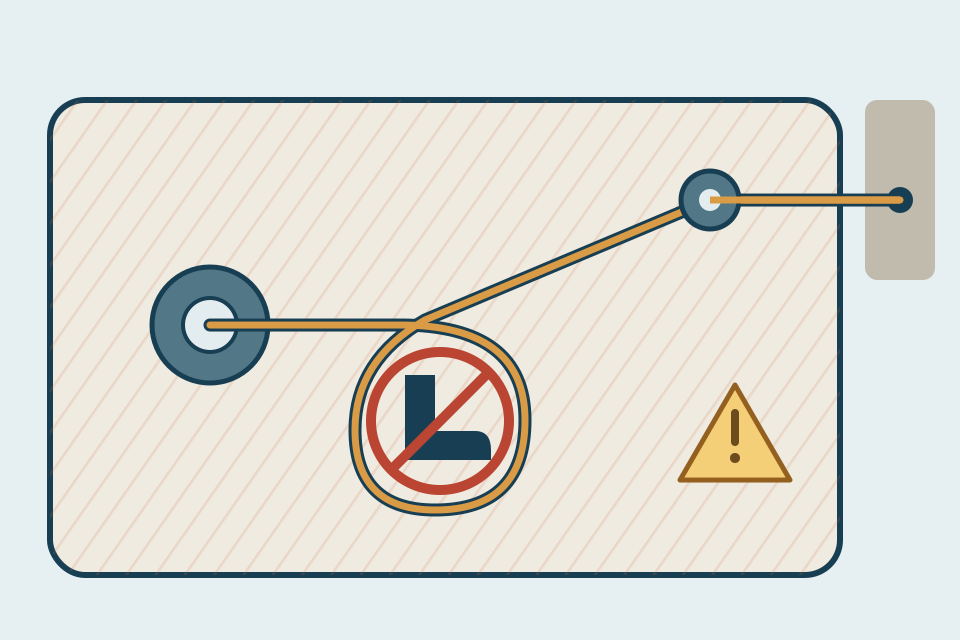
Stay out of a bight
A bight is a curved or looped section of rope. If the line tightens, it can trap or drag anyone standing inside it. Keep feet and hands clear of the rope and its fittings.
Recoil is not one painted patch
If a loaded line breaks or suddenly releases, it can whip back. This recoil is called snap-back. A fairlead is a fitting that guides the rope; it can change its lead and recoil path. Painted areas do not define every danger: assess the whole working area.
Stop and reduce the load
Report a snag, excessive strain or an unsafe position immediately. The person directing the operation must arrange a controlled reduction of load. Do not step over, free by hand or casually cast off a heavily loaded line.
Remember
- Stay out of rope bights.
- A changed lead can change the recoil path.
- Report abnormal strain and arrange a controlled response.
Common mistakes
Wrong: Standing outside the painted area guarantees safety.
Right: A line's lead and fittings change where it may recoil.
Wrong: A snagged, loaded rope should be pulled free by hand.
Right: Report the snag and have the load reduced under the agreed plan.
Worked case
A line snags at a fitting while the boat moves away. Someone steps towards the loaded bight to clear it.
Show the answer
Call the stop signal and warn the person to stay clear. Tell the helm or person directing the operation about the snag so the load can be reduced in a controlled way.
Practice question
A slack loop surrounds your boot and another crew member is about to take strain. What should you do first?
- Wait until the line tightens before stepping out
- Pin the loop down with your foot while it loads
- Call a stop and move clear before the line is loaded
- Rely on the fairlead to keep the loop open
Show the answer
Answer: C. Stop the operation before tension comes onto the line and move clear. A bight can tighten and drag or trap you.