
Emergencies at sea · Level R1 · 5 parts · about 18 min
Fire on board: prevention and fighting
5 short parts: How fire works · Extinguishers · Engine fire · Galley & gas · Lithium batteries. Each part explains the idea, then gives the points to remember, the common mistakes, a worked case and a practice question; the Academy unit adds all 30 check questions.
1 · How fire works
How fire works and the classes of fire
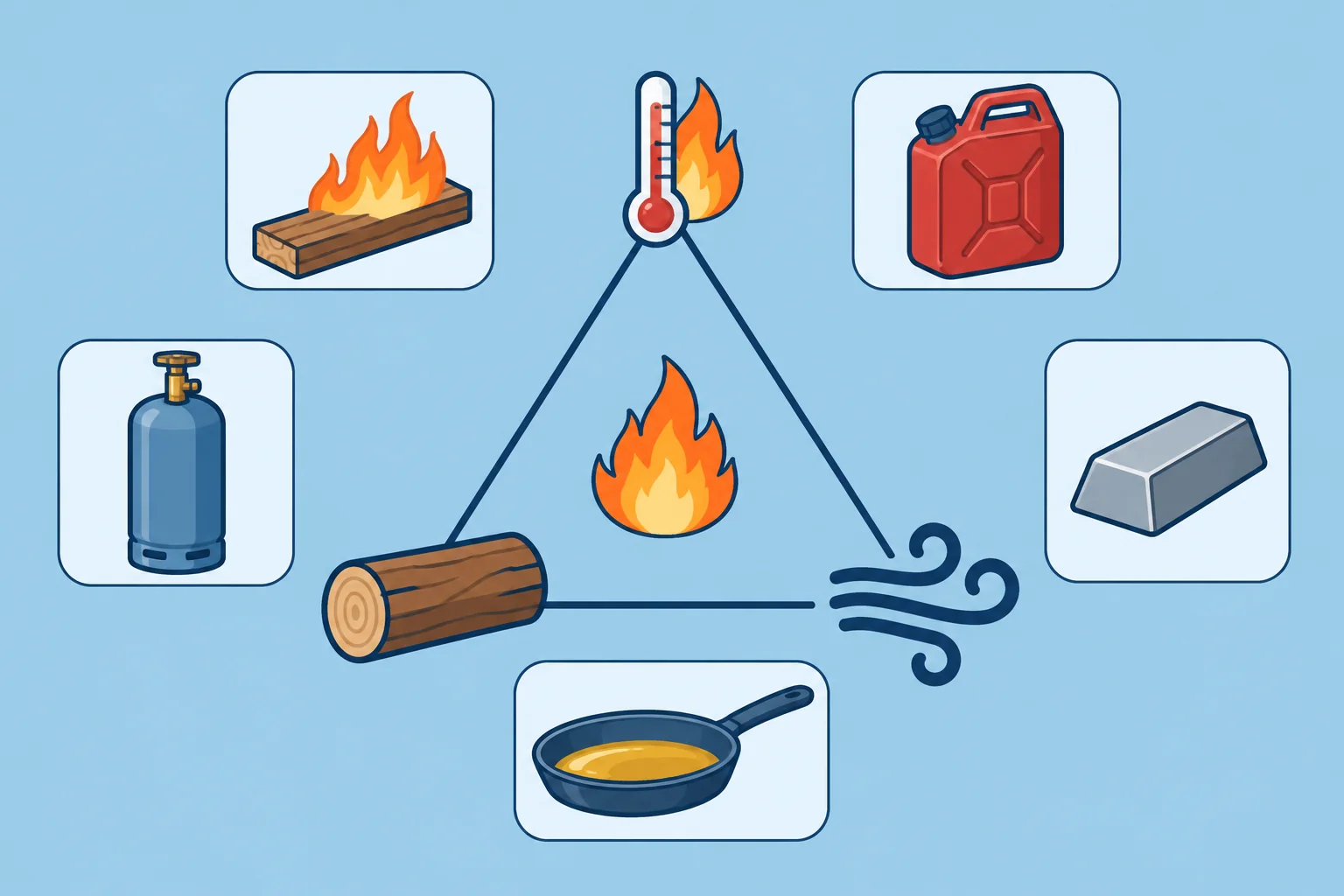
Fire needs fuel, heat and oxygen, sustained by a chain reaction. Interrupt one to extinguish it; match your extinguisher to the fuel.
The fire triangle
A fire needs three things: fuel to burn, heat to keep it at ignition temperature and oxygen from the air. This is the fire triangle. Take one away and the fire goes out: cool it to remove heat, smother it to remove oxygen, or shut off the fuel. A boat is full of all three: diesel, petrol, gas, wood, cloth and resin, in a small space with a running engine.
The fire tetrahedron
Flames also need a self-sustaining chain reaction in the burning gases. Adding it to the triangle gives the fire tetrahedron. Dry powder works mainly by breaking that chain reaction, which is why it knocks flames down fast. It does not cool, so hot material can re-ignite once the powder settles. Keep watching a fire you think is out.
Classes of fire
In Europe, standard EN 2 sorts fires by fuel. Class A: solids normally forming embers, such as wood, cloth and paper. Class B: liquids and liquefiable solids (solids that melt), such as petrol, diesel and wax. Class C: gases such as LPG (bottled gas). Class D: metals such as magnesium. Class F: cooking oils and fats. Electrical equipment is not a class: it adds a risk of electric shock until you isolate it.
Other letters
The letters are not the same everywhere. In the United States, NFPA 10 uses A for solids, B for liquids and gases, C for live electrical equipment, D for metals and K for cooking oils. Read the pictograms on the extinguisher rather than trusting a letter, especially on a charter boat abroad.
Smoke kills first
Burning plastics, foam and resins give thick, toxic smoke. On a boat the danger often comes from smoke before flames. One or two breaths can disable you. Stay low, keep a way out behind you, and fight a fire only if you can do so safely. Fit smoke and carbon monoxide (CO) alarms and test them.
Key figures
- Class A (EN 2)
- Solids normally forming embers: wood, cloth, paper
- Class B (EN 2)
- Liquids and liquefiable solids: petrol, diesel, wax
- Class C (EN 2)
- Gases: LPG, butane, propane
- Class D (EN 2)
- Burning metals
- Class F (EN 2)
- Cooking oils and fats
- US letters (NFPA 10)
- A, B (liquids and gases), C (live electrical), D, K (cooking)
Remember
- Fire needs fuel, heat and oxygen, plus a chain reaction.
- Fight it by cooling, smothering, cutting the fuel or breaking the chain.
- EN 2: A ember-forming solids, B liquids and melting solids, C gases, D metals, F cooking oils.
- Electrical is a hazard, not an EN 2 class; US letters differ.
- Smoke is often the first killer: stay low and keep an exit.
Common mistakes
Wrong: Once the flames are out the fire is over.
Right: Hot material can re-ignite, especially after powder. Keep cooling and watching.
Wrong: Class C means electrical fires everywhere.
Right: EN 2 uses C for gases; NFPA uses C for energised electrical equipment. Check the label.
Worked case
On a charter yacht abroad you find an extinguisher marked ‘ABC’. A crew member says it is for wood, petrol and electrical fires. Is that right?
Show the answer
It depends on the classification system. Under NFPA, ABC means ordinary solids, flammable liquids and gases, and energised electrical equipment, so the crew member is right. Under EN 2, C means gases. Check the label and electrical-use instructions before choosing it.
Practice question
You safely close the supply valve feeding a gas flame. Which part of the fire triangle have you removed?
- The fuel supply
- The heat source
- The oxygen supply
- None of the three
Show the answer
Answer: A. Closing the supply removes fuel. Do not extinguish a gas flame while gas continues escaping.
2 · Extinguishers
Choosing and using an extinguisher
Match the extinguisher and technique to the fuel. Follow its label, keep an escape route and leave if the fire is not controlled.
Which agent
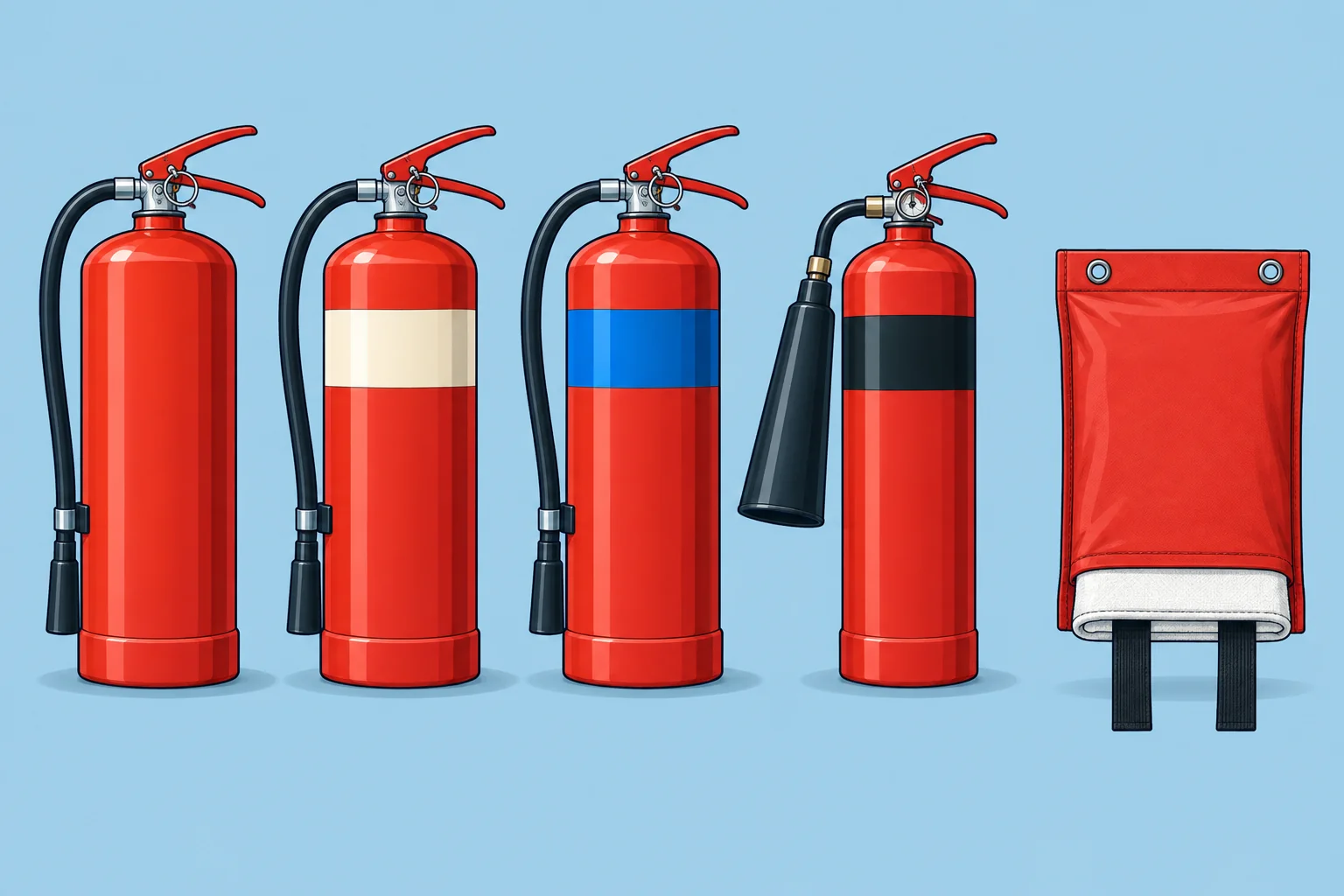
Water cools Class A solids; never use it on oil or live electrics. Foam suits A/B fires, not cooking oil; follow its label’s electrical restrictions. ABC powder suits A, B and C fires but gives little cooling. Its cloud can obscure your exit and irritate your lungs. Never extinguish a gas flame unless you can stop its supply: unburnt gas can explode. On live electrics, use only a rated extinguisher at its labelled distance; isolate power first if safe.
Carbon dioxide
Carbon dioxide (CO₂) suits Class B fires and live electrical equipment, within its label’s limits. It disperses outdoors and can suffocate in a closed space. Evacuate first. For an engine-space fire, keep the hatch shut and use the specified suitable extinguisher through its fire port, a small covered opening, from outside. Never enter the gas-filled space.
Fire blanket
A fire blanket smothers a small pan fire or a person’s burning clothing. Pull the tapes, hold the blanket in front of your hands to protect them, lay it over the pan from the front, turn off the heat if you can, and leave it in place until everything is cool. A wet chemical extinguisher, made for Class F, is rare on small boats.
Using it
Remember PASS: Pull the pin, Aim at the base of the flames, Squeeze the handle, Sweep from side to side. A small boat extinguisher may empty in 10 seconds or less, so start at the distance on its label and advance only as flames subside. Keep low and keep your exit behind you. Have a second extinguisher ready. For foam on liquid, follow the label: never drive a jet into the fuel, which can splash burning liquid.
When to stop
Fight a fire only while it is small and you can do it safely. If one extinguisher does not control it, or smoke fills the cabin, get everyone out, close the hatches behind you to starve it of air, send a Mayday and prepare to abandon to the liferaft or another vessel. Lifejackets on early. A boat can be replaced.
Key figures
- Water
- Class A; never on oil or live electrics
- Foam
- A/B; not cooking oil; check electrical restrictions
- Dry powder (ABC)
- A/B/C; stop gas supply; rated electrics only; little cooling
- CO₂
- B/rated electrics; suffocation risk; evacuate before discharge
- Fire blanket
- Small pan fires and burning clothing
- PASS
- Pull, Aim at the base, Squeeze, Sweep
Remember
- Water on solids only; never on oil or live electrics.
- Powder: little cooling; stop gas supply first. CO₂: B/rated electrics; evacuate first. Follow electrical label limits.
- PASS: pull, aim at the base, squeeze, sweep. For foam on liquid, follow the label; never drive a jet into fuel.
- Small extinguishers empty in seconds: follow the label’s operating distance and keep an exit.
- Losing it? Get out, close hatches, Mayday, prepare to abandon.
Common mistakes
Wrong: Aim at the flames and smoke where they look worst.
Right: Aim at the burning base, following the label. With foam on liquid, never drive a jet into the fuel: it can splash burning liquid.
Wrong: Keep fighting until the last extinguisher is empty.
Right: If the first one does not control the fire, get out and call for help while you still can.
Wrong: CO₂ is safe to discharge in a closed cabin with people inside.
Right: Clear everyone first. Use only the specified suitable extinguisher through the engine fire port, from outside. Never enter a CO₂-filled space.
Worked case
A cushion smoulders and then flames near a cabin light. You have a powder extinguisher, a bucket and a fire blanket. The light circuit is still on. What do you do?
Show the answer
Shout ‘fire’. Isolate the circuit at a safely accessible control. If the fire is small with a clear exit, use electrically rated powder within label limits at the base. With power isolated, cool the cushion with water; never carry it. Watch for re-ignition. If fire persists or smoke threatens your exit, leave, close the hatch if safe and send Mayday. Ventilate only once the fire is confirmed out and the cushion is cool; if unsure, stay out and seek emergency-service advice.
Practice question
Which should never be used on burning cooking oil?
- A fire blanket
- A wet-chemical unit
- A water-jet unit
- A Class F-rated unit
Show the answer
Answer: C. Water sinks under hot oil, boils instantly and throws burning oil out of the pan.
3 · Engine fire
Engine compartment fire
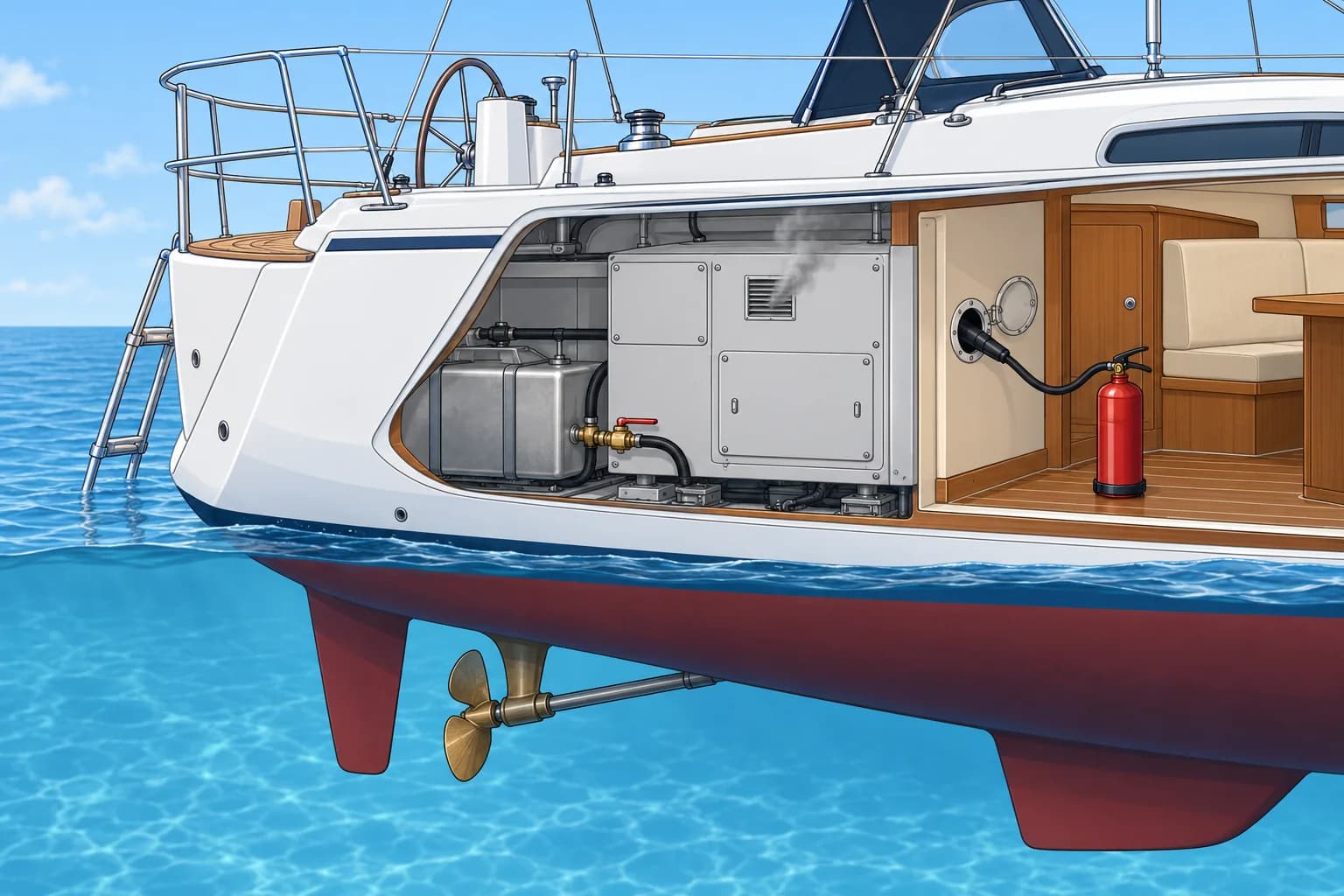
Use safe external controls: stop engine, shut fuel, close vents. Use the fixed system or specified extinguisher through the fire port. Keep the hatch shut.
Why engines burn
Engine fires usually start with fuel or oil spraying onto a hot exhaust or turbocharger, an electrical short, an overheated exhaust hose after a cooling-water failure, or oily rags. Warning signs are a smell of burning, smoke from vents, a high-temperature alarm or a sudden loss of power. Act at once.
Starve it, don’t feed it
An enclosed engine space holds limited air. Use safely accessible controls outside the engine space to stop the engine and blowers, shut fuel and close vents. Never open the hatch or enter smoke to reach a control. Keeping the hatch shut starves the fire. Opening it lets in air that can turn smoke into a fireball in your face, a backdraught.
Fixed systems and fire ports
Many boats have a fixed system in the engine space that discharges a clean gaseous agent, automatically by heat or by a manual pull. It needs the space closed and the engine stopped, or the engine sucks the gas out. A fire port is a small covered opening. Without a fixed system, use a fire port with the extinguisher type and capacity specified for that compartment, keeping the hatch shut.
After discharge
Follow the system maker’s instructions. Keep the space closed until the fire is out and it has fully cooled. Check for heat and smoke from outside. Time alone and a cool hatch do not prove safety. If heat or smoke remains, or you are unsure, keep it shut and seek emergency-service advice before reopening. Have another extinguisher ready. Do not restart until the cause has been found and repaired.
Engine compartment fire
- Raise the alarm, clear the engine space and get lifejackets on. Have a crew member call for help immediately while you respond. — Help takes time. Mayday is for grave and imminent danger; Pan-Pan is for urgency without that danger.
- Use safely accessible controls outside the engine space to stop the engine and blowers and shut fuel. Never open the hatch or enter smoke to reach them. — A running engine draws in air and the fuel feeds the fire.
- Close vents only using safely accessible controls outside the engine space. Keep the hatch shut; never enter smoke to reach a control. — Starving the fire of air helps put it out; opening it can cause a backdraught.
- Use the fixed system, or the specified suitable extinguisher through the fire port, from outside. — The agent fills the space without letting air in.
- Update rescuers and prepare the liferaft. — Keep rescuers informed and be ready to abandon if necessary.
- Follow system instructions. Keep shut until the fire is out and fully cooled; if unsure, seek emergency-service advice. — Time and a cool hatch do not prove safety. Air can re-ignite hidden hot fuel.
Remember
- Use safe external controls to stop engine and blowers, shut fuel and close vents. Never enter smoke to reach them.
- Do not open the hatch: fresh air feeds the fire.
- Use the fixed system or the specified suitable extinguisher through the fire port, from outside.
- Follow system instructions; check heat and smoke outside. Keep shut until out and fully cooled; if unsure, seek help.
- Call early: Mayday for grave and imminent danger; Pan-Pan for urgency without that danger.
Common mistakes
Wrong: Open the engine hatch to see how bad it is.
Right: Opening the hatch lets air in and can blow fire out at you. Keep it shut; use the fixed system or specified suitable extinguisher through the fire port.
Wrong: Keep the engine running so you can reach harbour.
Right: A running engine pulls air in and sucks out the extinguishing gas. Stop it and shut fuel only using safe external controls.
Wrong: Once the system has fired, open up straight away to check.
Right: Follow system instructions. Keep shut until the fire is out and fully cooled. A cool hatch proves nothing; if unsure, keep shut and seek specialist help.
Worked case
Motoring three miles offshore, you smell burning and see smoke from the engine vents. The engine is still running and the boat has a fire port but no fixed system. What do you do?
Show the answer
Alert crew, get lifejackets on; have someone call for help now. Use safe external controls to stop engine and blowers, shut fuel and close vents; never open the hatch to reach them. Use the specified suitable extinguisher through the fire port. Mayday: grave and imminent danger; Pan-Pan: urgency without it. Ready the liferaft. Follow system instructions. Keep shut until out and fully cooled; if unsure, seek specialist advice.
Practice question
Why must you not open the engine hatch during an engine fire?
- The fresh air can feed the fire and blow it out at you
- The smoke will set off the boat’s gas alarm at once
- The bilge pump stops working when the hatch is open
- The fixed system only fires once the hatch is opened
Show the answer
Answer: A. An enclosed fire is short of air. A sudden supply can flare it up into your face.
4 · Galley & gas
Galley fires and bottled gas
LPG is heavier than air and collects in the bilge, where one spark can explode it. Pan fires are smothered, never doused with water.
LPG sinks
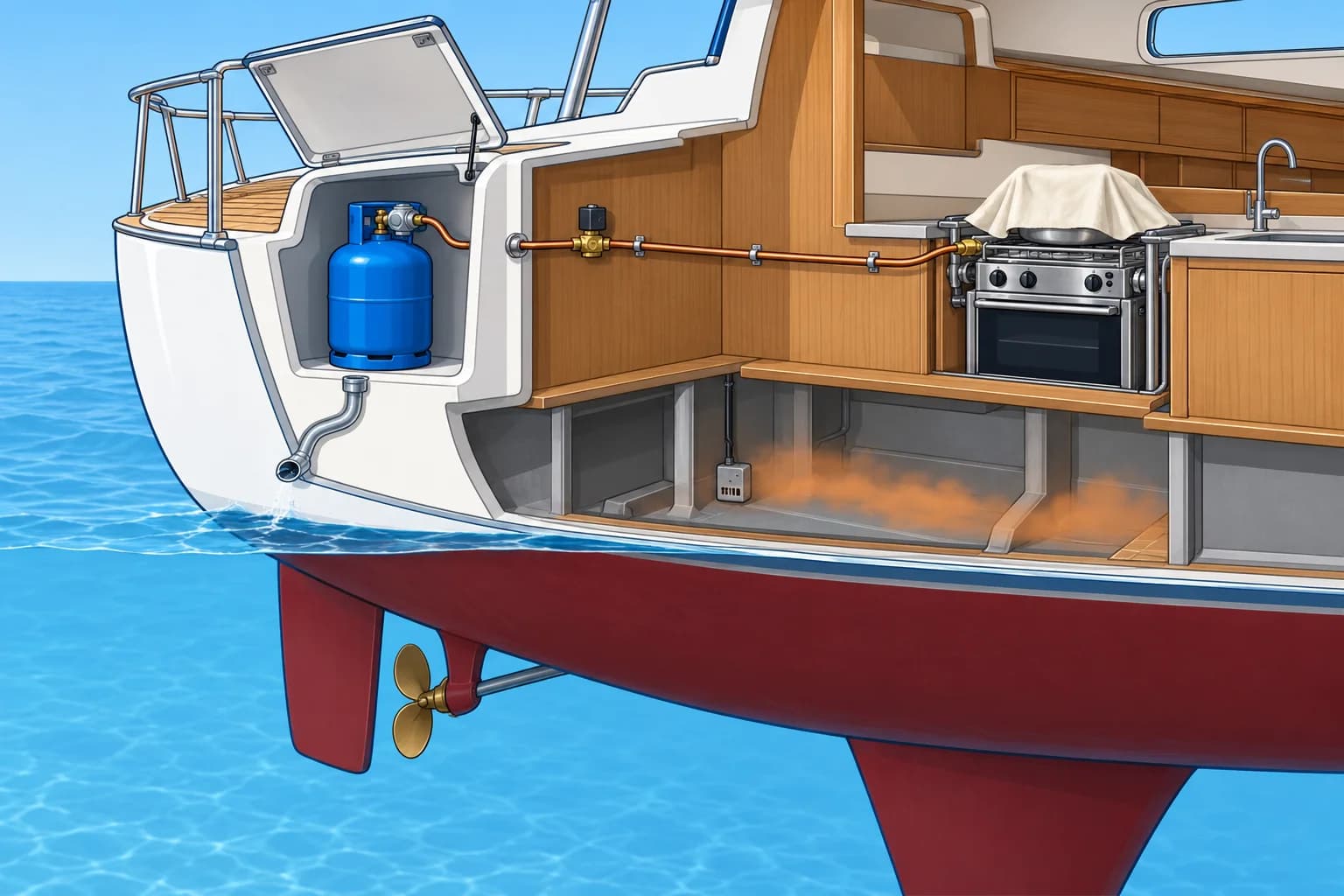
Boats cook on LPG (liquefied petroleum gas: butane or propane). It is heavier than air, so a leak flows down into the bilge, the lowest space inside the hull, and stays there. A boat hull holds it like a bowl. A spark from a switch, pump or engine can then cause an explosion that destroys the boat. Do not rely on cockpit drains or ordinary lockers to clear gas trapped inside the hull.
Safe installation
Keep the cylinder in a dedicated gas locker that opens to the outside, is gas-tight to the boat’s interior and drains directly overboard above the waterline. Use approved pipe, few joints and a flame-failure device on every burner, which shuts the gas if the flame goes out. A solenoid valve with a switch near the cooker lets you shut gas at the cylinder from below. Fit a gas alarm sensor low down, clear of bilge water, as its maker directs.
Daily routine
Turn gas on at the cylinder only for cooking. After cooking, close the cylinder valve, let the flame go out, then close the burner control. This reduces residual gas; it does not prove the pipe is gas-free. Test joints with soapy water or a leak detector, never a flame. Never leave a cooker unattended at sea. Use the cooker’s retaining rails, called fiddles, and pan clamps.
If you smell gas
Get everyone on deck. Do not operate switches, plugs, pumps or the starter. Shut the cylinder only if safely accessible. Open hatches from deck for natural ventilation, without electrical equipment. Do not go below to bail or investigate. Opening hatches or manual pumping may leave gas in low pockets. Keep people out until the atmosphere is confirmed safe; if you cannot establish this, withdraw and get help. Have the leak repaired and the system leak-tested before reuse.
Pan fires
Burning oil is a Class F fire. Turn off the heat if you can reach it safely, cover the pan with a fire blanket or a close-fitting lid, and leave it for at least 30 minutes, until it is cool. Never throw water on it, and never carry a burning pan: at sea it spills.
If you smell gas
- Do not operate any switch, pump, starter or radio button near the gas. — A spark from electrical equipment can ignite it.
- Get everyone on deck. Shut the cylinder and extinguish flames or cigarettes only if safe. — Keep people clear and stop more gas escaping without entering danger.
- Open hatches from deck for natural ventilation. Do not go below to bail or investigate. — Fresh air helps dilute gas but may not clear low pockets.
- Keep people out until the atmosphere is confirmed safe. If you cannot establish this, withdraw and get help. — Opening hatches or manual pumping does not prove the bilge is gas-free.
- Have the leak repaired and the system leak-tested before reuse. — A competent person must confirm safe conditions before gas or electrical equipment is used again.
Remember
- LPG is heavier than air and collects in the bilge.
- Gas locker drains overboard; flame-failure devices and a solenoid.
- After cooking: cylinder valve off, let the flame go out, then close the burner control.
- Smell gas: no switches, get clear, shut cylinder if safe, ventilate from deck; keep out until confirmed gas-free.
- Pan fire: heat off, fire blanket or lid, never water.
Common mistakes
Wrong: Run the electric bilge pump to clear a gas leak fast.
Right: Its motor or switch can spark. Get clear and ventilate from deck. Hatches or manual pumping may leave gas; keep out until confirmed safe, or withdraw and get help.
Wrong: Check gas joints with a lighter flame.
Right: Use soapy water or a leak-detection spray. Bubbles show the leak.
Wrong: Lift the fire blanket after a minute to see if it worked.
Right: Air can re-ignite the oil. Leave it at least 30 minutes, until cool.
Worked case
On a calm evening at anchor a crew member says they smell gas in the saloon (main cabin). The cabin lights and the fridge are on. What do you do?
Show the answer
Move everyone onto deck. Do not operate switches, pumps, plugs or the starter. Shut the cylinder if safely accessible. Open hatches from deck for natural ventilation; do not go below to bail or investigate. Do not restart or operate electrical equipment until a competent person has repaired the leak, leak-tested the system and confirmed the space is gas-free. If safety cannot be confirmed, withdraw and get help.
Practice question
Why is an LPG leak so dangerous on a boat?
- It rises to the top of the cabin
- It collects low in the bilge
- It forms an acid with seawater
- It freezes and cracks the pipes
Show the answer
Answer: B. LPG flows down and stays in the bilge, where a spark can ignite it.
5 · Lithium batteries
Lithium-ion battery fires and prevention
A failing lithium battery heats itself, vents toxic, flammable gas and can re-ignite for hours. Prevention and early escape matter more than extinguishers.
Thermal runaway
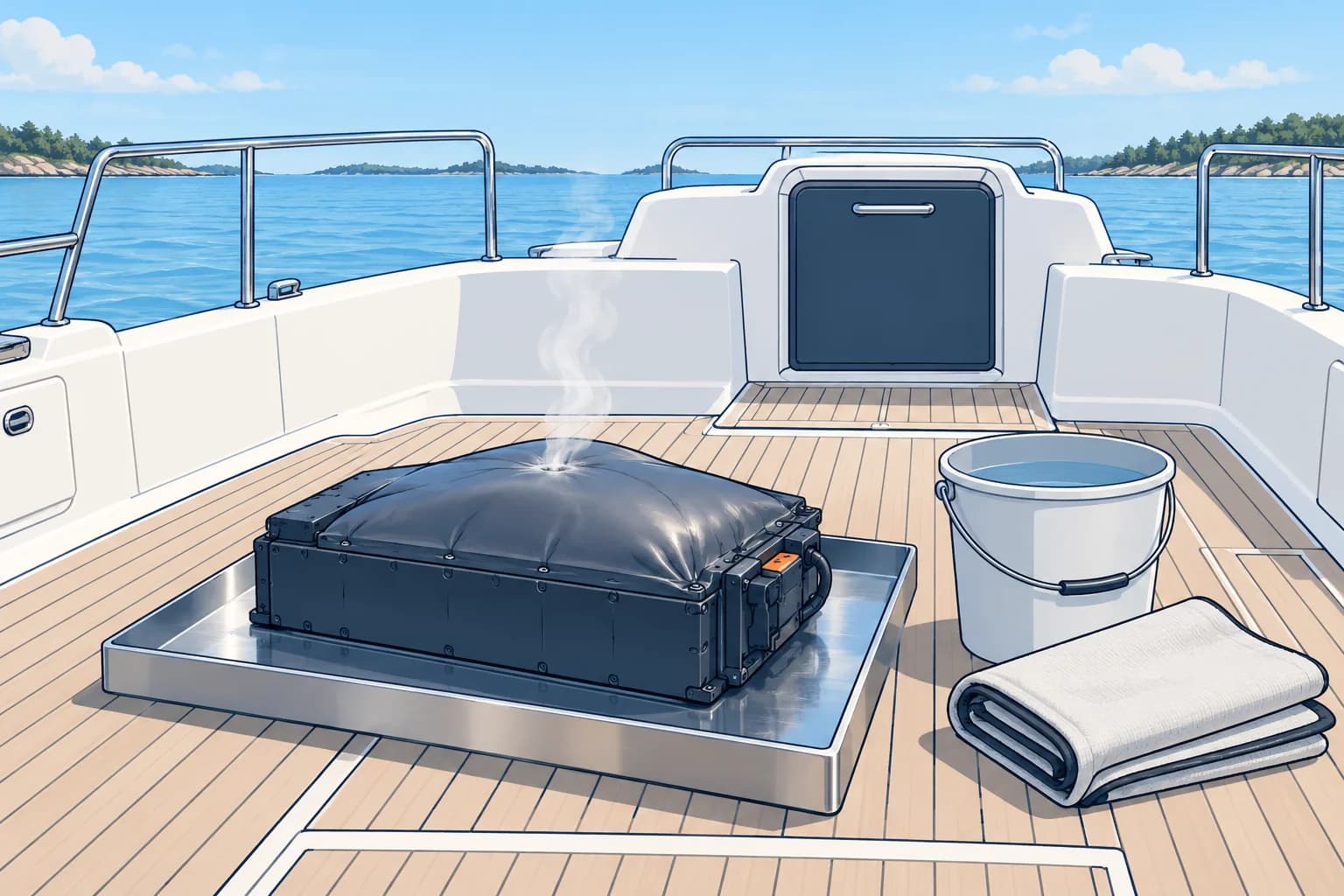
Lithium-ion batteries power phones, laptops, e-bikes, e-foils, outboards and house banks, the boat’s service batteries. Damage, overcharging, poor chargers, water ingress or a fault can start thermal runaway: a cell heats itself, vents gas and sets off its neighbours. The gas is toxic and flammable and can explode in a closed space. Smothering or CO₂ may suppress flames but cannot reliably cool cells enough to stop thermal runaway.
Warning signs
Watch for swelling, heat, hissing, popping, a sweet or chemical smell, or white or grey vapour. Vapour can come before any flame. Get everyone away from the vapour first. Isolate charging only at a safe remote point outside the affected space; do not touch the battery or operate nearby plugs or switches.
Fighting it
For a small device, attempt cooling only with charging power safely isolated and without entering smoke or vapour. Use plenty of water from a distance and keep cooling: re-ignition can last hours. Do not handle the battery. A specialist extinguisher must be rated for the battery’s size and may not prevent re-ignition. For an e-bike, e-foil or house-bank pack, withdraw, close the space only if safe, call for help and prepare to abandon.
Prevention
Use reputable batteries. Charge portable devices with the maker’s charger on a hard, non-flammable surface while awake and present, never on bunks. Charge large portable batteries ashore where possible; stow them dry and secured away from exits. A battery management system (BMS) monitors cells and can disconnect charging or loads when limits are exceeded; it cannot prevent every failure. Installed banks need correct fuses, lithium-compatible chargers and installation to a marine standard such as ABYC E-13.
Other prevention
Most boat fires start in the engine, the electrics or the galley. Check fuel and exhaust hoses, keep wiring tidy with correct fuses, never leave a cooker or heater unattended, store oily rags in a closed metal tin and keep smoke and carbon monoxide (CO) alarms working.
Remember
- Thermal runaway: cells heat themselves and vent toxic, flammable gas.
- Small device: isolate charging safely before cooling. Water cools; smothering and CO₂ cannot reliably stop runaway.
- Large packs: do not fight; get clear, call for help, prepare to abandon.
- Charge portable devices on a non-flammable surface, while awake and present, with the right charger.
- Installed lithium needs a BMS, fuses and lithium charging profiles; a BMS cannot prevent every failure.
Common mistakes
Wrong: A fire blanket over a burning e-bike battery will put it out.
Right: The battery makes its own heat and gas. A blanket does not stop runaway; get clear and call for help.
Wrong: Charging phones and e-bikes on your bunk overnight is fine.
Right: Charge while awake, on a hard non-flammable surface, with the maker’s charger.
Worked case
At anchor, an e-foil battery charging in the saloon (main cabin) starts to hiss and give off white vapour. There is no flame yet. What do you do?
Show the answer
Get everyone on deck, away from vapour. Isolate charging only at a safe remote point outside the affected space. Do not touch the battery or operate nearby plugs or switches. Close the space if safe. Send Mayday for grave and imminent danger, including toxic vapour or explosion risk; use Pan-Pan only if urgent without that danger. Do not wait for flames. Prepare to abandon; never carry the pack.
Practice question
What is thermal runaway in a lithium-ion battery?
- A slow loss of charge in cold weather
- A cell heating itself and setting off others
- A charger shutting down when it gets warm
- A short spark when you connect the cables
Show the answer
Answer: B. Once started, the reaction makes its own heat and spreads from cell to cell.