

Lighthouses and the List of Lights
1The lesson in plain words
A lighthouse is a landmark by day and a long-range light by night. The chart shows the basics; the List of Lights gives the full details.
What a lighthouse is
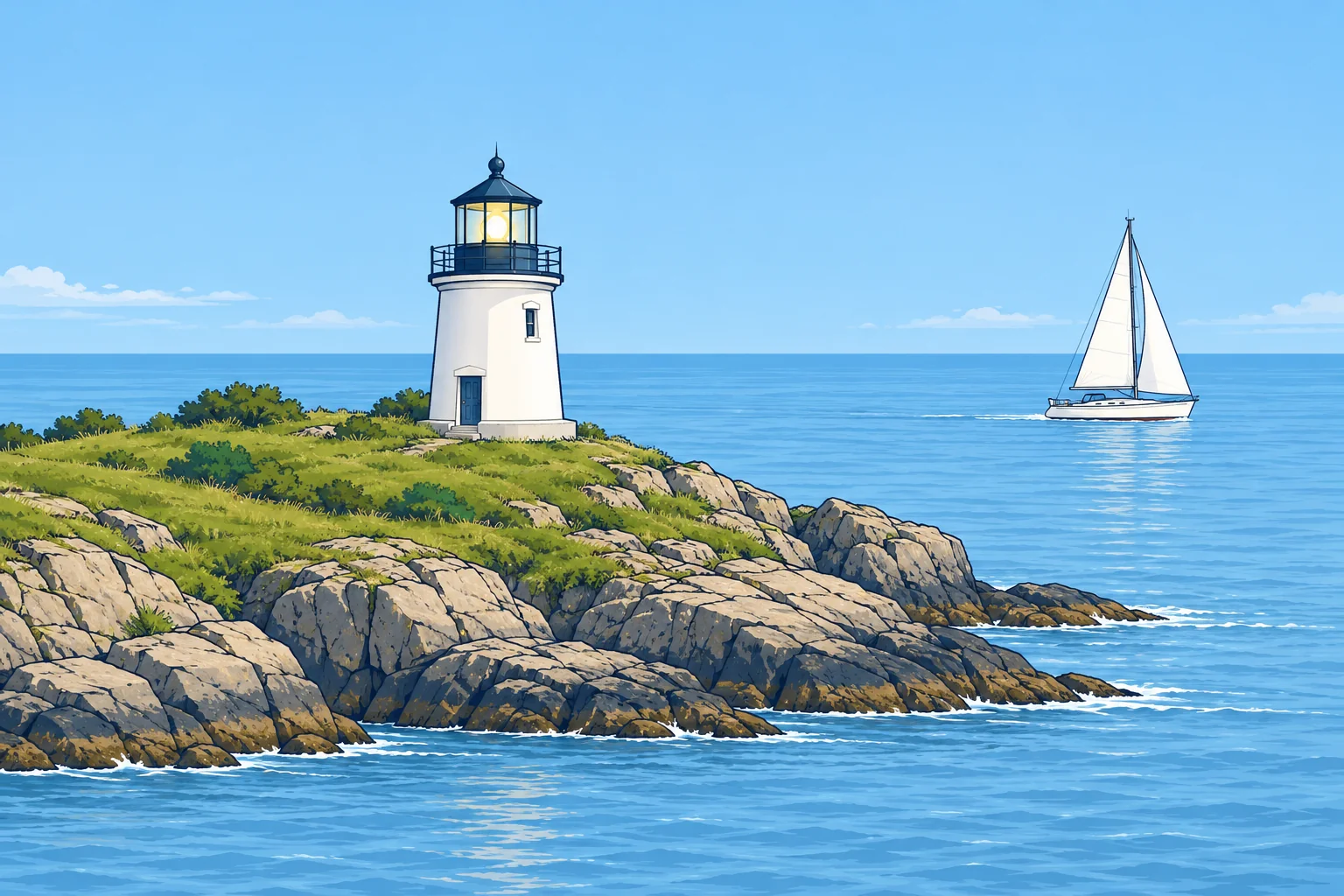
IALA defines a lighthouse as a tower or substantial structure at a fixed place, carrying a light. By day its shape and colours make it a daymark, a landmark you can recognise. By night it shows a long or medium-range light.
Identifying a light
You identify a major light by its character: rhythm, colour and period, as in the light characteristics unit. Nearby lights may share a character, so check the expected bearing and position too. Many powerful lights show a loom, a glow in the sky, before the light itself rises above your horizon.
The List of Lights
The chart gives a short legend; the List of Lights gives more: position, character with each phase in seconds, elevation, range, structure, sectors and remarks. The UK publishes the ADMIRALTY List of Lights and Fog Signals in 15 volumes, A to Q (NP74 to NP88), on paper and as the ADMIRALTY Digital List of Lights (ADLL). The US NGA publishes Pubs 110 to 116, free online; US waters are in the US Coast Guard Light List.
International numbers
Where provided, an international number, such as A1234, identifies the same light across lists and Notices to Mariners, which report changed or failed lights. It may not appear on your chart: match the charted position, name and character to the list entry. USCG lists also use local numbers. Read each volume’s introduction for its abbreviations and conventions.
Cautions
A light can fail or be changed before a notice reaches you. Aero lights for aircraft are often brighter than marine lights, but they are not maintained for ships. Wind farms carry marine navigation lights as well as aviation warning lights; rotating blades can make some lights seem to flicker. Bright lights ashore can hide a weak light. Identify every light by its full character and its bearing before you use it.
2Key data
- ADMIRALTY List of Lights
- 15 volumes, A to Q (NP74–NP88); paper and digital
- NGA List of Lights
- Pubs 110–116; coasts outside US waters; free online
- US waters
- US Coast Guard Light List
- ADLL
- ADMIRALTY Digital List of Lights
- Loom
- Glow of a light still below the horizon
3Key points
- 1
A lighthouse is a daymark by day and a long-range light by night.
- 2
Identify a light by its full character, timed over several periods.
- 3
The List of Lights holds the full details: phases, sectors, structure.
- 4
Distinguish wind-farm marine lights from aviation lights; confirm each light against the chart and list.
4Frequent mistakes
Wrong: The chart legend gives everything the List of Lights does.
Right: The list adds phases, sectors, structure and remarks. Use both.
Wrong: A bright light on the coast is the lighthouse you expect.
Right: Time its character and check its bearing. Aero lights and shore lights can be brighter.
5Practice case & exam keys
Two white lights are near the expected lighthouse bearing. The brighter one flashes every 5 seconds; the weaker one matches the charted two flashes every 10 seconds. Which can you use, and what must you check first?
Show the answer
The weaker light is the candidate, regardless of brightness. Time several complete periods, compare its full character with the current List of Lights, and check its bearing against the chart. Use it only when both match.
Exam keys
- Lighthouse: daymark by day, long- or medium-range light by night.
- ADMIRALTY List of Lights: 15 volumes, A–Q; NGA Pubs 110–116; USCG Light List.
- Loom: the glow of a light still below the horizon.
- Confirm a light by its full character and bearing.
Finish this unit
When you've read it, match the terms, then answer three questions. Get them all right to finish the unit; opening the page alone doesn't count.
My notes for this unit
No notes