17Action by Stand-on Vessel
1The rule in plain words
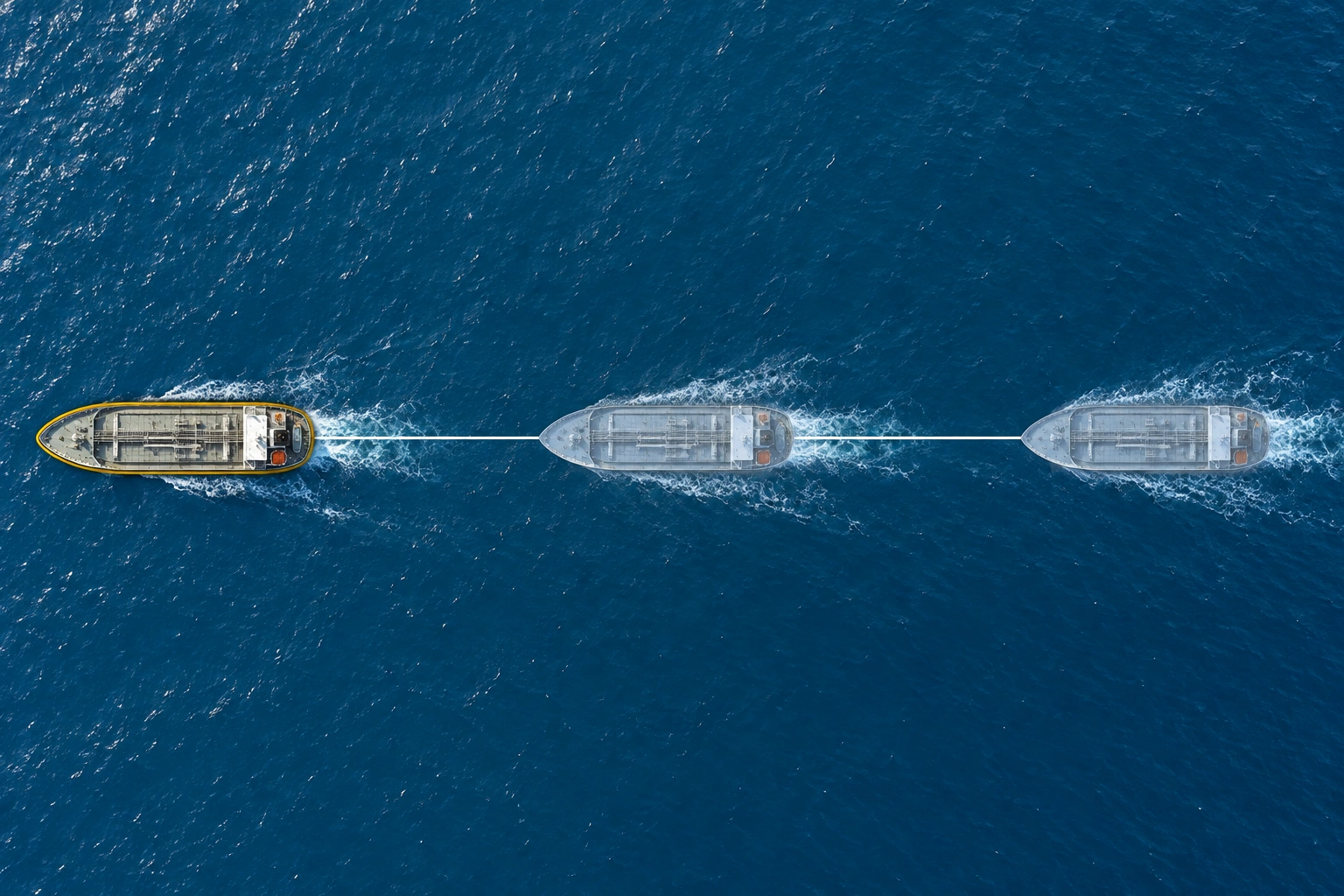
If you keep course and speed, you may act when the give-way vessel does not, and must act when her action alone cannot avoid collision.
What do you do first?
If the other vessel is to keep out of the way, keep your course and speed: this is your first duty.
When may you act alone?
As soon as it becomes apparent that the vessel required to keep out is not complying with COLREG, you may avoid collision by your manoeuvre alone.
When does action become mandatory?
If you are so close that the give-way vessel alone cannot avoid collision, you shall take the best action to aid avoidance.
What is the crossing limit?
A power-driven vessel acting under 17(a)(ii) shall not alter course to port for another power-driven vessel on her own port side, if circumstances admit; the give-way duty remains.
2Key points
- 1
First stage: course + speed for the vessel keeping her way.
- 2
Apparent inaction → own manoeuvre permitted.
- 3
Critical closeness → own action mandatory; give best aid.
- 4
Power-driven crossing → no port alteration toward port-side vessel · other duty remains.
3Frequent mistakes
Wrong: "The vessel keeping course and speed can never manoeuvre."
Right: She may act when it becomes apparent that the give-way vessel is not complying with COLREG.
Wrong: "If the other vessel fails, I must always wait."
Right: When her action alone cannot avoid collision, you shall act to aid avoidance.
Wrong: "In a crossing, I will alter to port for the vessel on my port side."
Right: For a power-driven vessel, do not alter to port when the circumstances admit.
4Exam keys & interpretation
Exam keys
- Three stages: keep course/speed → may act → shall act when the give-way vessel alone cannot avoid collision.
- "May" is 17(a)(ii); "shall take such action" is 17(b): do not swap permission and duty.
- In a crossing, "to port" and "vessel on her own port side" trigger 17(c), if circumstances admit.
How to read it
- Read Rule 17 as steps: maintain, react when inaction is apparent, then aid avoidance when the other vessel alone cannot.
- In the crossing, the port restriction is conditional; the give-way vessel's obligation remains.
5Official text
IMO COLREG 1972U.S. Coast Guard — International Navigation Rules (2024)
Full wording of the rule, reproduced from the official source below.
(a) (i) Where one of two vessels is to keep out of the way the other shall keep her course and speed.
(ii) The latter vessel may, however, take action to avoid collision by her maneuver alone, as soon as it becomes apparent to her that the vessel required to keep out of the way is not taking appropriate action in compliance with these Rules.
(b) When, from any cause, the vessel required to keep her course and speed finds herself so close that collision cannot be avoided by the action of the give-way vessel alone, she shall take such action as will best aid to avoid collision.
(c) A power-driven vessel which takes action in a crossing situation in accordance with subparagraph (a)(ii) of this Rule to avoid collision with another power-driven vessel shall, if the circumstances of the case admit, not alter course to port for a vessel on her own port side.
(d) This Rule does not relieve the give-way vessel of her obligation to keep out of the way.Source: U.S. Coast Guard — International Navigation Rules (2024)
Finish this unit
When you've read it, match the terms, then answer three questions. Get them all right to finish the unit; opening the page alone doesn't count.
My notes for this unit
No notes