

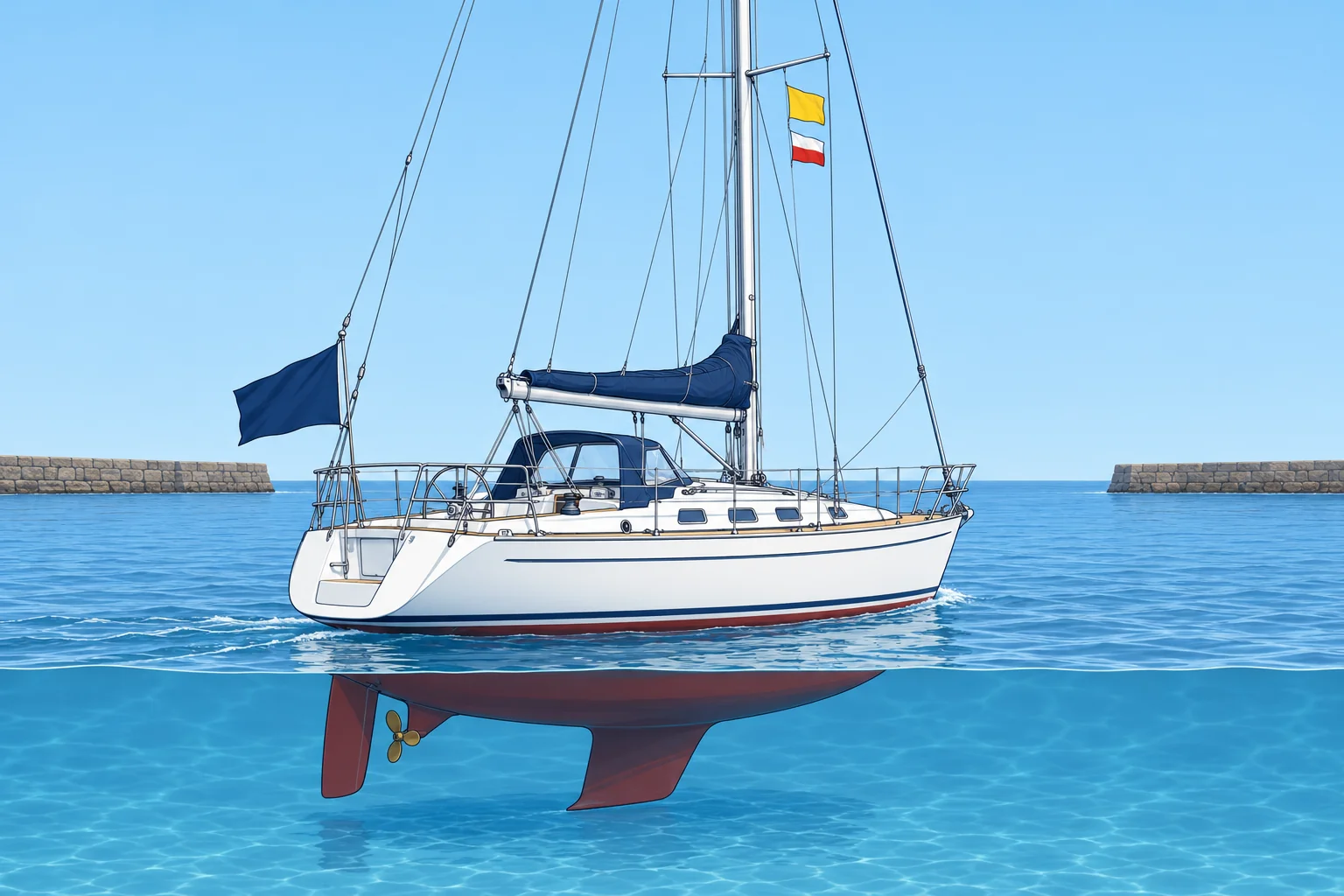
Ensign, courtesy flag and the Q flag
1The lesson in plain words
Your ensign identifies your boat's registration. Fly the local courtesy flag abroad, and follow the arrival port's instructions for the yellow Q flag.
The ensign
The ensign is the national flag your boat is entitled to fly, as shown on its registration. Fly it at the stern on a staff, or on the backstay, the wire supporting a sailing yacht's mast from aft. Some countries have a special ensign for yachts; use only the one your papers allow.
The courtesy flag
In foreign waters, fly the host country's customary courtesy flag from the starboard spreader, a mast strut on the boat's right when you face the bow, or a starboard halyard, a flag-hoisting line. This may be its civil ensign, the flag for civilian vessels: visiting yachts commonly use the Red Ensign in the UK. Keep it clean, upright and in good condition.
The Q flag
The plain yellow Q flag means ‘My vessel is healthy and I request free pratique’: health permission to enter port and carry out normal port activities. Where Q is required, hoist it at the stage specified in the port's arrival instructions. Keep it flying until those instructions permit lowering. Q does not replace customs or immigration clearance; tying up does not mean you are cleared.
Other flags
A club burgee, a club's identifying flag, goes at the masthead or on the port (left) spreader. Never fly flags that look like distress or other signals by mistake: the International Code flags have meanings of their own. The Flags unit in GMDSS teaches the code flags.
At night and in port
Follow local customs for the ensign and courtesy flag; 08:00 to sunset is common in port. Keep required clearance signals displayed as instructed.
2Key data
- Ensign
- At the stern; the flag shown on your registration
- Courtesy flag
- Host country's customary courtesy flag; starboard spreader
- Q flag
- Plain yellow: healthy, requesting free pratique
- When to hoist Q
- Follow the destination's Q-flag and clearance instructions
3Key points
- 1
The ensign at the stern shows the boat's nationality, as in its registration.
- 2
Abroad, fly the host country's customary courtesy flag from the starboard spreader.
- 3
The yellow Q flag requests free pratique: health clearance, separate from customs and immigration.
- 4
Follow the destination's Q-flag and clearance instructions, including when to hoist and lower it.
- 5
Keep flags clean and the right way up; replace worn courtesy flags.
4Frequent mistakes
Wrong: The courtesy flag goes on the port spreader.
Right: It goes on the starboard spreader, the place of honour. The port side is used for burgees and other flags.
Wrong: Lower the Q flag as soon as you tie up.
Right: Tying up does not mean clearance. Follow the destination's Q-flag instructions before lowering it.
Wrong: Any flag of your country will do as an ensign.
Right: Fly the ensign your registration allows. Some countries have special yacht ensigns that need a permit.
5Practice case & exam keys
You arrive from Morocco at a Spanish marina with your ensign, a Spanish courtesy flag and Q flying. An employee suggests lowering Q because you are tied up. Does tying up change its meaning, and what should you check?
Show the answer
Keep your registered ensign at the stern and the customary courtesy flag on the starboard spreader. Q requests free pratique, which is health clearance. Tying up does not mean you have clearance. Follow the port's instructions on when to lower Q, and complete customs and immigration formalities separately.
Exam keys
- Ensign at the stern: the flag of the boat's registration.
- Host country's customary courtesy flag on the starboard spreader.
- Q is plain yellow: healthy, requesting free pratique (health clearance).
- Follow the arrival port's Q-flag instructions; customs and immigration are separate.
Finish this unit
When you've read it, answer three questions. Get all three right to finish the unit; opening the page alone doesn't count.
My notes for this unit
No notes