

Risk assessment, the controls hierarchy and permits to work
1The lesson in plain words
Risk is likelihood × severity. Assess a task before you start it, choose the strongest control you can and use a permit for high-risk work.
Hazard and risk
A hazard is anything that can cause harm: a fall from height, a toxic atmosphere, a rotating shaft. Risk combines how likely the harm is with how bad it would be. A risk assessment identifies the hazards of a task, rates the risk, chooses controls and checks that the residual risk, the risk left after the controls, is acceptable. The ISM Code requires the company to assess all identified risks.
The risk matrix
Many companies use a 5 × 5 risk matrix. Likelihood runs from 1, rare, to 5, almost certain. Severity runs from 1, minor injury, to 5, a death or major pollution. Risk = likelihood × severity. A common banding is 1–4 low, 5–12 medium and 15–25 high. High risk means you do not start until controls bring it down. Use your own company's matrix and bands.
Hierarchy of controls
Choose the strongest control first. Elimination: remove the hazard entirely, for example by doing the job from deck instead of climbing. Substitution: use something less dangerous. Engineering controls: guards, fixed ladders, ventilation. Administrative controls: procedures, permits, training, signs. Personal protective equipment (PPE), such as a harness, comes last because it relies on each person using it correctly.
Worked example
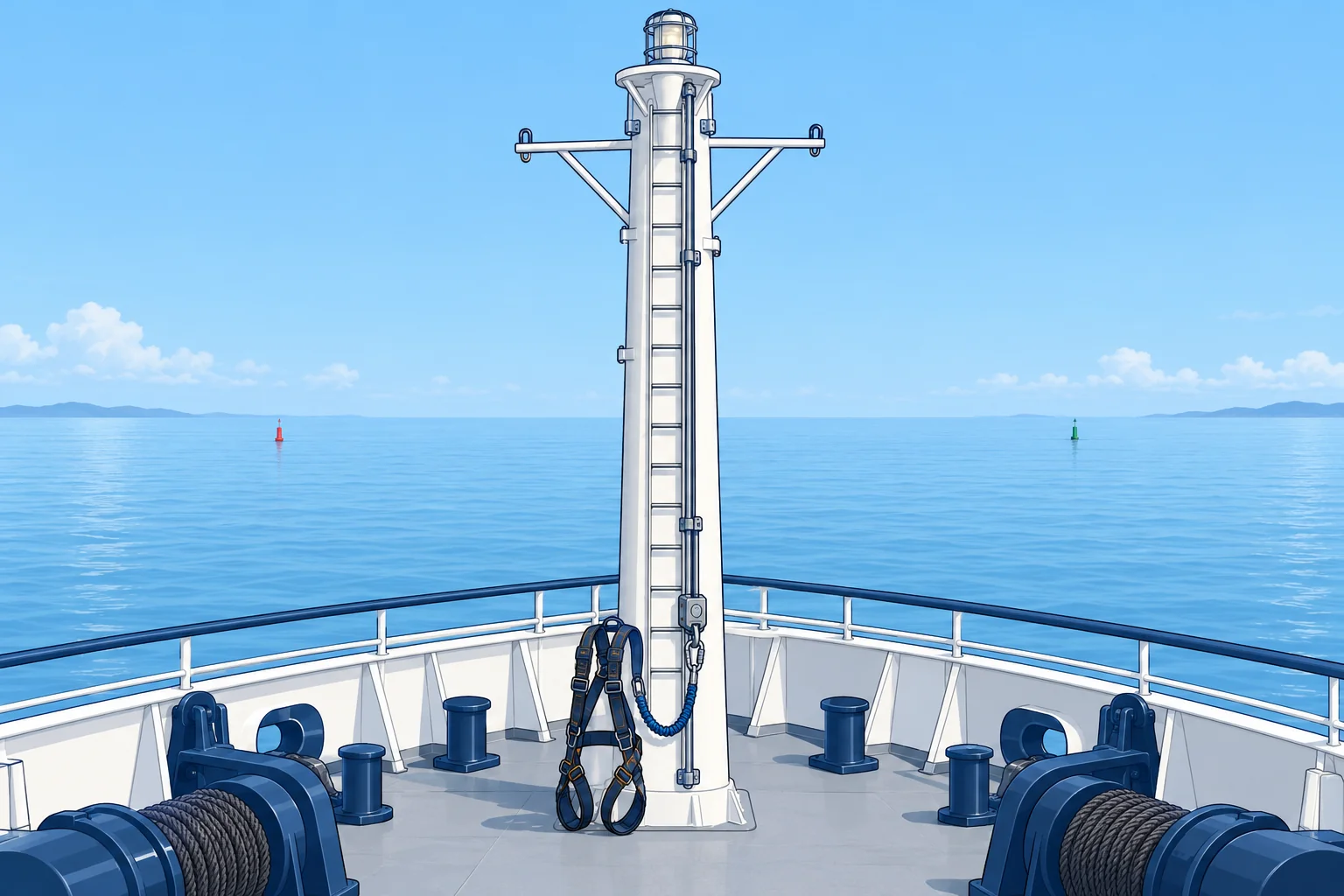
Changing a foremast lamp while the ship rolls could cause a fatal fall. For this example, likelihood 3 × severity 5 = 15: high. Delay until conditions are suitable. Use approved access and fall protection, a work-aloft permit and a standby person. If reassessment supports likelihood 1, residual risk is 1 × 5 = 5, medium. Start only if company acceptance and authorisation rules are met and all controls are verified. Controls may reduce likelihood, severity or both; justify each rating.
Permit to work
A permit to work is a written authority for high-risk work, such as hot work, entry into an enclosed space, work aloft or over the side, or work on electrical systems. It states the task, hazards, precautions, tests and time limit, and is signed by the person in charge. For enclosed spaces, follow the IMO recommendations MSC.581(110) of 2025, which replaced A.1050(27): test the atmosphere, including carbon dioxide, before and during entry.
Toolbox talk
Before the job, hold a short toolbox talk with everyone involved: the task, the hazards, the controls and who may stop the job. Anyone may stop work that has become unsafe. If conditions change, such as the weather, the plan or the people, stop and assess again.
2Key data
- Risk
- Likelihood × severity (e.g. 1–5 each on a 5 × 5 matrix)
- Common bands
- 1–4 low, 5–12 medium, 15–25 high (company matrices vary)
- Controls hierarchy
- Eliminate, substitute, engineer, administrative, PPE
- Worked example
- Mast work: 3 × 5 = 15; if reassessed likelihood is 1, 1 × 5 = 5
- Enclosed spaces
- MSC.581(110) (2025), replacing A.1050(27)
3Key points
- 1
Risk = likelihood × severity; assess before you start.
- 2
Choose the strongest control first; PPE is the last line.
- 3
Controls may reduce likelihood, severity or both; justify the residual rating.
- 4
A permit to work covers hot work, enclosed spaces, work aloft and similar tasks.
- 5
Anyone may stop unsafe work; reassess when conditions change.
4Frequent mistakes
Wrong: With a harness on, work aloft at sea is low risk.
Right: PPE is the weakest control. First remove or reduce the hazard, for example by waiting for anchor and calm water.
Wrong: Once the permit is signed, the risk assessment is finished.
Right: Reassess when conditions change, and close the permit only when the work is complete and the place is safe.
5Practice case & exam keys
You must open a cargo hold that has been closed for 20 days with a cargo of logs, to check lashings. The hatch is open and the air looks clear. A cadet wants to go straight down the ladder. Can the cadet enter, and what must happen first?
Show the answer
Stop entry. Logs can deplete oxygen and release gases. Follow the SMS enclosed-space procedure: ventilate; sample remotely at several heights and locations for oxygen, flammables and relevant toxic gases, including carbon monoxide and carbon dioxide. Enter only with safe readings, acceptable residual risk, an authorised permit, an attendant, communications and rescue readiness. Maintain ventilation and monitoring; leave if conditions become unsafe.
Exam keys
- Hazard is the source of harm; risk is likelihood × severity.
- Controls hierarchy: eliminate, substitute, engineer, administrative, PPE.
- Residual risk must be acceptable before work starts.
- Permits for hot work, enclosed spaces, work aloft; MSC.581(110) for enclosed-space entry.
Finish this unit
When you've read it, answer three questions. Get all three right to finish the unit; opening the page alone doesn't count.
My notes for this unit
No notes