

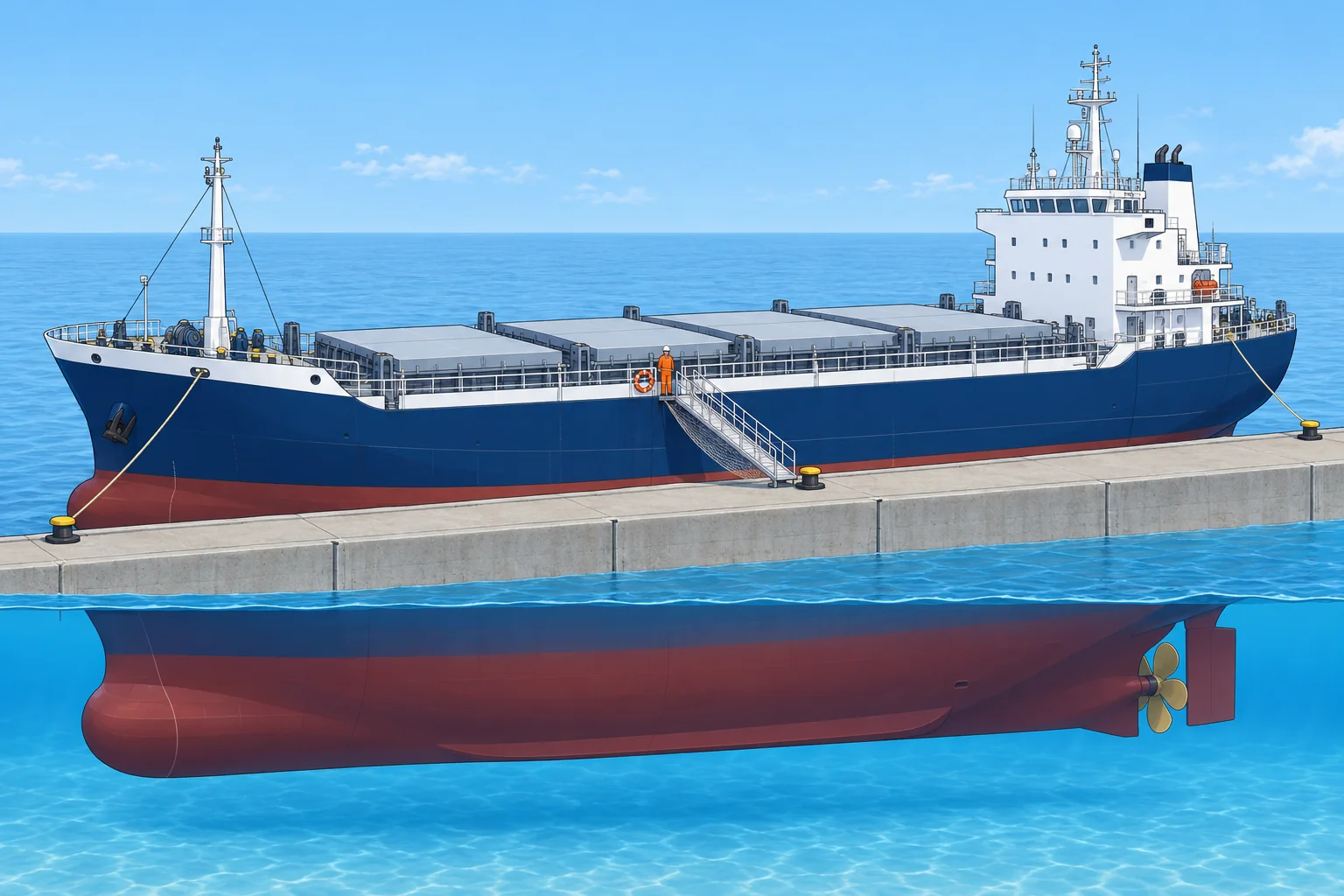
Watches at anchor and in port: anchor, gangway and deck
1The lesson in plain words
At anchor and alongside, the watch goes on: watch the anchor and the weather, control the gangway, tend the moorings and report to the duty officer.
Anchor watch
At anchor the OOW checks the ship’s position regularly. You help. Watch the cable, the anchor chain, for heavy strain or jerking. Look for dragging: shore lights or marks moving steadily one way. Report weather changes and nearby traffic. Check the anchor lights by night or black ball by day. Under 50 m, one all-round white light may be shown where best seen. Ships 100 m or longer must also illuminate their decks.
Gangway watch
In port, check each visitor’s identity and reason for boarding. The ship security plan, required by the International Ship and Port Facility Security (ISPS) Code, sets the access rules. Log visitors in and out. Refuse anyone who cannot show why they should be on board, and call the duty officer. Never leave the gangway unattended.
Gangway and moorings
Tide changes the water level. Cargo changes the ship’s draught, how deep her hull sits below the waterline. As the ship rises or falls, watch the gangway’s landing and angle against its posted limits; report unsafe access immediately. Watch the moorings, the lines holding the ship to the berth: slack lines let her move away; overtight lines can break. Report lines that need adjusting. The deck machinery and ship mooring lessons cover the equipment and line work.
Rounds and reports
A deck watch also makes rounds: look for fire or smoke, oil on the water, flooding, open doors and hatches, loose gear and people in danger. In port, report to the duty officer. Know the alarms, how to raise them, and the ship’s orders for calling help ashore.
2Key data
- At anchor, by day
- One black ball in the fore part (COLREG Rule 30)
- At anchor, by night
- ≥50 m: all-round white forward + lower aft; <50 m: one where best seen
- Tide and draught
- Check gangway landing and mooring strain as the ship moves
- Access control
- Ship security plan under the ISPS Code
3Key points
- 1
Anchor watch: watch the cable, look for dragging, report weather changes and close traffic.
- 2
Check that the anchor lights or the black ball are shown.
- 3
Gangway watch: check identity and purpose, log visitors, never leave the gangway.
- 4
As tide and draught change, watch the gangway’s landing and angle; report moorings that need adjusting.
- 5
Rounds: fire, oil on the water, flooding, open doors; report to the duty officer.
4Frequent mistakes
Wrong: At anchor the watch can relax.
Right: Ships drag, the weather changes and traffic passes close. Keep watching and reporting.
Wrong: A visitor in overalls with a toolbox can come straight on board.
Right: Check identity and the reason for the visit, as the ship security plan says. Call the duty officer if in doubt.
Wrong: Tight moorings are always the safest.
Right: Overtight lines can break as the ship rises or moves. Report them so they can be adjusted.
5Practice case & exam keys
Night at anchor, wind rising. Two shore lights you have been watching, one behind the other, are slowly opening apart and keep moving the same way, and the cable is jerking. What do you do?
Show the answer
Report to the OOW at once: ‘Wind rising, the two shore lights are opening and still moving, cable jerking. The ship may be dragging.’ The OOW checks the position by radar and GNSS and may call the master and the engine room. Keep watching the cable and the lights and report any further change.
Exam keys
- Anchor watch: cable, signs of dragging, weather, close traffic, anchor lights or ball.
- Gangway watch: access control under the ship security plan (ISPS Code); never unattended.
- Watch the gangway and moorings as tide and draught change; report to the duty officer.
Finish this unit
When you've read it, answer three questions. Get all three right to finish the unit; opening the page alone doesn't count.
My notes for this unit
No notes