

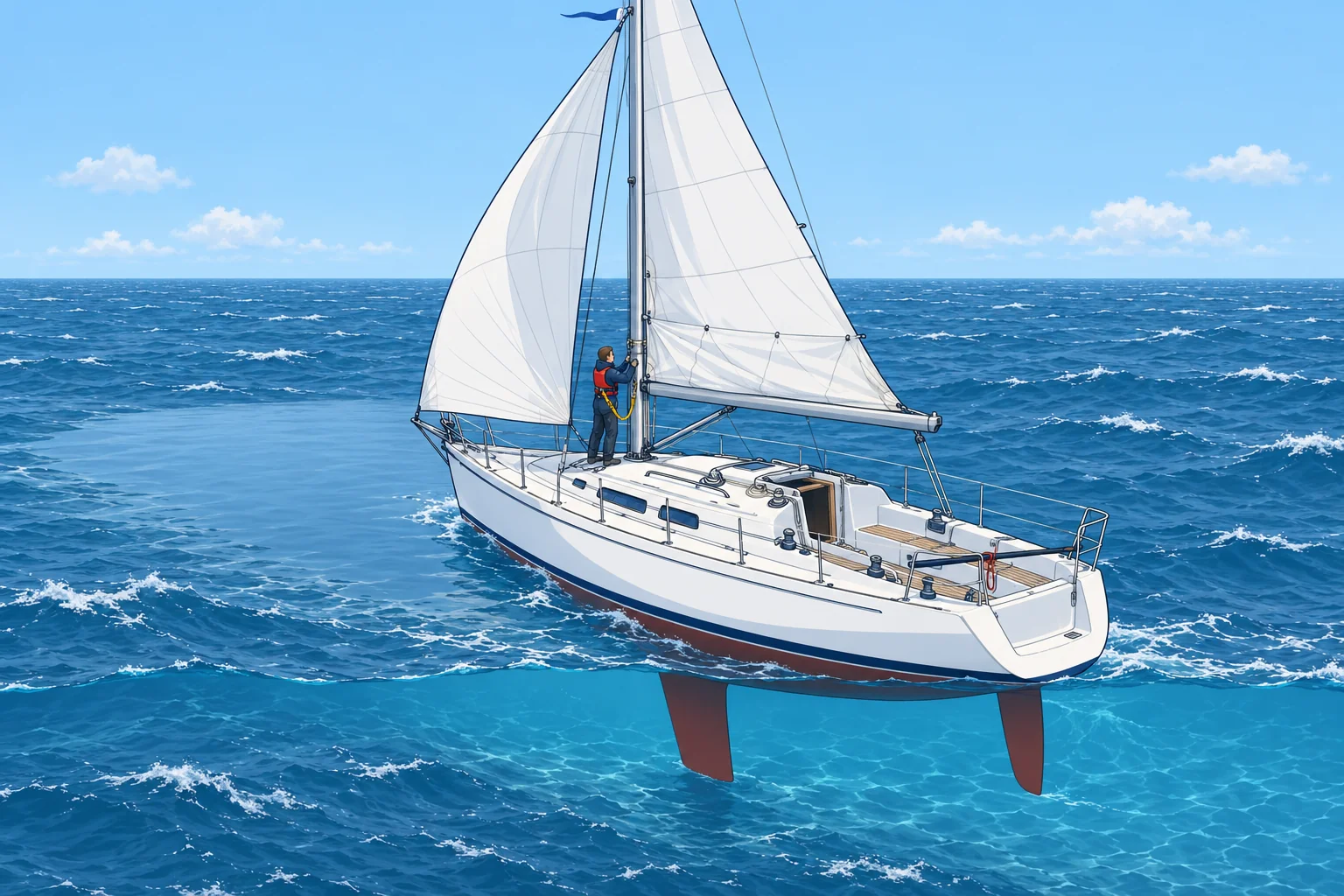
Heaving to: stopping under sail
1The lesson in plain words
Heaving to balances a backed headsail against the mainsail and rudder. Aim for a steady pause with little forward motion; allow for drift.
What it is
When hove-to, the boat balances under sail with little forward motion. Many yachts lie roughly 45–60° to the wind, but the angle varies. The headsail is backed, sheeted on the windward side, towards the wind, pushing the bow away. The rudder turns the bow towards the wind. The partly eased mainsail balances the two. You drift to leeward, away from the wind, and may keep moving forward, called fore-reaching.
Why heave to
Heaving to gives you a pause at sea. Use it to reef, to cook or eat, to wait for daylight or a tide before entering a harbour, to sort out a problem, or to rest the crew. It is also a recognised heavy-weather tactic for many boats. The emergency use in man-overboard recovery, the crash-stop, is covered in the Emergencies module.
How to heave to
From close-hauled, tack without releasing the headsail sheet. The headsail stays on the old side and fills from the wrong side, backed. Ease the mainsheet partly. Set the rudder to turn the bow towards the wind: tiller to leeward, or wheel turned to windward, then lash it. Adjust the mainsheet and rudder for a steady balance with little forward motion. Do not force a fixed angle or speed.
Getting it right
A long keel runs along much of the hull; a fin keel is shorter and deeper. Long-keeled yachts often settle more readily; some fin-keel yachts keep fore-reaching. Ease the main; use less helm if you keep tacking. Partly furl (roll away) an overpowering genoa, a large overlapping headsail. Change one setting at a time. Check the backed sail is not rubbing on the spreaders, the struts supporting the mast’s side wires. Keep a lookout and sea room to leeward: you are still drifting.
Getting going
To sail on, free the helm, release the backed headsail sheet and sheet it in on the leeward side. Trim the main and bear away to your course. Under the COLREGs, a hove-to sailing vessel is still underway: she has not made fast to the shore or anchored. She keeps her normal lights and must still keep a lookout.
2Step by step
Heaving to from close-hauled
- 1
Sail close-hauled and check there is sea room to leeward.
Hove-to, you still drift with leeway and current, and may fore-reach.
- 2
Tack without releasing the headsail sheet.
The headsail stays backed and pushes the bow away from the wind.
- 3
Ease the mainsheet partly.
A fully sheeted main drives the boat forward; eased, it balances the headsail.
- 4
Put the helm to leeward (tiller to leeward, wheel to windward) and lash it.
The rudder now tries to turn the bow back towards the wind.
- 5
Adjust the main and helm for a steady balance with little forward motion.
Each boat balances differently; watch your drift and sea room rather than forcing a fixed angle or speed.
3Key data
- Heading when hove-to
- Often 45–60° off the wind; varies with the yacht and conditions
- Headsail
- Backed: sheeted on the windward side
- Helm
- Tiller to leeward (wheel to windward), lashed
- COLREG status
- Still underway; keep lookout and normal lights
4Key points
- 1
Hove-to: backed headsail, eased main and helm to leeward balance each other.
- 2
To heave to, tack without releasing the headsail sheet.
- 3
Aim for a steady balance with little forward motion; your angle and drift depend on the yacht and conditions.
- 4
Use it to reef, rest, eat, wait or sort out a problem; keep a lookout.
- 5
Some fin-keel yachts keep fore-reaching; adjust one setting at a time and watch your drift.
5Frequent mistakes
Wrong: Hove-to, you are stopped, so you no longer need a lookout.
Right: You are still underway and drifting. Keep a lookout, keep your lights, and watch your sea room.
Wrong: Tiller to windward keeps her pointing into the wind.
Right: Put the tiller to leeward (wheel to windward). That turns the bow towards the wind against the backed headsail.
6Practice case & exam keys
You need to put in a reef. You heave to, but the boat keeps sailing forward at 3 knots and occasionally tacks back through the wind.
Show the answer
Check the headsail is backed and the helm is set correctly. Try easing the main to reduce forward drive. If you repeatedly tack, reduce the helm angle slightly. Change one setting at a time and watch the result. Reduce a genoa that overpowers the balance. Aim for a steady attitude and low speed, checking drift and sea room; some fin-keel yachts keep fore-reaching. Do not force a fixed angle or speed.
Exam keys
- Heave to: tack, keep the headsail sheet made fast, ease main, helm to leeward.
- Backed headsail pushes bow off; rudder turns it up; main balances.
- Drifts slowly to leeward: keep sea room and a lookout.
- Still underway under the COLREGs.
Finish this unit
When you've read it, answer three questions. Get all three right to finish the unit; opening the page alone doesn't count.
My notes for this unit
No notes