France
- Who issues it
- Préfet du département [Departmental prefect], through the state service handling the licence application.
- Minimum age
- 16 years
- Buoyage
- IALA region A
- Collision rules
- Règlement international pour prévenir les abordages en mer (RIPAM)
Do you need a licence?
Yes, above 4.5 kW, about 6 hp, at sea or inland.
You don't need one for:
- a sailboat at sea, even with an auxiliary engine
- an approved inland rental
- declared accompanied driving
The usual minimum age is 16, or 18 for inland boats of 20 metres or more. From 14 to 15, you may drive a boat under 20 metres by day in supervised approved sports activities.
Contremarque · One-day inland rental authorisation
From 16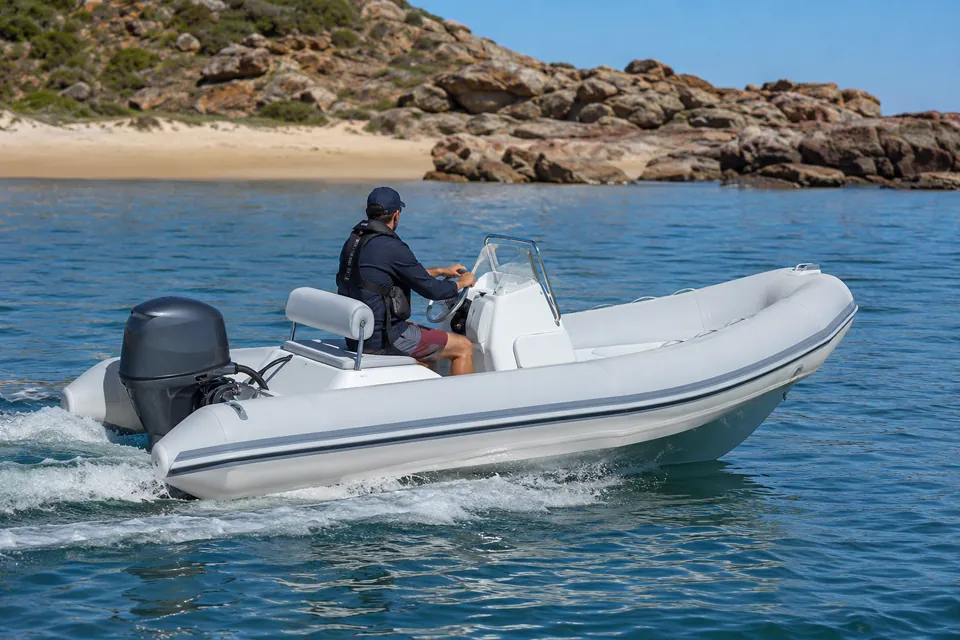
- What it lets you do
- You can use approved inland rentals of non-habitable boats under 5 metres on authorised waters, issued for the day only. The power ratio T is 2.6 times P divided by L squared and must be under 1, with P in kW and L in metres.
- How you get it
- No exam is specified. The approved rental operator briefs you on the authorised area, speed and weather precautions.
- Where to study
- Study it in Academy
Carte de plaisance · Temporary inland rental boating card
From 16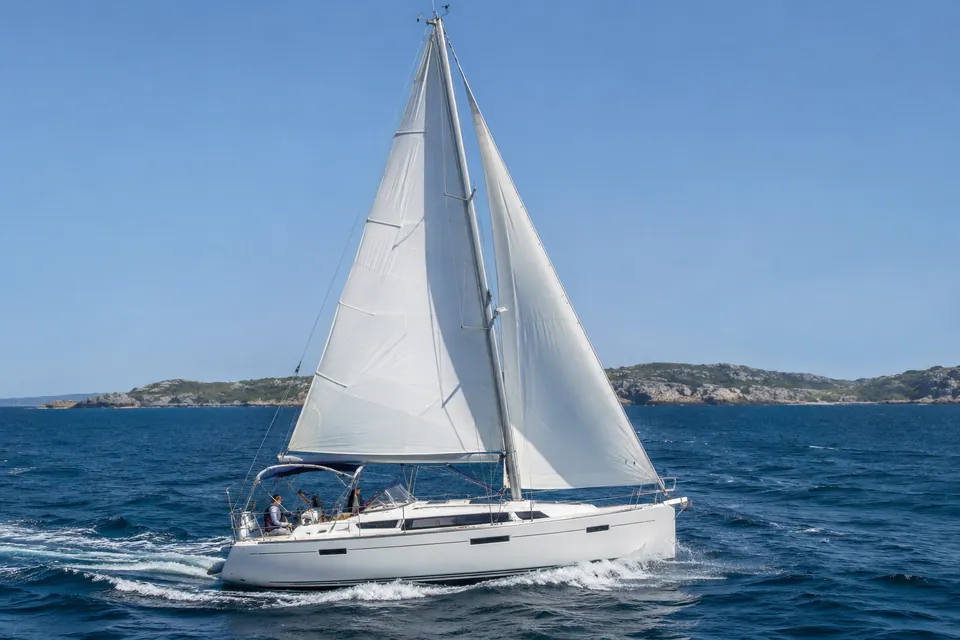
- What it lets you do
- You can use approved inland rentals on permitted waterways, with hulls from 5 to 15 metres inclusive, for rental only and up to 6 weeks. The power ratio T is 2.6 times P divided by L squared and must be under 1.15, with P in kW and L in metres.
- How you get it
- No exam is specified. The approved rental operator gives you route and safety instruction as well as boat-handling training.
- Where to study
- Study it in Academy
Permis de conduire des bateaux de plaisance à moteur — option côtière · Recreational motorboat licence — coastal option
From 16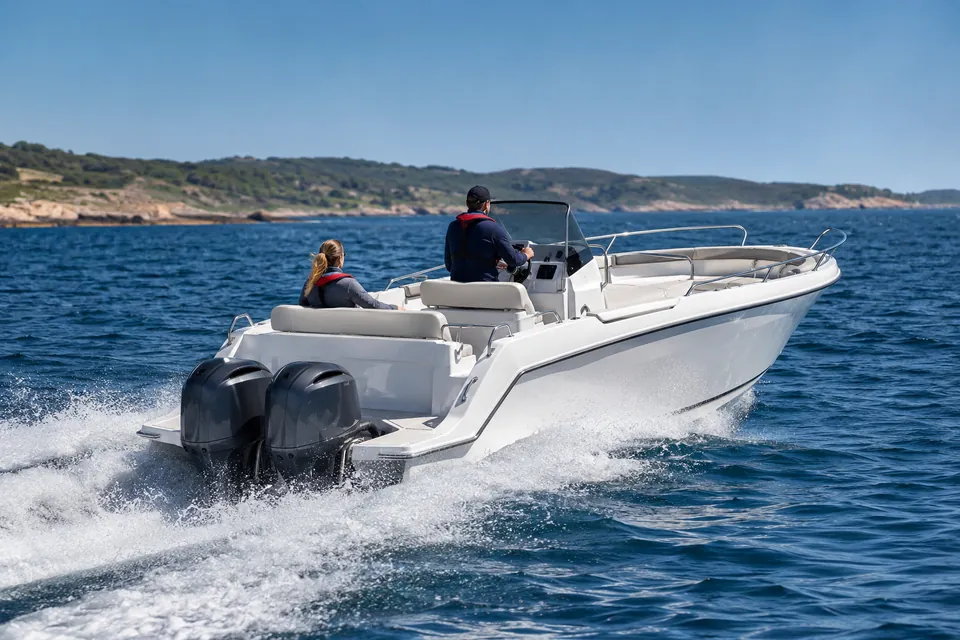
- What it lets you do
- You can use recreational motorboats at sea up to 6 nautical miles from shelter. It is also valid on lakes and closed inland waters.
- How you get it
- Answer 40 multiple-choice questions with no more than 5 errors. An approved school assesses and validates your practical training.
- Where to study
- Study it in Academy
Permis de conduire des bateaux de plaisance à moteur — option eaux intérieures · Recreational motorboat licence — inland waters option
From 16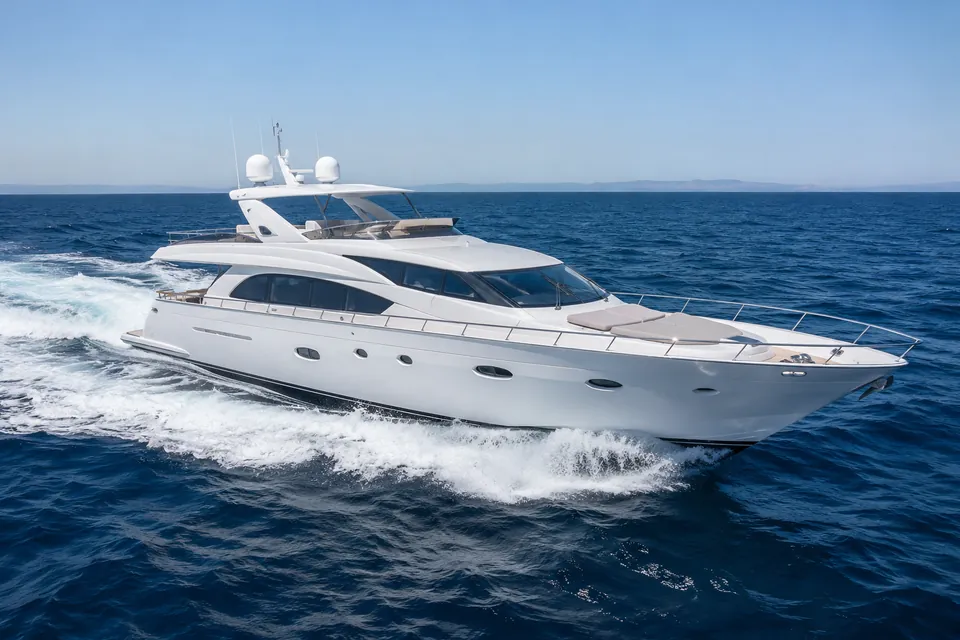
- What it lets you do
- You can use recreational motorboats with a hull under 20 metres on inland waters, including rivers and canals.
- How you get it
- Answer 40 multiple-choice questions with no more than 5 errors. An approved school assesses and validates your practical training.
- Where to study
- Study it in Academy
Permis de conduire des bateaux de plaisance à moteur — extension hauturière · Recreational motorboat licence — offshore extension
From 16- What it lets you do
- With the coastal option, you can use recreational motorboats beyond 6 nautical miles from shelter.
- How you get it
- You take a 90-minute theory paper on chartwork, tides and 5 multiple-choice questions. You need at least 10 out of 20 overall and 7 out of 12 in chartwork, with no extra practical test.
- Where to study
- Study it in Academy
Permis de conduire des bateaux de plaisance à moteur — extension grande plaisance eaux intérieures · Recreational motorboat licence — large inland craft extension
From 18- What it lets you do
- With the inland option, you can use recreational motorboats with a hull of 20 metres or more on inland waters.
- How you get it
- You complete at least 9 hours of practical training, with an approved school validating your skills as you learn. There is no additional theory exam.
- Where to study
- Study it in Academy
Certificat international de conducteur de bateau de plaisance · International Certificate for Operators of Pleasure Craft — inland ICC
- What it lets you do
- You can request this international certificate if you hold an inland licence, a large-inland extension, or a legacy S or PP certificate. It is based on that qualification.
- How you get it
- You present the original qualifying inland title and a recent identity photo. No additional examination is specified.
- Where to study
- Study it in Academy
More exam guides
Permis bateau option côtière — révision et examen blanc
Le Permis Plaisance Option Côtière est le permis bateau français exigé pour conduire un navire à moteur de plus de 6 chevaux sur les eaux maritimes jusqu'à 6 milles d'un abri. L’épreuve théorique est couramment appelée « le code bateau ».
Permis Plaisance Extension Hauturière
Le Permis Hauturier est l'extension du Permis Plaisance Côtier permettant de naviguer au-delà de 6 milles d'un abri — Méditerranée, Atlantique, transats, charter.
Professional deck titles
Certificat de matelot de quart passerelle
STCW II/4- What it lets you do
- You can work as a deck rating forming part of a navigational watch on seagoing ships.
- Where to study
- Study it in Academy
Certificat de marin qualifié pont
STCW II/5- What it lets you do
- You can work as an able seafarer carrying out qualified deck duties on seagoing ships.
- Where to study
- Study it in Academy
Brevet de capitaine 200
STCW II/3- What it lets you do
- You can be master of commercial ships under 200 GT, up to 20 nautical miles from the coast.
- Where to study
- Study it in Academy
Brevet d'officier chef de quart passerelle
STCW II/1- What it lets you do
- You can be the officer responsible for the navigational watch on seagoing merchant ships.
- Where to study
- Study it in Academy
Brevet de capitaine 3 000
STCW II/2- What it lets you do
- You can be master of commercial ships under 3,000 GT.
- Where to study
- Study it in Academy
Brevet de capitaine
STCW II/2- What it lets you do
- You can be master of commercial ships with no licence tonnage limit.
- Where to study
- Study it in Academy
Radio certificates
Certificat restreint de radiotéléphoniste du service mobile maritime (CRR maritime)
SRC- What it lets you do
- You can operate VHF radio, including DSC, on maritime and inland waters.
- Where to study
- Study it in Academy
Certificat restreint de radiotéléphoniste du service mobile fluvial (CRR fluvial)
- What it lets you do
- You can operate VHF radio on inland waterways only.
- Where to study
- Study it in Academy
Certificat spécial d'opérateur (CSO)
- What it lets you do
- You hold a legacy GMDSS certificate that is no longer issued. When you revalidate it, it is replaced by the CGO.
- Where to study
- Study it in Academy
Certificat restreint d'opérateur (CRO)
ROC- What it lets you do
- You can work as a GMDSS radio operator in sea area A1, subject to a specified coastal-fishing exception.
- Where to study
- Study it in Academy
Certificat général d'opérateur (CGO)
GOC- What it lets you do
- You can work as a GMDSS radio operator in all sea areas.
- Where to study
- Study it in Academy
Certificat de radioélectronicien de 1re classe du service mobile maritime et du service mobile maritime par satellite
- What it lets you do
- You can operate GMDSS radio and take responsibility for equipment maintenance in all sea areas.
- Where to study
- Study it in Academy
Ready to study for it?
The Academy is free with an account: lessons for every topic, timed mocks marked like the real exam, and your progress saved.
Official sources: Légifrance — Décret n° 2007-1167: recreational licensing, ages and exemptions (consolidated) · Légifrance — Arrêté du 28 septembre 2007: licence exams, training and international certificate (consolidated) · Légifrance — Arrêté du 25 octobre 2007: approved inland rentals and temporary authorisations (consolidated) · Légifrance — Décret n° 2015-723: professional deck and radio qualifications; annexes I and II (consolidated) · Agence nationale des fréquences — Le CRR · Légifrance — Arrêté du 30 novembre 2017: maritime buoyage regions (consolidated)