Italy
- Who issues it
- Ministero delle infrastrutture e dei trasporti [Ministry of Infrastructure and Transport]: Capitanerie di porto [Harbour Masters], Uffici circondariali marittimi [Maritime District Offices] and Uffici motorizzazione civile [Civil Motorisation Offices], according to licence category.
- Minimum age
- 16 years
- Buoyage
- IALA region A
- Collision rules
- Regolamento internazionale del 1972 per prevenire gli abbordi in mare (COLREG 1972)
Do you need a licence?
Yes, for boats over 24 metres, beyond 6 nautical miles at sea, jet skis, waterski towing, or engines over 30 kW or the stated cc caps.
You don't need one for:
- inland or within 6 nautical miles at sea, an imbarcazione if you are 18
- inland or within 6 nautical miles at sea, a natante if you are 16
- from 14, an unpowered sailing natante over 4 square metres of sail or a rowing boat beyond 1 nautical mile
The licence-free cases apply otherwise.
Patente nautica di categoria D, tipo D1 · Category D1 recreational boating licence
From 16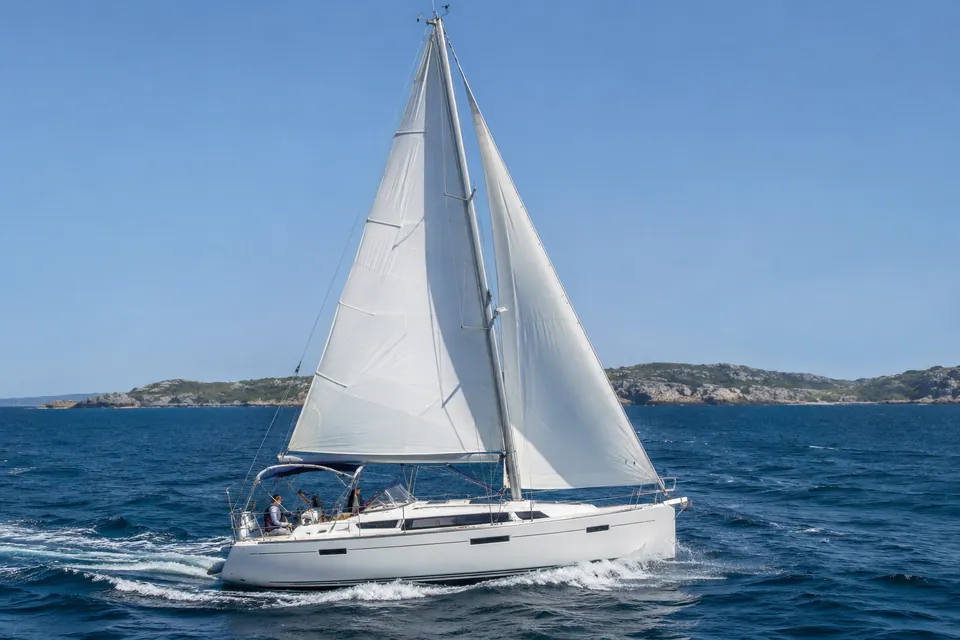
- What it lets you do
- In daylight, you can use motorboats up to 12 metres inland or within 6 nautical miles, and jet skis within 1 nautical mile. The limit is 85 kW and engine cc caps apply; if you are under 18, you can use natanti and jet skis only.
- How you get it
- You complete practical training, then take a course plus quiz, or a quiz at a motorisation office without the course. The quiz has 15 questions, you need 12 correct in 30 minutes, and there is no separate practical exam.
- Where to study
- Study it in Academy
Patente nautica di categoria A — entro dodici miglia dalla costa · Category A — within 12 nautical miles of the coast
From 18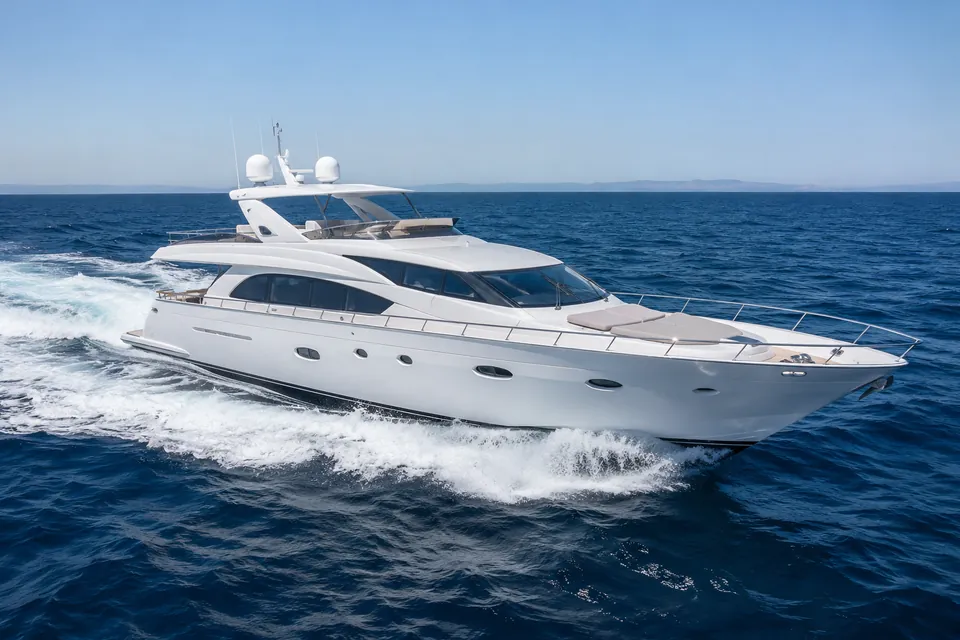
- What it lets you do
- You can use boats up to 24 metres within 12 nautical miles of the coast, under sail and motor, or motor only if endorsed.
- How you get it
- You answer 20 base questions with 16 correct, 5 chart questions with 4 correct, and take a practical test. A sail endorsement adds 5 questions, with 4 correct needed.
- Where to study
- Study it in Academy
Patente nautica di categoria C — entro dodici miglia dalla costa · Category C — nautical direction within 12 nautical miles
From 18- What it lets you do
- You can use boats up to 24 metres within 12 nautical miles if you have a specified disability. You need a capable adult helper and a device to locate a person overboard and stop the engines or autopilot.
- How you get it
- You take the Category A theory and practical examination. Personalised aids or oral theory may be authorised for your disability.
- Where to study
- Study it in Academy
Patente nautica di categoria D, tipo D2 — entro dodici miglia dalla costa · Category D2 special licence — within 12 nautical miles
From 18- What it lets you do
- You can use boats up to 24 metres within 12 nautical miles, subject to the restrictions prescribed after your medical assessment.
- How you get it
- You take the Category A theory and practical examination. Personalised aids or oral theory may be authorised after assessment.
- Where to study
- Study it in Academy
Patente nautica di categoria A — senza alcun limite dalla costa · Category A — unlimited distance from the coast
From 18- What it lets you do
- You can use boats up to 24 metres without a coastal-distance limit, under sail and motor, or motor only if endorsed.
- How you get it
- You answer 20 base questions with 16 correct, 4 chart problems with 3 correct, and take a practical test. Sail adds 5 questions with 4 correct needed; holders of an existing 12-nautical-mile licence skip the base quiz.
- Where to study
- Study it in Academy
Patente nautica di categoria C — senza alcun limite dalla costa · Category C — nautical direction without a coastal-distance limit
From 18
- What it lets you do
- You can use boats up to 24 metres with no distance limit if you have a specified disability. You need a capable adult helper and a device to locate a person overboard and stop the engines or autopilot.
- How you get it
- You take the Category A theory and practical examination. Personalised aids or oral theory may be authorised for your disability.
- Where to study
- Study it in Academy
Patente nautica di categoria D, tipo D2 — senza alcun limite dalla costa · Category D2 special licence — unlimited distance from the coast
From 18- What it lets you do
- You can use boats up to 24 metres without a coastal-distance limit, subject to the restrictions prescribed after your medical assessment.
- How you get it
- You take the Category A theory and practical examination. Personalised aids or oral theory may be authorised after assessment.
- Where to study
- Study it in Academy
Patente nautica di categoria B · Category B recreational ship licence
From 21- What it lets you do
- You can use recreational ships over 24 metres and smaller recreational boats. You must have held category A unlimited, at least motor, for 3 years.
- How you get it
- You take a written theory exam, including an anticollision plotting problem, within 90 minutes, plus an oral examination and practical manoeuvring.
- Where to study
- Study it in Academy
More exam guides
Patente nautica D1
La patente nautica D1 consente di comandare e condurre natanti e imbarcazioni da diporto fino a 12 metri, nelle acque interne e in mare entro 6 miglia dalla costa, solo di giorno. Le moto d'acqua sono limitate a 1 miglio dalla costa. Dai 16 ai 17 anni puoi comandare solo natanti e moto d'acqua; la potenza non può superare 85 kW e valgono anche i limiti di cilindrata.
Patente Nautica entro 12 miglia
La Patente Nautica entro 12 miglia è il titolo italiano per la navigazione entro 12 miglia dalla costa; la patente può essere obbligatoria anche entro 6 miglia in base a potenza o cilindrata del motore, dimensioni dell'unità o alle regole per moto d'acqua.
Patente Nautica senza alcun limite dalla costa
La patente nautica di categoria A senza alcun limite dalla costa consente la navigazione da diporto su unità fino a 24 m, entro l’abilitazione alla propulsione indicata sulla patente.
Professional deck titles
Comune di guardia di coperta
STCW II/4- What it lets you do
- You can work as a deck rating forming part of a navigational watch.
- Where to study
- Study it in Academy
Marittimo abilitato di coperta
STCW II/5- What it lets you do
- You can work as an able seafarer deck, carrying out deck duties at support level.
- Where to study
- Study it in Academy
Ufficiale di coperta
STCW II/1- What it lets you do
- You can be the officer responsible for a navigational watch.
- Where to study
- Study it in Academy
Comandante su navi di stazza inferiore a 500 GT che compiono viaggi costieri
STCW II/3- What it lets you do
- You can be master on seagoing ships under 500 GT on near-coastal voyages.
- Where to study
- Study it in Academy
Primo ufficiale di coperta su navi di stazza compresa tra 500 e 3000 GT / Primo ufficiale di coperta su navi di stazza pari o superiore a 3000 GT
STCW II/2- What it lets you do
- You can be chief mate under separate certificates for ships between 500 and 3,000 GT, and for ships of 3,000 GT or more.
- Where to study
- Study it in Academy
Comandante su navi di stazza pari o superiore a 500 GT
STCW II/2- What it lets you do
- You can be master of seagoing ships of 500 gross tonnage or more, subject to certificate limitations.
- Where to study
- Study it in Academy
Radio certificates
Certificato limitato di radiotelefonista per navi senza esami (RTF)
- What it lets you do
- You can use limited-power, non-DSC radiotelephony on ships under 150 GT. This certificate is issued without an exam.
- Where to study
- Study it in Academy
Certificato limitato di radiotelefonista per navi con esami (RTF)
- What it lets you do
- You can use radiotelephony with preset frequencies. An examination is required.
- Where to study
- Study it in Academy
Short Range Operator Certificate (SRC)
SRC- What it lets you do
- You can operate GMDSS radio on non-SOLAS vessels in sea area A1, within VHF coverage.
- Where to study
- Study it in Academy
Long Range Operator Certificate (LRC)
LRC- What it lets you do
- You can operate GMDSS radio on non-SOLAS vessels in all sea areas.
- Where to study
- Study it in Academy
Certificato Limitato di operatore GMDSS (ROC)
ROC- What it lets you do
- You can operate GMDSS radio on any vessel working in sea area A1, within VHF coverage.
- Where to study
- Study it in Academy
Certificato Generale di operatore GMDSS (GOC)
GOC- What it lets you do
- You can operate GMDSS radio on any vessel in all sea areas.
- Where to study
- Study it in Academy
Certificato limitato di operatore VHF-RTF/DSC EPIRB
- What it lets you do
- You can use VHF and DSC, and EPIRB, on eligible coastal fishing vessels working in sea area A1.
- Where to study
- Study it in Academy
Certificato limitato di operatore MF-RTF/DSC EPIRB
- What it lets you do
- You can use VHF and MF-DSC, and EPIRB, on eligible coastal fishing vessels in sea areas A1 and A2.
- Where to study
- Study it in Academy
Ready to study for it?
The Academy is free with an account: lessons for every topic, timed mocks marked like the real exam, and your progress saved.
Official sources: Normattiva — DM 29 July 2008, n. 146: consolidated recreational boating rules, current on 2 November 2026 · Gazzetta Ufficiale — 9 May 2025, no. 106: reproduced Articles 39 and 39-bis of the recreational boating code · Gazzetta Ufficiale — DM 10 agosto 2021: category A, B and C examination programmes and procedures · Gazzetta Ufficiale — DM 27 novembre 2024: category D1 training and examination · Ministero delle infrastrutture e dei trasporti — PR STW 03: current certificate titles and STCW regulations, 2025 · Ministero delle Imprese e del Made in Italy — Servizio radioelettrico marittimo