Spain
- Who issues it
- Dirección General de la Marina Mercante [Directorate-General for the Merchant Marine] and competent autonomous-community administrations. Navigation licences: authorised nautical schools and sailing/motorboating federations.
- Minimum age
- 16 years
- Buoyage
- IALA region A
- Collision rules
- Reglamento Internacional para Prevenir Abordajes en la Mar (RIPA)
Do you need a licence?
Yes, Spanish-flag boats normally need a licence.
You don't need one for:
- from 18, a private motorboat up to 5 metres and 15 CV, by day within 2 nautical miles of the departure port, marina or beach
- from 18, a sport sailboat up to 6 metres, by day within 2 nautical miles of the departure port, marina or beach
- from 18, a floating or beach craft, by day within 2 nautical miles of the departure port, marina or beach
- official sports competition training or participation
The 15 CV must be the engine's real power, not a bigger engine held back by a power limiter. Jet skis are always excluded.
Licencia de navegación · Navigation licence
From 16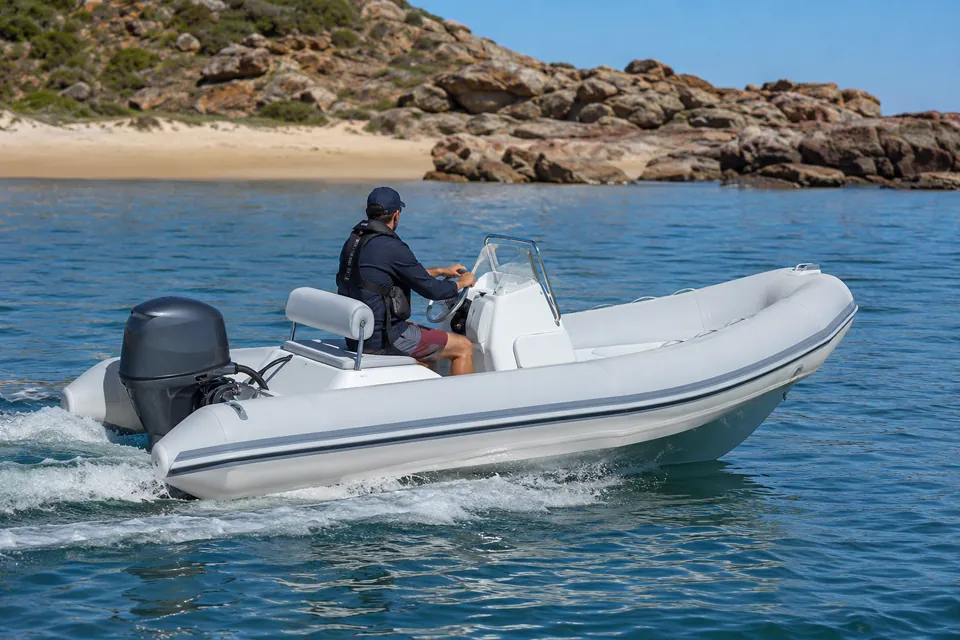
- What it lets you do
- You can take boats up to 6 metres, with the engine power the manufacturer allows, out by day within 2 nautical miles of a port, marina or shelter. It also covers jet skis within their own limits.
- How you get it
- There is no exam. You complete 2 hours of theory and at least 4 hours of practical boat training.
- Where to study
- Read the guideStudy it in Academy
Patrón para navegación básica · Basic navigation skipper
From 16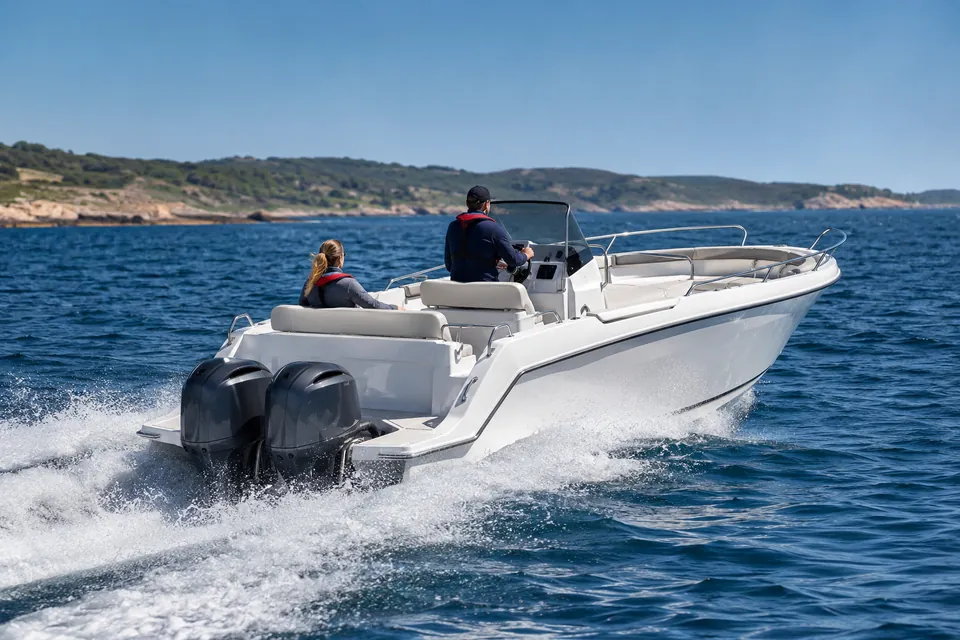
- What it lets you do
- You can use motorboats up to 8 metres within 5 nautical miles of a port, marina or shelter, and sail with extra training. It also covers jet skis within their own limits.
- How you get it
- Answer 27 questions in 45 minutes and score at least 17, with no more than 2 buoyage and 5 RIPA errors. You also need at least 8 hours of boat practice and 4 hours of radio training.
- Where to study
- Read the guideFree mock exam · 27 questionsStudy it in Academy
Patrón de embarcaciones de recreo · Recreational boat skipper
From 18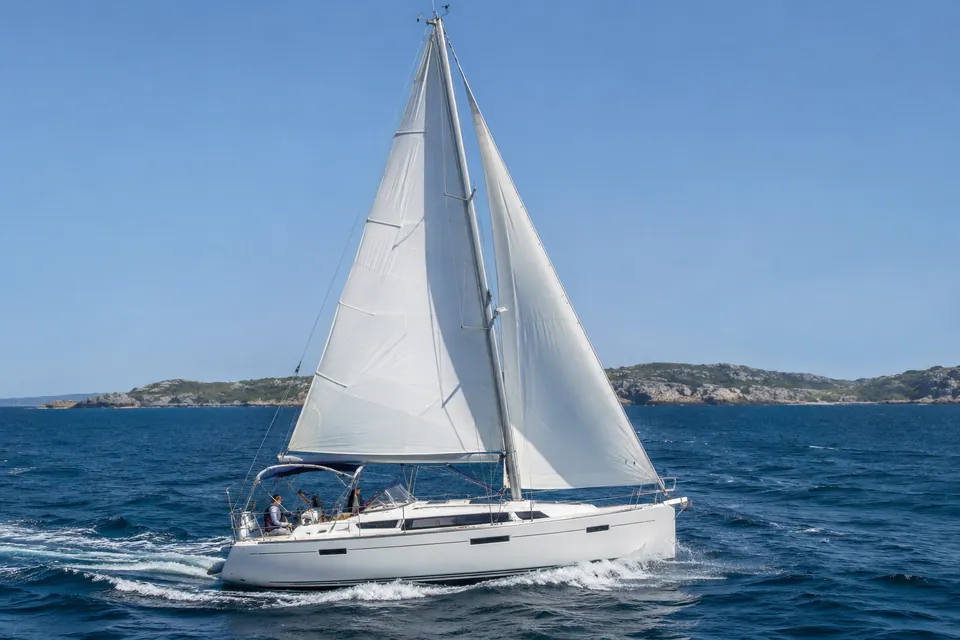
- What it lets you do
- You can use motorboats up to 15 metres, up to 12 nautical miles offshore or within either the Balearic or Canary archipelago. With extra practice, you can go up to 24 metres and between mainland Spain and the Balearics; a sail endorsement is available.
- How you get it
- Answer 45 questions in 90 minutes and score at least 32, with no more than 5 RIPA, 2 buoyage and 2 chartwork errors. You also need at least 16 hours of boat practice and a 12-hour SRC course.
- Where to study
- Read the guideFree mock exam · 45 questionsStudy it in Academy
Patrón de yate · Yacht skipper
From 18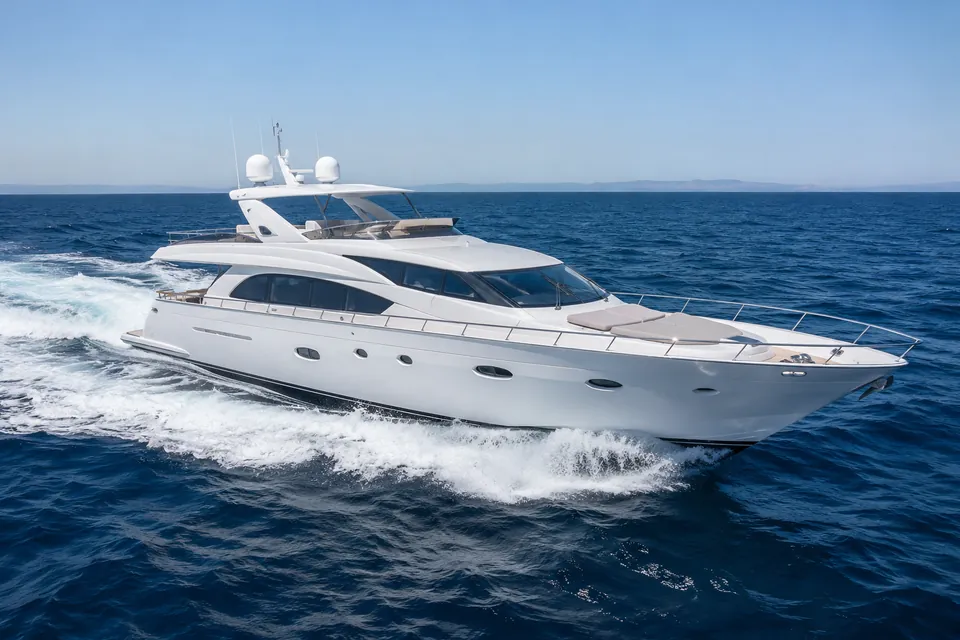
- What it lets you do
- You can use motorboats up to 24 metres, up to 150 nautical miles from shore, and sail with extra training. You need the recreational boat skipper title, PER.
- How you get it
- Answer 40 questions in 2 hours and score at least 28 overall, with no more than 5 navigation-theory and 3 chart errors; there is a modular option. You also need at least 48 hours of boat practice with day and night watches, plus an SRC course.
- Where to study
- Read the guideFree mock exam · 30 questionsStudy it in Academy
Capitán de yate · Yacht captain
From 18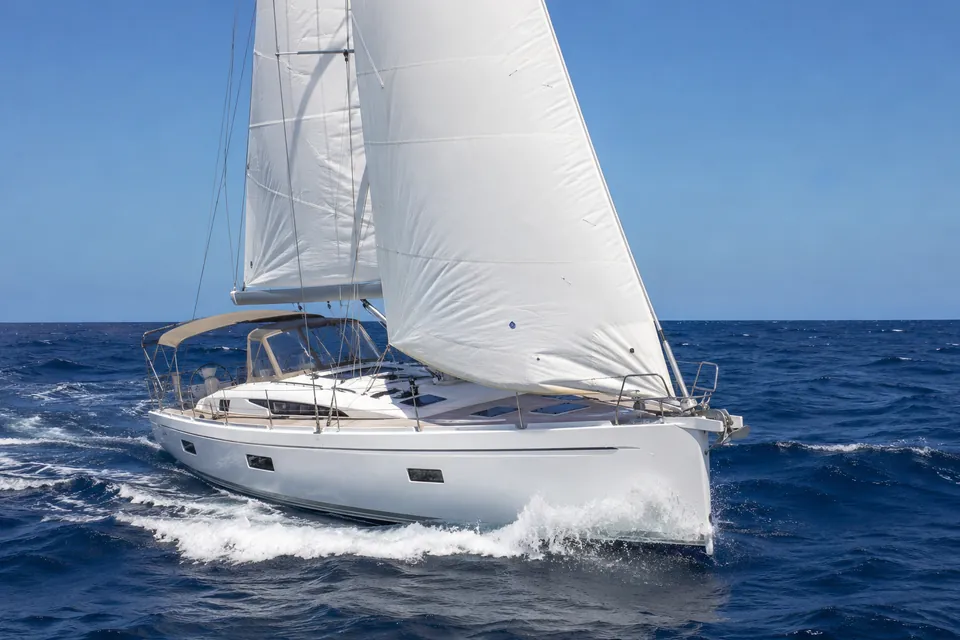
- What it lets you do
- You can use motorboats up to 24 metres without geographical limits, and sail with extra training. You need the yacht skipper title.
- How you get it
- Answer 40 questions in 2.5 hours and score at least 28 overall, with no more than 5 navigation-theory and 4 navigation-calculation errors; there is a modular option. You also need at least 48 hours of boat practice with day and night watches, plus an SRC course.
- Where to study
- Read the guideFree mock exam · 30 questionsStudy it in Academy
Professional deck titles
Marinero de puente de la marina mercante; Marinero de primera de puente de la marina mercante
STCW II/4, II/5- What it lets you do
- You can hold either of two deck-rating roles on merchant ships of 500 GT or more: navigation watchkeeping under II/4, or able seafarer deck under II/5.
- Where to study
- Study it in Academy
Patrón de Litoral de la Marina Mercante
STCW II/1, II/3- What it lets you do
- You can work as a deck officer on ships under 1,600 GT. With qualifying sea service, you can also be master or chief mate on near-coastal ships under 500 GT.
- Where to study
- Study it in Academy
Patrón de Altura de la Marina Mercante
STCW II/1, II/2, II/3- What it lets you do
- This lets you serve as a deck officer on ships under 3,000 GT. Qualifying sea service is needed for wider officer and command privileges.
- Where to study
- Study it in Academy
Piloto de Segunda Clase de la Marina Mercante
STCW II/1, II/2, II/3- What it lets you do
- You can serve as a deck officer without limits, or as chief mate on ships under 3,000 GT.
- Where to study
- Study it in Academy
Piloto de Primera Clase de la Marina Mercante
STCW II/2- What it lets you do
- Depending on your qualification route, you can be master on ships under 3,000 GT or chief mate without limits.
- Where to study
- Study it in Academy
Capitán de la Marina Mercante
STCW II/2- What it lets you do
- You can serve as master, chief mate or deck officer with no navigation or tonnage limits.
- Where to study
- Study it in Academy
Radio certificates
Formación en radiocomunicaciones (patrón para navegación básica)
- What it lets you do
- You receive PNB radio training, rather than an SRC. It takes at least 4 hours, including at least 2 hours of practical training.
- Where to study
- Study it in Academy
Radio-operador de corto alcance
SRC- What it lets you do
- This recreational radio course takes at least 12 hours, including at least 8 hours of practical training.
- Where to study
- Study it in Academy
Radio-operador de largo alcance
LRC- What it lets you do
- You can take this optional recreational radio course, which lasts at least 16 hours and includes at least 8 hours of practical training.
- Where to study
- Study it in Academy
Operador Restringido del Sistema Mundial de Socorro y Seguridad Marítima
ROC- What it lets you do
- You can work as a professional GMDSS radio operator on civilian ships in sea area A1.
- Where to study
- Study it in Academy
Operador General del Sistema Mundial de Socorro y Seguridad Marítima
GOC- What it lets you do
- You can work as a professional GMDSS radio operator on civilian ships in all sea areas.
- Where to study
- Study it in Academy
Oficial Radioelectrónico de Segunda Clase de la Marina Mercante
- What it lets you do
- You can be a radio operator, including carrying out GOC duties. You can also maintain electronic equipment at sea outside sea area A4.
- Where to study
- Study it in Academy
Oficial Radioelectrónico de Primera Clase de la Marina Mercante
- What it lets you do
- You can be the radio station chief or operator and maintain radio and navigation equipment at sea. This also includes GOC duties.
- Where to study
- Study it in Academy
Ready to study for it?
The Academy is free with an account: lessons for every topic, timed mocks marked like the real exam, and your progress saved.
Official sources: BOE — Real Decreto 875/2014: recreational qualifications, consolidated text · Dirección General de la Marina Mercante / BOE — 2026 recreational examinations; Annex III marking criteria · BOE — Real Decreto 269/2022: Merchant Marine professional qualifications, consolidated text · Dirección General de la Marina Mercante / BOE — Resolution of 14 November 2016: seafarer rating certificates · BOE — Real Decreto 1188/2025: Article 4 and final provision 2; exemption changes effective 1 October 2026 · BOE — Real Decreto 1835/1983: Spain’s maritime buoyage system