

SMCP VTS headings, reporting points and pilot boarding
1The lesson in plain words
SMCP VTS headings group the phrases. Pilot boarding phrases set the ladder side, its height above water, the lee and the boarding speed.
SMCP VTS headings
The 2001 SMCP groups VTS phrases under three service headings. Current VTS need not use these labels. Information covers warnings, traffic, tides and weather. Navigational assistance supports your navigation: ‘Your position is bearing … degrees, distance … from …’ or ‘You are approaching the northern limit of the fairway.’ Traffic organisation covers clearances, anchoring, waiting times and slots.
Reporting points
A reporting point is a charted position where you must call VTS. Report your name, position and the details the port asks for, often ETA and draft. VTS may say ‘Report at the next waypoint’ or ‘Do not pass reporting point … until … UTC.’ It may pass traffic: ‘MV … has reported at reporting point …’. Always use the reporting point name printed on the chart or in the official guide.
Navigation phrases
Shore radar phrases are precise. ‘Your track is diverging from the reference line’ describes the ground track. ‘Course to make good is … degrees’ is what you need over the ground. ‘You are running into danger: shallow water … of you’ calls for immediate action. If danger is immediate, take safe action without waiting to transmit. Acknowledge as soon as practicable and report your action.
Pilot request
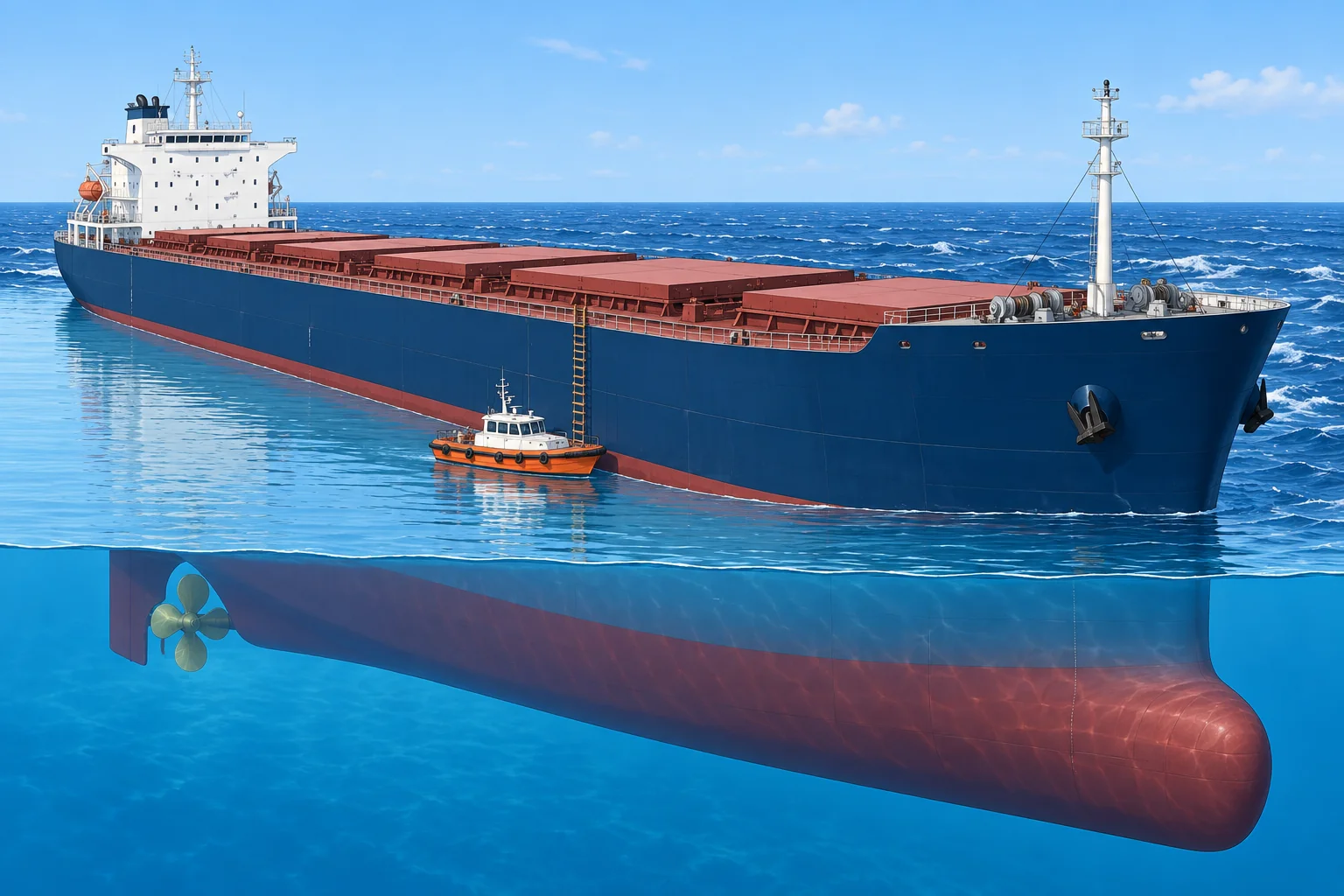
Request the pilot explicitly: ‘I require a pilot at … Pilot Station.’ Agree the boarding position and time with the pilot station or VTS. Give your arrival time: ‘My ETA at … Pilot Station is … hours local time.’ State the time basis. You may be asked your freeboard, the height of the deck edge above water, and told the ladder side and height: ‘Rig the pilot ladder on starboard side, two metres above water.’
Making a lee
The pilot boat needs calm water alongside. ‘Make a lee on your port side’ means put your port side away from wind and sea. ‘Steer … degrees to make a lee’ and ‘Keep the sea on your starboard quarter’ give the heading. ‘Make a boarding speed of … knots’ sets your speed. ‘Stop engine(s) until the pilot boat is clear’ protects the boat. If the boat reports ‘The pilot ladder is unsafe’, ask ‘What is wrong with the pilot ladder?’
2Step by step
Pilot boarding exchange
- 1
Request the pilot, give your ETA and confirm the boarding position.
The pilot boat plans its run to meet you there.
- 2
Answer the freeboard question and confirm the ordered ladder side and height.
The ladder must reach the boat at the right height above the water.
- 3
Have an officer check the ladder’s side, height and condition. Only then report ‘The pilot ladder is rigged on … side’.
The pilot trusts his life to that ladder.
- 4
Confirm a safe heading and speed with the pilot boat, then make the lee and settle at the agreed boarding speed.
Calm water and steady speed make the transfer safe.
- 5
Stand by on the ordered channel until the transfer is complete.
The boat may need you to alter course or stop engines at once.
3Key data
- SMCP VTS headings
- Information, navigational assistance, traffic organisation
- Ladder order
- ‘Rig the pilot ladder on … side, … metres above water.’
- Freeboard
- Height of the deck edge above the waterline
- Make a lee
- Put the boarding side away from wind and sea
- Boarding speed
- ‘Make a boarding speed of … knots.’
4Key points
- 1
The SMCP groups VTS phrases under information, navigational assistance and traffic organisation.
- 2
Call at every reporting point, using the reporting point name on the chart.
- 3
The pilot station sets ladder side, height above water, the lee and the boarding speed.
- 4
Confirm each pilot boarding order in full and report when the ladder is rigged.
5Frequent mistakes
Wrong: ‘Make a lee on your port side’ means the port side faces the wind.
Right: It means the port side is sheltered: wind and sea are on the starboard side, so the boat comes alongside in calm water to port.
Wrong: Give pilot station ETAs in UTC without saying so, as for VTS.
Right: Pilot phrases often use local time. State which time you use: ‘… hours local time’ or ‘… UTC’.
Wrong: Report the ladder rigged as soon as it is lowered over the side.
Right: Report it rigged only after an officer has checked its side, height and condition against the order.
6Practice case & exam keys
The pilot station tells you: ‘Rig the pilot ladder on port side, one decimal five metres above water. Make a lee on your port side. Make a boarding speed of eight knots.’ Wind and swell are from the north-west. What do you do and say?
Show the answer
Read back all three orders. Confirm a heading that shelters port while keeping the ship in safe water; do not turn solely to make a lee. If the heading or speed would be unsafe, tell the pilot boat and agree an alternative. Have the port ladder checked at 1.5 m above water. When safely established at 8 knots, report the ladder rigged and the lee made.
Exam keys
- SMCP VTS headings: information, navigational assistance, traffic organisation.
- Report at reporting points by their charted names; follow ‘Do not pass … until …’.
- Pilot boarding: ladder side and height above water, freeboard, lee, boarding speed.
- ‘Make a lee on your port side’: port side sheltered from wind and sea.
Finish this unit
When you've read it, answer three questions. Get all three right to finish the unit; opening the page alone doesn't count.
My notes for this unit
No notes