

How conventions and amendments enter into force
1The lesson in plain words
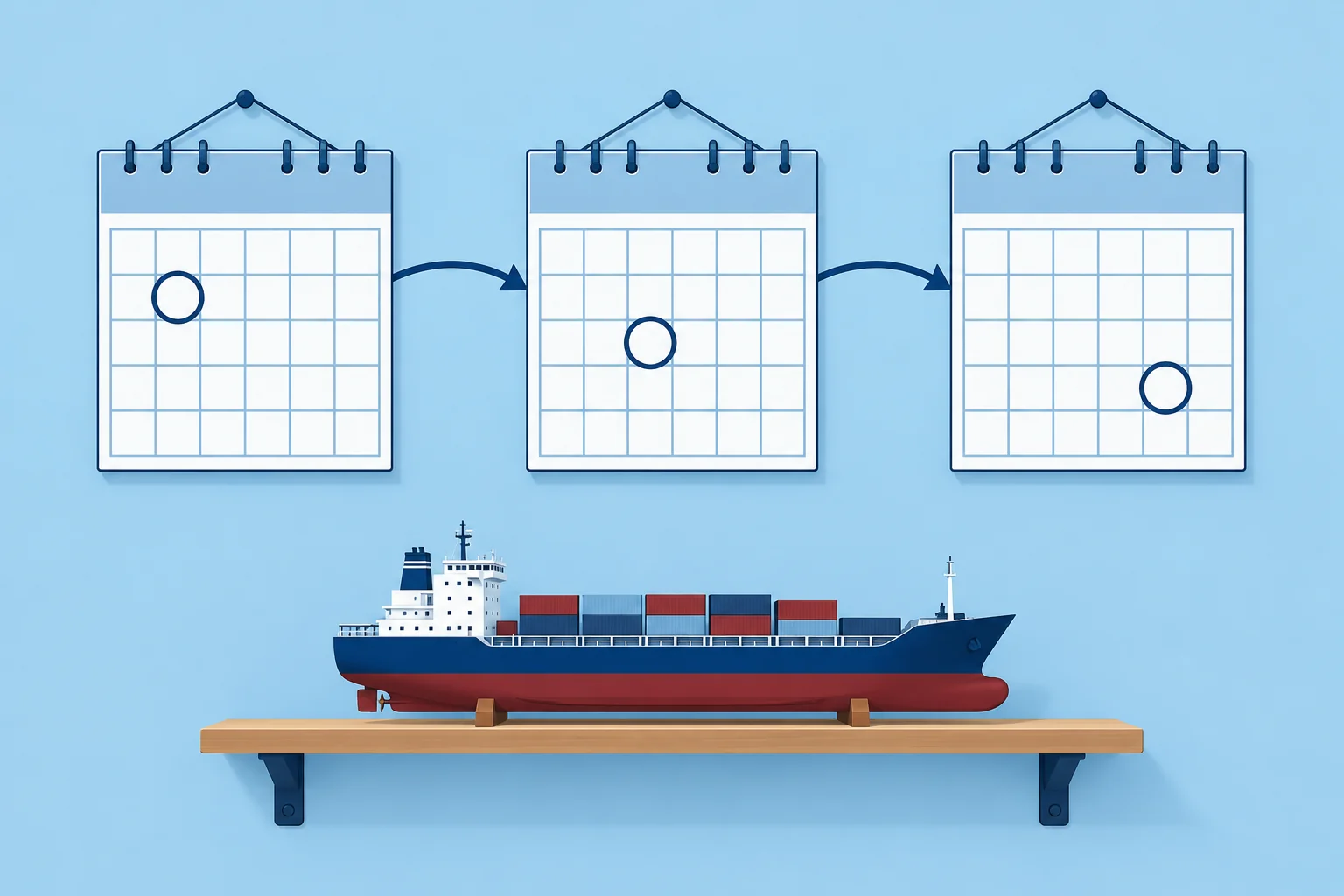
Under tacit acceptance, an amendment is adopted, deemed accepted, then enters into force. Check all three dates in its resolution.
From text to treaty
A convention is first adopted at a conference or by the IMO. States consent to be bound, for example by ratification or accession. Each convention states its own entry-into-force conditions. SOLAS 1974 required acceptance by 25 states representing at least 50% of world merchant tonnage, followed by a 12-month waiting period. It entered into force on 25 May 1980.
Explicit acceptance
Under the older explicit acceptance procedure, an amendment enters into force only after a set share of parties, often two thirds, formally accepts it. This can take decades. It still applies to some provisions, such as SOLAS chapter I and the convention articles. The IMO Convention itself also uses it, which is why the 2021 Council amendments are still waiting.
Tacit acceptance
Most technical amendments use tacit acceptance: silence counts as acceptance. The adoption date is when the committee agrees the text. At the deemed acceptance date, it is accepted unless enough parties have objected. SOLAS acceptance is blocked by objections from more than one third of parties, or parties representing at least 50% of world merchant tonnage. MARPOL uses at least one third of parties, with the same alternative tonnage threshold. Entry into force normally follows six months later.
A worked example
MSC 108 adopted SOLAS amendments in May 2024, including resolution MSC.549(108) on emergency towing. They were set to be deemed accepted on 1 July 2027 and to enter into force on 1 January 2028. Under SOLAS the acceptance period is normally two years and never less than one. MARPOL works similarly but often with a shorter period of at least 10 months. A MARPOL amendment can therefore apply about 16 months after adoption.
The SOLAS cycle
To give industry time to prepare, SOLAS amendments and the mandatory codes under it normally enter into force on 1 January in a four-year cycle, such as 2024 and 2028. Some amendments use the date in between, as several did on 1 January 2026. Each amendment is a resolution numbered by committee and session, for example MSC.550(108). A flag may allow voluntary early implementation, but port states may still apply the old rule until the date.
2Step by step
Reading an IMO amendment
- 1
Note the resolution number, such as MSC.550(108).
It tells you the committee and session, so you can find the text.
- 2
Find the adoption date.
Adoption does not itself establish your ship’s compliance deadline.
- 3
Find the deemed acceptance date.
Enough objections by then would stop the amendment.
- 4
Find the entry-into-force date.
This is the amendment’s entry into force; check separately when your ship must comply.
- 5
Check which ships it covers: new, existing, or by size and type.
Many rules apply only to ships built or contracted after a set date.
- 6
Check your flag's circular on implementation and any early use.
Flag guidance explains implementation; check it against the amendment’s application and transition clauses.
3Key data
- SOLAS objection threshold
- More than 1/3 of parties, or parties with at least 50% of tonnage
- SOLAS acceptance period
- Normally 2 years after adoption, never less than 1
- Entry into force
- Normally 6 months after deemed acceptance
- SOLAS cycle
- 1 January, four-year cycle (2024, 2028)
- MSC 108 example
- MSC.549(108): adopted May 2024; in force 1 Jan 2028
4Key points
- 1
Tacit acceptance has three dates: adoption, deemed acceptance and entry into force.
- 2
SOLAS: Objections by over one third of parties, or by parties with at least 50% of tonnage, stop an amendment.
- 3
SOLAS amendments normally enter into force on 1 January in a four-year cycle.
- 4
Explicit acceptance needs formal acceptance by the required share of parties; adoption votes are separate. It can take decades.
5Frequent mistakes
Wrong: An amendment applies on the day the MSC adopts it.
Right: Adoption alone does not make an amendment binding. Check its entry-into-force date, which ships it covers, when your ship must comply and any binding flag requirement.
Wrong: If the flag allows early implementation, every port state must accept it.
Right: Early implementation is voluntary. A port state may apply the rule in force until the official date.
Wrong: Every new IMO rule applies to every ship already in service.
Right: Many rules apply only to new ships. Check the application clause before acting.
6Practice case & exam keys
Your company forwards a notice: "MSC adopted new SOLAS amendments this week; please fit the new equipment before the next port." The notice names no dates. What do you check before you raise a requisition?
Show the answer
Find the resolution and read its adoption, deemed acceptance and entry-into-force dates. Check which ships it covers and any transition. Adoption alone does not establish a legal deadline at the next port. Confirm binding flag requirements and ask why the company requests earlier installation.
Exam keys
- Tacit acceptance: adoption, deemed acceptance, entry into force (six months later).
- SOLAS: Objection: more than 1/3 of parties or parties with at least 50 % of world tonnage.
- SOLAS: 1 January, four-year cycle; resolutions numbered MSC.xxx(session).
- Explicit acceptance: positive acceptance by a fixed share of parties.
Finish this unit
When you've read it, answer three questions. Get all three right to finish the unit; opening the page alone doesn't count.
My notes for this unit
No notes