

 See units
Designated security duties: access control, searches and security equipment (STCW A-VI/6-2)
Security equipment, its limits and its tests
1The lesson in plain words
Cameras, lights, alarms and detectors help you watch more of the ship. They only work if you know their limits and test them as the plan says.
What the ship has
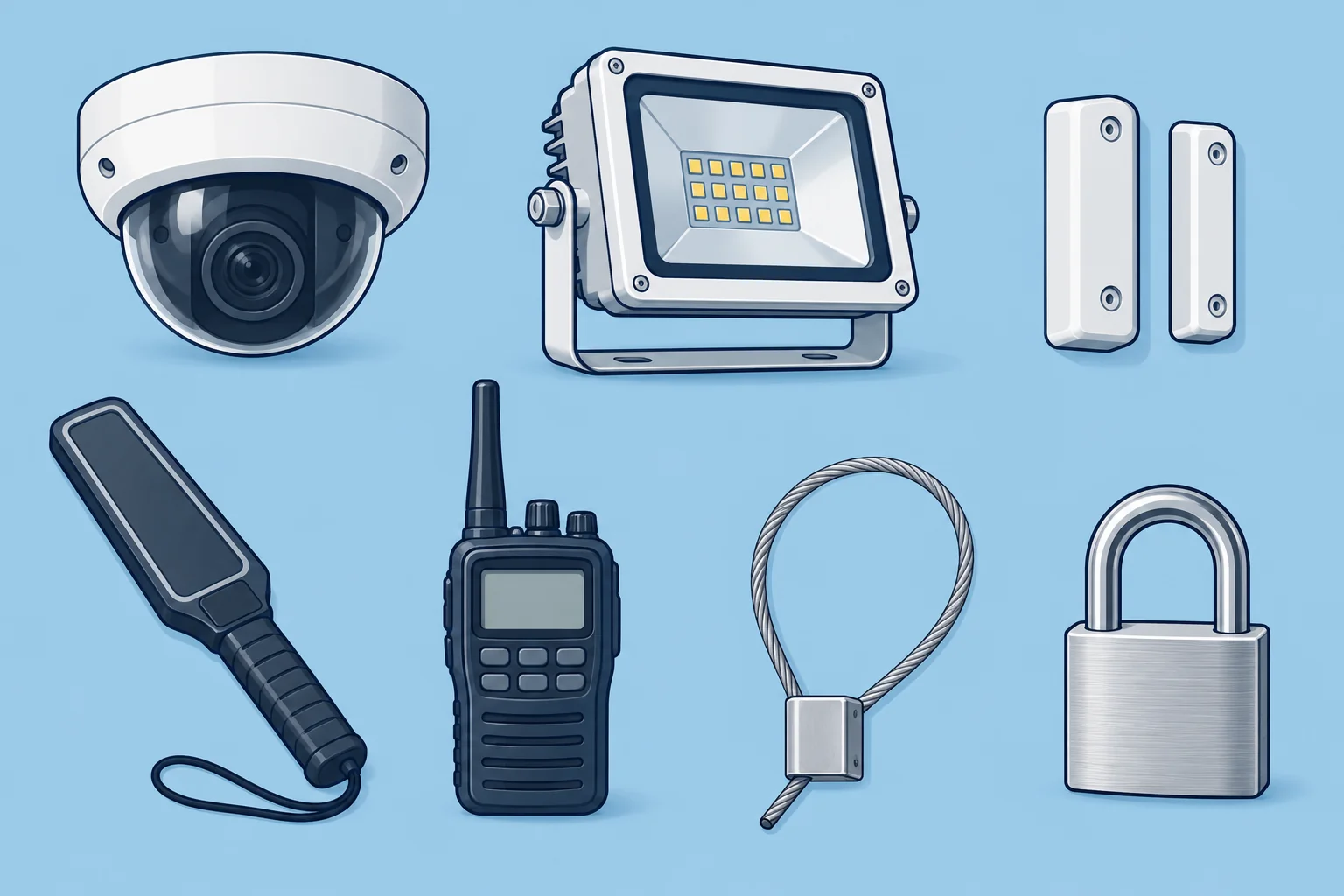
Security equipment depends on the ship and its plan. It can include CCTV cameras and monitors, deck and floodlights, intruder alarms on doors and hatches, locks, seals and key control, handheld and walk-through metal detectors, radios and the public address system (ship’s loudspeakers), and on some ships searchlights or water hoses ready for anti-boarding.
Know the limits
Cameras have blind spots and poor night images; recordings help later review, but live response needs monitoring. Lights can fail or dazzle. False alarms can make people ignore real alerts. Locks depend on controlled keys and codes. Seals show tampering; they do not prevent entry. Metal detectors miss non-metallic threats and drugs. Radios may not work in some parts of the ship. Noise can mask public address announcements. Equipment supports the watch; it does not replace people.
The SSAS
The ship security alert system (SSAS) sends a covert alert, with the ship’s identity and position, to the authorities the flag state chooses, usually including the company. It gives no sound or light on board. Never press an activation point to test it informally. Follow only the SSP’s authorised test procedure, including required notifications to prevent a false alert. A false alert can start a real response.
Tests and records
The plan sets how often each item is tested, calibrated (compared with a known reference) and maintained. You may check that cameras record, that lights work before dark, that alarms sound, and that a detector passes its prescribed test with an approved test piece. Report any fault to the SSO at once and record each test and repair; these are security records.
2Key data
- SSAS on board
- No alarm sound or light; covert ship-to-shore alert
- Metal detector limit
- Does not find plastic, ceramic, liquids or drugs
- Tests
- As the SSP sets; faults reported and recorded
3Key points
- 1
Equipment includes CCTV, lighting, alarms, locks, seals, metal detectors and radios.
- 2
Every item has limits: blind spots, false alarms, items a detector cannot find.
- 3
Equipment supports the watch; it does not replace people.
- 4
SSAS: covert alert to shore, no alarm on board; test only by the SSP’s authorised procedure.
- 5
Test, calibrate and maintain as the plan says; report and record faults.
4Frequent mistakes
Wrong: With CCTV running, the gangway watch can stand down at night.
Right: Cameras have blind spots and need someone watching. Keep the watch the plan requires.
Wrong: Press an SSAS button to check it still works.
Right: A real alert starts a real response. Test only under the plan's procedure, with the authorities warned.
5Practice case & exam keys
Before your night gangway watch, the aft mooring deck CCTV camera shows a black image. During the prescribed detector test, the approved test piece gives no alarm.
Show the answer
Report both faults to the SSO or officer of the watch at once and record them in the security equipment log. Until they are fixed, the SSO may set extra patrols on the aft mooring deck and hand searches or a handheld detector at the gangway. Do not just carry on as if the equipment worked.
Exam keys
- Security equipment: CCTV, lighting, alarms, locks and seals, metal detectors, communications.
- Know each item's limits; equipment does not replace people.
- SSAS: covert alert to shore, no alarm on board; authorised tests include required notifications.
- Tests, calibration and maintenance follow the SSP and are recorded.
Finish this unit
When you've read it, answer three questions. Get all three right to finish the unit; opening the page alone doesn't count.
My notes for this unit
No notes