

 See units
Personal safety, social responsibilities and preventing violence and harassment (STCW A-VI/1-4)
Safe working practices, risk and protective equipment
1The lesson in plain words
A ship mixes heavy machinery, height, weather and a moving deck. Safe habits, a quick risk check and the right protective gear keep you safe.
Why it matters
A merchant ship is a factory, a hotel and a vehicle at once. Hazards (anything that can hurt you) are everywhere: moving machinery, wires and ropes under load, slippery and moving decks, heavy weather, hot surfaces, electricity, chemicals, noise and work at height. Most accidents happen during ordinary jobs, not emergencies. That is why STCW asks every seafarer to follow safe working practices at all times. The practical side of this basic training is done in your approved course; these lessons give you the knowledge behind it.
Risk assessment
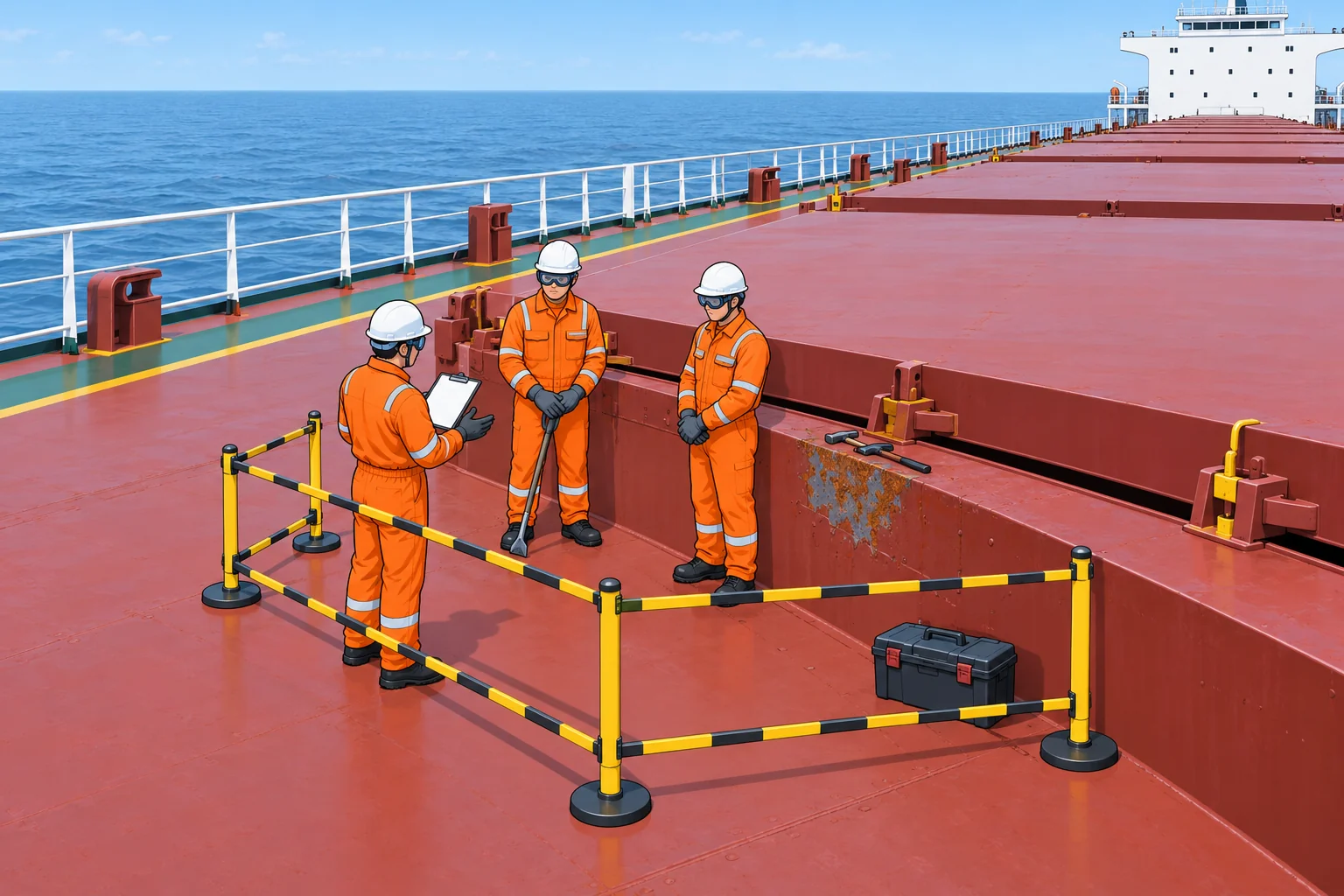
A risk assessment asks three plain questions: what could go wrong, how likely is it, and how bad would it be? Then it sets controls that make the risk smaller, such as isolating a machine, using a different tool or adding a second person. Before a job starts, the team meets at the work site for a toolbox talk: a short briefing on the task, the hazards, the controls, who does what and how to stop the job.
Stop work
Every person on board has the right and the duty to stop the work if they see a danger that has not been controlled, whatever their rank. Say stop clearly, make the job safe and tell the person in charge. A good company backs you when you do this. Ships run their safety through a safety management system (SMS) under the International Safety Management (ISM) Code, and national codes of safe working practice add practical rules.
Protective equipment
Personal protective equipment (PPE) protects against risks left after other controls. Wear a hard hat where things can fall, safety shoes with toe caps, gloves suited to the job, goggles for chips or splashes; add a face shield when needed. Use ear defenders in noisy spaces and close-fitting coveralls. Work aloft (at height) or over the side also needs a safety harness secured to a strong point, and over the side a working lifejacket. PPE must fit and be in good condition.
Report it
Report every hazard, accident and near miss (an event that could have hurt someone but did not). Near misses are free lessons: if the dropped spanner missed you today, it may not miss the next person. Reports go to the officer in charge and into the SMS so the cause can be fixed.
2Key data
- STCW basis
- Regulation VI/1; Code table A-VI/1-4, personal safety
- Risk
- How likely it is × how bad it would be
- PPE
- The last line of defence, after other controls
- Stop-work authority
- Every person on board, whatever the rank
3Key points
- 1
Most accidents happen during routine work; safe working practices apply at all times.
- 2
A risk assessment asks what can go wrong, how likely and how bad, then sets controls.
- 3
A toolbox talk at the job site goes over task, hazards, controls, roles and how to stop.
- 4
Anyone can stop unsafe work. Report hazards, accidents and near misses.
- 5
PPE is the last line of defence and must fit and be in good condition.
4Frequent mistakes
Wrong: PPE makes any job safe, so other precautions can be skipped.
Right: PPE protects against risks left after other controls. Isolate, guard and plan the job first.
Wrong: A near miss is not worth reporting because nobody was hurt.
Right: A near miss reveals a hazard that could hurt someone. Report it so the cause can be addressed.
Wrong: Only officers can stop a job.
Right: Any crew member who sees an uncontrolled danger can and should stop the work.
5Practice case & exam keys
You are chipping rust with an air hammer. Your eye and hearing protection are missing. A crane starts carrying stores directly over your work area.
Show the answer
Stop chipping and move clear of the suspended load. Tell the bosun (deck supervisor) about the missing protection and the lift crossing your workplace. Restart only with suitable eye and hearing protection, after the person in charge confirms that your workplace is safely separated from the lifting operation.
Exam keys
- Safe working practices apply at all times; most accidents happen in routine jobs.
- Risk assessment: what can go wrong, how likely, how bad, which controls.
- Toolbox talk before work; every person may stop unsafe work.
- PPE is the last line of defence; report hazards and near misses.
Finish this unit
When you've read it, answer three questions. Get all three right to finish the unit; opening the page alone doesn't count.
My notes for this unit
No notes