

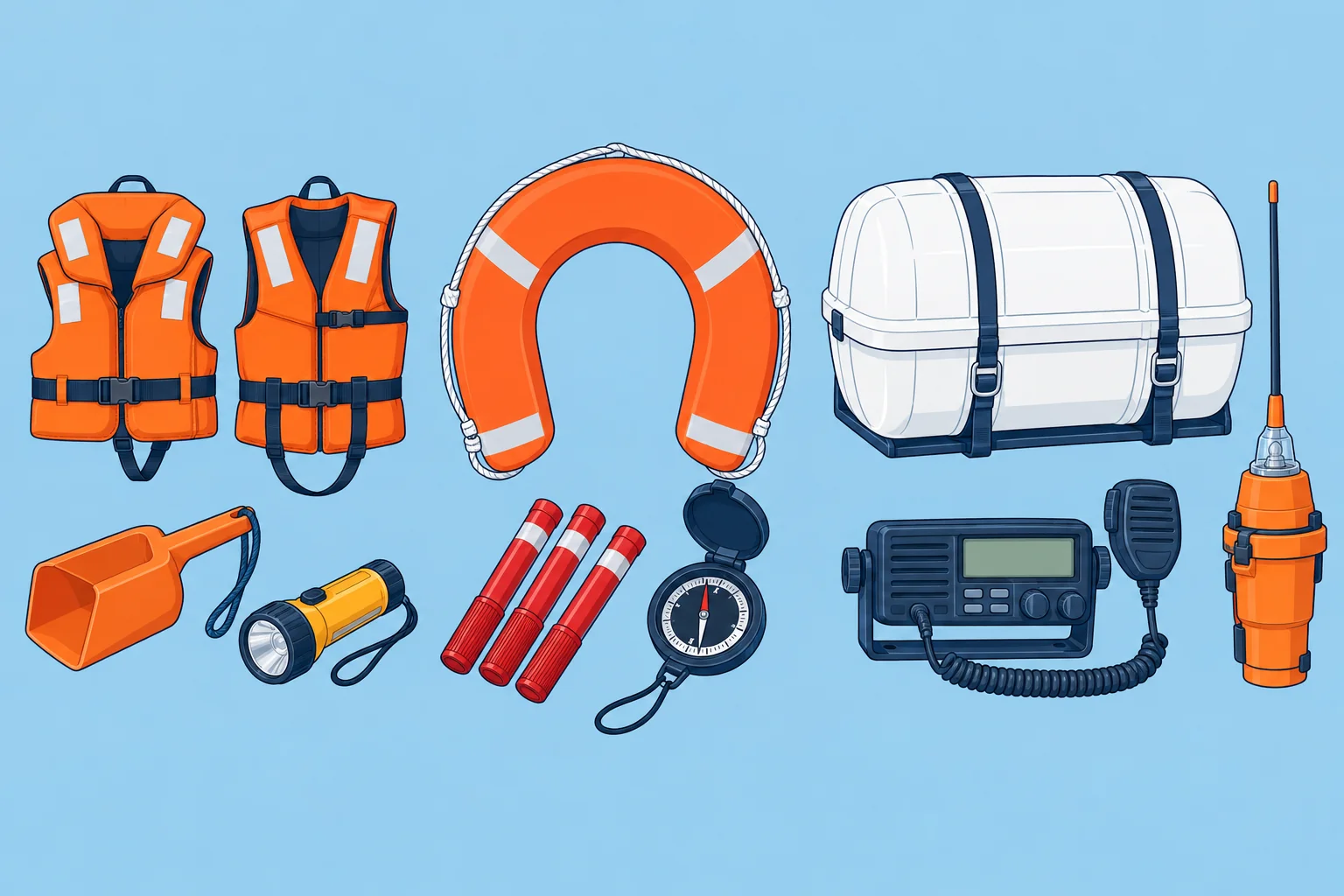
Required safety equipment by zone
1The lesson in plain words
The flag state sets the gear a boat must carry. The list grows with the distance you go from the coast or a shelter.
Who sets the list
In most countries the flag state, the country whose flag the boat flies, sets its safety equipment requirements. Some also apply their list to foreign boats kept there by residents. Check the registration: a charter boat may fly a foreign flag. Its flag-state requirements and applicable coastal-state and charter rules matter.
The list grows with distance
Countries use navigation zones or bands. Spain has seven zones measured from the coast or a shelter. France measures from a shelter: <2 NM, 2–<6 NM, 6–<60 NM and ≥60 NM. Portugal and Italy also use distance. Stay within the equipped band and any national operating limits. Separately, keep within the boat's design limits for wind and waves.
The common core
Common essentials include a lifejacket for each person, an anchor with suitable chain or rope, a bailer (water-scooping container) or pump, and a light. Check the required navigation lights and sound signals too. Further-out equipment often includes flares, a lifebuoy (rescue ring), compass, charts, fixed VHF radio, liferaft and an EPIRB (Emergency Position Indicating Radio Beacon), a satellite distress beacon. These are common patterns, not one legal list; carriage rules vary by country.
In date and in working order
Keep gear in working order. Flares have expiry dates; inflatable lifejackets, liferafts and extinguishers may need inspection or servicing. Follow the applicable expiry, inspection and servicing requirements. Where in-date equipment is required, expired items do not satisfy the required inventory.
Lifejackets in newtons
Buoyancy is the upward force that helps keep you afloat. It is measured in newtons (N). 50 N is a buoyancy aid for good swimmers near help. 100 N suits sheltered waters. 150 N suits coastal and offshore use, but waterproof clothing can prevent face-up flotation. 275 N is for heavy clothing and offshore work. Children need jackets that fit their weight.
2Key data
- Lifejacket levels
- 50 N aid · 100 N sheltered · 150 N coastal/offshore · 275 N heavy
- France: bands from a shelter
- <2 NM · 2–<6 NM · 6–<60 NM · ≥60 NM
- Spain: zones
- 1 (unlimited) to 7 (ports and sheltered bays)
- Usual offshore additions
- Liferaft, fixed VHF with DSC, EPIRB, more flares
3Key points
- 1
Check the boat's actual flag, its equipment rules and applicable coastal-state or charter requirements.
- 2
The list grows with distance from the coast or a shelter, zone by zone.
- 3
Legal lists vary. Carry suitable personal flotation for everyone and check the applicable equipment requirements.
- 4
Follow applicable expiry, inspection and servicing rules. Expired items fail requirements for in-date equipment.
- 5
150 N lifejackets suit coastal and offshore use; children need their own size.
4Frequent mistakes
Wrong: Category B lets me go offshore without checking the equipment rules.
Right: Category B describes wind and wave conditions. You still need the equipment and permissions required for your route.
Wrong: One lifejacket size fits all, so adult jackets cover the children.
Right: Children need lifejackets sized for their weight. An adult jacket can slip off a child.
Wrong: Flares last as long as they stay dry.
Right: Flares have a printed expiry date. Where in-date flares are required, expired ones do not meet the requirement.
5Practice case & exam keys
On a French-flagged boat, your route reaches 7 NM from the nearest usable shelter. You carry only the under-6-NM kit. The boat is design category B. Can you go as equipped?
Show the answer
No. At 7 NM you need the 6–<60 NM equipment, including a liferaft and fixed VHF. Category B describes wind and wave conditions, not a permitted distance. Fit the complete required kit or choose a route within your equipped band. Check national operating limits, licence privileges, expiry dates and servicing too.
Exam keys
- Flag state sets the gear; it grows with distance from the coast or a shelter.
- Carry a lifejacket per person; check offshore requirements for liferaft, fixed VHF and EPIRB.
- Follow applicable expiry, inspection and servicing requirements; required in-date gear must be in date.
- Lifejackets: 50 / 100 / 150 / 275 N; children need their own size.
Finish this unit
When you've read it, answer three questions. Get all three right to finish the unit; opening the page alone doesn't count.
My notes for this unit
No notes