

German signals, signs and speed limits on the seaways
1The lesson in plain words
The SeeSchStrO adds its own sound signals, ship signals and signboards to the KVR, and sets speed limits on stretches announced by the waterways authority.
Extra sound signals
Outside the Kiel Canal, one long blast means attention; give it when traffic conditions require, such as entering a harbour. Two groups of one long and four short blasts warn of danger. The stay-away signal warns that dangerous cargo is escaping, may escape or may explode: short-long, at least five times each minute, with two-second gaps between groups. The vessel giving it also uses a synchronised white all-round light if fitted. If you hear it, close openings, put out flames, stop smoking and keep clear.
Signals on other ships
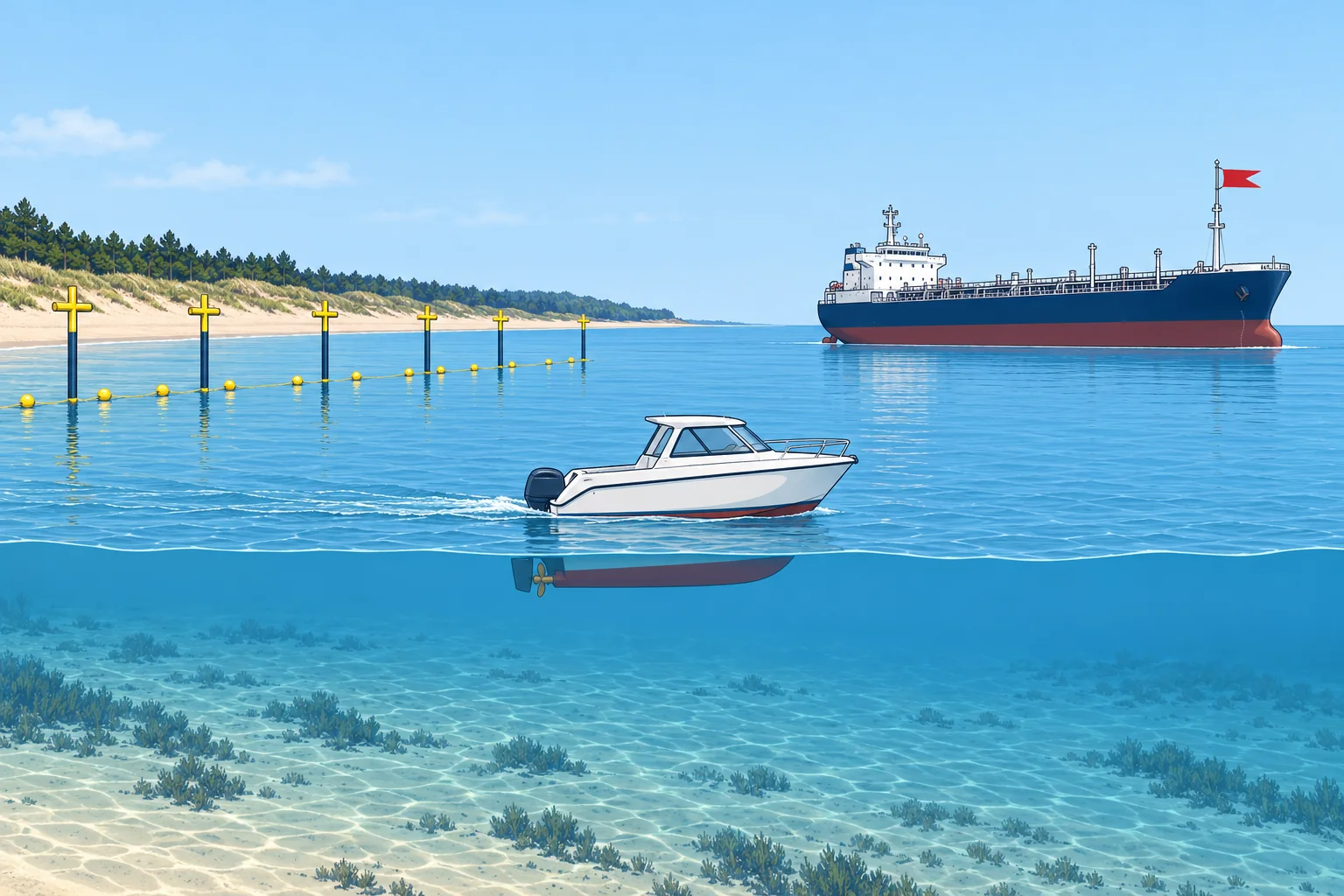
A blue quick-flashing light marks a public-service vessel carrying out police duties or a DGzRS (German Maritime Search and Rescue Service) vessel on a rescue operation. Certain dangerous-goods ships, including specified empty tankers, show a red all-round light at night and flag B (a red flag with a V-shaped notch) by day, also when anchored or moored. Customs vessels show three green all-round lights vertically at night and a square green flag by day.
Signboards
Red-bordered white boards show prohibitions or requirements; read the symbol. Prohibition signs usually add a red diagonal slash. Blue boards generally give information or indicate permission. A white board with a red border and a number is a speed limit in km/h through the water, or over the ground in the Kiel Canal. Poles with a yellow X-shaped cross mark bathing beaches.
Speed limits
Always keep a safe speed and slow down early near harbours, locks, ferries, dredgers and moored boats, so your wash (waves made by your boat) does no harm. Limits for named stretches are set by notice of the waterways authority and shown on signs and in the official notices. Outside the fairway, less than 500 m from the current shoreline in front of recognisable bathing activity, the limit is 8 km/h (4.3 kn) through the water (speed relative to the water, not the shore).
Water sports
In the fairway, water skiing, towing inflatables, jet skis, kitesurfing and windsurfing are banned except in areas announced or released by signs. Outside the fairway, water skiing, towing, jet skis and windsurfing are allowed except in announced zones. None of them at night or in restricted visibility. Skiers, riders and surfers keep clear of all vessels.
2Key data
- Attention signal
- Outside Kiel Canal: 1 long blast when traffic requires attention
- Danger and warning
- 2 groups, each 1 long + 4 short
- Stay-away signal
- Short-long ≥5/min; 2-second gaps; white all-round light if fitted
- Bathing, outside the fairway
- 8 km/h through water; <500 m from shoreline where people are bathing
- Dangerous-goods ship
- Red all-round light / flag B; includes specified empty tankers
3Key points
- 1
Outside the Kiel Canal: one long attention blast when traffic conditions require it.
- 2
Two groups of one long and four short blasts warn of danger; repeated short-long means stay away.
- 3
Blue quick-flashing: police duties or DGzRS rescue. Customs: three green all-round lights vertically / square green flag.
- 4
Outside fairways: 8 km/h <500 m from current shoreline in front of recognisable bathing. Yellow crosses mark bathing areas.
- 5
In fairways, water skiing, jet skiing and kitesurfing require an authorised area. Never take part at night.
4Frequent mistakes
Wrong: Short-long signals from a tanker are just a greeting.
Right: Short-long, repeated, is the stay-away signal: dangerous cargo is escaping, may escape or may explode. Keep clear and put out every flame on board.
Wrong: Speed limits are only in the harbour bylaws, not on the coast.
Right: The waterways authority announces limits for named seaway stretches and posts them on signs. Outside fairways, 8 km/h applies less than 500 m from the current shoreline in front of recognisable bathing activity.
5Practice case & exam keys
You motor at 15 knots off Travemünde, 300 m from the current shoreline, outside the fairway. You see bathing activity and a yellow-cross pole. A ferry behind you sounds two groups, each one long and four short blasts. What do you do?
Show the answer
Slow to 8 km/h (4.3 kn) or less through the water: outside the fairway, you are less than 500 m from the current shoreline in front of recognisable bathing activity. The yellow cross marks a bathing area. Two groups of one long and four short blasts are the danger and warning signal. Look around, identify the danger and keep clear of the ferry's track.
Exam keys
- Attention outside Kiel Canal: 1 long when traffic requires. Danger: two groups, each 1 long + 4 short. Stay-away: short-long ≥5/min, 2-second gaps; synchronised white all-round light if fitted.
- § 26(4): outside fairways, 8 km/h through the water less than 500 m from the current shoreline in front of recognisable bathing activity.
- Red all-round light / flag B: certain dangerous-goods ships, including specified empty tankers, also anchored or moored. Blue quick-flashing: police duties or DGzRS rescue. Customs: three green all-round lights vertically / square green flag.
- § 31: water skiing, jet skiing and kitesurfing in fairways require an officially authorised area; never at night.
Finish this unit
When you've read it, answer three questions. Get all three right to finish the unit; opening the page alone doesn't count.
My notes for this unit
No notes