

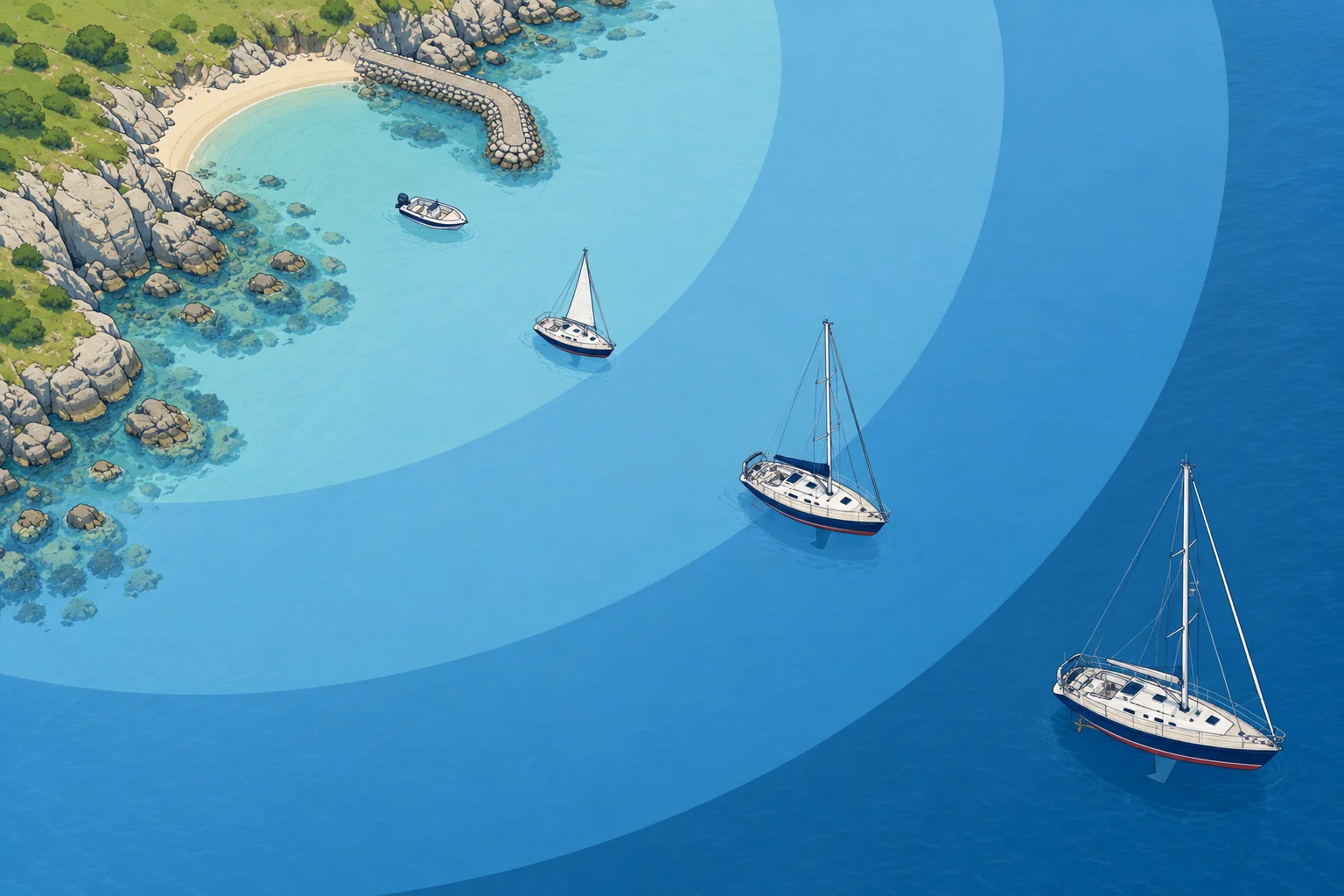
Division 240: four bands by distance from a shelter
1The lesson in plain words
France sets the gear you carry by how far you go from a shelter. There are four bands, and each one adds to the one before.
The rule book
French safety rules for pleasure craft at sea are in Division 240, part of the ship-safety regulation annexed to the ministerial order (arrêté) of 23 November 1987. It covers craft up to 24 m used privately or for training. The latest amendment is the order of 21 May 2026 (Journal officiel of 8 June 2026). The bigger equipment changes came with the order of 11 October 2024. Check that your guide is that recent.
Distance from a shelter
Measure distance in nautical miles (NM) from an abri (shelter): a place on the coast where your boat and crew can reach safety by anchoring, landing or berthing, and leave again without help. It must suit today's weather and sea, and your boat. A beach in an onshore swell is not a shelter that day.
The four bands
Basique: less than 2 NM from a shelter. Côtier: 2 to less than 6 NM. Semi-hauturier: 6 to less than 60 NM. Hauturier: 60 NM or more. Each band adds gear to the one before. In every band, the boat must also stay within her design limits and never carry more people or load than her builder's plate allows.
Tenders and paddle craft
A tender (annexe) stays within 300 m of shelter; its mother ship counts. Beach craft: normally 300 m by day. Qualifying kayaks and rowing boats: 2 NM by day, with safety kit and reboarding arrangements. For 6 NM: extra kit, at least two craft together and an accessible floating waterproof marine radio (VHF) per pair. One craft alone requires association membership for this activity and that VHF. Organised activities have exemptions.
Boards and jet skis
Qualifying paddleboards: 2 NM by day; beach-class boards: 300 m. Windsurfers, kites, wingfoils and motorboards: 2 NM by day. A jet ski (VNM, véhicule nautique à moteur) is used by day only. A one-seat jet ski may go 2 NM from a shelter; one built for two or more, 6 NM. Riders always wear an EIF (level 50 up to 2 NM, 100 beyond) and neoprene at least 2 mm thick.
Visiting boats
Visiting foreign-owned boats normally follow their flag state's equipment rules. In French territorial waters, boats owned by people principally resident in France, or companies based there, must meet French safety-equipment and permit rules regardless of flag. French local navigation rules apply to everyone. RIPAM is the French name for the international collision regulations (COLREG).
2Key data
- Basique
- Less than 2 NM from a shelter
- Côtier
- 2 NM to less than 6 NM
- Semi-hauturier
- 6 NM to less than 60 NM
- Hauturier
- 60 NM or more from a shelter
- Jet ski (VNM)
- Day only; 1 seat: 2 NM; 2 or more seats: 6 NM
- Tender
- Within 300 m of a shelter; the mother ship counts as one
3Key points
- 1
Division 240 sets the gear by distance from a shelter, not from the coast.
- 2
Bands: basique < 2 NM; côtier 2 to < 6 NM; semi-hauturier 6 to < 60 NM; hauturier ≥ 60 NM.
- 3
Each band includes all the gear of the band before it.
- 4
A shelter must be usable without help in the weather of the moment.
- 5
Jet skis: day only; 2 NM for one seat, 6 NM for two or more.
4Frequent mistakes
Wrong: Beyond 6 NM there is just one offshore list.
Right: There are two offshore bands: semi-hauturier from 6 NM to less than 60 NM, and hauturier from 60 NM.
Wrong: Any beach counts as a shelter.
Right: A shelter is a place where you can get safe and leave again without help in today's conditions. An exposed beach in swell does not count.
Wrong: A tender may follow the yacht anywhere, because the yacht is a shelter.
Right: A tender may go only 300 m from a shelter. Stay within 300 m of the mother ship or a usable coastal shelter.
5Practice case & exam keys
The nearby beach is exposed to breaking surf today. Your crossing reaches 4 NM from the nearest usable harbour or other shelter. A friend says the beach keeps you in the basique band. Which band applies, and why?
Show the answer
Côtier applies. The beach is unusable in today's conditions, so it cannot count as an abri. Your maximum distance from a usable shelter is 4 NM: at least 2 NM but below 6 NM. Each band includes the previous band's requirements.
Exam keys
- Division 240: basique < 2 NM; côtier 2 to < 6 NM; semi-hauturier 6 to < 60 NM; hauturier ≥ 60 NM from shelter.
- Shelter (abri): reach safety and leave again without help, in the conditions of the moment.
- Tenders: within 300 m of a shelter; the mother ship counts as one. Beach craft normally 300 m, by day.
- Jet ski: day only; 2 NM (one seat) or 6 NM (two or more); EIF and neoprene ≥ 2 mm always.
Finish this unit
When you've read it, answer three questions. Get all three right to finish the unit; opening the page alone doesn't count.
My notes for this unit
No notes