

Papers, VHF, alcohol and the switch to sea rules
1The lesson in plain words
Carry the required papers, follow VHF rules if fitted, keep within the alcohol limit, and check which rules apply to your waters.
Papers
Carry your required vaarbewijs (licence) and fast-boat RDW certificate. With VHF, also carry the original operator certificate and the radio registration document; the latter may be a PDF. Carry an up-to-date BPR, accessible at any time on paper or electronically; small open boats and large ships without crew accommodation are exempt. Show required papers on request.
VHF is optional, rules are not
Under the BPR, a marifoon (VHF radio) is normally optional on small craft; it is required for radar use or AIS (Automatic Identification System) transmission underway. If fitted, keep it on and listen on the channel for your waterway. Use the block channel, the assigned channel for a controlled section, where one applies. Send safety messages when needed. Inland VHF must transmit an ATIS identification code, and someone aboard needs an operator certificate.
Gear
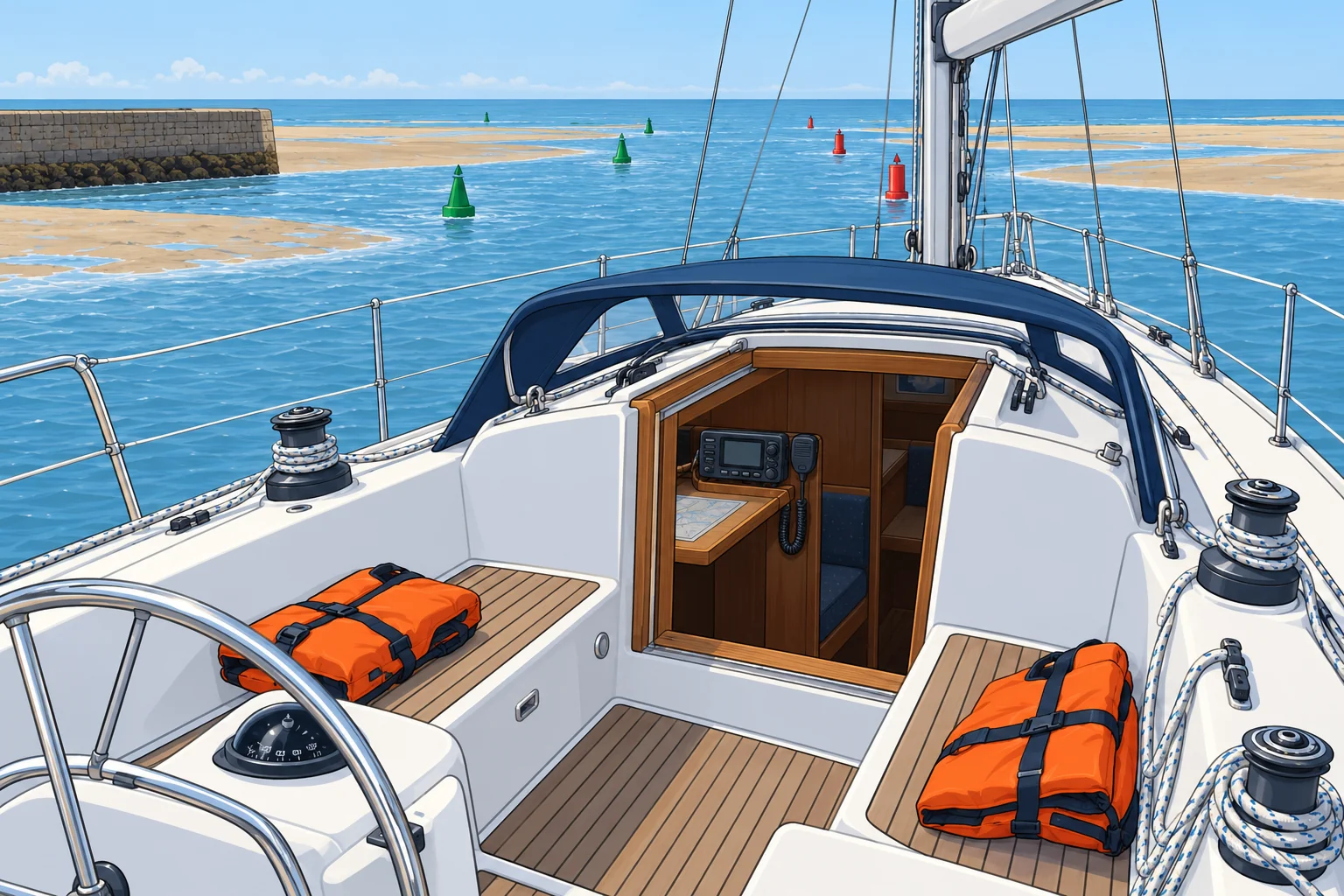
The BPR has no general safety-kit list for private small craft; fast motorboats have specific requirements. The lifejacket-wearing duty in BPR 1.08 concerns commercial transport. For safety, carry a lifejacket for each person, an extinguisher, an anchor and a suitable paddle. Your boat must also show the navigation lights required by the BPR.
Alcohol
You may not steer with more than 0.5 ‰ of alcohol in your blood: 0.5 grams per litre. This applies to pleasure and commercial boating. The water police may ask you for a breath test, and refusing is an offence. Steering under the influence brings a fine and can cost you your licence.
Out to sea
Beyond the line where Dutch inland waters end, the COLREG (International Regulations for Preventing Collisions at Sea) apply, together with the Scheepvaartreglement territoriale zee (territorial sea shipping regulations). The Westerschelde and the Ems estuary have their own regulations. The Waddenzee and IJsselmeer are inland waters under the BPR. Flags, the ICC and EU VAT are in Law: foreign waters.
2Key data
- VHF on a small craft
- Optional unless using radar or transmitting AIS underway
- If a VHF is carried
- Listen on the channel; ATIS code; operator certificate
- Alcohol limit
- 0.5 ‰, pleasure and commercial alike
- BPR copy on board
- Exempt: small open boats; large ships without crew accommodation
- At sea
- COLREG + Scheepvaartreglement territoriale zee
3Key points
- 1
Carry required papers. BPR copy: small open boats and large ships without crew accommodation are exempt.
- 2
Under the BPR, VHF is required for radar or AIS transmission underway; if fitted, listen and use ATIS.
- 3
Carry suitable safety equipment even without a general legal kit list; required navigation lights still apply.
- 4
Alcohol limit 0.5 ‰ for pleasure and commercial boating; refusing a breath test is an offence.
- 5
At sea: COLREG plus the territorial sea regulations; the Waddenzee stays under the BPR.
4Frequent mistakes
Wrong: My VHF is on board, but I keep it off to save the battery.
Right: A small craft with a VHF must listen on the channel for its stretch, including block channels. Switch it on and listen.
Wrong: The Waddenzee is sea, so the COLREG apply there.
Right: The Waddenzee is a Dutch inland water under the BPR, although it is tidal and exposed. The COLREG start beyond the inland boundary.
5Practice case & exam keys
Your 10 m yacht has a fixed VHF. You cross the Waddenzee from Harlingen to the North Sea, then enter the Westerschelde at Vlissingen. A friend says the radio can stay off because VHF is optional for yachts. Which rules apply, and is your friend right?
Show the answer
Your friend is wrong. Under the BPR, VHF is optional unless using radar or transmitting AIS underway. Once fitted, listen on the channel for each stretch and use ATIS on inland channels. The Waddenzee is under the BPR. Beyond the inland boundary, COLREG and the territorial sea regulations apply. The Westerschelde has its own regulations and VHF duties: check them before you go.
Exam keys
- BPR 1.10–1.11: required papers; BPR copy except on small open boats and large ships without crew accommodation.
- BPR 4.05/4.07: VHF for radar or AIS transmission underway; if fitted, listen on waterway/block channels; RAINWAT (ATIS).
- Alcohol: 0.5 ‰ for all skippers; refusal of a breath test is an offence.
- At sea: COLREG + Scheepvaartreglement territoriale zee; Westerschelde and Ems estuary own rules.
Finish this unit
When you've read it, answer three questions. Get all three right to finish the unit; opening the page alone doesn't count.
My notes for this unit
No notes