

Security levels 1, 2 and 3
1The lesson in plain words
The security level tells everyone how high the threat is. When it rises, the ship tightens its guard, and you will notice the difference.
Three levels
The ISPS Code uses three security levels. Level 1 (normal) is the level at which the ship normally operates; minimum security measures are kept at all times. Level 2 (heightened) applies while there is a higher risk of a security incident; extra measures are kept for that period. Level 3 (exceptional) applies for a limited time when an incident is probable or about to happen, even if the exact target cannot be named.
Who sets them
The Contracting Government sets the level. The flag state sets it for its ships, and a port state sets it for its port facilities and for ships in its waters. A ship must never operate at a lower level than the port facility it is visiting. The ship is told through the company, the port or the authorities, and the SSO tells the crew.
Level 1 on board
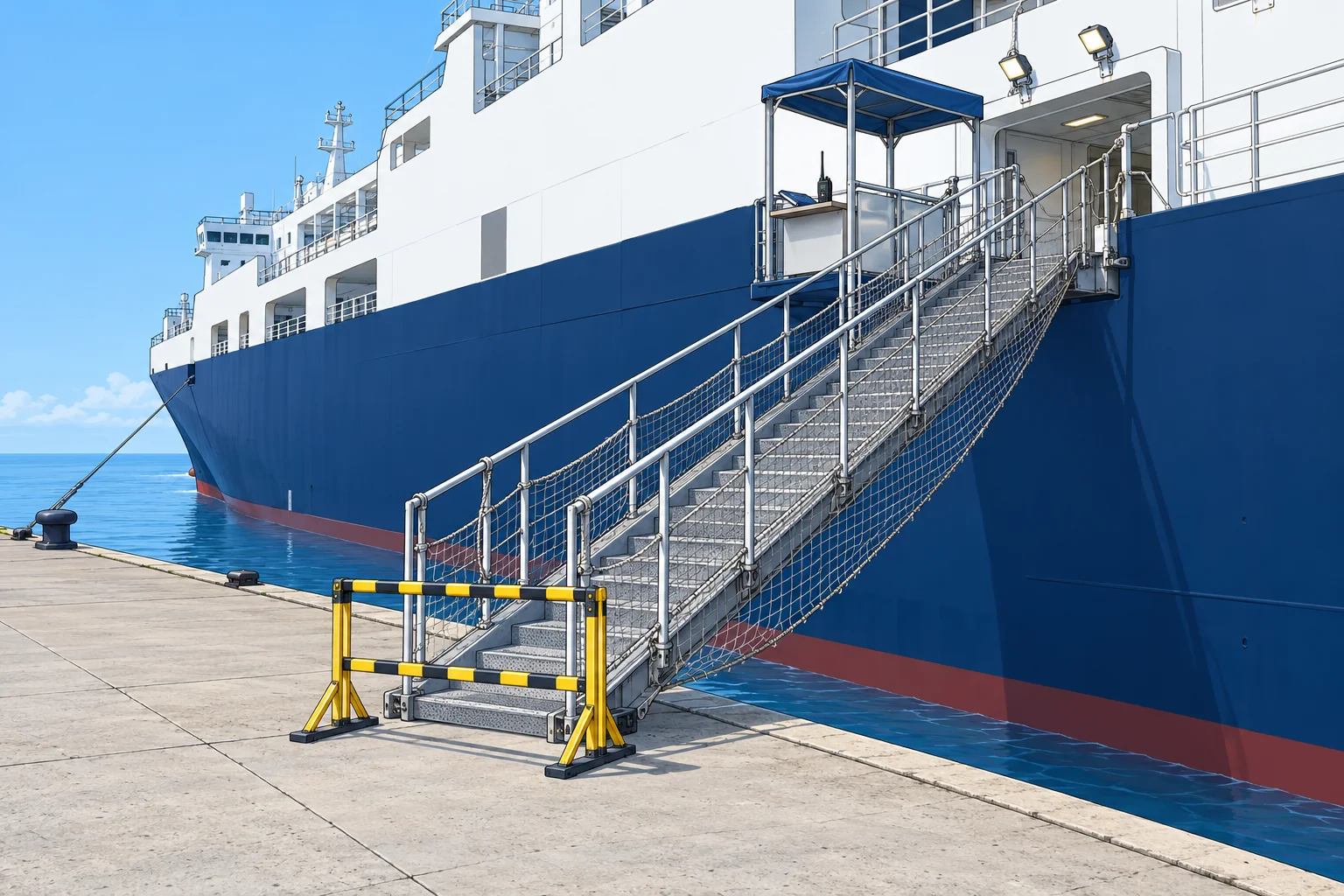
At level 1 the gangway is watched, everyone boarding is identified and their reason checked, restricted areas are locked or watched, deck areas and the ship's surroundings are monitored, and stores and baggage are checked. You will see sign-in logs, passes and locked doors.
Level 2 and 3
At level 2, you may see extra patrols, fewer access points and more checks or escorts. Your watches may change. At level 3, listen for urgent instructions; boarding, cargo work or shore leave may stop. Follow the SSO's directions and instructions from the responding authorities. Your ship's plan sets the arrangements.
2Key data
- Level 1
- Normal: minimum measures at all times
- Level 2
- Heightened: extra measures while the risk is higher
- Level 3
- Exceptional: incident probable or imminent, limited time
- Set by
- The Contracting Government (flag or port state)
- Ship vs port
- Ship never at a lower level than the port facility
3Key points
- 1
Level 1 normal, level 2 heightened, level 3 exceptional.
- 2
The Contracting Government sets the level: flag state for its ships, port state for its ports.
- 3
A ship must not be at a lower level than the port facility it is at.
- 4
At higher levels, you may see extra patrols, fewer access points, more checks or escorts; follow the SSO.
- 5
At level 3, follow the instructions of those responding to the threat.
4Frequent mistakes
Wrong: The master chooses the security level for the ship.
Right: The Contracting Government sets it. The master and SSO may apply stricter measures, never weaker ones.
Wrong: Level 3 is the normal level in a dangerous port.
Right: Level 3 is exceptional and for a limited time, when an incident is probable or imminent.
5Practice case & exam keys
Your ship is at level 3. The port facility is at level 2. A crewmate says you can now return to level 2 and reopen a closed access point. What should you do?
Show the answer
Do not change the arrangements yourself. The port level is a minimum, not an instruction to lower the ship's level. Continue the measures ordered for the ship and refer the suggestion to the SSO or officer of the watch. Follow their instructions.
Exam keys
- Level 1 normal, level 2 heightened, level 3 exceptional (probable or imminent incident).
- Set by the Contracting Government; the ship is never below the port facility's level.
- Extra measures may include patrols, fewer access points, checks or escorts; the approved plan sets the arrangements.
- At level 3, follow the instructions of those responding.
Finish this unit
When you've read it, answer three questions. Get all three right to finish the unit; opening the page alone doesn't count.
My notes for this unit
No notes