

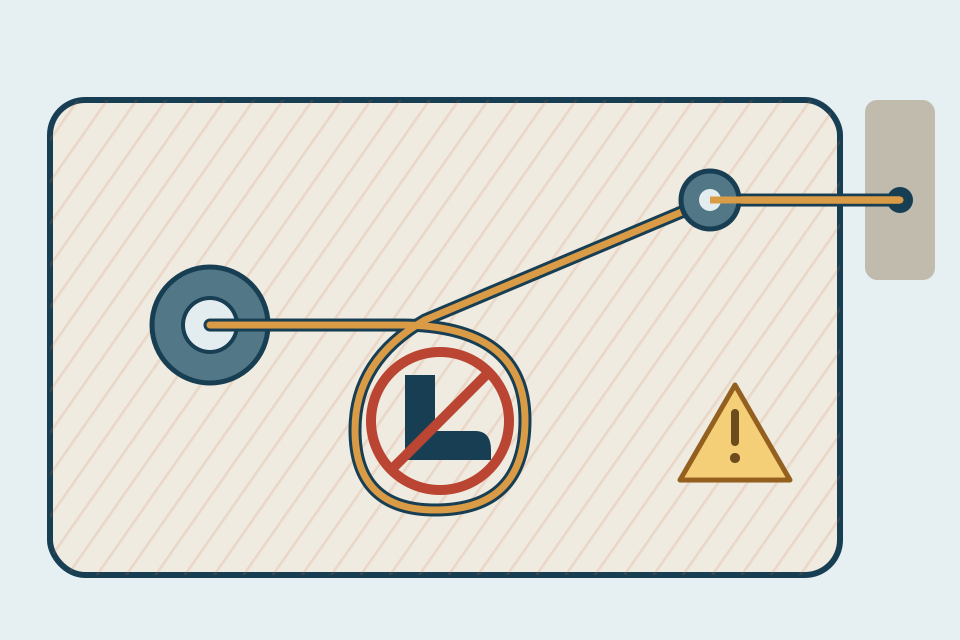
Keep people out of the loaded line's path
1The lesson in plain words
A mooring line under tension (pulling force) stores energy. Keep clear of bights and possible recoil, and report trouble before trying to fix it.
Stay out of a bight
A bight is a curved or looped section of rope. If the line tightens, it can trap or drag anyone standing inside it. Keep feet and hands clear of the rope and its fittings.
Recoil is not one painted patch
If a loaded line breaks or suddenly releases, it can whip back. This recoil is called snap-back. A fairlead is a fitting that guides the rope; it can change its lead and recoil path. Painted areas do not define every danger: assess the whole working area.
Stop and reduce the load
Report a snag, excessive strain or an unsafe position immediately. The person directing the operation must arrange a controlled reduction of load. Do not step over, free by hand or casually cast off a heavily loaded line.
2Key points
- 1
Stay out of rope bights.
- 2
A changed lead can change the recoil path.
- 3
Report abnormal strain and arrange a controlled response.
3Frequent mistakes
Wrong: Standing outside the painted area guarantees safety.
Right: A line's lead and fittings change where it may recoil.
Wrong: A snagged, loaded rope should be pulled free by hand.
Right: Report the snag and have the load reduced under the agreed plan.
4Practice case & exam keys
A line snags at a fitting while the boat moves away. Someone steps towards the loaded bight to clear it.
Show the answer
Call the stop signal and warn the person to stay clear. Tell the helm or person directing the operation about the snag so the load can be reduced in a controlled way.
Exam keys
- Never stand in a bight.
- No fixed painted zone guarantees freedom from recoil.
- Do not clear a snag while the line remains loaded.
Finish this unit
When you've read it, match the terms, then answer three questions. Get them all right to finish the unit; opening the page alone doesn't count.
My notes for this unit
No notes