

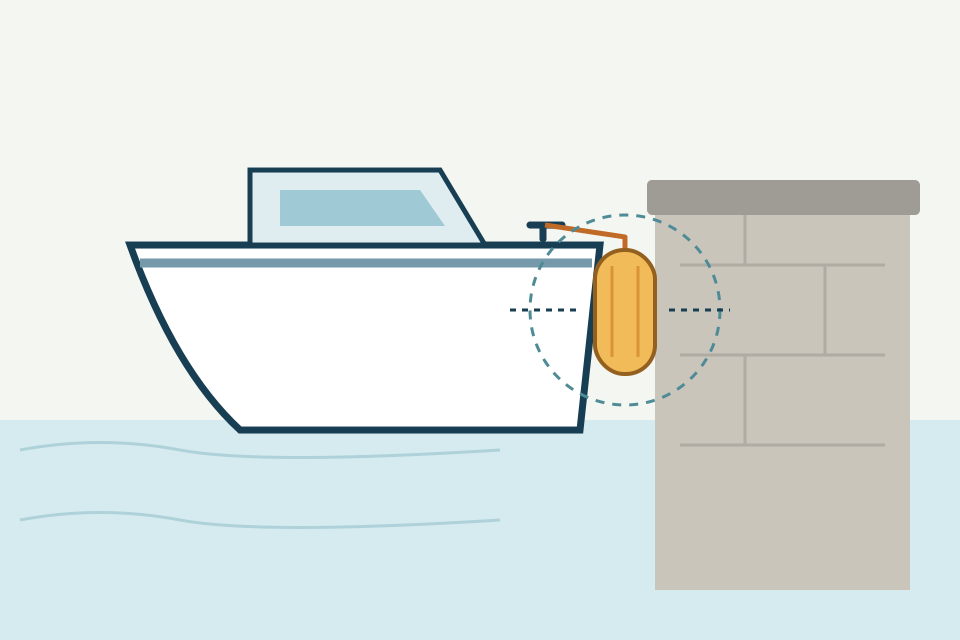
Prepare the boat and crew before the approach
1The lesson in plain words
Prepare lines, fenders and clear roles while there is still room and time to stop and rethink the approach.
Read the berth
Check space, water movement and wind before committing. Conditions can differ from departure. Agree the approach and an escape option with the helm—the person steering. A difficult berth may need another plan or assistance.
Rig before arrival
Prepare untangled lines and fenders—protective cushions between boat and berth. Match fender height to the contact surface and keep a movable fender ready. Never use hands or feet as a fender.
Brief the crew
Wear suitable footwear and lifejackets. Name who handles each line, where it goes and how instructions will be repeated. Agree a clear stop signal. Tell the helm if a line is not ready or someone is in an unsafe position.
Once alongside
A fixed quay (a solid dock attached to the shore) stays at one height while the boat rises and falls with the tide. Arrange enough line length for that movement without excessive slack. Recheck fender contact height. Look for chafe (wear from rubbing), especially frayed or flattened strands at fittings. Report problems and have the person directing the operation arrange adjustments safely.
2Key points
- 1
Prepare before the helm needs full attention on manoeuvring.
- 2
Fender height must match the contact surface.
- 3
An unsafe crew position is a reason to stop.
3Frequent mistakes
Wrong: The usual fender height suits every berth.
Right: Check the actual contact height and adjust before the approach.
Wrong: The crew will work out their jobs on arrival.
Right: Brief roles, line leads and communication beforehand.
4Practice case & exam keys
You are approaching a higher quay than usual. Your fenders hang below its contact edge and a crew member offers to hold the boat off by hand.
Show the answer
Do not use the person's hand as a fender. Tell the helm, stop or abandon the approach if necessary, and reposition the fenders before trying again.
Exam keys
- Conditions and escape option before commitment.
- Lines and fenders ready before the approach.
- Clear roles and a shared stop signal.
Finish this unit
When you've read it, match the terms, then answer three questions. Get them all right to finish the unit; opening the page alone doesn't count.
My notes for this unit
No notes