

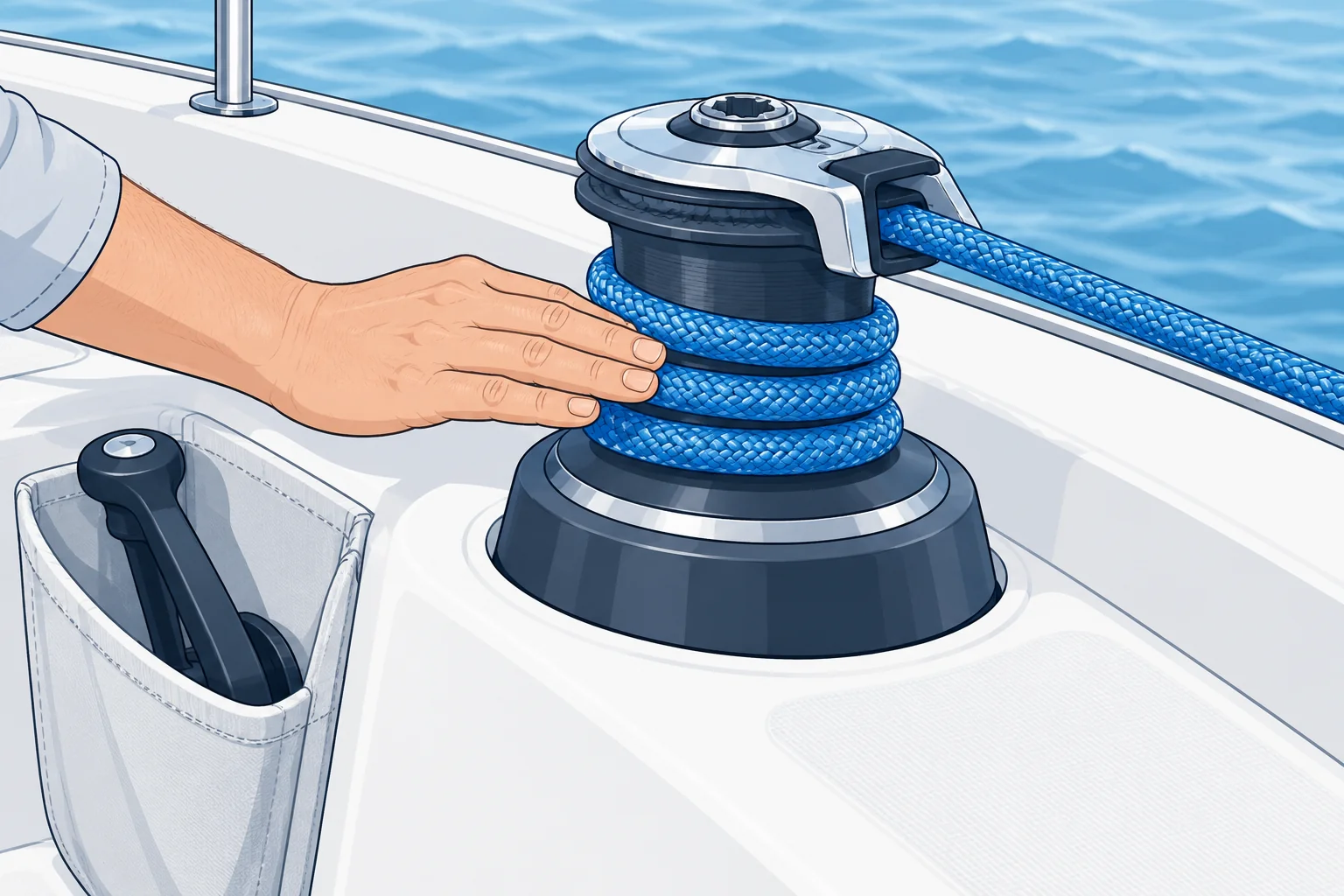
Using a winch safely
1The lesson in plain words
A winch multiplies your pull many times. Put the turns on clockwise, keep your fingers clear, and know how to ease and clear a riding turn.
How it works
A winch is a drum turned by a handle or a motor. The rope goes round it; friction grips it. Almost all yacht winches turn clockwise seen from above, so turns go on clockwise. A ratchet stops the drum turning back. On a two-speed winch, turning the handle one way gives fast speed; turning it the other way gives more power.
Turns and tailing
Lead the line onto the bottom of the drum. Stack two or three clockwise turns upwards without crossing while the line is light; add turns as the load grows, often three or four. A tailer controls the free end while someone winds. A self-tailing winch grips the tail in grooved top jaws.
Easing
To ease a line is to let it out under control. Remove the handle. Keep enough turns on the drum to control the load. Hold the tail securely before releasing it from the self-tailing jaws or cleat. Feed the tail out slowly, letting the turns slip around the drum: this is surging. Keep fingers clear. Never lift loaded turns off the drum.
Riding turn
A riding turn happens when a loaded turn crosses another and jams. Stop winching. Ask the skipper to unload the sail safely, or transfer the load to a suitable second winch. Use a spare line attached to the loaded sheet with a rolling hitch, a knot that grips another line (see Knots). Clear the jam only when its turns are slack. Reload the original winch and transfer the load back before releasing the spare line.
Safety
Remove the winch handle after use: a spinning or loose handle injures. Keep fingers and hair away from the drum and the point where the line comes on. On an electric winch, keep watching the sail and stop the motor at once if anything jams or a person is caught.
2Step by step
Winching in a sheet
- 1
Lead the sheet onto the bottom of the drum. While it is light, add two or three clockwise turns, stacking upwards.
Few turns let you pull in slack fast by hand.
- 2
Pull in by hand as far as you can, keeping your hands clear of the drum.
Hand pulling is faster than winding.
- 3
Add turns as the load grows, then put the tail in the self-tailer or give it to a tailer.
More turns stop slipping under load.
- 4
Fit the handle and wind. On a two-speed winch, use fast gear first, then power gear as the load grows.
Use the available gearing to match the load.
- 5
Secure the tail on a cleat if the winch is not self-tailing.
Securing the tail holds the sheet without someone tailing it.
- 6
Take the handle out and stow it.
A loose handle can fall overboard or hurt someone.
3Key data
- Direction
- Turns go on clockwise, on almost all yacht winches
- Under load
- Usually three or four turns
- Riding turn
- Take the load off; rolling hitch to another winch
4Key points
- 1
Turns go on clockwise; add turns as the load grows.
- 2
Control the tail and keep enough turns on the drum when easing.
- 3
Clear a riding turn by taking the load off, not by winching harder.
- 4
Remove the handle; stop an electric winch at once if anything jams.
5Frequent mistakes
Wrong: Winch harder to free a riding turn.
Right: That tightens it. Take the load off the line first.
Wrong: Leave the handle in the winch for the next tack.
Right: A loose handle can spin, fall or break fingers. Stow it after use.
Wrong: Put five turns on before pulling in the slack.
Right: Start with two or three so slack comes in fast; add turns as it loads up.
6Practice case & exam keys
The sheet of a headsail, the sail ahead of the mast, jams on the winch with a riding turn. A shoal, an area of shallow water, lies ahead. You have a spare line and a second suitable winch.
Show the answer
Tell the skipper immediately: staying clear of the shoal comes first. The skipper must choose a safe course before you attempt repairs. Once safe, attach a spare line to the loaded sheet on the sail side of the jam with a rolling hitch. Take the load on another suitable winch until the jammed turns are slack. Clear and reload the original winch. Ease the spare line slowly to transfer the load back before removing it. Keep fingers clear.
Exam keys
- Clockwise turns; three or four under load.
- Control the tail and keep enough turns on the drum when easing.
- Riding turn: remove the load, rolling hitch to another winch.
- Remove the handle after use.
Finish this unit
When you've read it, match the terms, then answer three questions. Get them all right to finish the unit; opening the page alone doesn't count.
My notes for this unit
No notes