

Downwind safety: preventer, MOB and night
1The lesson in plain words
Downwind sailing hides the wind's strength. Rig a preventer, know how to depower the spinnaker fast for a man overboard, and be conservative at night.
The preventer downwind
On long downwind legs, rig a preventer using suitable boom and deck strongpoints: from the boom end, forward through a block and back to the cockpit. It restrains the boom; it cannot stop the wind crossing the stern and backing the main. Keep steering actively. The line must be releasable under load. Rig both sides if needed, but release the working preventer before gybing.
Hidden wind
Downwind, the apparent wind feels much lighter than the true wind. A spinnaker set in what feels like 12 knots may be in 20 true. Read the true wind on your instruments or estimate it from the sea, and remember you will feel the full force if you round up, broach or turn to recover a person.
Man overboard
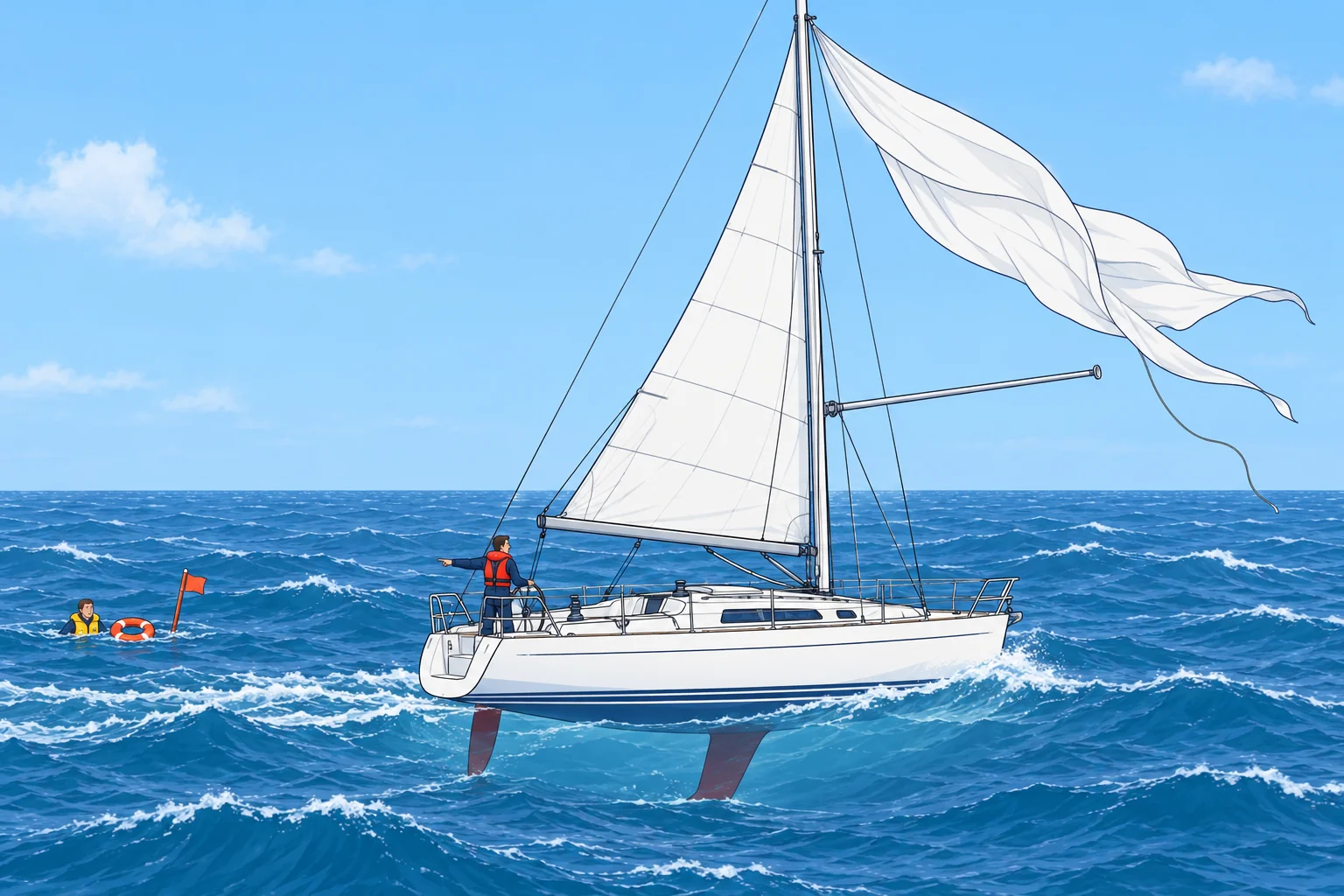
Throw flotation, mark the position with the MOB button and keep someone pointing. Depower immediately. Where fitted, fire the guy: trip its windward-clew shackle using its pre-rigged release from a safe position, with any lazy sheet free to run. Do not open the pole jaw or reach for loaded fittings. Otherwise use the boat's briefed depowering method. Lower and gather the sail under control, then follow your practised man-overboard recovery plan.
At night and short-handed
At night, the spinnaker's trim and the sea are hard to see. Many cruising crews drop the spinnaker at dusk or keep a smaller sail. Use harnesses and tethers on deck, and keep the sheets on winches with a crew member ready. If you doubt you can control it, drop early.
2Key data
- Preventer
- Boom end → bow block → cockpit; releasable under load
- Apparent vs true downwind
- Apparent can be several knots lighter than true
- MOB under symmetric
- Use the briefed windward-corner quick-release, where fitted
- Night
- Many cruisers drop the spinnaker at dusk
3Key points
- 1
Rig a preventer on long downwind legs; release it before gybing.
- 2
Downwind, the true wind is stronger than it feels: check instruments or the sea.
- 3
MOB under spinnaker: lifebuoy, MOB button, pointer, then depower the spinnaker at once.
- 4
Symmetric: use the briefed windward-corner quick-release, where fitted; any lazy sheet must be free to run.
- 5
At night or short-handed, carry less sail; when in doubt, drop it.
4Frequent mistakes
Wrong: With a preventer rigged, you can gybe without touching it.
Right: A preventer stops the boom crossing. Release it before every gybe.
Wrong: Recover a person overboard with the spinnaker still up.
Right: A powered spinnaker restricts safe manoeuvring. Depower and gather it promptly, then follow your practised recovery plan.
5Practice case & exam keys
At night under symmetric spinnaker, someone falls overboard. One crew member wants to turn back with the sail drawing; another reaches for the loaded pole jaw. Your rig has a remote guy-clew release. What do you do?
Show the answer
Shout 'Man overboard', throw flotation, mark the position and assign a pointer. Depower immediately using the boat's briefed method. If fitted, trip the guy's windward-clew shackle with its pre-rigged release from a safe position; any lazy sheet must be free to run. Do not open the pole jaw or reach for loaded fittings. Lower and gather the sail under control. Once the sail and lines are secured, continue your practised MOB recovery.
Exam keys
- Preventer from the boom end, forward, back to the cockpit; release before gybing.
- Downwind true wind is stronger than it feels.
- MOB: depower with the briefed method; windward-clew quick-release if fitted, lazy sheet free; lower and gather.
- At night: less sail, harnesses on, drop early.
Finish this unit
When you've read it, answer three questions. Get all three right to finish the unit; opening the page alone doesn't count.
My notes for this unit
No notes