Portugal
- Who issues it
- Direção-Geral de Recursos Naturais, Segurança e Serviços Marítimos (DGRM) [Directorate-General for Natural Resources, Safety and Maritime Services].
- Minimum age
- 8 years
- Buoyage
- IALA region A
- Collision rules
- Regulamento Internacional para Evitar Abalroamentos no Mar
Do you need a licence?
Yes, at sea or inland you need a suitable licence or to be a legally qualified registered seafarer.
You don't need one for:
- a sailboard
- a beach craft without motor or sail within 300 metres of shore
There is no general power or length exemption. Minimum ages are 8 for junior, 16 for Marinheiro and 18 for other tiers.
Marinheiro Júnior · Junior boat handler
From 8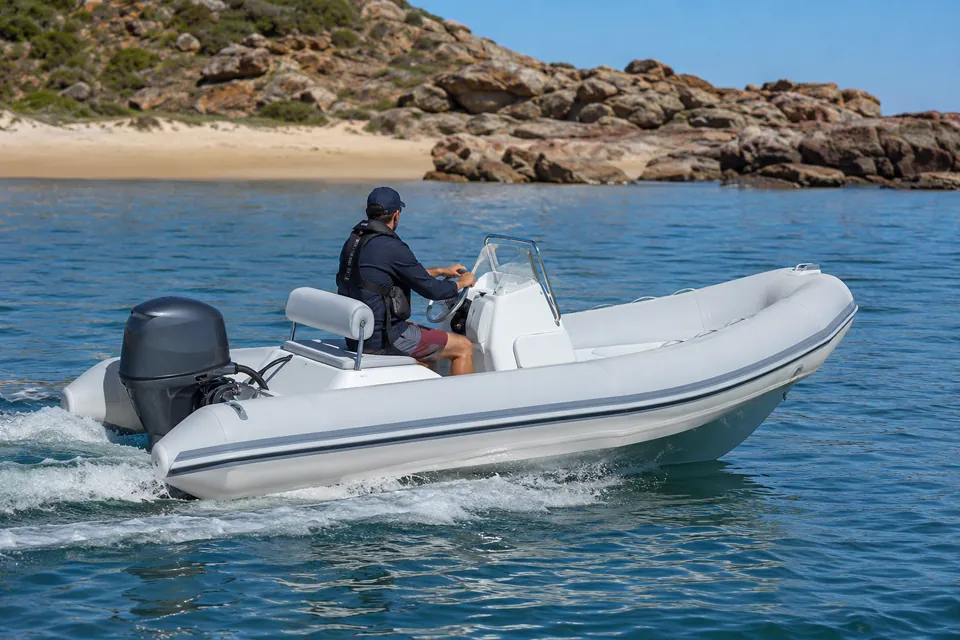
- What it lets you do
- You can take a boat up to 6 metres and 4.5 kW out in daylight only. Stay within 1 nautical mile of the low-water line and 3 nautical miles of a shelter port.
- How you get it
- You must pass both theory and practical assessments. You need more than 60% overall, at least 75% in collision rules and navigation or chartwork, and at least 60% in radio and safety or emergencies where those are tested.
- Where to study
- Study it in Academy
Marinheiro · Boat handler
From 16- What it lets you do
- You can operate in daylight, up to 3 nautical miles offshore and 10 nautical miles from shelter. From 16 to 18, you are limited to 6 metres and 22.5 kW, though jet skis and motor boards may be any power; over 18, you may use a boat up to 12 metres with its certified power.
- How you get it
- Both the theory and practical assessments must be passed. You need more than 60% overall, at least 75% in collision rules and navigation or chartwork, and at least 60% in radio and safety or emergencies where tested.
- Where to study
- Read the guideFree mock exam · 30 questionsStudy it in Academy
Patrão Local · Local skipper
From 18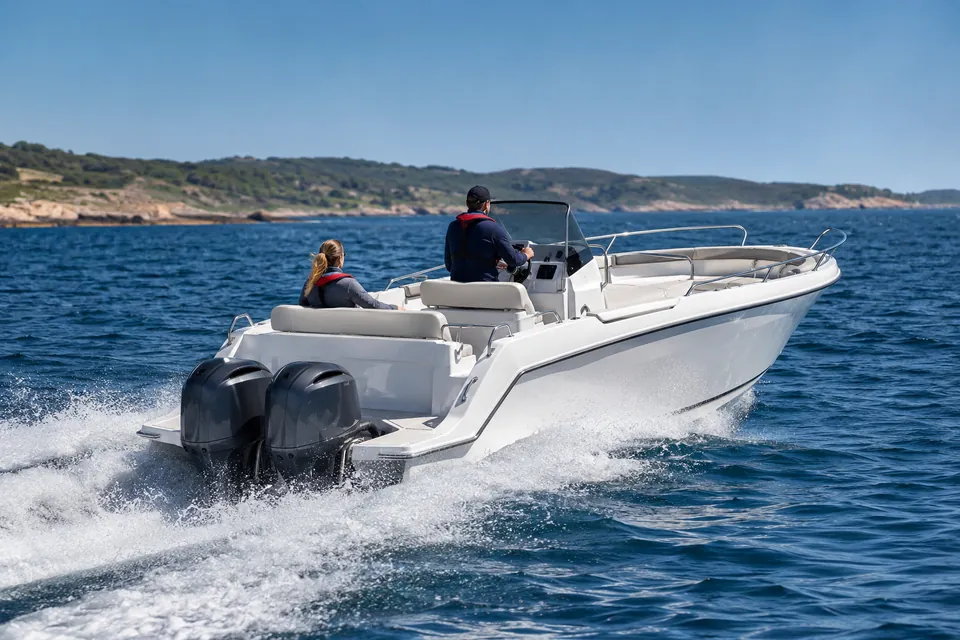
- What it lets you do
- You normally stay in sight of land, up to 6 nautical miles offshore and 25 nautical miles from a shelter port. Authorised inter-island exceptions apply in the Azores and Madeira.
- How you get it
- You need to pass theory and practical assessments. The required marks are more than 60% overall, at least 75% in collision rules and navigation or chartwork, and at least 60% in radio and safety or emergencies where tested.
- Where to study
- Read the guideFree mock exam · 30 questionsStudy it in Academy
Patrão de Costa · Coastal skipper
From 18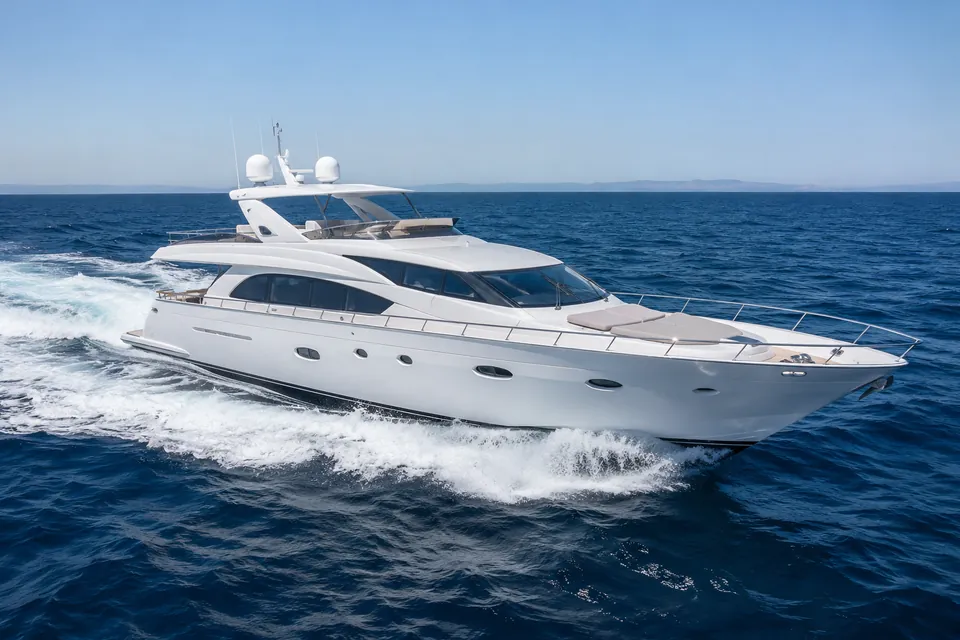
- What it lets you do
- You normally go up to 40 nautical miles offshore. Authorised inter-island exceptions apply in the Azores and Madeira, and the boat's own limits still apply.
- How you get it
- You must pass both theory and practical assessments. You need more than 60% overall, at least 75% in collision rules and navigation or chartwork, and at least 60% in radio and safety or emergencies where these are tested.
- Where to study
- Read the guideStudy it in Academy
Patrão de Alto-Mar · Ocean skipper
From 18- What it lets you do
- You can use recreational craft without a geographical licence limit. The boat's own certified limits still apply.
- How you get it
- You need to pass theory and practical assessments. You must score more than 60% overall, at least 75% in collision rules and navigation or chartwork, and at least 60% in radio and safety or emergencies where tested.
- Where to study
- Study it in Academy
Professional deck titles
Marinheiro
STCW II/4; II/5- What it lets you do
- You can gain separate qualifications for deck watchkeeping under II/4, or for marítimo qualificado do convés, also known as able seafarer deck, under II/5.
- Where to study
- Study it in Academy
Mestre local / Mestre costeiro
STCW II/3- What it lets you do
- With the relevant certificate, as mestre local you can be watch officer on ships under 500 GT. As mestre costeiro, you can be master on ships under 500 GT on region-limited coastal voyages.
- Where to study
- Study it in Academy
Mestre do alto mar
STCW II/1; II/3- What it lets you do
- With the relevant certificate, you can be watch officer on ships over 500 GT or master on ships under 500 GT. Your voyages are limited to coastal voyages.
- Where to study
- Study it in Academy
Piloto de 2.ª classe
STCW II/1- What it lets you do
- With the relevant certificate, you can be a navigation watch officer. To be chief mate on ships under 3,000 GT, you need its own certificate.
- Where to study
- Study it in Academy
Piloto de 1.ª classe
STCW II/2- What it lets you do
- With the relevant certificate, you can be chief mate or master. To command ships of 3,000 GT or more, you need 12 months as chief mate on such ships.
- Where to study
- Study it in Academy
Capitão da marinha mercante
STCW II/2- What it lets you do
- With the corresponding certificate, you can be master of ships of any tonnage.
- Where to study
- Study it in Academy
Radio certificates
Certificado de operador de curto alcance (Short Range) no GMDSS (navios não-SOLAS)
SRC- What it lets you do
- You can operate GMDSS radio on non-SOLAS vessels that work exclusively in sea area A1.
- Where to study
- Study it in Academy
Certificado de operador de longo alcance (Long Range) no GMDSS (navios não-SOLAS)
LRC- What it lets you do
- You can operate GMDSS radio on non-SOLAS vessels in any sea area.
- Where to study
- Study it in Academy
Certificado restrito de operador no GMDSS
ROC- What it lets you do
- You can operate GMDSS radio on ships that work exclusively in sea area A1.
- Where to study
- Study it in Academy
Certificado geral de operador no GMDSS
GOC- What it lets you do
- You can operate GMDSS radio on ships in any sea area.
- Where to study
- Study it in Academy
Certificado de operador de rádio no GMDSS, na área marítima A1 nacional
- What it lets you do
- You can operate in Portuguese A1 waters, communicating only with Portuguese coast stations.
- Where to study
- Study it in Academy
Certificado de operador de rádio no GMDSS, nas áreas marítimas A1 e A2 nacionais
- What it lets you do
- You can operate in Portuguese A1 and A2 waters, communicating only with Portuguese coast stations.
- Where to study
- Study it in Academy
Certificado de operador radiotelefonista
- What it lets you do
- You can use radiotelephony on vessels that use neither GMDSS frequencies nor GMDSS techniques.
- Where to study
- Study it in Academy
Certificado de manutenção a bordo do equipamento no GMDSS
- What it lets you do
- You can carry out onboard GMDSS radio maintenance, subject to statutory conditions.
- Where to study
- Study it in Academy
Certificado de manutenção elementar a bordo do equipamento no GMDSS
- What it lets you do
- You can carry out basic onboard GMDSS radio maintenance, subject to statutory conditions.
- Where to study
- Study it in Academy
Ready to study for it?
The Academy is free with an account: lessons for every topic, timed mocks marked like the real exam, and your progress saved.
Official sources: DGRM — Navegadores de Recreio · Diário da República — Decreto-Lei n.º 93/2018, consolidated recreational boating regime, Articles 2, 8, 30, 35–39, 44 and 63 · Diário da República — Portaria n.º 288/2000, recreational examination syllabus and assessment criteria (in force) · Diário da República — Portaria n.º 235/2020, consolidated seafarer categories and duties, including the July 2026 amendment · Diário da República — Portaria n.º 468/2025/1, professional and radio certificates · Diário da República — Portaria n.º 177/2016, national maritime buoyage regulations