
Decide
Four situations at sea. Decide first, then read why.
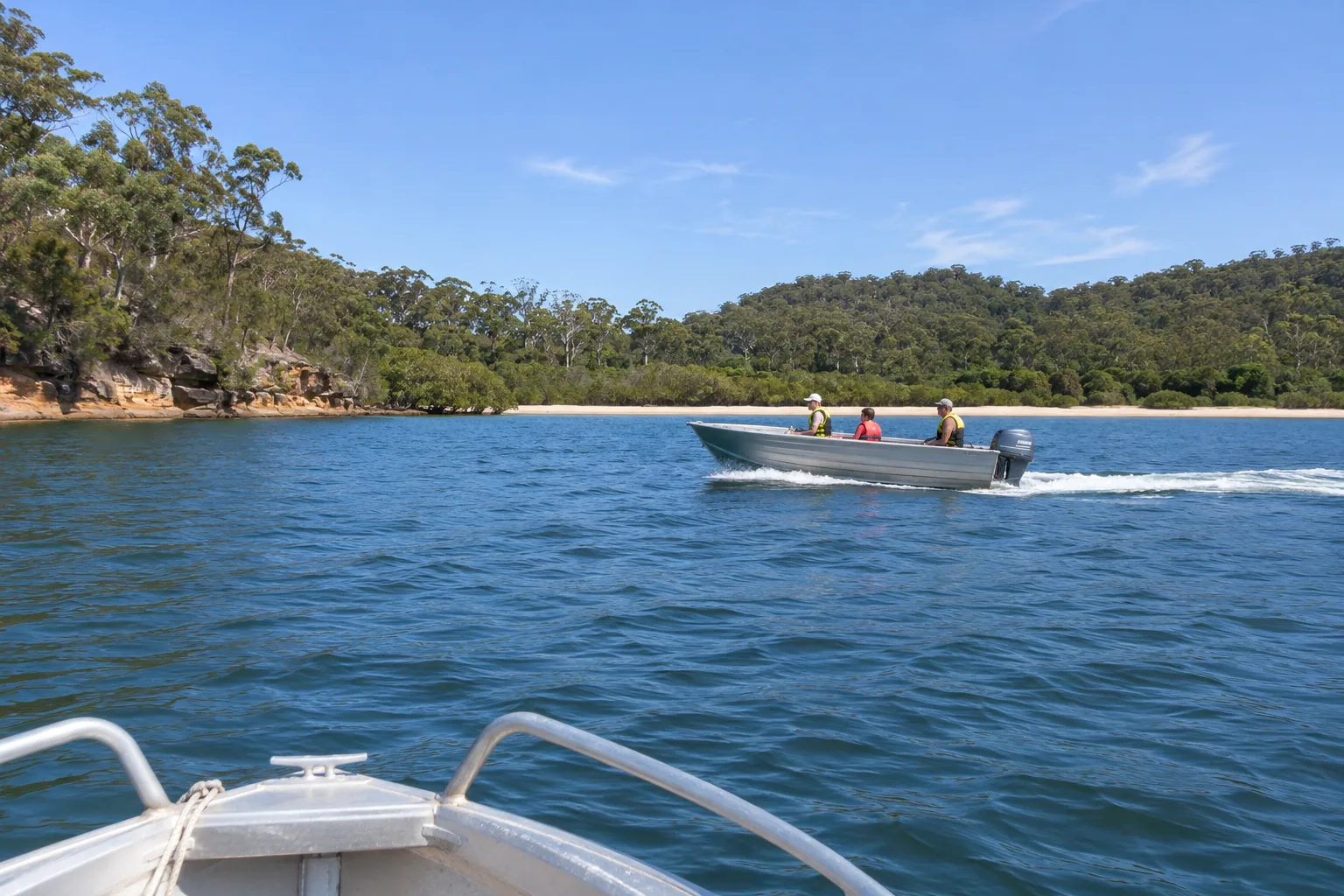
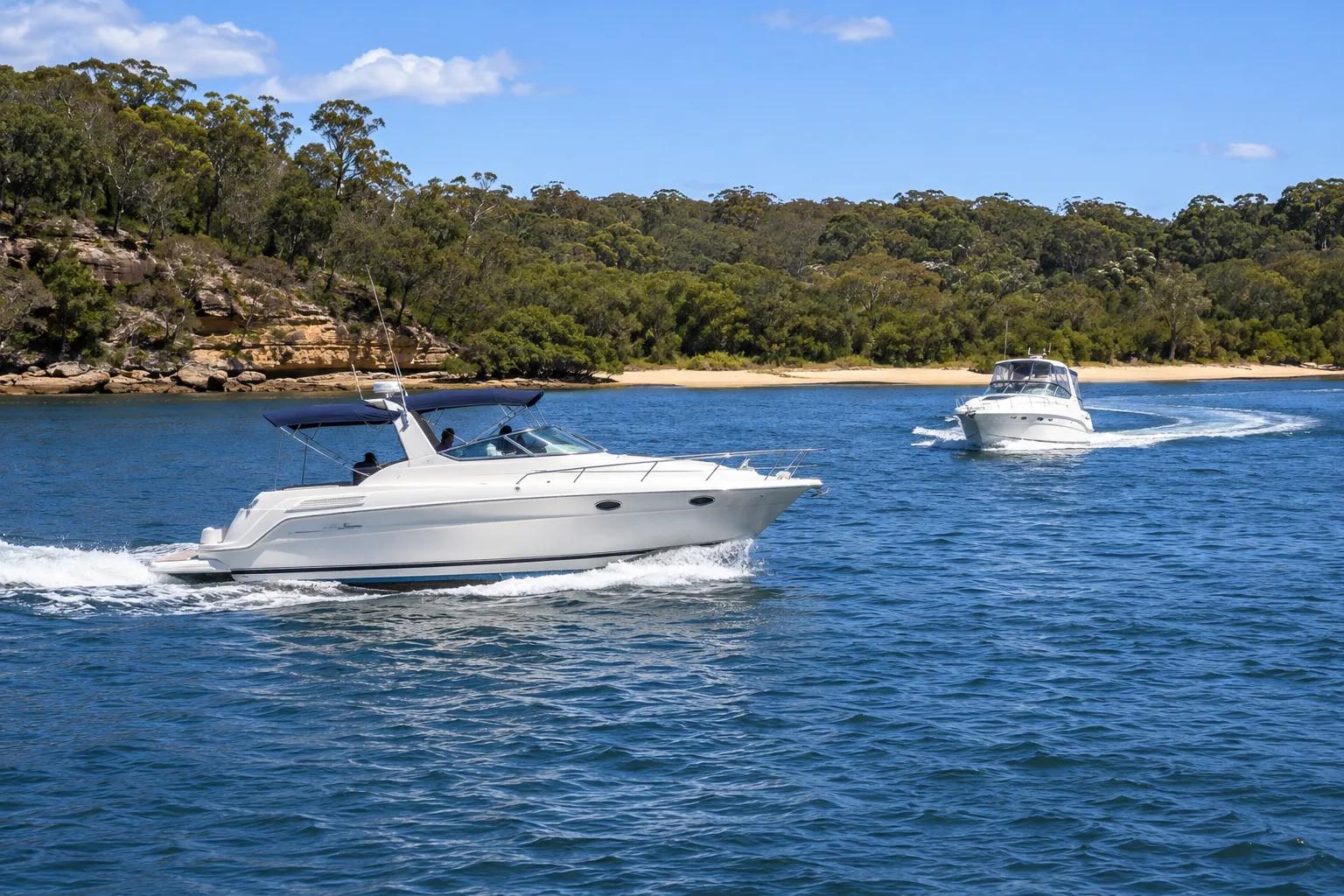
From your runabout on Pittwater, another powered boat approaches from your starboard side on a crossing track. Neither is overtaking. What do you do?
Key points
- Look and listen all aroundA proper lookout is continuous and includes what is behind you.
- Use sight and hearing; keep music low enough to hear warnings. Look for navigation lights and unlit hazards at night.
- Watch for low craft, people in the water, lines and floating hazards. Keep spinning propellers away from people.
- Use radar if fitted, dim its display at night and get a lookout person to help when your view is blocked.
- Watch for seaplanes; check overhead clearance against your boat's full height and the water level.
- Head-on and crossing under powerHead-on: both turn right. Crossing: give way to the boat on your right.
- Give way early by a clear course or speed change.
- The stand-on boat maintains course and speed only if safe.
- Both skippers stay ready to prevent collision.
- Sailing rulesPower normally gives way to sail; check for overtaking and special vessels.
- A yacht using its engine follows powered-vessel rules.
- Under sail: port tack gives way to starboard tack; on the same tack, windward gives way.
- Sydney Harbour's orange-diamond ferry priority over sail applies during the day, except when the ferry is overtaking a sailing vessel. It does not apply at night; both skippers must still avoid collision.
- The overtaking boat keeps clearOvertaking applies to every type of vessel, including sail overtaking power.
- Pass on either side only when safe, with safe speed and clearance.
- Do not cut in front of the boat you pass.
- If being overtaken, maintain course and speed if safe.
- Give working vessels roomKeep well clear of big ships, dredges, work barges and commercial fishing vessels.
- Do not obstruct a ship or pass between it and its escort.
- Dredge: two diamonds show the safe side; two balls mark the obstructed side.
- Moving cable ferry: 4 knots or less within 100 metres of its chains, ropes or cables. Pass safely behind, preferably after it reaches shore, and turn power off when crossing its chains, ropes or cables.
- Act early and check the resultYou must avoid collision even if the other skipper does nothing.
- Make a change large enough to be clearly seen; avoid repeated tiny alterations.
- Slow, stop, reverse or alter course as appropriate to the situation.
- Keep watching until the danger has passed.
- Keep right in narrow waterwaysIn a narrow channel or river, keep as far to starboard as practical.
- Keeping to starboard is also recommended in other channels and rivers.
- A channel may be narrow because a larger vessel needs its width or deepest water.
- Use a safe speed, take extra care at bends and never block the waterway.
Check what you have read
Before changing course on Lake Macquarie, where should your lookout extend?
Worked case: A crossing on Pittwater
You are driving a runabout across open water on Pittwater in daylight. Another runabout approaches from your starboard side and your tracks will cross. Neither boat is overtaking. There is plenty of clear water behind the other boat, but a kayak is off your port quarter.
Before you read the solution: what would you do?
True or false?
Decide each statement before you see the answer.
I am the stand-on boat, so I must never change course or speed.
A few tiny turns will show the other skipper I am giving way.
A proper lookout is continuous and includes what is behind you.
Two diamonds mean I can pass right beside a dredge.
A yacht always has priority over a motorboat.
You must avoid collision even if the other skipper does nothing.
In a narrow channel or river, keep as far to starboard as practical.
Keep well clear of big ships, dredges, work barges and commercial fishing vessels.
Overtaking applies to every type of vessel, including sail overtaking power.
The middle of a narrow channel is the correct place for my runabout.
Power normally gives way to sail; check for overtaking and special vessels.
I only need to look ahead; boats behind must avoid me.
Exercise: See the situation, choose the action
Practise three decisions on a daylight trip. Assume there is room for the stated manoeuvre and no special vessel signals unless mentioned.
Step by step
On Sydney Harbour, a powered cruiser is coming directly towards your powered boat. What should happen?
Show the solution
For powered vessels meeting head-on, both turn to starboard. Check that your turn is safe and make it clear early. Handbook, p. 83.
Later, another powered boat approaches from your starboard side on a crossing track. Who gives way?
Show the solution
In this powered-vessel crossing, you give way to the boat on your right. Alter course or slow early to let it pass. Handbook, pp. 82–83.
Put this safe response to the crossing in order.
- 1Keep watching until both vessels are safely clear
- 2Recognise that you must give way
- 3Check your manoeuvre is safe and make a clear early change
- 4Look all around and identify the crossing risk
Show the solution
Look first, identify your responsibility, act clearly and check the result. Do not stop looking once you have changed course or speed. Handbook, pp. 79, 82 and 88.
You then enter a narrow river reach. Where should you travel?
Show the solution
The narrow-channel rule requires you to keep as far to starboard as practical. Take extra care at bends and do not block the river. Handbook, p. 88.
Now on your own
Now try a Hawkesbury River trip. Think about the vessel's activity as well as its type.
A yacht under sail is overtaking your powered boat. Which vessel must keep well clear?
A vehicular ferry is moving. Within 100 metres of its chains, ropes or cables, what is the maximum speed?
You are now the stand-on boat in a separate crossing. The other skipper has not acted and a collision is developing. What do you do?
Before towing a water skier on an unfamiliar reach after a flood, what does the handbook recommend?
Check: 10 questions
Questions from this subject, explained after each answer.
Free: lesson + 10 questions · Exam Pass: all 27 questions, unlimited practice tests, your mistakes retrained
The full explanation and the lessons for each programme item
Topic 1 of 6
Keep looking and listening
As skipper, you must keep a proper lookout by sight and hearing at all times.
Look all around, including behind you. You need to understand what is happening and judge the risk of a collision, not just watch the water ahead. Loud music can hide a shout or another vessel's signal. Boating Handbook, p. 79.
Look for swimmers, divers and low craft such as kayaks. A blue and white Alpha flag warns that divers, snorkellers or spearfishers are nearby. Keep a safe distance from people in the water and keep spinning propellers away from them: a propeller strike can cause serious injury or death. Large vessels can be moving much faster than they seem. In mooring areas, watch for dinghies and lines as well as the moored boats. Boating Handbook, pp. 79–80.
Keep a safe speed and take extra care when visibility is poor. If you have radar, use it to help your lookout; dim its display at night to protect your night vision. The handbook recommends a lookout person, especially if your view is blocked. You still have your responsibility as skipper.
At night, look for other vessels' navigation lights and take extra care with unlit floating or submerged hazards. Watch for seaplanes taking off or landing on waterways such as Pittwater. Avoid sudden changes of direction that could confuse the pilot or obstruct the aircraft. On the water, seaplanes follow the same rules as other powered vessels. Boating Handbook, p. 81.
- Scan for logs, debris, fishing equipment and submerged hazards, as well as vessels.
- Watch bridges, jetties and overhead powerlines. Obey maximum-height signs and know your boat's full height, including its mast and fishing poles. Charted bridge heights are measured at mean high water. Tides and floods change the available clearance, and a lightly loaded boat may need more height. Boating Handbook, p. 81.
- Look for aquatic animals and avoid harming them. When towing a person, both the driver and the observer must keep a lookout. Before towing, the handbook recommends checking for debris, sandbars and snags. Take extra care on unfamiliar or recently flooded waterways. Boating Handbook, p. 81.
Topic 2 of 6
Two powered boats: make your intentions clear
When two powered vessels meet head-on, both must turn to starboard, which is right, and pass at a safe distance.
When their paths cross, the powered boat with the other on its starboard side must give way. These rules include PWC. Boating Handbook, pp. 82–83.
The give-way vessel alters course or slows down to let the other pass. Make that action clear early. In an ordinary crossing with room to manoeuvre, slowing and passing behind the other boat can resolve the situation. Check for other traffic and hazards before choosing your action.
The stand-on vessel keeps its course and speed if safe, but stays ready to act to avoid a collision. These responsibilities also apply to vessels drifting or holding position without being anchored. Both skippers have a duty to avoid a collision. Boating Handbook, p. 82.
- Head-on under power: both turn right.
- Crossing under power: give way to the boat on your right.
- Stand on only while it is safe; keep watching what the other boat actually does.
Topic 3 of 6
Sail, power and overtaking
A powered vessel gives way to a sailing vessel, unless the sailing vessel is overtaking it. A sailing vessel using its engine follows the powered-vessel give-way rules.
The presence of a mast does not decide the rule. Boating Handbook, p. 83.
Between sailing vessels, the one on port tack gives way to the one on starboard tack. Port tack means the wind comes from the boat's port, or left, side. Starboard tack means it comes from the right. If both boats are on the same tack, the windward boat, closer to where the wind comes from, gives way. Boating Handbook, pp. 83–84.
Every overtaking vessel must keep well clear, whatever type of boat it is passing. You may overtake on either side only when safe, at a safe speed and distance. Do not cut in front. The vessel being overtaken maintains course and speed if safe. Boating Handbook, pp. 85 and 87.
- The handbook recommends that powered and sailing vessels give way to paddlecraft and rowing vessels; these low craft can be hard to see.
- Paddlers and rowers also have a responsibility to avoid collision.
- On Sydney Harbour, an orange diamond is a ferry's priority-over-sail signal during the day: sailing vessels must keep well clear. This priority does not apply at night or when the ferry is overtaking a sailing vessel. Both skippers must still act to avoid collision. Boating Handbook, pp. 84 and 141.
Topic 4 of 6
Leave room for vessels that cannot easily move
All vessels must keep well clear of big ships and other large vessels.
They may be unable to turn or stop quickly, and their stern can swing out widely when turning. The master may not see your small boat. Never cross a channel if you will get in a large vessel's way, cross its bow unless well clear, pass too close behind it or pass between a ship and its escort. Boating Handbook, p. 85.
Keep well clear of dredges and work barges. A dredge shows two diamonds on the safe side to pass and two balls on the obstructed side. That signal does not invite you to pass close. Work barges use a red flag and a yellow flag to ask passing vessels to reduce wash. Do not create wash that may damage or unreasonably affect them. Keep well clear of commercial fishing vessels, whose fishing equipment restricts their manoeuvrability. Boating Handbook, p. 86.
Vehicular ferries use chains, ropes or cables to cross the waterway, which significantly restricts their manoeuvrability. When the ferry is moving, slow to 4 knots or less within 100 metres of those chains, ropes or cables. Pass a safe distance behind it, preferably once it has reached the shore, and turn your power off when crossing the chains, ropes or cables. Boating Handbook, p. 86.
- Look at the vessel's work, signals and room to manoeuvre before applying a simple sail-versus-power rule.
- Leave large vessels and their escorts plenty of room; do not squeeze through a gap.
Topic 5 of 6
Avoid collision and keep to starboard in channels
You must take appropriate action to avoid a collision, even if the other skipper does nothing.
If you are in doubt, act early. Make changes large enough to be easily seen, rather than a string of tiny course or speed changes. Depending on the situation, you may need to alter course, slow down, stop, reverse, pass the other vessel or let it pass. An appropriate sound signal can also be part of your response. Keep watching to check that your action is working. Boating Handbook, p. 88.
Keeping to starboard is recommended for all vessels in channels and rivers. In a narrow channel or river, you must keep as far to starboard as practical. A channel can be narrow because a vessel needs much of its width or its deepest water to navigate. Take extra care at bends, travel at a safe speed and never block a channel or river. Boating Handbook, p. 88.
- Choose an action that leaves safe water and room for everyone.
- Being the stand-on vessel does not remove your duty to avoid collision.
- Keep as far right as practical in narrow waterways; allow for depth and hazards.
Topic 6 of 6
Practise and go further
The best places to practise this subject. When you finish, one tap brings you back to the course.
- Lookout and collision riskLesson
- Fog and visibilityLesson
- Head-on and overtakingLesson
- Crossing situationsLesson
- Responsibilities between vesselsLesson
- Pilotage and planning your trackLesson
All lessons by programme item
- H5a Keeping a proper lookout (Handbook pp. 79–81)
- H5b Giving way: head-on, crossing, overtaking, sail and power, vessels restricted in their ability to manoeuvre (Handbook pp. 82–88)
- H5c Avoiding collision and keeping to the starboard side of channels and rivers (Handbook p. 88)
Sources
- Boating Handbook 2026: Proper lookout, pp. 79–81 · checked
- Boating Handbook 2026: Giving way and overtaking, pp. 82–87; Sydney Harbour ferries, p. 141 · checked
- Boating Handbook 2026: Avoiding collision; Channels and rivers, p. 88 · checked
- Transport for NSW: Giving way, overtaking and avoiding collisions · checked
- Transport for NSW: Proper lookout · checked
Checked against the official sources on .