
COLREG: rules of the road · Level R3 · 4 parts · about 13 min
US Inland Rules: where they differ from COLREG
4 short parts: Where they apply · Whistle signals · Rivers and lakes · Inland lights. Each part explains the idea, then gives the points to remember, the common mistakes, a worked case and a practice question; the Academy unit adds all 24 check questions.
1 · Where they apply
Where the Inland Rules apply, and what they are
Inside the COLREGS demarcation lines and on the US Great Lakes, US vessels and visitors follow the Inland Rules: COLREG with some American changes.
Two rulebooks
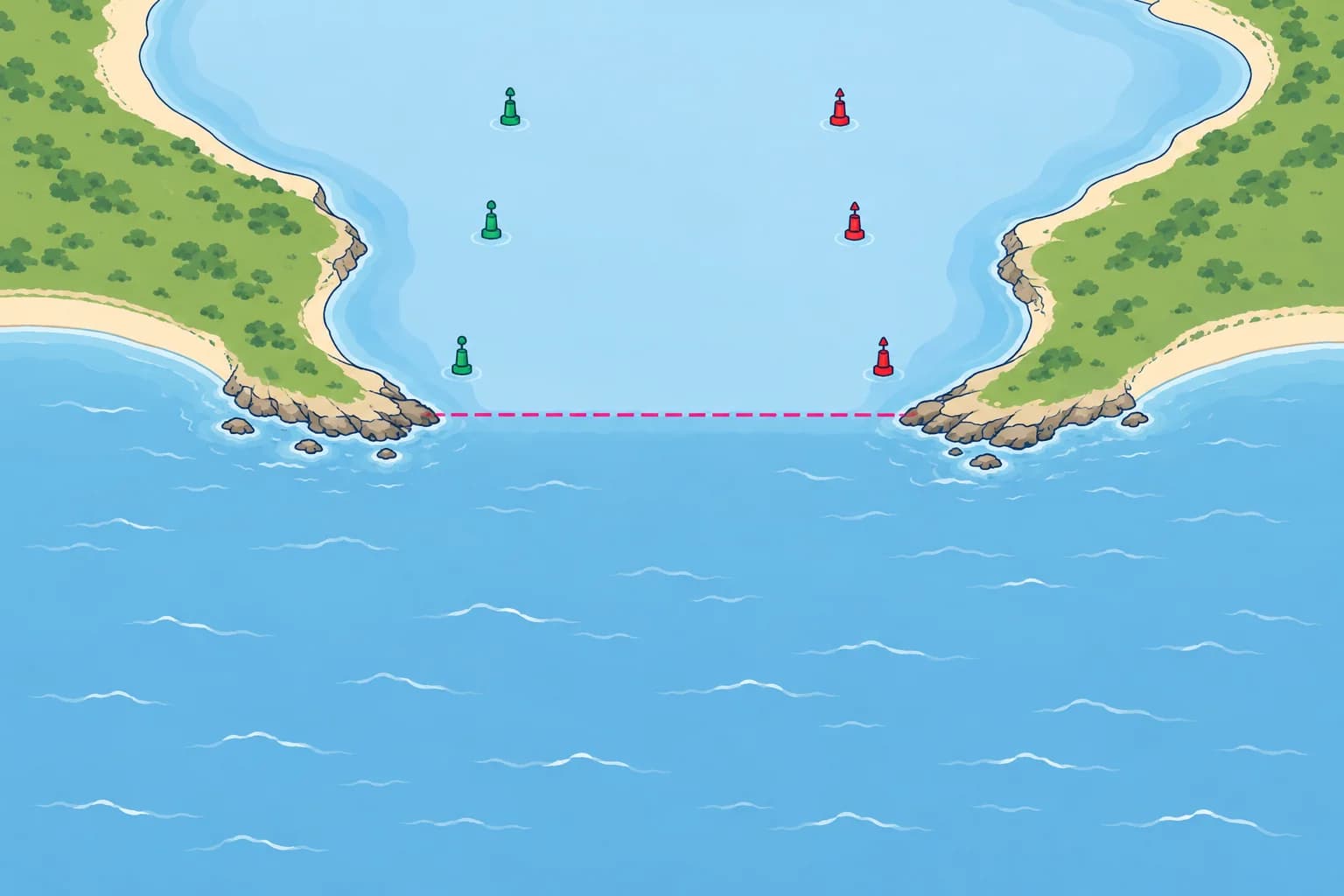
In US waters you meet two sets of rules. Seaward of the COLREGS demarcation lines, COLREG applies. Shoreward of them, the Inland Navigation Rules apply (33 CFR 80.01). The lines cross harbour entrances, bays and inlets. They are listed in 33 CFR Part 80 and drawn on US charts as magenta dashed lines. Check the chart before you enter or leave port.
Rules as regulations
The Inland Rules began as the Inland Navigational Rules Act of 1980. They entered the Code of Federal Regulations (CFR) in 2010 and were updated in 2014. The rules are in 33 CFR Part 83. Parts 84–88 contain the annexes, including US-only Annex V. Part 89 implements the Inland Rules, including special-water lists; Part 90 provides interpretations.
Same numbers, same core
The Inland Rules keep COLREG’s numbers: Rule 15 is still the crossing rule. Most text is identical. They count as the special rules for inland waters that COLREG Rule 1(b) allows a state to make. COLREG-compliant construction and equipment are accepted (Inland Rule 1(b)(ii)); you must still follow Inland operating rules. The differences are mainly in whistle signals, river traffic and some lights.
Special waters
Western Rivers means the Mississippi, its tributaries, South Pass and Southwest Pass to the demarcation lines, plus the Port Allen–Morgan City Alternate Route and the Atchafalaya above its junction with that route, including the Old River and the Red River. The Great Lakes include their connecting and tributary waters, and the St Lawrence east to Saint Lambert Lock.
On board
The operator of every self-propelled vessel of 12 m or more must carry a copy of the Inland Rules on board for ready reference (Inland Rule 1(g)). The Coast Guard Navigation Center publishes the Rules free online. Compare COLREG Rule 1 and the COLREG vs US Inland Rules summary.
Key figures
- Inland Rules
- 33 CFR Part 83; annexes 84–88; supporting provisions 89–90
- Demarcation lines
- 33 CFR Part 80: Inland inside, COLREG outside
- In the CFR since
- 17 May 2010; updated in 2014
- Specified waters
- 33 CFR 89.25, e.g. Tennessee-Tombigbee Waterway
- Copy on board
- Self-propelled vessels of 12 m or more
Remember
- Seaward of the demarcation lines: COLREG. Shoreward and on the US Great Lakes: Inland Rules.
- Inland Rules: 33 CFR Part 83; annexes in Parts 84–88; implementing rules and interpretations in Parts 89–90.
- Rule numbers match COLREG; check the differences, not the whole text.
- Self-propelled vessels of 12 m or more carry a copy of the Inland Rules.
Common mistakes
Wrong: COLREG applies everywhere once you are in salt water.
Right: Shoreward of the demarcation lines the Inland Rules apply, even in salt-water bays and harbours.
Wrong: The Inland Rules are a completely different rulebook.
Right: They follow COLREG closely, with the same rule numbers. Learn where they differ.
Worked case
Your 13 m motor yacht enters a salt-water harbour in Maine. The chart places you shoreward of the demarcation line. A crew member says salt water means COLREG still applies. Which rules do you use, and what must be aboard?
Show the answer
Use the Inland Rules. The charted demarcation line decides, even in salt water. Your self-propelled yacht is at least 12 m long, so carry a copy of the Inland Rules aboard for ready reference. Check the Inland differences before proceeding.
Practice question
Seaward of a COLREGS demarcation line, which rules apply?
- The US Inland Navigation Rules
- The International Rules, COLREG
- Each state’s own boating rules
- The Western Rivers pilot rules
Show the answer
Answer: B. 33 CFR 80.01: waters inside the lines are Inland Rules waters; waters outside them are COLREG waters.
2 · Whistle signals
Whistle signals: proposing and agreeing a passing
Under COLREG one short blast reports a turn. Under the Inland Rules it proposes how you will pass, and the other vessel answers to agree.
Intent, not action
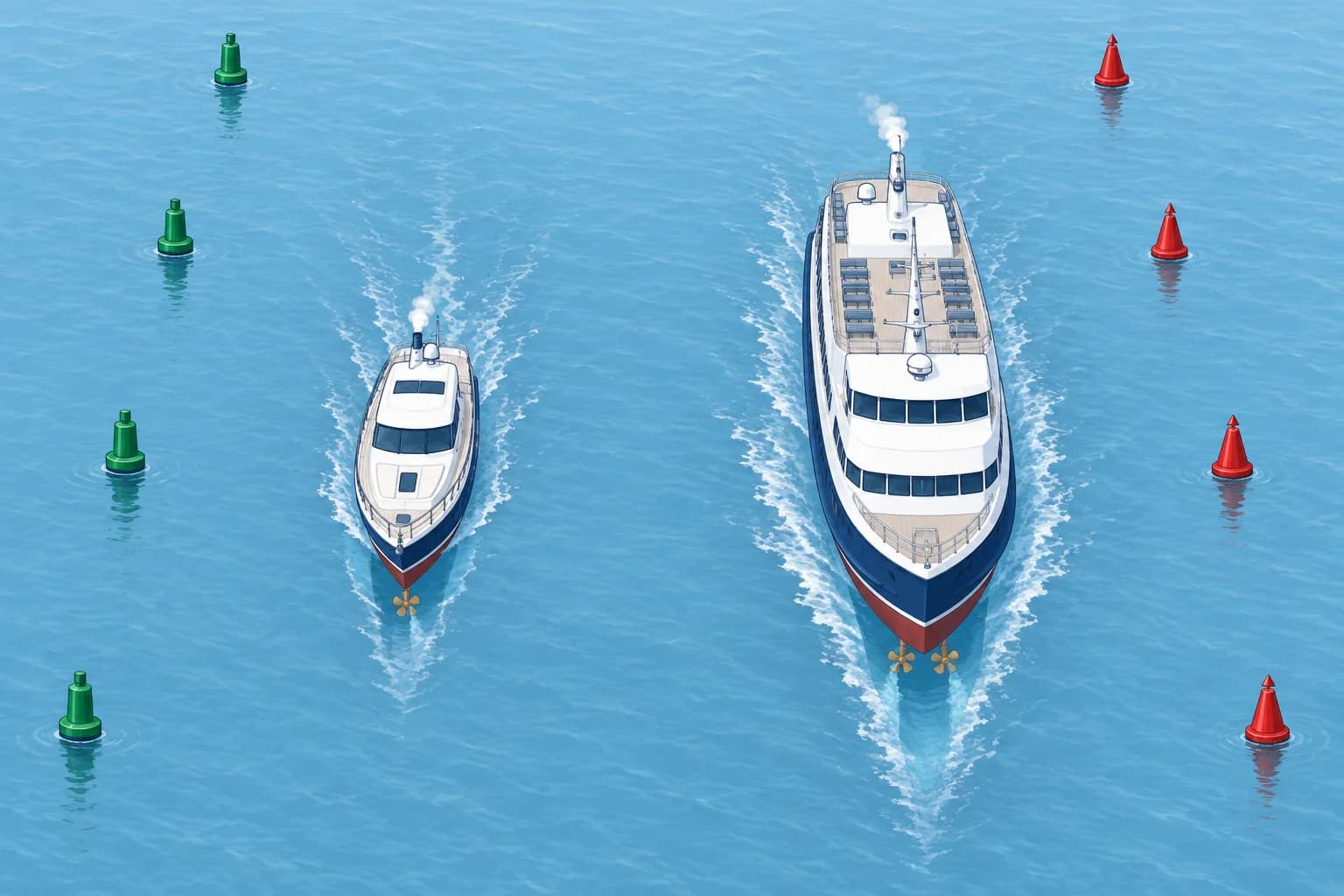
Under COLREG Rule 34(a), one short blast means “I am altering my course to starboard”: it reports an action. Under Inland Rule 34(a), power-driven vessels in sight, meeting or crossing within half a mile, use signals to propose a passing. One short: “I intend to leave you on my port side”. Two short: “I intend to leave you on my starboard side”. Three short: “I am operating astern propulsion”.
Agree before you pass
A short blast lasts about 1 second. For a one- or two-blast passing proposal, repeat the signal if you agree; both vessels then act to pass safely. Do not echo three blasts as agreement. If you doubt the plan, immediately sound at least five short and rapid blasts, the doubt signal. Both then take precautions until they agree. A different answer, one blast for two, is not agreement: sound the doubt signal.
Overtaking
When motoring in sight of another power-driven vessel, signal your intended overtaking side: one short, her starboard side; two short, her port side. She repeats the signal to agree or sounds at least five short and rapid blasts if in doubt (Rule 34(c)). In a narrow channel, she may take steps to let you pass only if specifically agreed (Inland Rule 9(e)). You still keep clear under Rule 13.
Agreement by radio
Many vessels agree by VHF instead. Under the Vessel Bridge-to-Bridge Radiotelephone Act, power-driven vessels of 20 m or more, towing vessels of 26 ft (about 8 m) or more and some others keep watch on VHF channel 13; on parts of the lower Mississippi, channel 67 (33 CFR 26). Agreed by radio, they need not sound whistles, but may. Without agreement, whistles are exchanged in time and prevail (Inland Rule 34(h)).
Other Inland signals
A power-driven vessel leaving a dock or berth sounds one prolonged blast, 4 to 6 seconds (Inland Rule 34(g)). The bend signal, one prolonged blast answered by one prolonged, is the same as COLREG. A white or yellow all-round light flashing with the whistle may supplement the signals (Inland Rule 34(b)). Compare COLREG Rule 34.
Key figures
- 1 short (meeting, crossing)
- “I intend to leave you on my port side”
- 2 short (meeting, crossing)
- “I intend to leave you on my starboard side”
- 3 short
- “I am operating astern propulsion”
- When (Inland Rule 34(a))
- Power-driven, in sight, meeting or crossing within half a mile
- Doubt or danger
- At least five short and rapid blasts
- Bridge-to-bridge VHF
- Channel 13; channel 67 on parts of the lower Mississippi
Remember
- Inland one short = leave you on my port side; two short = on my starboard side.
- Repeat one or two blasts to agree, never three. In doubt, immediately sound at least five short and rapid blasts.
- Overtaking (Inland): one short = your starboard side, two short = your port side.
- An agreed passing on channel 13 (67 where prescribed) makes whistles optional; without agreement, use whistle signals.
- Leaving a berth: one prolonged blast.
Common mistakes
Wrong: One short blast means the same in COLREG and Inland waters.
Right: COLREG: “I am altering my course to starboard”. Inland: “I intend to leave you on my port side”, waiting for agreement.
Wrong: Answer a two-blast proposal with one blast if you prefer the other side.
Right: A different answer is a cross signal, not agreement. Sound five short blasts and agree a passing first.
Wrong: Once you have talked on VHF, whistle signals are forbidden.
Right: Agreed by radio, you need not sound them but may. If you do not agree, whistles are exchanged and prevail.
Worked case
In a US harbour, your motor yacht meets a ferry nearly head-on, 0.4 nautical mile away. She sounds two short blasts. Shoal water to your port prevents a safe starboard-to-starboard passing.
Show the answer
She proposes a starboard-to-starboard passing. Do not agree to an unsafe passing. Immediately sound at least five short and rapid blasts. Reduce speed or stop as needed to avoid danger. Use whistles or the local bridge-to-bridge VHF channel to agree a safe passing before proceeding.
Practice question
On Inland waters, what does one short blast mean between power-driven vessels meeting within half a mile?
- “I am altering my course to starboard”
- “I intend to leave you on my port side”
- “I intend to leave you on my starboard side”
- “I am operating astern propulsion”
Show the answer
Answer: B. Inland Rule 34(a)(i): one short blast proposes a port-to-port passing. The COLREG meaning reports an alteration to starboard.
3 · Rivers and lakes
Rivers and lakes: downbound vessels and river crossings
On specified waters, special rules cover power-driven vessels meeting with or against the current, and power-driven vessels crossing a river.
Downbound has the right of way
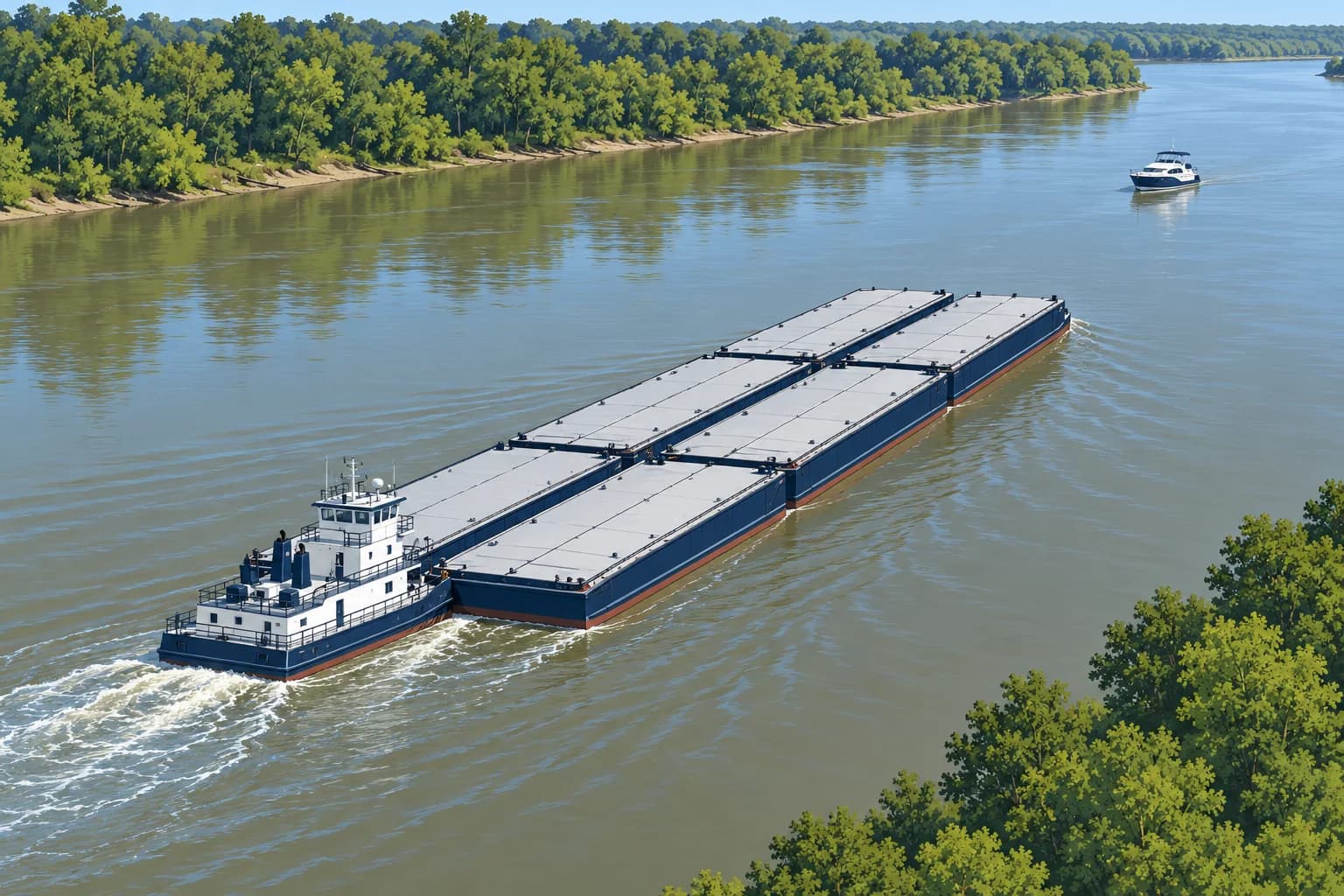
On the Great Lakes, the Western Rivers and waters listed in 33 CFR 89.25, a power-driven vessel downbound with a following current has the right of way over an upbound power-driven vessel. She proposes the manner of passage and starts the whistle signals. Inland Rule 9(a)(ii) says this for narrow channels and fairways; Inland Rule 14(d) for meeting head-on.
Why the current matters
A vessel going downstream with the current, often a towboat pushing barges, has less control at low speed and needs much more room to stop. A vessel going upstream against the current can slow and almost hold her ground. When these power-driven vessels meet, the upbound vessel holds as necessary to permit safe passing (Inland Rule 9(a)(ii)).
Crossing a river
On the same waters, a power-driven vessel crossing a river keeps out of the way of a power-driven vessel going up or down it (Inland Rule 15(b)). This applies whichever side she is on. A motor ferry or small motorboat crossing gives way to a towboat coming downstream, even when the towboat is on her port side.
No constrained-by-draught
The Inland Rules have no vessel constrained by her draught: Inland Rule 28, and the matching parts of Inland Rules 3 and 18, are left blank. Deep ships in Inland channels rely on Rule 9 instead: a vessel under 20 m, or a sailing vessel, shall not impede a vessel that can safely navigate only within a narrow channel or fairway.
What stays the same
Rule 13, ordinary Rule 15 crossing encounters, and Rules 16, 17 and 19 follow COLREG; Rule 18 omits constrained-by-draught status. Compare COLREG Rules 9, 14 and 15.
Key figures
- Where
- Great Lakes, Western Rivers, waters in 33 CFR 89.25
- Power-driven, downbound with current
- Right of way over upbound power-driven vessel; proposes and signals
- Power-driven, upbound
- Holds as necessary for safe passing with downbound power-driven vessel
- Power-driven river crossing
- Gives way to power-driven vessels going up or down the river
- Constrained by her draught
- Not in the Inland Rules (Rule 28 reserved)
Remember
- Power-driven, downbound with a following current: right of way over upbound power-driven vessel; proposes and signals first.
- The upbound power-driven vessel holds as necessary for safe passing with the downbound power-driven vessel.
- A power-driven vessel crossing a river gives way to power-driven vessels going up or down it.
- These rules apply on the Great Lakes, Western Rivers and the waters in 33 CFR 89.25.
- No constrained by her draught status exists in the Inland Rules.
Common mistakes
Wrong: On a river, the crossing rule works as at sea: give way to the vessel on your starboard side.
Right: On the Western Rivers, Great Lakes and listed waters, a power-driven vessel crossing the river gives way to power-driven vessels going up or down it.
Wrong: The downbound rule applies on every US river.
Right: Only on the Great Lakes, the Western Rivers and the waters listed in 33 CFR 89.25.
Wrong: An upbound vessel can carry on and let the downbound tow sort it out.
Right: When these power-driven vessels meet, the upbound vessel holds as necessary to permit a safe passing.
Worked case
Motoring upstream on the Mississippi, you see a towboat pushing barges coming downstream round the next bend. She sounds one short blast.
Show the answer
The downbound tow proposes port-to-port passage. If safe, answer one short blast and hold as necessary. If you doubt the plan, immediately sound at least five short and rapid blasts and take precautions. Use the local bridge-to-bridge VHF channel to resolve the plan; a radio call does not replace the doubt signal.
Practice question
On the Western Rivers, which power-driven vessel has the right of way in a narrow channel?
- The vessel upbound against the current
- The larger vessel in the encounter
- The vessel downbound with a following current
- The vessel with the other on her port side
Show the answer
Answer: C. Inland Rule 9(a)(ii): the downbound vessel with a following current has the right of way and proposes the manner and place of passage.
4 · Inland lights
Inland lights: the Great Lakes, tows and US-only signals
Inland differences include paired yellow towing lights, a flashing yellow light on the tow, the Great Lakes white-light option, and blue or red-and-yellow signals.
Great Lakes option
On the Great Lakes, a power-driven vessel may carry an all-round white light instead of the second masthead light and the sternlight (Inland Rule 23(e)). It sits where the second masthead light would be, with the same range. So from astern a Great Lakes freighter may show a high white light and no sternlight.
Small-craft differences
Inland Rule 23(d) keeps the under-12 m option: an all-round white light and sidelights. It has no equivalent to COLREG’s under-7 m option for vessels whose maximum speed does not exceed 7 knots. A sailing vessel under 12 m that is motor-sailing need not show the cone (Inland Rule 25(e)).
Pushing and towing alongside
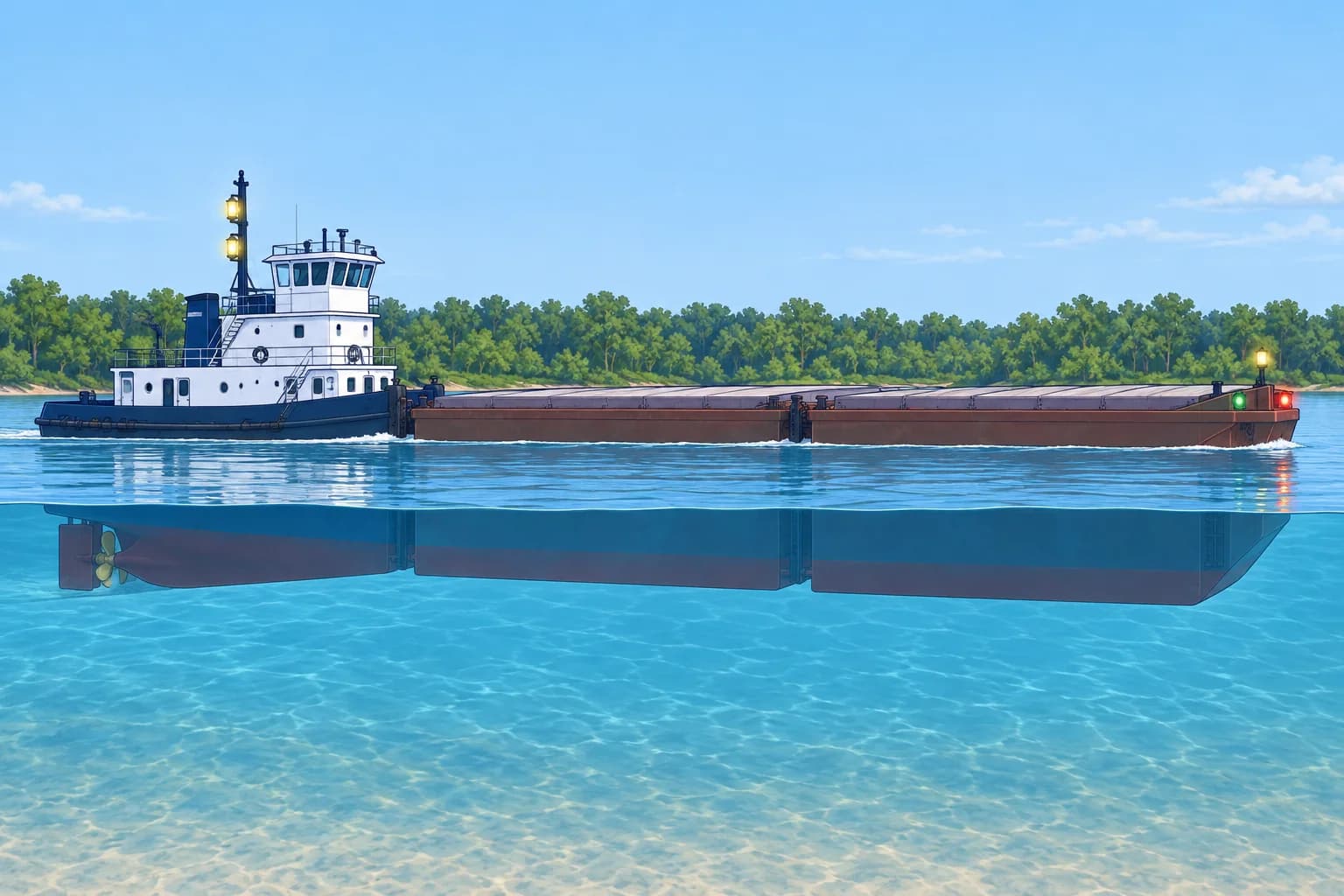
A rigidly joined tug and tow form a composite unit and show ordinary power-driven vessel lights. Otherwise, pushing ahead or towing alongside requires two masthead lights vertically, sidelights and two yellow towing lights vertically instead of a sternlight (Rule 24(c)). At 50 m or more, she also shows the other masthead light (Rule 24(d)). For non-composite vessels, Rule 24(j) omits masthead lights on Western Rivers except the Mississippi below the Huey P. Long Bridge, and on waters in 33 CFR 89.27.
The special flashing light
Outside a composite unit, a pushed tow shows sidelights and a special flashing yellow light at its forward end. An alongside tow also shows these lights forward, plus a sternlight aft (Rule 24(f)). The special light flashes 50–70 times a minute, covers 180°–225° and reaches at least 2 nautical miles. It sits as far forward as practicable on the centreline (Rule 21(g)). Look for the towboat beside or behind the tow.
Annex V and anchorages
Law-enforcement vessels may show a flashing blue light. Public-safety craft, such as rescue or regatta patrol boats, may show an alternately flashing red and yellow light, which gives no special right of way (33 CFR 88). Under 20 m, in a Coast Guard special anchorage area, you need show no anchor light and sound no fog bell (Inland Rules 30(g), 35(l)).
Key figures
- Great Lakes power-driven
- All-round white may replace 2nd masthead light and sternlight
- Non-composite pushing/alongside, outside Rule 24(j)
- 2 masthead lights (+ 3rd at ≥50 m), sidelights, 2 yellow towing lights
- Rule 24(j) waters, non-composite
- Western Rivers except below Huey P. Long Bridge; also 33 CFR 89.27
- Special flashing light
- Yellow, 50–70 per minute, 180°–225°, front of the tow
- Law enforcement
- Flashing blue light (33 CFR 88.05)
- Special anchorage, under 20 m
- No anchor light or shape; no anchor fog signal
Remember
- Two yellow towing lights in a line mean a vessel pushing ahead or towing alongside.
- A flashing yellow light low and forward marks the front of a pushed tow.
- Great Lakes ships may show an all-round white instead of a second masthead light and sternlight.
- Flashing blue = law enforcement; red and yellow = public safety. These lights give no special right of way.
- Under 20 m in a special anchorage area: no anchor light needed.
Common mistakes
Wrong: The special flashing yellow light is carried by the towboat.
Right: It is carried at the forward end of the tow: the vessel pushed ahead or towed alongside.
Wrong: A red and yellow flashing patrol boat has the right of way.
Right: The light is identification only and conveys no privilege. The patrol boat follows the Inland Rules.
Wrong: Under 7 m and slower than 7 knots, an all-round white is enough on Inland waters.
Right: COLREG alone allows a power-driven vessel under 7 m, whose maximum speed does not exceed 7 knots, to show an all-round white light and, if practicable, sidelights. Inland, use the under-12 m option: an all-round white light and sidelights.
Worked case
At night on the Ohio River, you see sidelights and a yellow light flashing about once a second. A crew member sees no white masthead light and says it must be a small boat you can cross close ahead of. Is that a safe conclusion?
Show the answer
No. The flashing yellow light marks the forward end of a non-composite pushed or alongside tow. The towboat may be well behind it. Her two steady yellow towing lights face aft, so you need not see them from ahead. Rule 24(j) omits masthead lights for this arrangement on the Ohio River. Do not cross close ahead; keep clear and agree any passing early.
Practice question
A 20 m tug pushes ahead where Rule 24(j) does not apply. Tug and tow do not form a composite unit. Which lights must the tug show?
- Two masthead lights, sidelights and a sternlight
- One masthead light, sidelights and a sternlight
- Sidelights and two yellow towing lights only
- Two masthead lights, sidelights, two towing lights
Show the answer
Answer: D. For this 20 m non-composite tug outside Rule 24(j) waters, Rule 24(c) requires two masthead lights vertically, sidelights and two yellow towing lights vertically. Composite units use ordinary power-driven lights; Rule 24(j) waters omit masthead lights.