

Whistle signals: proposing and agreeing a passing
1The lesson in plain words
Under COLREG one short blast reports a turn. Under the Inland Rules it proposes how you will pass, and the other vessel answers to agree.
Intent, not action
Under COLREG Rule 34(a), one short blast means “I am altering my course to starboard”: it reports an action. Under Inland Rule 34(a), power-driven vessels in sight, meeting or crossing within half a mile, use signals to propose a passing. One short: “I intend to leave you on my port side”. Two short: “I intend to leave you on my starboard side”. Three short: “I am operating astern propulsion”.
Agree before you pass
A short blast lasts about 1 second. For a one- or two-blast passing proposal, repeat the signal if you agree; both vessels then act to pass safely. Do not echo three blasts as agreement. If you doubt the plan, immediately sound at least five short and rapid blasts, the doubt signal. Both then take precautions until they agree. A different answer, one blast for two, is not agreement: sound the doubt signal.
Overtaking
When motoring in sight of another power-driven vessel, signal your intended overtaking side: one short, her starboard side; two short, her port side. She repeats the signal to agree or sounds at least five short and rapid blasts if in doubt (Rule 34(c)). In a narrow channel, she may take steps to let you pass only if specifically agreed (Inland Rule 9(e)). You still keep clear under Rule 13.
Agreement by radio
Many vessels agree by VHF instead. Under the Vessel Bridge-to-Bridge Radiotelephone Act, power-driven vessels of 20 m or more, towing vessels of 26 ft (about 8 m) or more and some others keep watch on VHF channel 13; on parts of the lower Mississippi, channel 67 (33 CFR 26). Agreed by radio, they need not sound whistles, but may. Without agreement, whistles are exchanged in time and prevail (Inland Rule 34(h)).
Other Inland signals
A power-driven vessel leaving a dock or berth sounds one prolonged blast, 4 to 6 seconds (Inland Rule 34(g)). The bend signal, one prolonged blast answered by one prolonged, is the same as COLREG. A white or yellow all-round light flashing with the whistle may supplement the signals (Inland Rule 34(b)). Compare COLREG Rule 34.
2Key data
- 1 short (meeting, crossing)
- “I intend to leave you on my port side”
- 2 short (meeting, crossing)
- “I intend to leave you on my starboard side”
- 3 short
- “I am operating astern propulsion”
- When (Inland Rule 34(a))
- Power-driven, in sight, meeting or crossing within half a mile
- Doubt or danger
- At least five short and rapid blasts
- Bridge-to-bridge VHF
- Channel 13; channel 67 on parts of the lower Mississippi
3Key points
- 1
Inland one short = leave you on my port side; two short = on my starboard side.
- 2
Repeat one or two blasts to agree, never three. In doubt, immediately sound at least five short and rapid blasts.
- 3
Overtaking (Inland): one short = your starboard side, two short = your port side.
- 4
An agreed passing on channel 13 (67 where prescribed) makes whistles optional; without agreement, use whistle signals.
- 5
Leaving a berth: one prolonged blast.
4Frequent mistakes
Wrong: One short blast means the same in COLREG and Inland waters.
Right: COLREG: “I am altering my course to starboard”. Inland: “I intend to leave you on my port side”, waiting for agreement.
Wrong: Answer a two-blast proposal with one blast if you prefer the other side.
Right: A different answer is a cross signal, not agreement. Sound five short blasts and agree a passing first.
Wrong: Once you have talked on VHF, whistle signals are forbidden.
Right: Agreed by radio, you need not sound them but may. If you do not agree, whistles are exchanged and prevail.
5Practice case & exam keys
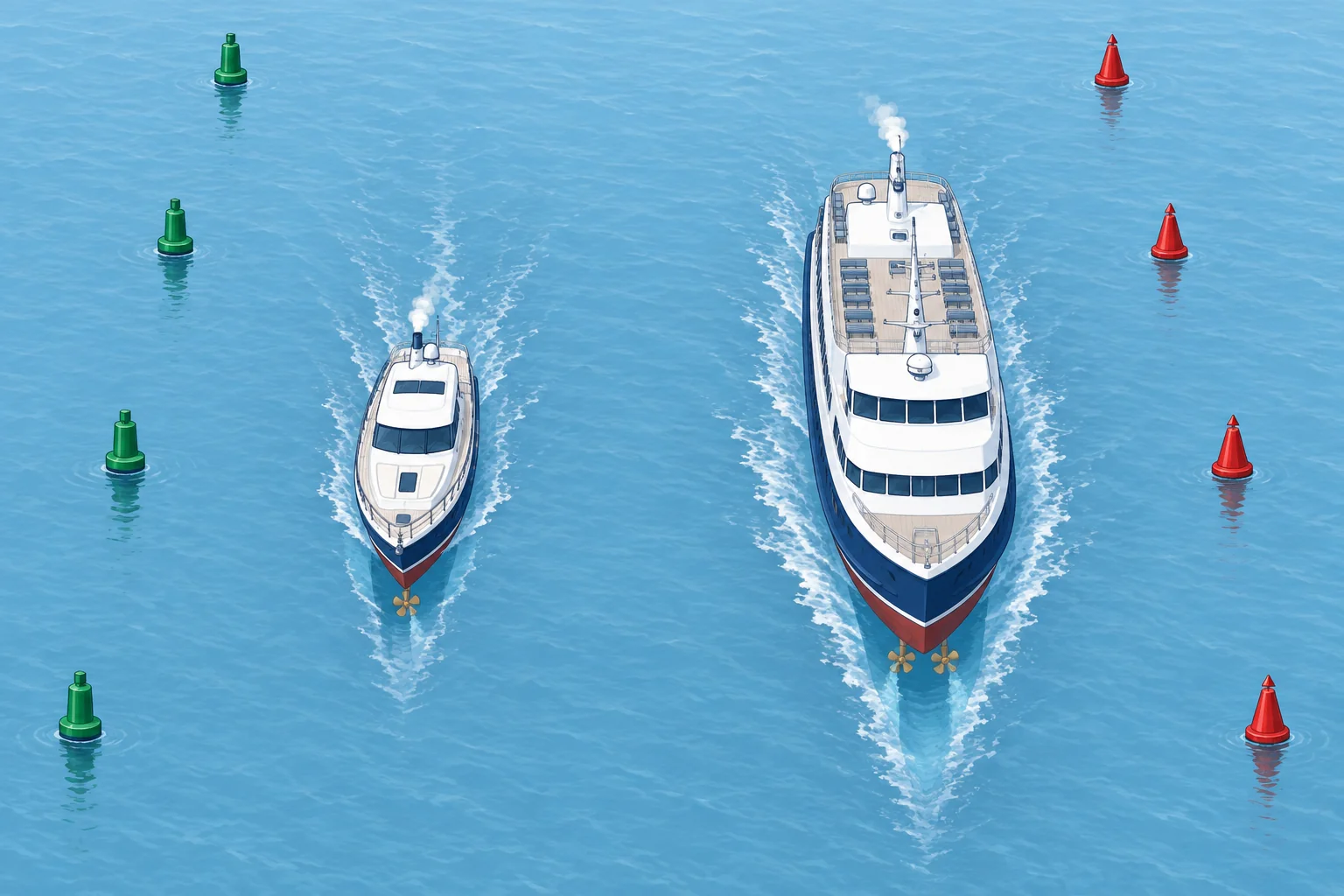
In a US harbour, your motor yacht meets a ferry nearly head-on, 0.4 nautical mile away. She sounds two short blasts. Shoal water to your port prevents a safe starboard-to-starboard passing.
Show the answer
She proposes a starboard-to-starboard passing. Do not agree to an unsafe passing. Immediately sound at least five short and rapid blasts. Reduce speed or stop as needed to avoid danger. Use whistles or the local bridge-to-bridge VHF channel to agree a safe passing before proceeding.
Exam keys
- Inland 34(a): power-driven, in sight, within half a mile, meeting or crossing; signals of intent and agreement.
- 1 short = leave you on my port side; 2 short = starboard side; 3 short = astern propulsion.
- Overtaking: 1 short = on your starboard side, 2 short = on your port side; repeat to agree.
- VHF agreement makes whistles optional; failing agreement, whistles are exchanged and prevail (Inland 34(h)).
Finish this unit
When you've read it, match the terms, then answer three questions. Get them all right to finish the unit; opening the page alone doesn't count.
My notes for this unit
No notes