

Calling a port or marina in English
1The lesson in plain words
A good port call is short and complete: who you are, what you want, your size and your ETA. Then listen for the berth and the way in.
The call
Address the port or marina by name and identify your vessel: ‘Rodney Bay Marina, this is sailing yacht Blue Heron.’ Give your berth request, dimensions, intended stay and ETA clearly. Listen to the reply and confirm the berth and how to moor. See Talking on the VHF for calling procedure and channel selection.
What to give
A marina needs your length overall (LOA), beam (width) and draught (depth from the waterline to your boat’s deepest point), the number of nights and your ETA (estimated time of arrival). Example: ‘I request a berth for three nights. Length overall one-two metres, beam four metres, draught two decimal one metres. My ETA one-five-three-zero local time.’
What you may hear
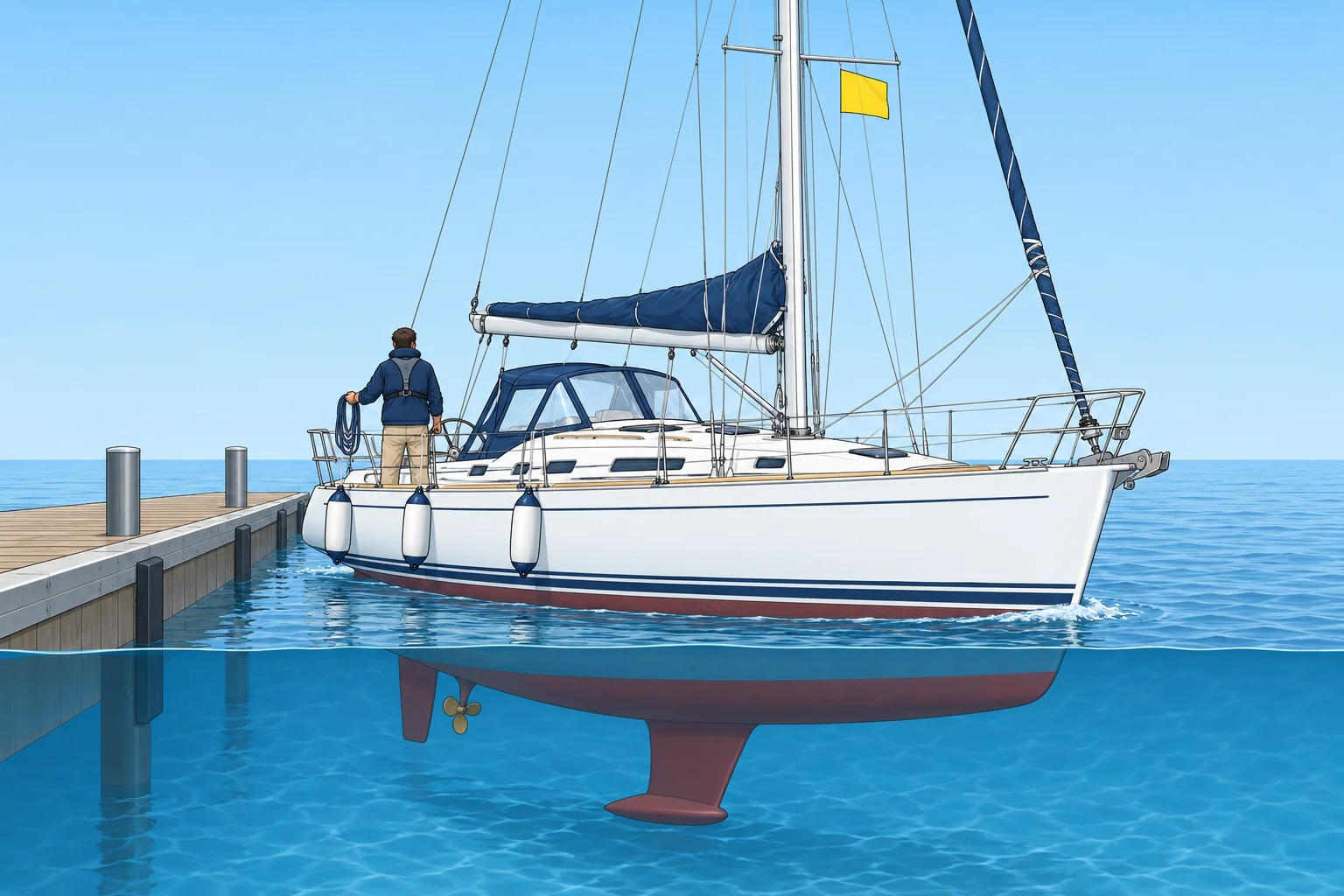
A pontoon is a floating walkway; a berth is your assigned mooring place. ‘Pontoon Charlie, berth one-four, port side to’ means put your port side beside it. ‘Moor stern-to’ means berth with your stern towards the quay. Fenders are protective cushions between your boat and the berth. If unsure, say ‘Say again’.
Formalities
Clear in means complete the required customs, immigration and health formalities. The yellow Q flag means ‘My vessel is healthy and I request free pratique’: public-health clearance, distinct from customs, immigration and other entry permissions. Ask where and when to report. Check local arrival rules, including advance notice, when the Q flag is required and whether you must remain aboard.
False friends
Some words look like Spanish, French or Italian ones but mean something else. ‘Actual’ means real; ‘present’ explicitly means current. For current draught, the SMCP wording is ‘my present draught’. A boat has fenders, not defenses. ‘Eventually’ means in the end, not possibly. ‘Alongside’ means berthed beside a quay or another vessel.
2Key data
- LOA
- Length overall
- Draught
- Vertical distance from waterline to the boat’s deepest point
- ETA
- Estimated time of arrival
- Q flag
- My vessel is healthy; I request free pratique
- Port side to
- Berth with your port side against the quay
- False friend
- SMCP current-draught report: ‘my present draught’
3Key points
- 1
Call the station, then give your vessel's name, request, size and ETA in one message.
- 2
Size for a marina: length overall, beam and draught, with units.
- 3
Listen for the berth, the side to and how to moor; say ‘Say again’ if unsure.
- 4
Check local clearance rules; the Q flag requests health clearance, not customs or immigration clearance.
- 5
Actual means real; present means current; eventually means in the end. Use fenders, not defenses.
4Frequent mistakes
Wrong: Assume English ‘actual’ always means ‘current’.
Right: ‘Actual’ means real, while ‘present’ explicitly means current. For current draught, the SMCP wording is ‘my present draught’.
Wrong: Guess the berth number when the reply is hard to hear.
Right: Say ‘Say again’. A wrong berth or side to can mean a collision in a crowded marina.
5Practice case & exam keys
You are Blue Heron (13.5 m long, beam 4.2 m, draught 2.3 m), requesting two nights, ETA 1600 local. The foreign marina replies, ‘Pontoon C, berth …, port side to.’ You miss the berth number. What do you say, prepare and check before landing?
Show the answer
‘Rodney Bay Marina, this is Blue Heron. I request a berth for two nights. Length overall one-three decimal five metres, beam four decimal two metres, draught two decimal three metres. ETA one-six-zero-zero local time.’ Then: ‘Say again berth number.’ Prepare fenders and lines to port; confirm the berth before proceeding. Follow local Q-flag, clearance and remain-aboard rules; ask where and when to report.
Exam keys
- Give vessel name, request, LOA, beam, draught and ETA, with units.
- Typical replies: proceed to pontoon …, berth …, port or starboard side to; moor stern-to.
- Q flag requests free pratique (health clearance). Check local customs, immigration and arrival requirements.
- False friends: actual = real; present = current; fenders; eventually = in the end.
Finish this unit
When you've read it, answer three questions. Get all three right to finish the unit; opening the page alone doesn't count.
My notes for this unit
No notes