

When to abandon, and getting ready
1The lesson in plain words
Prepare early. Stay aboard while the boat is safer than the raft, and leave before a safe transfer becomes impossible.
Step up
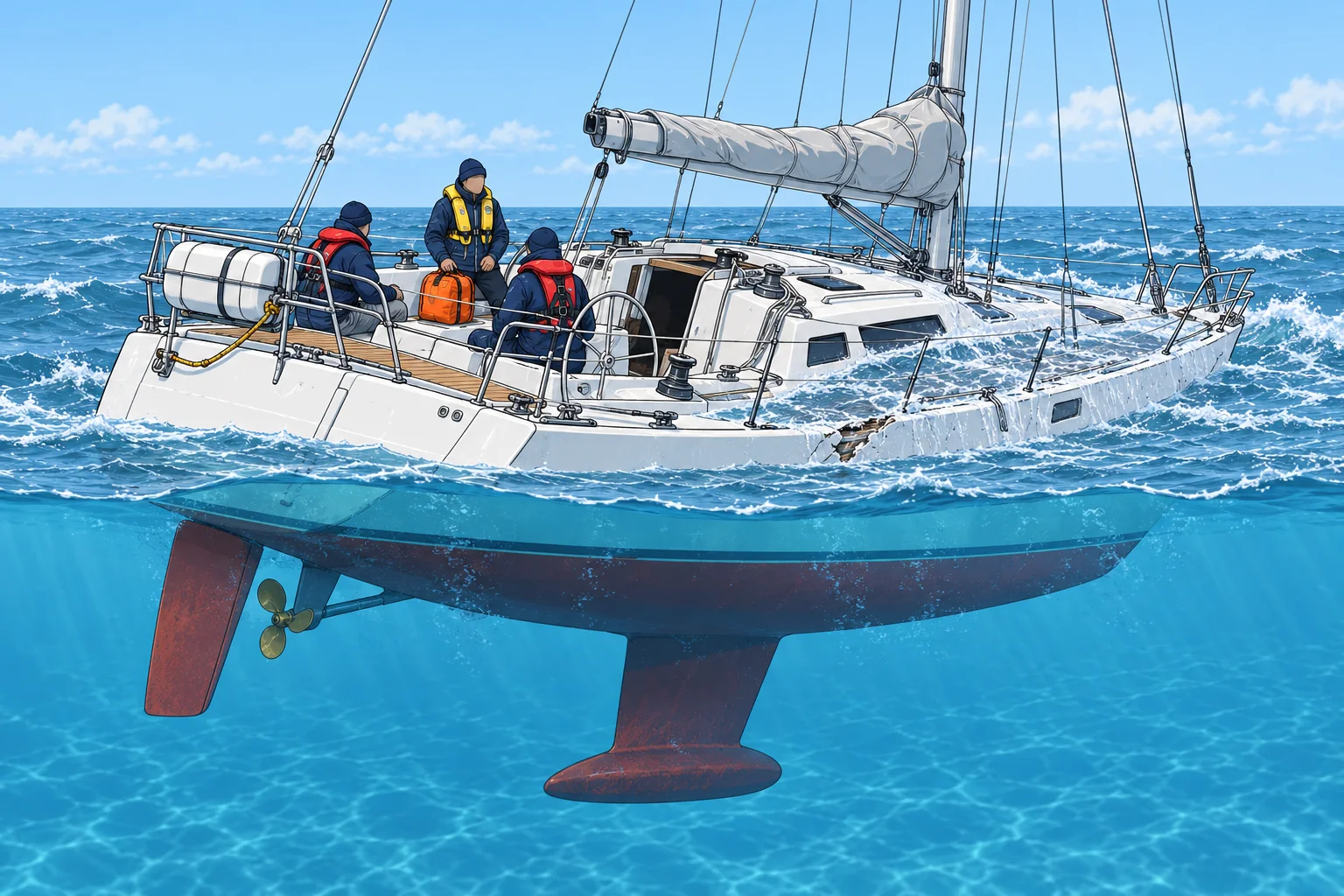
The rule to step up into the liferaft means staying with the boat while it remains the safer refuge. Leave before the danger traps you. A damaged yacht may be bigger, warmer, easier to see and easier to rescue from than a raft. In the 1979 Fastnet storm, several yachts abandoned by their crews were later found still afloat, while some who took to liferafts died.
Reasons to go
Abandon when flooding is beyond the pumps and the boat is clearly settling, when fire has taken hold, or when the boat is breaking up or on rocks with no other way off. A dismasting, a lost rudder or seasick crew are not reasons on their own. If it remains safe, stay aboard until rescuers arrive.
Prepare early
While you still fight the emergency, get ready. Send a Mayday distress call with your position, number aboard and intention to abandon. Activate the EPIRB, the emergency position-indicating radio beacon. Dress warmly, with hats, and fit lifejackets with crotch straps. Bring the grab bag, extra water and handheld VHF marine radio on deck. Secure the liferaft’s painter, its tether and inflation line, to a strong point.
Before you leave
Take seasickness tablets now: seasickness in a raft causes vomiting, dehydration and despair. Drink water if you can before you go. Count heads and give each person a job: launch the raft, carry the grab bag, help the weakest. Leave dry if you can: wet clothes lose heat fast.
2Key points
- 1
Step up into the raft: stay aboard while the boat is safer; leave before danger prevents a safe transfer.
- 2
A damaged boat is usually safer and easier to find than a raft.
- 3
Prepare early: Mayday, EPIRB on, warm clothes, lifejackets, grab bag.
- 4
Take seasickness tablets and drink before leaving.
- 5
Count heads and give jobs; board dry if you can.
3Frequent mistakes
Wrong: Launching the raft means everyone must leave the boat immediately.
Right: Prepare early. Launch when needed for a safe transfer; stay aboard while the boat remains the safer refuge.
Wrong: Take off heavy clothes so you can swim to the raft.
Right: Keep warm clothing and a hat on. Fit your lifejacket over your clothing.
4Practice case & exam keys
Twenty miles offshore at night, your yacht has lost her mast and the crew is seasick and frightened. There is no water coming in. One crew member wants to get into the liferaft. What do you decide?
Show the answer
Stay aboard while the yacht remains the safer refuge. Prepare the raft and grab bag, give the crew warm clothing, water and seasickness tablets, and assign jobs. Keep checking for damage or flooding. Leave if conditions make staying aboard more dangerous than a safe transfer.
Exam keys
- Step up into the liferaft: stay aboard while the boat is safer; leave before a safe transfer becomes impossible.
- Before leaving: Mayday, EPIRB on, warm clothing, lifejackets, grab bag, extra water.
- Seasickness tablets and water before boarding.
- Count heads, give jobs, board dry if possible.
Finish this unit
When you've read it, answer three questions. Get all three right to finish the unit; opening the page alone doesn't count.
My notes for this unit
No notes