

Getting back under sail: quick-stop and heave-to
1The lesson in plain words
Stay close to the person. Turn promptly, keep them in sight and make a controlled final approach.
Recap
Shout, throw flotation, point, press MOB and raise the alarm; see Seamanship: man overboard.
Quick-stop
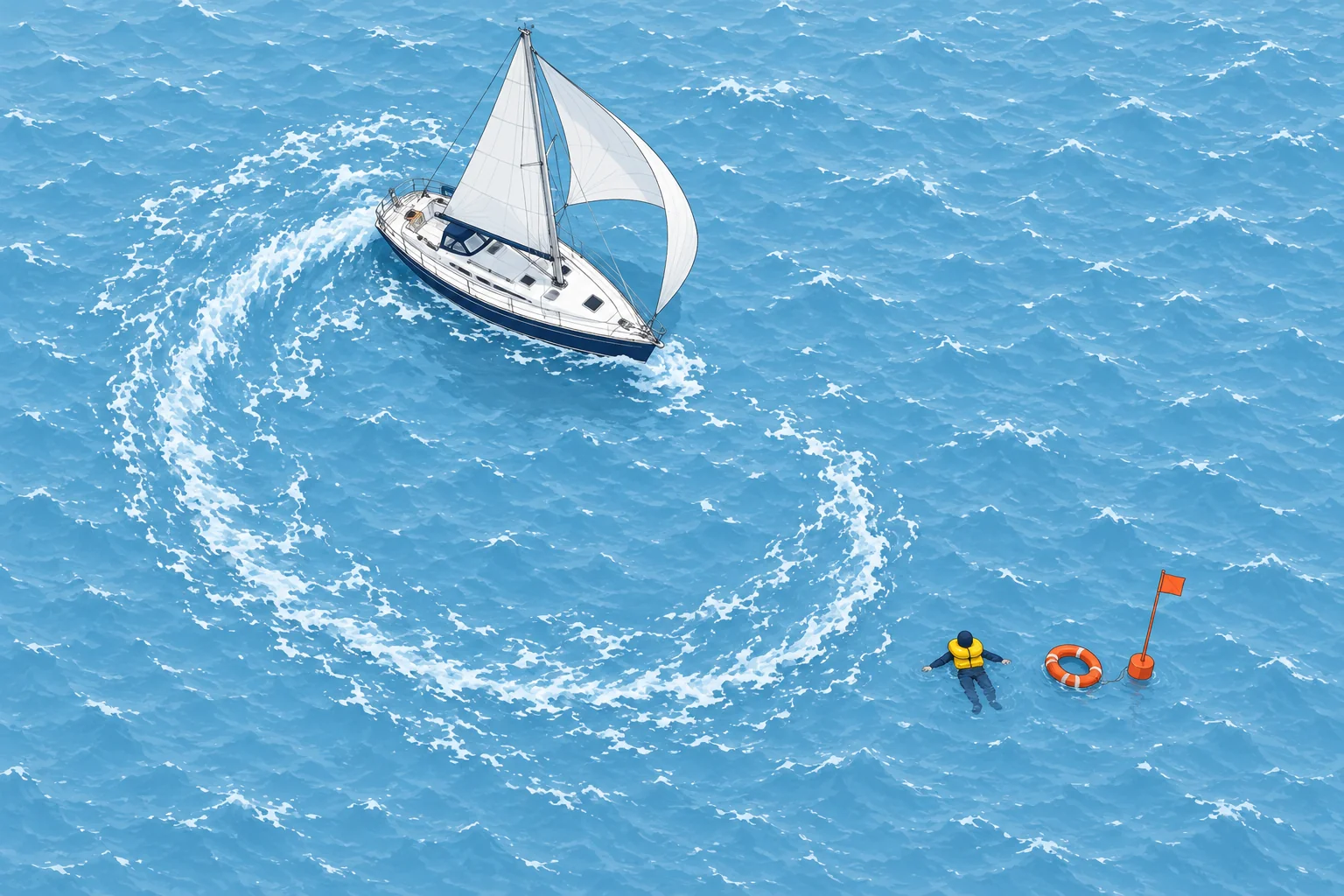
Turn at once into the wind through a tack (bow through the wind). Keep the jib (headsail) control rope (sheet) secured so the jib backs, with wind on its reverse side. Bear away (turn away from the wind) and furl (roll away) or lower the jib. Bring the mainsail towards the centreline and keep everyone clear of the boom before a controlled gybe (stern through the wind); ease the mainsail afterwards. Continue far enough downwind to return on a close reach, easing sheets early to stop alongside.
Crash-stop and heave-to
Tack without releasing the headsail sheet. Ease the mainsail and hold the rudder as if turning back into the wind. Adjust both until the forces balance and you lie hove-to: almost stopped, but still drifting. Boats vary; some do not settle reliably, so practise on yours. Keep pointing and be ready to manoeuvre again. Before motoring, recover trailing lines, furl the headsail and check the propeller is clear.
The close-reach approach
Approach on a close reach: between close-hauled (as close to the wind as you can sail) and a beam reach (wind across the boat). Sheet in for drive; ease sheets early to slow, allowing for momentum. Approaching straight into the wind, you may stop short with little steering. On a run, easing sheets alone will not spill wind effectively. Stop with the person alongside just aft of the shrouds, the mast-supporting wires, and secure them.
Which side?
Many schools stop with the casualty to leeward, the downwind side: the deck edge is closer to the water when the boat leans and the boat drifts towards them. In rough seas some prefer the windward, or upwind, side so the hull is not thrown onto the person, though the boat then drifts away. Practise both on your boat and agree your method in the briefing.
2Key points
- 1
Quick-stop: turn at once, circle the casualty, return on a close reach.
- 2
Crash-stop: tack with the jib backed; balance rudder and mainsail to lie hove-to, still drifting.
- 3
Final approach on a close reach: sheet in for drive; ease sheets early to slow down.
- 4
Check for lines in the water before starting the engine.
3Frequent mistakes
Wrong: Sail on for a while to get room to manoeuvre.
Right: Every second takes you further away and the person is quickly lost from view. Turn at once.
Wrong: Start the engine at once and motor straight back.
Right: Check that no sheets or lines are trailing first. A fouled propeller leaves you helpless.
Wrong: Approach on a run so the wind carries you down to them.
Right: On a run, easing sheets cannot reliably remove sail drive. Approach on a close reach and ease sheets early to slow down.
4Practice case & exam keys
You are sailing close to the wind with three people aboard when one falls overboard. Your remaining crew member is a beginner. The engine is unavailable. What manoeuvre do you choose?
Show the answer
Tack without releasing the jib sheet and ask the beginner to keep pointing. Ease the mainsail and balance the rudder to heave-to. This buys time close to the casualty, but you still drift. If they are not within reach, manoeuvre again and return on a close reach, easing sheets early to lose drive. Secure them alongside before attempting recovery.
Exam keys
- Quick-stop: immediate turn into the wind, circle, return on a close reach.
- Crash-stop: tack with headsail backed; balance rudder and mainsail to heave-to. Practise on your boat.
- Final approach on a close reach; check for lines before using the engine.
Finish this unit
When you've read it, answer three questions. Get all three right to finish the unit; opening the page alone doesn't count.
My notes for this unit
No notes