

Water in the boat: find the leak
1The lesson in plain words
Most water in a yacht enters through a fitting, hose or seal. Keep pumping while you search quickly and in order.
First moves
Water above the cabin floor is an emergency. Get everyone into lifejackets, start every available bilge pump, and give one person the job of pumping or bailing while others search. Note the time and mark the water level, so you can tell whether it is rising or falling. If it is rising fast, call for help at once.
Salt or fresh?
Never taste water from the bilge (the lowest space inside the hull): fuel, sewage or chemicals may contaminate it. Check tanks, pipes and deck openings as well as underwater fittings. Rain is fresh; spray and boarding seas bring seawater. Outside water may be fresh or brackish (partly salty). Fresh water does not rule out a hull leak. Salt content is only a clue: keep pumping and searching until you find the source.
Where it comes in
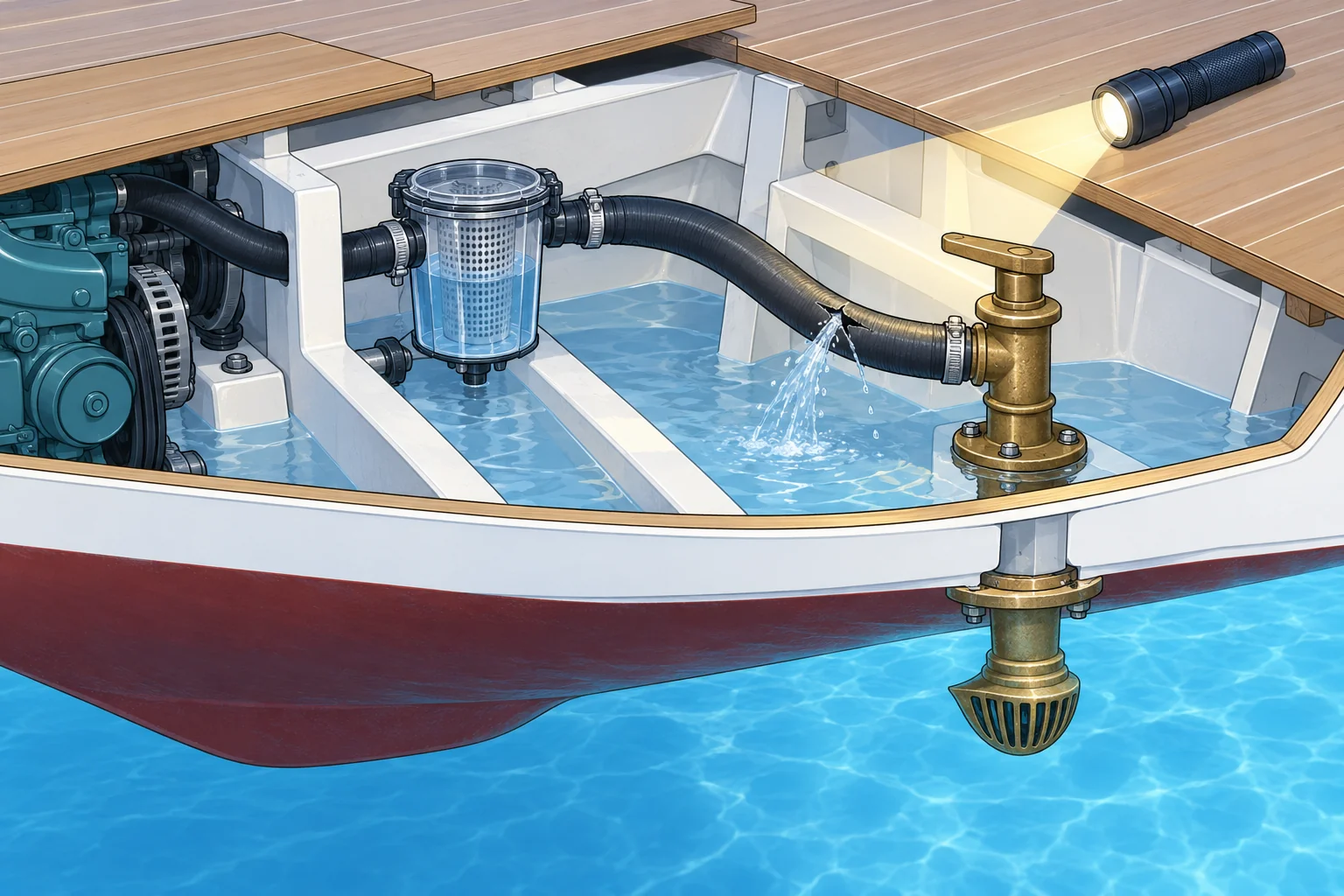
Search the through-hull fittings (openings through the hull) first: intakes, toilets, drains and instruments. Then check the engine seawater cooling circuit: strainer, pump, hoses and exhaust. Then check the stern gland (the seal around the propeller shaft), saildrive seal (around a drive leg through the hull), rudder bearing and keel bolts. A split hose or loose hose clip (the band securing a hose) can let in water quickly.
Shut it off
Close a suspect seacock (the valve on a hull opening), but stop the engine before closing its cooling-water intake. Do not restart until the fault is repaired and cooling restored. If a fitting has broken off, tap in the softwood bung (a tapered wooden plug) tied beside it. If the leak is hidden, empty lockers and lift floorboards systematically from one end of the boat to the other.
Heel and trim
Heel is sideways lean; trim describes how high the bow and stern sit. Many leaks depend on depth or on which side is down. Tacking (turning the bow through the wind) so the leaking side is high, or safely moving crew weight, can lift the leak above water. Move weight aft to lift bow damage, or forward to lift stern damage. A leak only under power suggests the engine circuit.
2Key points
- 1
Lifejackets on, all bilge pumps going, mark the water level and the time.
- 2
Trace water sources; never taste bilge water.
- 3
Check through-hulls, the engine seawater cooling circuit and the stern gland first.
- 4
Close the seacock or fit a softwood bung; stop the engine before closing its cooling intake.
- 5
Heel or trim to lift the leak clear of the water while you work.
3Frequent mistakes
Wrong: Search first and start pumping once you know the cause.
Right: Pump at once and keep pumping. Search at the same time with other crew.
Wrong: Call for help only once you are sure the boat will sink.
Right: Call as soon as flooding threatens safety. Choose Mayday or Pan-Pan according to the danger.
4Practice case & exam keys
Water rises while motoring. When you stop the engine, it stops rising; the bilge pumps keep running. Which system deserves an early check, and what must happen before restarting?
Show the answer
Keep pumping, mark level and time, and get lifejackets on. The change under power points towards the engine seawater circuit, but does not prove the source. Check its strainer, hoses and exhaust. Keep the engine stopped before closing its intake. Repair the fault and restore cooling before restarting. Continue searching if water still enters; call early if safety is threatened.
Exam keys
- Lifejackets, pumps, mark level and time; call early if flooding threatens safety.
- Trace water sources; never taste bilge water.
- Search through-hulls, engine seawater cooling circuit, stern gland, rudder bearing, keel.
- Stop the engine before closing its cooling intake; close leaking seacocks, fit bungs, raise the leak.
Finish this unit
When you've read it, answer three questions. Get all three right to finish the unit; opening the page alone doesn't count.
My notes for this unit
No notes