

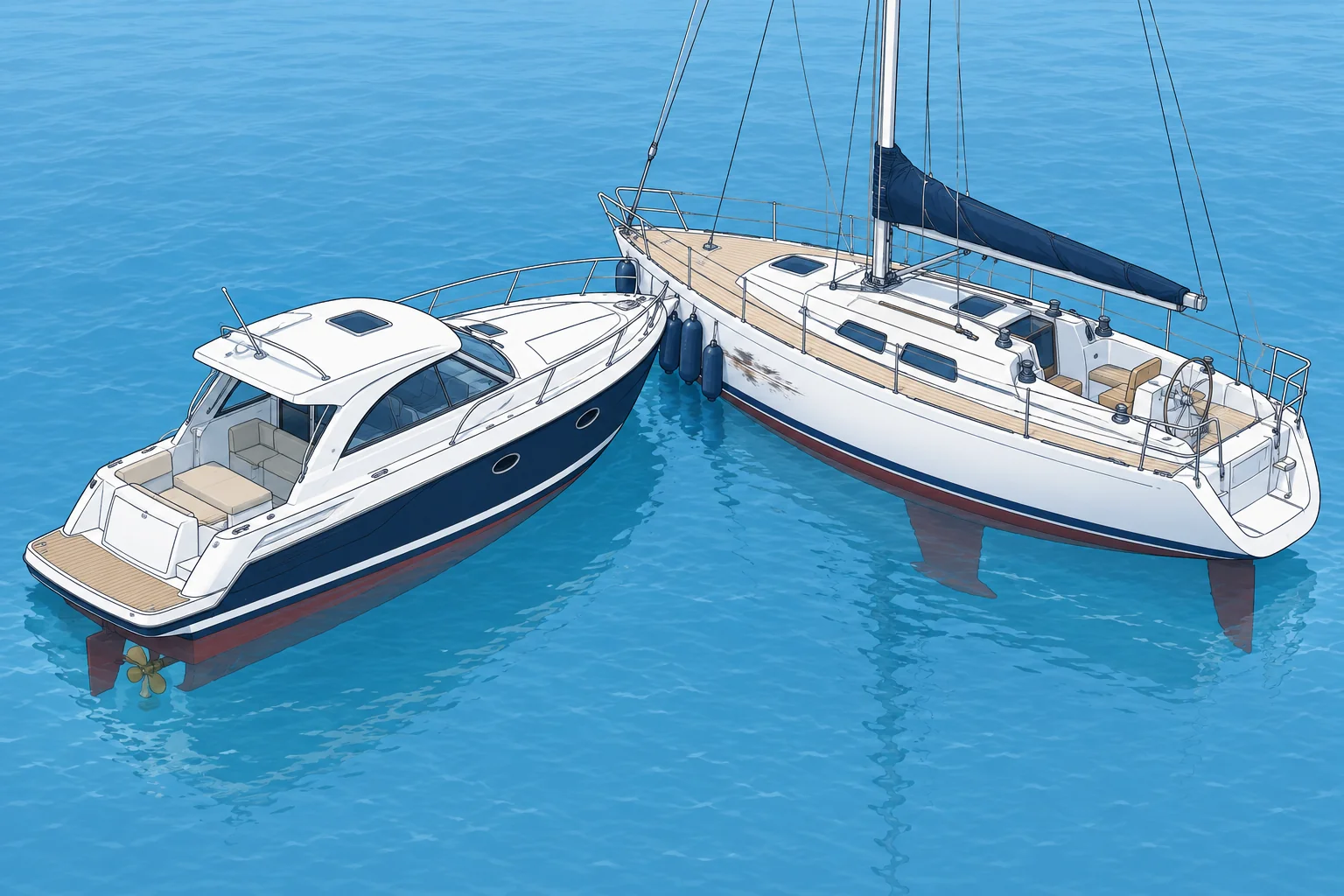
After a collision
1The lesson in plain words
After a collision, protect people, call promptly when danger is clear, and assess damage. An embedded bow may be plugging a hole.
People first
Count heads. Check for injuries and anyone in the water. Get lifejackets on. Someone may have been thrown overboard or crushed between the boats, so look all round before you manoeuvre. Stop the propeller near people in the water.
Check the damage
Check every compartment for holes, cracks and leaks. Check the rig (mast, sails and supporting wires): a broken stay (a wire supporting the mast) can bring it down. If a bow is embedded in another hull, it may be plugging the hole. Do not separate just to inspect damage. If stable, await rescue advice; separate only if necessary and safe, with both crews ready to control flooding.
Call for help
Send Mayday for grave and imminent danger needing immediate assistance, such as uncontrolled flooding or a life-threatening injury. Send Pan-Pan for an urgent safety problem without that level of danger. Minor injuries or a routine escort request do not automatically justify either call. Crew can call while others inspect the damage.
Duties after a collision
Most countries require each vessel to stand by and give assistance, so far as she can without serious danger to her own vessel, crew and passengers, and to exchange names, home ports and destinations. Note the time, position, weather, lights shown and the other vessel’s details in your log. Report as required by your flag state and the coastal state where the collision occurred. The collision rules themselves are in COLREG: conduct.
2Key points
- 1
People first: count heads, check injuries and the water around you.
- 2
Inspect every compartment and the rig.
- 3
An embedded bow may be plugging the hole; separate only if necessary and safe, with flooding control ready.
- 4
Mayday: grave and imminent danger needing immediate assistance. Pan-Pan: urgent safety help below distress level.
- 5
Stand by, exchange details, log and report.
3Frequent mistakes
Wrong: Reverse out immediately to see the damage.
Right: The bow may be plugging the hole. Separate only if necessary and safe, with both crews ready to control flooding.
Wrong: If your own boat is fine you can leave.
Right: You must stand by and help as far as you safely can, and exchange details.
4Practice case & exam keys
In poor visibility a motor cruiser hits your yacht amidships. Her bow is stuck in your hull at the waterline. Her skipper wants to reverse off. What do you say?
Show the answer
Ask the skipper to avoid relative movement if safe while you assess both boats. Count heads, put lifejackets on and call for help as needed. Check flooding and prepare pumps and patches. Do not separate just to inspect damage. If stable, await rescue advice; separate only if necessary and safe, with both crews ready to control flooding. Stand by and exchange details; log and report.
Exam keys
- People first; call as soon as danger is clear; inspect hull, all compartments and rig.
- An embedded bow may plug the hole; separate only if necessary and safe, with flooding control ready.
- Mayday for grave and imminent danger, Pan-Pan for urgency.
- Stand by and assist; exchange names, ports, destination; log and report.
Finish this unit
When you've read it, answer three questions. Get all three right to finish the unit; opening the page alone doesn't count.
My notes for this unit
No notes