

Damage control: bungs, plugs and collision mats
1The lesson in plain words
Stop as much water as you can, as fast as you can, with whatever is to hand. A rough patch that holds is better than a neat one that never gets fitted.
Bungs and repair compounds
Tap a tapered softwood bung gently into a damaged fitting; wet wood swells and grips. Cloth can help seal an irregular gap. Carry spare sizes beside those tied to fittings. Use underwater-curing epoxy putty for small cracks once flow is controlled; follow its mixing and cure instructions. A rubber emergency plug can suit an irregular opening; follow the kit instructions and check that it holds.
Plugging from inside
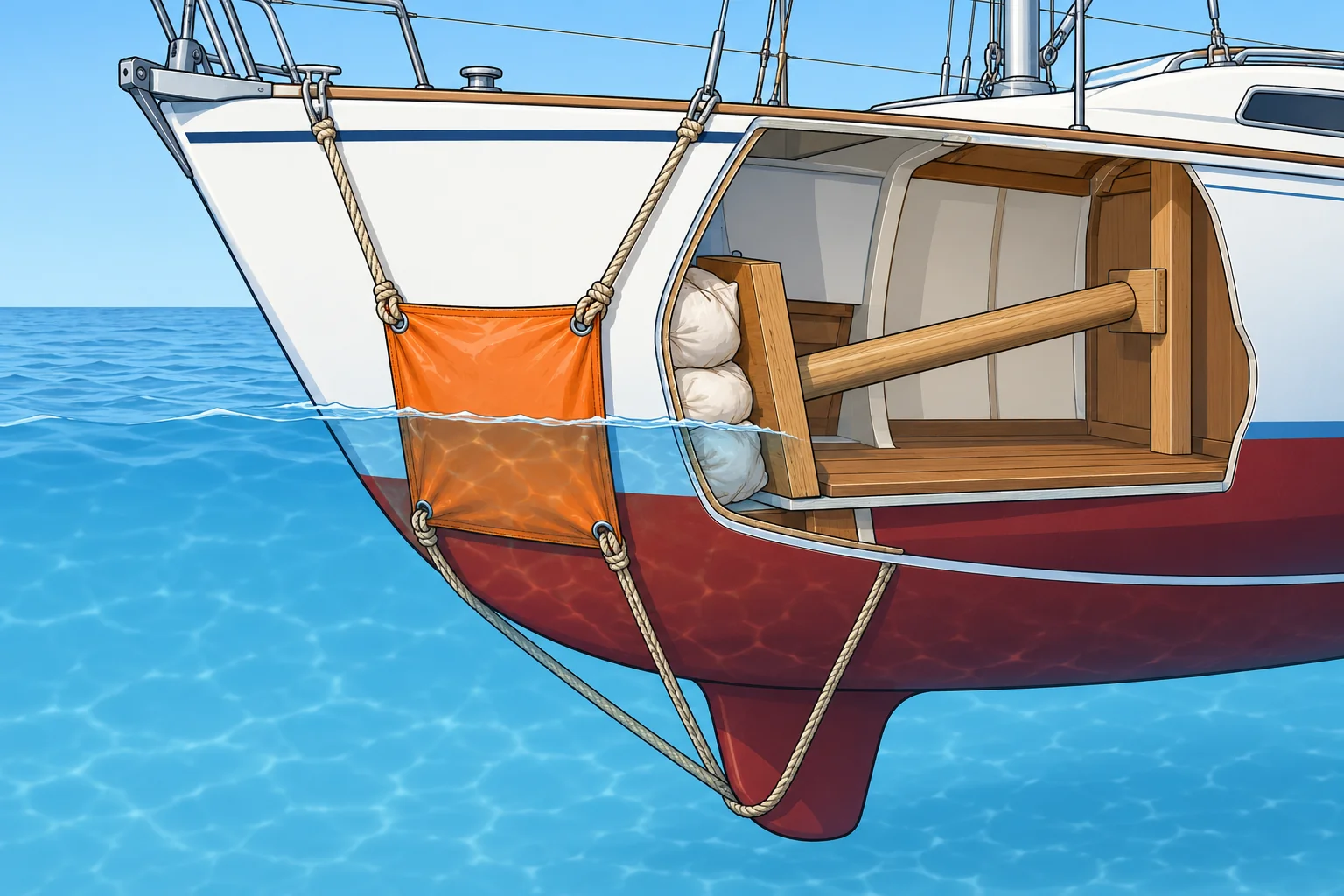
For a larger hole, push in soft material: cushions, sleeping bags, sail bags or clothing. Then hold it with something stiff, such as a floorboard or locker lid, braced against the hull with a strong pole or oar wedged against a strong structure. This is called shoring. Water pressure is trying to push the plug in, so a good brace matters.
Collision mat from outside
A sail or tarpaulin over the hole can slow the leak. Stop propulsion before handling lines and keep it stopped while lines are beneath the boat. Attach strong corner lines, lower the mat over the bow and draw it aft from deck until it covers the damage. Secure it with lines led to both sides. Keep lines clear of propellers; do not send anyone into the water. Water pressure helps press the mat against the hull, reducing inflow for inside repairs.
Use heel and trim
Lift the hole out of the water if you can. Put the damaged side up by tacking or by moving weight: crew, water cans, anchor and chain. Trim the boat bow-up for damage forward. Slow down, especially for damage in the bow, because speed rams water in.
Keep a damage-control kit
Bungs, epoxy putty, a rubber plug kit, a bag of rags, duct tape, a hacksaw, spare hose clips, hose lengths, a sheet of plywood and some wedges let you deal with most leaks. Check that every crew member knows where it is and where every seacock is.
2Key points
- 1
Tap a softwood bung gently into a damaged fitting; carry spare sizes and underwater-curing epoxy putty.
- 2
Plug from inside with soft material, then shore it with a brace.
- 3
A collision mat outside is pressed on by the sea itself.
- 4
Heel and trim to lift the hole; slow down.
- 5
Keep a damage-control kit and show the crew every seacock.
3Frequent mistakes
Wrong: An inside patch only needs to be pushed in place.
Right: Water pressure pushes it out of the hole. Brace it firmly against strong structure.
Wrong: Keep sailing fast towards harbour to get there sooner.
Right: Speed forces water through bow damage. Slow down until the hole is controlled.
4Practice case & exam keys
A floating log has punched a hand-sized hole in the bow just below the waterline. Water pours in. You have cushions, a spare headsail, lines and a strong pole. What do you do?
Show the answer
Stop the boat and propeller. Get lifejackets on, start pumps and send a Mayday. Trim bow-up by moving weight aft. Plug with cushions and brace with a floorboard and pole. From deck, draw the headsail over the hole using corner lines beneath the bow; secure it and keep propulsion stopped. Check that the patch holds and the water level falls. Agree a tow or safe destination with rescuers; keep pumping and checking the repair.
Exam keys
- Softwood bungs into failed fittings; epoxy putty and plug kits as backup.
- Inside: soft material plus a braced backing (shoring).
- Outside: collision mat (sail or tarpaulin) hauled over the hole with lines under the hull.
- Heel or trim to raise the damage; slow down; keep a damage-control kit.
Finish this unit
When you've read it, answer three questions. Get all three right to finish the unit; opening the page alone doesn't count.
My notes for this unit
No notes