

Contingency plans and decision support
1The lesson in plain words
Every likely emergency has a short plan: ISM requires them, MARPOL adds pollution plans, and the damage control plan shows how to save a flooded ship.
ISM: be ready
The ISM Code (International Safety Management Code) section 8 requires the company to identify potential emergencies, write procedures to respond to them and set up programmes of drills and exercises. The company's shore organisation must also be able to respond at any time. In practice the SMS (safety management system) has a contingency manual with one checklist per emergency: fire, flooding, collision, grounding, steering failure, blackout, man overboard, piracy, pollution and more.
One structure
IMO resolution A.1072(28) groups integrated emergency plans into six modules: introduction; provisions; planning, preparedness and training; response actions; reporting procedures; and annexes. This gives different emergency plans a common structure. Put immediate actions, including urgent alerts and reports, first. Follow with continuing actions and later reports. Keep checklists short and know where copies are kept.
Pollution plans
MARPOL requires a SOPEP (shipboard oil pollution emergency plan) on oil tankers of 150 GT (gross tonnage, a measure of enclosed volume) and above, and other ships of 400 GT and above. Ships of 150 GT and above certified to carry noxious liquid substances (harmful liquids) in bulk need an SMPEP (shipboard marine pollution emergency plan). The plans may be combined. They list reporting contacts, reporting steps and actions to control a spill. Detailed response belongs to the pollution unit.
Damage control plan
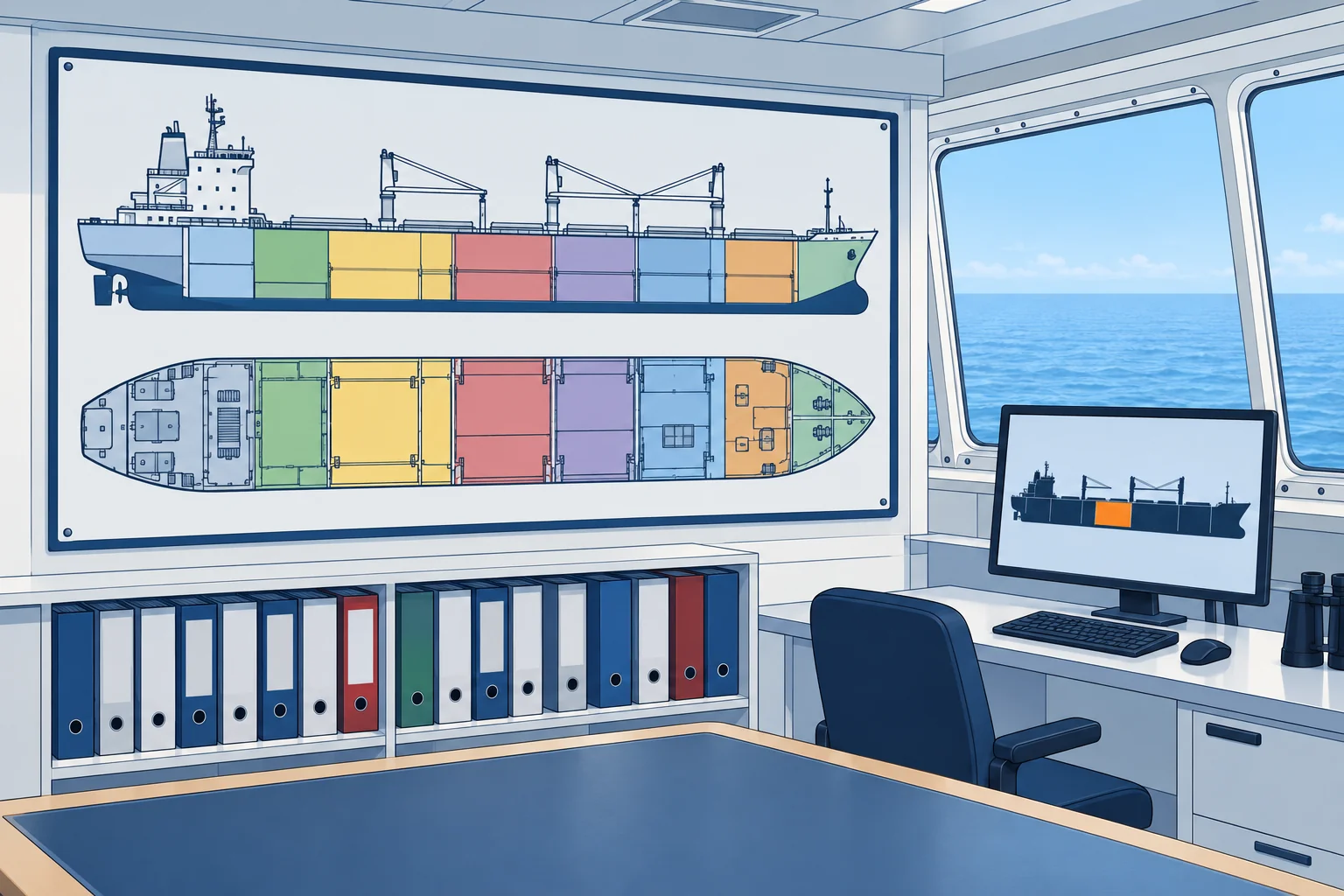
Passenger and cargo ships carry a damage control plan, permanently displayed or readily available on the bridge, with booklets for officers. It shows watertight boundaries, openings, controls and measures to correct a list (sideways tilt) after flooding. Many ships have onboard stability software. Oil tankers of 5,000 tonnes deadweight and above must have prompt access to shore-based computer programs for damaged stability and residual structural strength. Deadweight measures the weight a ship can carry.
Decision support
SOLAS III/29 requires passenger ships to have a decision support system for masters on the bridge: at least a printed emergency plan for fire, damage to the ship, pollution, unlawful acts threatening the ship, personnel accidents, cargo accidents and emergency help to other ships. It may also be computer based. On cargo ships, the SMS checklists play the same role.
2Key data
- ISM Code section 8
- Identify emergencies, procedures, drills, shore response
- Integrated plans
- IMO resolution A.1072(28)
- SOPEP
- Oil tankers ≥ 150 GT; other ships ≥ 400 GT (MARPOL I/37)
- SMPEP
- ≥150 GT, certified for noxious liquids in bulk (MARPOL II/17)
- Damage control plan
- SOLAS II-1/19; displayed or readily available on the bridge
- Decision support system
- SOLAS III/29; passenger ships
3Key points
- 1
ISM section 8: identify emergencies, write procedures, drill them, and keep the shore ready.
- 2
Integrated plans: introduction; provisions; planning, preparedness and training; response; reporting; annexes.
- 3
SOPEP and SMPEP cover pollution; they belong to the same emergency organisation.
- 4
The damage control plan shows watertight boundaries and how to correct a list.
- 5
Passenger ships have a decision support system for masters (SOLAS III/29).
4Frequent mistakes
Wrong: Contingency plans are paperwork for the auditor.
Right: They are the first-minute checklists you will use under stress; know them and drill them.
Wrong: Flooding is handled from memory; the damage control plan is for the shipyard.
Right: Keep the damage control plan permanently displayed or readily available on the bridge, to find openings and correct a list.
5Practice case & exam keys
During an audit on your bulk carrier, the auditor finds that the steering-failure checklist is a five-page text and that the bridge copy of the damage control plan is missing. The master asks you, the chief officer, to fix it.
Show the answer
Rewrite the steering-failure checklist in the company format. Put immediate actions, including urgent alerts and reports, first, followed by continuing actions and later reports. Obtain a replacement damage control plan and booklets for officers; keep the plan permanently displayed or readily available on the bridge. Test both in the next drill.
Exam keys
- ISM Code section 8: emergency preparedness, procedures, drills and exercises.
- Integrated contingency plans: A.1072(28).
- SOPEP: oil tankers ≥150 GT, other ships ≥400 GT; SMPEP: ships ≥150 GT certified to carry noxious liquid substances in bulk.
- Damage control plan (SOLAS II-1/19); decision support system for masters (SOLAS III/29).
Finish this unit
When you've read it, answer three questions. Get all three right to finish the unit; opening the page alone doesn't count.
My notes for this unit
No notes